When I was a children’s librarian, I enjoyed reading juvenile books, especially for the Battle of the Books at my work. One of the titles that I read to prepare for that competition was A Snicker of Magic by Natalie Lloyd. Even though it can be predictable, it’s a good novel about finding the right words to say what one believes in.
A Snicker of Magic involves Felicity Pickle – a 12-year-old “word collector” – and a town that used to have magic. In the past, Midnight Gulch was a magical place, but a curse drove it away. When Felicity arrives in that town, she thinks her luck will change. As “a word collector,” Felicity sees words everywhere, yet Midnight Gulch is the first place that she’s ever seen the word “home” because her nomadic mom has a wandering heart. She also meets Jonah – a mysterious do-gooder who shimmers with words that she has never seen before, and he makes her heart beat a little faster. Felicity wants to stay in Midnight Gulch, yet she has to figure out a way to bring back the magic, so she can break the spell that’s been cast over the town and over her mom’s broken heart.
I can see why my library chose this title for Battle of the Books. When I read this book, all I could think of was how cinematic this can be. This was especially true with how the words appear everywhere that Felicity looks like in someone’s hair and in strings of her Uncle Boone’s banjo. I personally think it could work better in animation since that form doesn’t limit much to the imagination like live action can at times.
In addition, Felicity Pickle is a relatable character as all she wants is a place to stay and belong. I know a lot of kids, especially her age can identify with that. She has her quirks with the words and her insecurities. She’s great at collecting words, but verbalizing them is a challenge. All she needs is the right words, and spoilers, she does. I like her friend Jonah as well. He likes to do good things for people regardless of where they live in the world. He does this because it makes him feel good and as a way to distract him from thinking of his dad who’s been deployed. Jonah also is confined to a wheelchair for unknown reasons, but he and the book don’t let his disability define him. In other words, it’s there, and it’s a part of his story. The townspeople are accommodating to him, but all they think of him is a kid who lives with them.
My only complaint is that it can be predictable at times.
The characters have quirky names: check! The main character’s name is Felicity Juniper Pickle, and her teacher is Miss Divinity Lawson.
The town the Pickles move is unique, and all of the townspeople could have their own TV shows: check! Midnight Gulch is a place that used to have a lot of magic, and everybody in it has some kind of power.
People tell stories that happen to advance the plot: check! I understand that Felicity has a hard time finding and telling her story, but does everybody have to tell theirs? I don’t know if everyone has figured out each of their own, but there could’ve been other ways to move the plot forward.
And of course, I also have to address a peeve that a lot of readers have with the book: the amount of times the word “spindiddly” and the phrase “what the hayseed” are mention. I personally didn’t mind this because “spindiddly” is such a unique word that suits Felicity perfectly. People use certain words repeatedly to describe practically everything. For example, I like to say “absolutely,” “definitely,” and “indeed” plenty of times. I’ve annoyed others by repeating these words, but that’s my thing. As for “what the hayseed,” I find the phrase to suit the location very well. It takes place in a town in Tennessee, so it makes sense that people from that part of the United States might exclaim something like that. Also, I reviewed For Whom the Bell Tollslast year, and there’s one part of the book, in which the main character says muck to everybody he knows. Yes, muck. In addition, various people say, “What the obscenity” too! In other words, I’d rather hear “what the hayseed” than “what the obscenity.”
All in all, A Snicker of Magic by Natalie Lloyd is a good middle-reader novel that tackles the power of finding the right words to say what one really means. The protagonist is certainly relatable, and the descriptions for how the words form in everywhere that she sees make the book ripe for a film adaptation. Some readers might be annoyed with its troupes and frequent use of certain words and phrases. I’d recommend it for those who love reading about magical towns and characters who struggle to speak up. It got me a snicker of magic, and you can have it too.
Subscribe below to get notified when I post new updates. Also feel free to email me here for any review suggestions, ideas, or new titles!
Last year, I reviewed For Whom the Bell Tolls the movie – a film adaptation that was so faithful to the novel of the same name that it was dull and barely cinematic. It made me realize that there are ways to keep to the spirit of the book while adapting it to the big screen. A good example of this is the 1939 movie adaptation of Goodbye, Mr. Chips starring Robert Donat and Greer Garson. It captures the warm, somber, and sentimental spirit of the 1934 novella of the same name, while making the necessary changes to make it cinematic through the screenplay, the costumes, the music, and the performances.
The screenplay was written by R.C. Sherriff, Claudine West, and Eric Maschwitz. All of them are British. Since the book is quintessentially English, it makes sense to have British people adapt it due to their knowledge and experiences with schooling in England. This definitely comes through in the movie.
As for the screenplay itself, Sherriff, West, and Maschwitz expand and alter certain elements of the book for the movie. For starters, in the beginning of the novella, there are mentions of Mr. Chips disciplining his students at the beginning of his tenure at Brookfield to show them who’s boss, especially how the first boy he punished was one named Colley. These get turned into a couple of scenes in the film. Some of them involve Chips failing to keep the boys in line on his first day at the school due to their unruly and chaotic behavior and then later punishing them by keeping them in the classroom while a cricket game is going on. As for Colley, child actor Terence Kilburn plays every generation of said character who came and went to Brookfield to symbolize the families that Mr. Chips remembers and influences at the school. These expansions help to reinforce the evolution of the relationship between the title character and the students.
As for the alterations, the main ones come at the beginning and the pivotal scene where Chips meets Katherine. The book starts off with the retired teacher sitting by the fire at Mrs. Wickett’s place, reflecting on certain things, and then dozing off. It doesn’t really do much to establish his character. I sense that the writers felt the same thing because the flick begins with an assembly commemorating the new fall term at Brookfield and a new teacher getting a brief tour of the school. The headmaster mentions that Mr. Chips is ill, so he won’t be present. However, the film quickly cuts to the title character as he old-man sprints to the assembly, and he picks up a lost student along the way. Later on, he greets the returning and new students by remembering how their fathers and grandfathers were, and the latter warmly receiving him. My favorite part of that scene was how he points out that one student named Morgan was wearing trousers that are 3 inches too short just like his grandfather did. This is more effective in establishing who Chips is in a nutshell.
Additionally, the scene, in which Mr. Chips meets Katherine for the first time, plays out slightly differently in the movie. In the novella, he goes to the Lake District in England with a colleague named Rowden during the summer. While climbing a mountain, he encounters Katherine in a misunderstanding that she needed to be rescued, but he proceeds to injure his ankle while trying to get to her. After getting to know each other, Katherine and her friend help Chips get down the mountain.
In the film, a German teacher named Max Staefel (played by Paul Henreid of Casablanca and Now, Voyager fame) takes Chips on a trip to Austria during the winter break. Max is briefly mentioned in the book when it’s revealed that he was killed during the Great War while fighting for the Germans. His character is expanded in the flick as being a nice guy who wants to help Mr. Chips to get his mind off of not getting the housemaster position (side note: it’s interesting having a sympathetic German person in an Anglo-American film from 1939). Then, while Chips and Katherine get to know each other in the mountains, a search party is organized to find them. Both are eventually discovered. I bet these changes were done to consolidate certain characters and make it less on-the-nose on how Katherine’s entire purpose in both the movie and the book is to rescue Mr. Chips from his old ways.
If I had to nitpick on the screenplay, it would be that it could’ve ended several times throughout the movie. In one scene, Mr. Chips and Katherine have a dramatic parting at the train station that’s reminiscent in many romantic movies. As Katherine leaves, Chips looks despondent until Max shows and says that he and Flora (Katherine’s friend) have arranged a church for them to be married in when they get back to England. Talk about things getting resolved quickly!
Granted this may also have to do with the editing as well. Almost every scene ends with a blackout, which may confuse viewers into thinking that the movie is over. Other than that, the film is well paced.
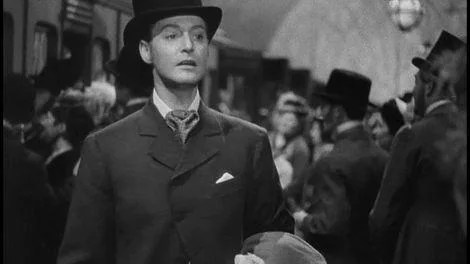
Now, let’s move onto the costumes. Even though the clothes worn in the film are not as spectacular as other flicks released in 1939 (*cough Gone With the Wind), they are effectively used in the story. The outfits worn by Robert Donat as Mr. Chips subtly emphasize how eccentric the character is. When the flick introduces a younger version of Chips in 1870, he is dressed with a coat with the top two buttons buttoned and that barely fits. Since the movie establishes how odd the character is with his unkempt hair, Airedale-like mustache, and how unfiltered he could be, this is a simple way of showing how he was not like other teachers. At one point, Chips’s raggedy wardrobe gets pointed out when Headmaster Ralston confronts him about his old-fashioned habits. The way that Donat looks down at the worn robe makes it clear that the character didn’t notice the garb in that way until that moment.
The wardrobe in the movie also reflects Mr. Chips’s memory. During the time he spent with Katherine, people are seen wearing outfits common for the 1890s and 1900s even though it’s supposed to be around 1888 after Headmaster Wetherby dies. Normally, I’d be confused, but because Chips later admits that during his retirement speech before the war, he would only be able to remember the boys as they are now. And, since he’s recalling his life in the 1930s, he’s likely forgetting certain details like the clothes outside of the uniforms the students wear. All he can recollect is the emotions and how Katherine looked to him during his years with her.
Moreover, the music is really good in capturing the cozy and nostalgic vibe of the flick. The school song sounds like something that was probably written centuries ago because of how choral it is. The voices exude a warmth tone, which suits the film very well. The melody is just as good when the instrumental plays during the background in various scenes. Also, “The Blue Danube” is exquisitely utilized throughout the flick. It’s first used during a ball in Vienna, where Chips and Katherine waltz. Afterwards, whenever he recalls his time with his late wife, “The Blue Danube” plays. Not only does it symbolize the happiness he had with Katherine, but it also further emphasizes how he best remembers the feelings that he had whenever he looks back.
It’s the decisions with things like costumes and music that make director Sam Wood effective. He directed the film adaptation of For Whom the Bell Tolls but this one is much better for many reasons. Wood is faithful to the source material, but he’s able to make things cinematic more successfully like the first meeting between Mr. Chips and Katherine than the film I discussed prior. He also infuses plenty of humor that mainly come from how eccentric Mr. Chips is, but Donat plays it like he’s in on the joke. Furthermore, the scenes involving some form of chaos are well done. This includes Chips’s first day of teaching and how that goes awry very quickly. I especially love how there are closeups of the kids having a mischievous grin on their faces before messing with their schoolmaster.
If I had to complain about one thing about Wood’s direction in this flick, it’s how calculative it can be. It tugs at viewers’ emotions at many occasions, and a lot of those moments are well executed. However, there are times that it’s doing so just to get a reaction out of the audience. It’s most apparent when Katherine dies, and a maid who hasn’t appeared in the movie until then starts crying upon hearing the news. I know that there are people who have said that you’re heartless if you don’t feel something during that scene. It’s not that I didn’t since there were other scenes that tugged at my heartstrings. It’s that I knew what Wood was doing with having the maid as a surrogate for the audience at that time. If she was established as a character much earlier in the film, then that moment would’ve been more effective.
Finally, I have to talk about the performances. Let’s start off with Greer Garson. She plays Katherine in the movie. Even though the character is essentially an I’m-not-like-most-bicycle-riding-Suffragettes plot device that turns Mr. Chips’s life around (this part is more apparent when Chips and Max are looking for Katherine and Flora, and they encounter another set of female bicyclists), Garson embodies her cheekiness and motherly kindness. She also has good chemistry with Donat. It helps that she has a memorable entrance where she emerges from the mist when Katherine and Chips meet for the first time in the mountains. On top of that, it was Garson’s debut film. Although she’s clearly supporting, I can see why Garson got nominated for Best Actress at the 1939 Academy Awards.
Next, let’s talk about the kids. The boys as the students at the school act like any other kids who get amusement by messing with their teacher. And when they’re punished, they act like the world is ending even though it’s not. This is true when they have to stay in the classroom while a cricket game is going on. At the same time, they share a warm report with Chips, especially when he starts inviting them to tea on Sundays. They always seem to greet him warmly whenever they see him. I also have to give time to discuss how Terence Kilburn who plays every Colley Chips encounters at the school. Kilburn plays every generation with a different kind of personality. The first Colley starts off as mischievous, and they evolve until the last one Chips sees is timid.
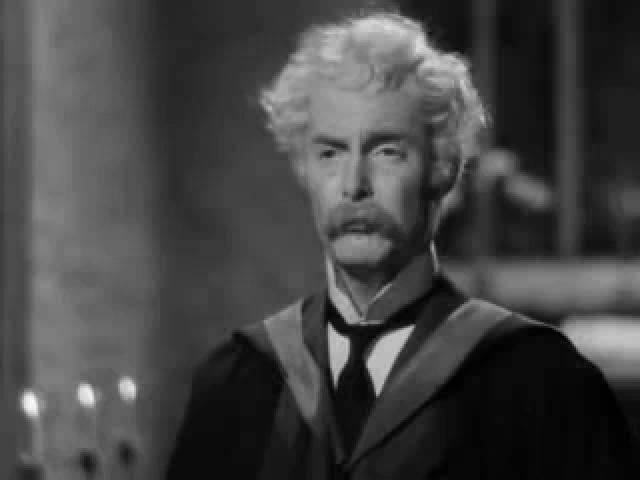
Finally, I need to talk about Robert Donat and his performance as the titular character. On paper, Mr. Chips is eccentric, but unremarkable. Given the appearance mentioned earlier as well as the Latin-related puns, a lesser actor would’ve played him one note. Donat doesn’t fall into that trap. Instead, he grounds Mr. Chips with warmth and sincerity. The emotional transformation of his character is believable because Donat establishes very early on that he wants to make a difference in his student’s lives. A younger version of Chips attempts to console a young boy on the train to Brookfield with little success, but later on, that boy, now a man, thanks the more aloof and stoic teacher for helping him out. Of course, I have to comment on the makeup. It’s the only time a movie directed by Sam Wood contains legitimately good makeup. Although Donat’s comes off a little clown-like at the beginning, it becomes more fleshed out as the flick progresses. Overall, I can see how the physical and emotional evolution of the character landed Donat the Best Actor Oscar at the 1939 Academy Awards.
Twenty-something Mr. Chips with his coat
Forty-something Mr. Chips
Sixty-something Mark Twain (oops, Mr. Chips)
Eighty-something Mr. Chips
All in all, the 1939 film adaptation of Goodbye Mr. Chips captures the spirit of the novella of the same name while altering it for cinematic reasons. The decisions made for adapting the book are successful in maintaining the warm, somber, sweet (but not sappy), and humorous vibes. The biggest strength of the adaptation is the performances, especially Robert Donat’s. I would recommend it to those who love black-and-white movies and not just to those who are obsessed with the Oscars as well as to those who love films about teachers and how much they can make a difference in people’s lives. This flick proves that one can be faithful to the story while making the necessary adjustments for a different medium.
I made another appearance on The 300 Passions Podcast with Zita Short this week to discuss this film, the novella, and the other adaptations and why the movie failed to make AFI’s 100 Years…100 Passions List. Check it out here!
Subscribe below to get notified when I post new updates. Also feel free to email me here for any review suggestions, ideas, or new titles!
Today is the last Monday of the year! You know what that means? It’s the 3rd annual year-end countdown of books* I reviewed in 2022!
*This year I expanded my reviews to include more movie adaptations of the novels I read for this website. At least one of those will be on here.
Like before, I’ll pick 6 titles for this list – 3 for the best and 3 for the worst! Now, I have only one question for you!
I sure am! Let’s get started with the Best Books of 2022!
I read a lot of 4-star titles this year, but that doesn’t mean that they weren’t worthy for the list. All I’m saying that it was a little easier to choose the best of the best since at least 5 of the books that I read and reviewed this year were exceptional. At the end of the day, I had to narrow down the best list to 3 of those titles, which I’d love to show all of you now.
3. Maus by Art Spiegelman
Initially published in serial form from 1980 to 1991, Maus by Art Spiegelman experienced a popularity resurgence earlier this year due to the McMinn County School Board removing from its 8th grade curriculum for reasons that still don’t make a whole lot of sense. This further sparked debate about banning books from schools. Reading this Pulitzer-Prize-winning graphic novel made me realize how vital it is to teach about the Holocaust in non sugarcoated ways. Even though it’s obvious to people who’ve read it, what makes this book iconic is its stark black-and-white imagery with the mice being the Jewish people and the cats being the Germans. It simplifies the infamous conflict in ways anyone can understand without watering it down. It also balances the darkness and horror with humor and flawed protagonists. Maus truly shows that the most powerful books are the ones that are often at risk of getting banned, and this one is most definitely fits that category. Go read it if you haven’t already!
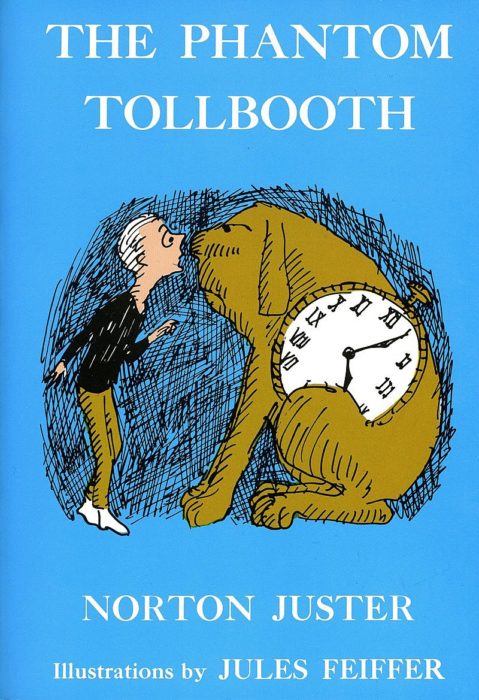
2. The Phantom Tollbooth by Norton Juster
I spent a good chunk of this year as a Children’s Librarian. As a result, I read plenty of classic and contemporary juvenile literature. The Phantom Tollbooth by Norton Juster is the best of the classics that I read this year. It’s extremely silly in most creative ways even though some of the puns are dated. That aspect is balanced by the profound message of learning and experiencing all of the senses. This is definitely for kids who love learning, but not necessary in school, as well as anyone who loves reading about faraway lands, absurdism, and puns (lots and lots of them). So jump to the Island of Conclusions if you haven’t read it already. It’s the best example of deep and simple storytelling that populate the most beloved stories for children.
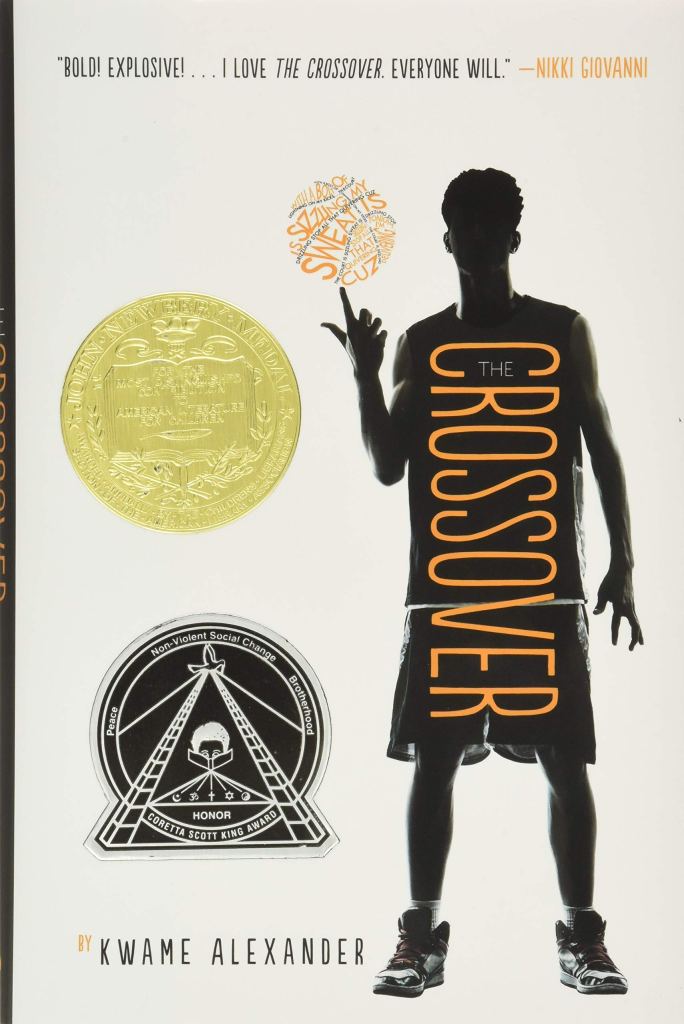
1. The Crossover by Kwame Alexander
If The Phantom Tollbooth was my favorite classic children’s story that I read this year, then The Crossover by Kwame Alexander is the best contemporary juvenile book that I read in 2022. It contains memorable and layered twin protagonists as they navigate their world through basketball. Oh by the way, did I mention that there is non-rhyming verses? It’s so digestable and heartfelt that I even recommended it to an older woman who was looking for a quick read at the library. She was excited to read it. It’s for all these reasons that I can’t wait to check out the series when it eventually comes out on Disney+!
Before, we get to the worst list, I want to mention that the chosen titles bothered me in a variety of ways, and that’s why they’re on the worst list.
Now that we got that out of the way, it’s now time to get to the Top 3 Worst Books* of 2022!
3. Where the Crawdads Sing Movie
The movie adaptation of Where the Crawdads Sing is not bad. It’s aesthetically pleasing, the theme song “Carolina” by Taylor Swift definitely deserves the nominations it’s gotten at various award shows, and I enjoyed David Strathairn’s performance as Tom Milton – Kya’s lawyer.
The thing that bothered me was that it was so average that I could see why reviewers preferred to talk about the controversy surround author Delia Owens rather than the film itself. The choices made when adapting felt marketable and predictable. So much that it strips some of the nuance of Kya’s character and possibly reduces her to a Nicholas Sparks female archetype. Granted, the book wasn’t exactly great, but even that offered more to the consumer than the film ever did.
2. The Fountainhead Book by Ayn Rand
I can see why people might like The Fountainhead by Ayn Rand, but I couldn’t have cared less. Philosophy aside, it’s too long with too many speeches, and I wasn’t convinced by the main character Howard Roark as the model of objectivism. It also didn’t help that Howard rapes Dominque – the main female in the book, and the novel tries to justify it! Now, by mere coincidence, I’ve read 15 novels since April that feature and/or mention sexual assault. This is the worst depiction of rape that I’ve ever read in a book due to the victim blaming.
This book isn’t any higher because I lowered my expectations before reading it. Also, the movie version is more entertaining, so if we didn’t have the tome, we wouldn’t have the flick.
If you want to watch a movie that involves people waiting for orders and sitting in a room and talking, see Battleground (1949) and 12 Angry Men (1957).
If you want to watch a nearly three-hour film that’s based on a book and involves blowing up a bridge, view The Bridge on the River Kwai (1957).
If you want to torture someone, look them in a room, tie them to a chair, peel their eyes open, and make them watch the scene from For Whom the Bell Tolls, in which one character says “I don’t provoke” while getting repeatedly punched for no logical reason on an one-hour loop.
What I’m saying is that unless you’re an Oscar buff, avoid For Whom the Bell Tolls at all costs. It’s dull with a capital D and eliminates majority of nuance present in the novel. Oh, by the way, did I mention that there’s brownface in it? Stay away from it as much as you can!
And that was the Top 3 Best and Worst Books* of 2022! I hope all of you enjoyed it. I look forward to having plenty of new reviews for 2023! See you next year!
Subscribe below to get notified when I post new updates. Also feel free to email me here for any review suggestions, ideas, or new titles!
Full disclosure: One of the authors of this book gave me an electronic copy in exchange for an honest review.
There are certain aspects that influence what kind of books readers take a look at. Some are personal, while others are coincidental, but they could be seasonal too. Much like certain songs, some books are meant to be consumed at a certain time of the year. A case in point is Once Upon a Winter: A Folk and Fairy Tale Anthology edited by H.L. Macfarlane, and it’s a very good collection of stories all set in winter.
Once Upon a Winter: A Folk and Fairy Tale Anthology is the first of four planned seasonal anthologies. This contains folk and fairy tales written by 17 authors across the globe, and they consist of different genres, adaptations of known stories, and original ones.
While all of the stories have winter as their backdrops, they explore that season in different ways. Some venture into its harsh and isolated side, while others portray it as more whimsical and with more depth. All of them have a fantasy element (for obvious reasons), but some like The Biting Cold by Josie Jaffrey and Santa Claus is Coming to Town by Bharat Krishnan have horror elements, while others have humor like The Snow Trolls by S. Markem. In addition, some are more suited for a Young Adult or a Middle Grade audience like The Best Girl This Side of Winter by Laila Amado and You Can’t See Me by Kate Longstone. In other words, it’s got something for everybody.
My favorite stories were mainly the fairy tale retellings. The Match Girl retold by Rebecca F. Kenney is a twist on the Hans Christian Andersen fairy tale of the same name. It captures the spirit of the story of a girl trying to survive while selling matches. I won’t spoil it, but the twist is let us say enlightening. Another one of my favorites was A Pea Ever After by Adie Hart – a retelling of another Hans Christian Andersen tale The Princess and the Pea. This one involves a witch who’s mistaken as a princess and gets roped into a contest for Prince Percival’s hand in marriage, yet none of the other contestants seem all that interested. This story is refreshing, inclusive, and contains plenty of twists to satisfy the reader.
I also have to give a shout out to The Snow Trolls. It involves two trolls that discover snow for the first time. It’s a punchline of a story, but it’s satisfying and obviously funny, especially with the snarky narration.
While I liked a lot of the stories, some didn’t do it for me. For example, Queen of the Snows by Joyce Reynolds-Ward is a decent epic tale of a queen looking for some magical weapons. It’s got some good imagery, yet I couldn’t follow the story, and some actions felt very random. It’s an intriguing story that should be a full-fledged novel.
In summary, Once Upon a Winter: A Folk and Fairy Tale Anthology edited by H.L. Macfarlane is a very good collection of stories set in wintertime. There’s a story for everyone in a variety of genres. I would recommend this to anyone who likes short stories, fantasy, and winter-based tales with a cup of hot cocoa or tea. I look forward to reading the other seasonal anthologies in the future.
Stay tune for next week when I post my Top 3 Best and Worst Books of 2022!
Subscribe below to get notified when I post new updates. Also feel free to email me here for any review suggestions, ideas, or new titles!
I’ve read and reviewed plenty of character studies on this website, but I’ve not tackled the most quintessential kind: the-old-man-looking-back-on-his-life trope. That is until now. One of the most well-known titles in this subgenre is the 1934 novella Goodbye, Mr. Chips by James Hilton. Even though it doesn’t have the same cultural legacy that it did in the past, its warmth, sweetness, somberness, and humor made the book likable and endure for such a long time.
Goodbye, Mr. Chips is about Mr. Chipping – an old classics schoolmaster at the Brookfield School. Mr. Chips – as he is affectionately known as – dreams by the fire as he reflects on his days as being a teacher at an English boarding school for many decades. He recalls his early period as a difficult taskmaster schooling his students. He later views his middle-age period as a rebirth when he meets Katherine – a young woman whose opinions change him for the better. He evolves into the lovable old schoolmaster who’s constantly reliable while Brookfield experiences new students and a new, uncertain world full of conflict.
This subgenre of the character study is self explanatory. The old man in question usually reflects on his actions and relationships that he’s made throughout the years. As a result, there’s not much of a plot nor stakes in it. However, that’s not an inherently bad thing. Sometimes, it’s good to read a book that’s not all about making one heart’s pound.
This can work if the main character is interesting, and in this case, Mr. Chips is in a way. He’s not exactly the textbook-definition of the word interesting as he’s described in the novella as being friendly, yet people wouldn’t necessarily be chums with. He’s more eccentric in a good way. Mr. Chips has his way of speaking by saying “umph” at least once in his sentences and being unfiltered like recalling casually how he disciplined one student to the latter’s son. And of course, he makes plenty of puns (check out the one he makes about the Lex Canuleia)! And yet, he means no ill. In addition, he has afternoon tea with new students to get to know them even when he’s retired. All of these traits and actions make him endearing and reliable.
Additionally, even though I wouldn’t label the novella as a romance, I certainly was invested in the relationship between Chips and Katherine because of how realistic and unexpected it was. They have different ideologies, for Chips is conservative, while Katherine lends more socialist. I appreciate that Hilton gives Catherine these kinds of beliefs even if she’s essentially a plot device that makes Chip turn his life around. As a result, they disagree on certain things. Even though their romance only takes up a small section of the tome, it effectively shows how Chips’s views evolve by telling the readers so. What makes it unexpected is how they meet. While Chips is vacationing in the Lake District, he’s up in the mountains when he sees Katherine waving excitedly. He mistakes this as her needing to be rescued, but it turns out that she’s an expert climber and that she brings him down after he sprains his ankle. She not only saves him physically, but also mentally and emotionally, since she’s responsible for the afternoon teas that he has with new students and allows him to open up to new experiences and ways of thinking even if he disagrees.
It doesn’t have the same cultural legacy as it did in the past, yet it endures. There are books and movies that have replaced Goodbye Mr. Chips as being the most well known teacher stories. I’m talking about stuff like Dead Poet Society, Mr. Holland’s Opus, and Freedom Writers. Additionally, I’m sure that today’s filmmakers don’t want to touch a tale involving a relationship with a big age gap. The implications involving that are barely addressed in the book. Finally, although it has had four different adaptations made – two feature films and two television presentations – over 6 decades, the most recent was from 2002. Since then, it has come to my attention that the original premise for the beloved television show Breaking Bad was having Walter White turn from Mr. Chips to Scarface. Also, Jeopardy had a clue about the book in a category about (fittingly enough) “c”haracter studies in an episode that aired earlier this year.
The only thing that I have nitpick is that there’s more telling than showing. The novella explains to readers how Chips feels as he goes through the various episodes in his life. It leaves little to the imagination, but honestly, it’s still enjoyable.
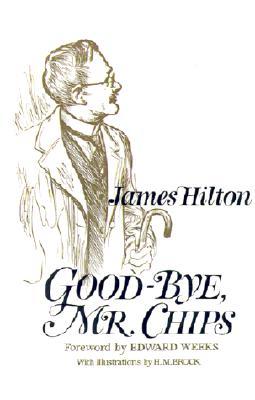
Moreover, I have to acknowledge that Goodbye, Mr. Chips has several different editions. The one I read was the 1962 one. It contains a foreword by Edward Weeks and illustrations by H.M. Brock. Both were pretty charming since the former discussed his relationship with Hilton and why the author wrote the novella in the first place, and the latter had sketches of various moments featured in the book.
All in all – umph, Goodbye, Mr. Chips by James Hilton is as warm as Earl Grey tea, as sweet as sponge cake, somber as an English boarding school, and as humorous as the main character’s puns. While it doesn’t have the same cultural legacy as it once did, it still endures, and I can see why. Mr. Chips is a character that people recognize as someone they’ve known in their lives even with all of his quirks. The relationships that he has with his students and with Katherine are relatable and endearing. I would recommend this old-man-looking-back-on-his-life character study to those who love sentimental novels as well as to those who love reading about teachers fictional or nonfictional.
Before I go, I want to let you all know that I’ll be talking about the 1939 movie adaptation with Zita Short on her The 300 Passions Podcast! We’ll be discussing as always why it failed to make the cut on the American Film Institute’s 100 Years…Passions list. It’ll be my third time on that podcast. I had seen the movie before, and it motivated me to read this book, so it’ll be a fun time talking about how faithful it is to the novella. Stay tuned for my movie review of that and of the other adaptations (that I got my husband Carl to watch) as well as for that upcoming episode! Goodbye, book review!
Subscribe below to get notified when I post new updates. Also feel free to email me here for any review suggestions, ideas, or new titles!
I hope all of you had a great Thanksgiving! I sure did with family and friends as we yelled at the Lions and cheered on the Wolverines! Because I did so much, I haven’t had much time to read, yet I finished The Book Woman of Troublesome Creek by Kim Michele Richardson today.
However, I did start a new book fairly recently, and I would like to share it with all of you today.
The Underground Railroad by Colson Whitehead is a unique take on the famous network used by slaves in the early- to mid-19th century to obtain freedom. Cora is a slave on a cotton plantation in Georgia. Life is terrible there, but even more so for Cora since she’s considered to be an outcast by other Africans. Additionally, she’s coming into womanhood, where greater pains are to come. When Caesar arrives on the plantation from Virginia, he tells her about the Underground Railroad – a secret network of tracks and tunnels that engineers and conductors operate beneath the Southern soil. They decide to take the risk and leave. Things don’t go as planned since Cora kills a white boy as he tries to capture her. In addition, they travel to South Carolina – a state that may not be as friendly to black people as it seems. And finally, they are chased by Ridgeway – a relentless slave catcher. Nonetheless, Cora still embarks on the literal railroad to freedom.
I’m only about 50 pages in, and even though I’m having a hard time getting into it, I find it interesting so far. I’m in where the book explains Cora’s backstory in great detail. She became an outcast among her own peers through a combination of what her mother had done and what she had to do to ward off people from getting her land on the plantation. This is all to explain why she decides to escape. Because of this exposition, it’s pretty slow. That’s why I’m having a hard time being invested in the story thus far. I hope that will change once Cora and Caesar travel through the literal Underground Railroad.
We have now come to the end of the forty-first chapter of “What Am I Reading?”
Subscribe below to get notified when I post new updates. Also feel free to email me here for any review suggestions, ideas, or new titles!
Content warning: This review contains brief discussions on drugs and sexual assault.
A long time ago, I mentioned about the success of Where the Crawdads Singand if the hype was worth it. With that book, I was mixed despite the praises coming from everywhere (but I still gave it 4 stars). Since 2018, plenty of popular books have come out and received not only glowing reviews, but lots of accolades. One of them was Firekeeper’s Daughter by Angeline Boulley, which was published in 2021. I saw that book on nearly every best list whether it was best titles by Native American authors, best YA novels, or best books of 2021. By the time I finished reading it, I understood the hype, and reader, it was worth it for a variety of reasons.
Firekeeper’s Daughter revolves around a teenager going undercover to help with a criminal investigation. Daunis Fontaine is a biracial, unenrolled tribal member and the product of a scandal. She feels like she could never quite fit in both in her hometown and on the near Ojibwe reservation. She dreams of studying medicine, but when her family is struck by tragedy, she puts her future on hold to care for her fragile mother. Then comes Jamie. Jamie is a charming new recruit for her brother Levi’s hockey team. As she falls for him, Daunis realizes that some things don’t add up and that he’s hiding something. Everything comes to light when she witnesses a murder, which thrusts her into the heart of a criminal investigation. Reluctantly, she agrees to go undercover. At the same time, she conducts her own investigation, utilizing her knowledge of chemistry and traditional medicine to track down the criminals. But the deceptions—and deaths—keep piling up and soon the threat strikes too close to home. Now, Daunis must learn what it means to be a strong Anishinaabe kwe (Ojibwe woman) and how far she’ll go to protect her community, even if it tears apart the only world she’s ever known.
Before I go into my initial thoughts about Firekeeper’s Daughter, I want to say that I’ve been looking forward to reading it for a very long time. Its accolades go without saying, and I knew a lot of people who read and loved it. So why read it now? Well reader, back in March, I attended Spring Institute – a conference for youth librarians in the state of Michigan, and Angeline Boulley was a keynote speaker there. She was funny and wonderful to talk to. I even got a photo with her! In other words, she was the catalyst for me to FINALLY read Firekeeper’s Daughter!
I love how the book takes its time to establish its setting and most importantly its characters. Boulley’s descriptions of the various locations in Sault Ste. Marie, Michigan and on Sugar Island were clear and precise that I could imagine them right away. They also make me want to go to those places some day.
In addition, I really got the sense of who Daunis is and her relationships within the first 50 pages. She’s a science nerd who’s going through some recent trauma with her uncle’s sudden death. It doesn’t help that she feels that she doesn’t truly belong with either her white or native relatives. Establishing her character makes readers understand why she does the things she does even if some of her actions can come off as irrational. It also makes us root for her, especially when bad things happen to her like when one of hockey player’s dads rapes her in a hotel room.
Moreover, other characters feel very real too. Granted, there are lot of them, yet I had no trouble keeping track of them. I really like Lily – Daunis’s best friend. She is sex-crazy teenager who puts Daunis in her place, especially when the latter gets too science-y. She also has an on-again, off-again relationship with a guy named Travis who went to school with them. I won’t reveal the conclusion to that saga for those who haven’t read the novel yet. Then, there’s Jamie. At first, he is a cool, funny, and charming guy that I can totally see why Daunis develops feelings for. He has his secrets, and he hides them as much as she does. Let’s say that they go on a rollercoaster when it comes to relationship stuff.
While some people might complain about the slow beginning, once the murder happens, it moves at a brisk pace. Sure, there are times where the investigation stops, so Daunis can enroll in the tribe. However, I found that to be just as important as the research for her character.
For the plot itself, I found it to be fine. I’m not much of a science person, so I didn’t fully understand chemistry when it came to making crystal meth. Luckily, the internet was there to help me out. As mentioned earlier, it slowly bloomed like a flower. I got more and more invested as more obstacles arose. While not everyone involved in the crime was punished, it didn’t bother me, for the book critiques the notion of privilege. Many of the characters are not surprised by the outcome.
And of course, I couldn’t complete this review without mentioning the references to Ojibwe culture. This is what makes the book stand out. Even though Daunis feels that she doesn’t truly belong in either with her white family nor her indigenous one, she still connects to the Anishnaabe community. For example, every morning, she gives a pinch of semaa at the eastern base of a tree by her house and prays to her ancestors to give her the strength for the day. Also, the novel sprinkles in some Anishinaabemowin – the language of the Anishnaabe people. All of these felt authentic since Boulley is part of the Objibwe tribe, and they are used in ways that don’t interrupt the book. Some of these even enhance certain aspects. For example, Daunis discusses the concept of the Gifts of the Seven Grandfathers – a philosophy, in which one can follow in order to live a good life. One of them is telling the truth. However, throughout the book, she has a hard time doing that, for she doesn’t want to make things worse for the people around her while she investigates the sudden drug-related deaths and has a “relationship” with Jamie.
Overall, Firekeeper’s Daughter by Angeline Boulley is a character study that’s worth the hype. It’s not a perfect book, but what works really works. The characters and references to the Anishnaabe culture truly make the novel stand out. I would recommend it to those who want to read books by Native American authors as well as who like stories about being caught in two different worlds, murder mysteries, and involve lots of science. It’s being adapted into a limited series on Netflix by the Obama’s Higher Ground Productions Company, and I can’t wait to see it! Who knows? Maybe I’ll do a review of the series.
Subscribe below to get notified when I post new updates. Also feel free to email me here for any review suggestions, ideas, or new titles!
Full disclosure: I was given a free eARC copy of this book by NetGalley and Hachette Books in exchange for an honest review.
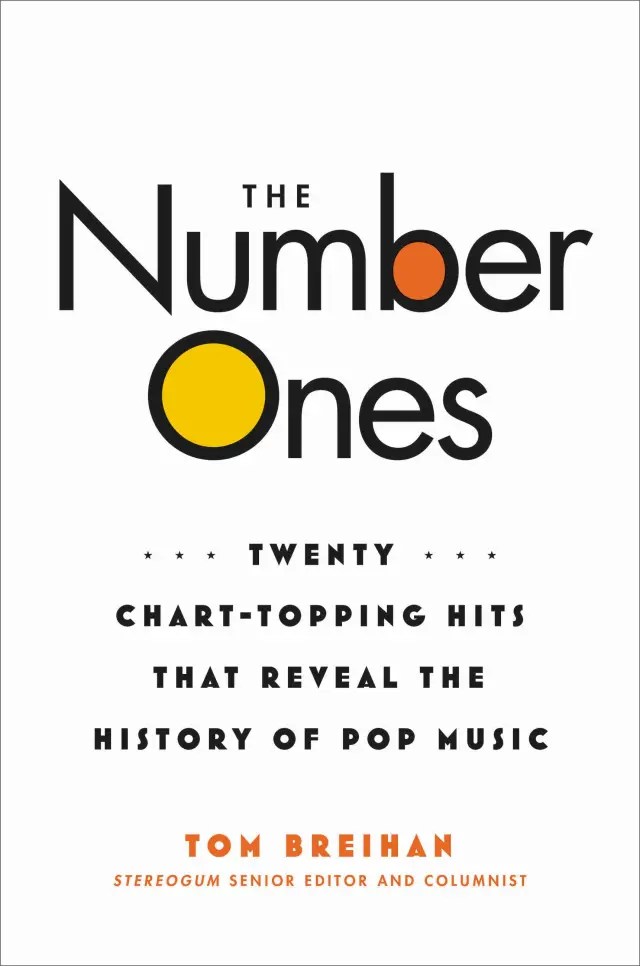
I’ve been excited to read books over the years. One can look at my review of Always Look on the Bright Side of Life: A Sortabiography by Eric Idle to see that in action. It’s been awhile since I’ve felt that way for a particular title. That changed this year when word got out that Tom Breihan – author of the “The Number Ones” column on Stereogum – was going to publish a book covering the most important number one hits on the Billboard Hot 100. Naturally, it’s called The Number Ones: Twenty Chart-Topping Hits That Reveal the History of Pop Music. I had to read it. Now, what do I think about it? Reader, it was great because it analyzed those ditties in a condensed, informative way.
In The Number Ones: Twenty Chart-Topping Hits That Reveal the History of Pop Music, Breihan takes 20 songs that hit number one on the Billboard Hot 100 and reveals how significant they were in shaping music trends. He looks at the historical context surrounding them and how they played a pivotal role in music chart history. Breihan features the greatest pop artists of all time like The Beatles, Michael Jackson, and Prince, and he gives musicians who never hit #1 like Bruce Springsteen, Bob Dylan, and James Brown their due as well.
When I was working as an Adult Librarian in Clarkston, Michigan, I was in charge of maintaining the music CD collection. This meant adding items to and removing them from the shelves as well as keeping up to date on the latest music news. One day, while I was looking at the latest stories, I came across “The Number Ones” column. In it, Breihan analyzes every number one hit on the Billboard Hot 100 since its inception in 1958, and he’s still in the early 2000s (in fact, today’s review was about “The Way You Move” by Outkast featuring Sleepy Brown). On the day that I discovered it, he was taking a look at Paul Anka’s 1974 number 1 song “(You’re) Having My Baby” (featuring Odia Coates (that’s not one of the tunes analyzed in The Number Ones book). After reading his snark-filled, but fully analyzed review of the ditty, I knew I had to read more. I’ve been a fan of Breihan’s column since.
The main difference between the column and this book is the tone. In the former, Breihan evaluates the chart topper in question with snark, sincerity, and complete bias (he’s fully aware that no journalism is wholly objective). That’s why he has rated songs like “Hotel California” a 4 and “We Didn’t Start the Fire” a 1. In the book, the tone is more academic and as balanced as it can be. This makes sense as the overall goal of the research is to see how each of the selected songs contributed to the evolution of pop music as we know it even if they’re not great. Also, in an interview with Billboard (surprise surprise), Breihan revealed that his father was a history professor. I wouldn’t be shocked if he was channeling his dad while writing his book.
As he discusses the #1 hits, Breihan also manages to find the time to write something about the most famous artists that never topped the charts. These get woven into the chapters on the number one tunes. During his chapter on The Byrds’ cover of “Mr. Tambourine Man,” Breihan mentions that Bob Dylan never had a number one hit, yet the cover ushered in the Hot 100’s acceptance of folk-inspired pop songs. Moreover, Bruce Springsteen’s biggest hit “Dancing in the Dark” reached #2 on the Hot 100 right behind another ditty selected for this book “When Doves Cry” by Prince, which reigned on top for 5 weeks and displayed how a musician could take their musical and artistic persona even further. Breihan proves that sometimes, it’s a game of chance of which artists obtain #1 hits or which one don’t.
As I mentioned earlier, the main strengths of the book are twofold. The first is that Breihan leaves no stone unturned when analyzing these tunes. For instance, when he talks about “Dynamite” by the K-pop group BTS, he goes into how American listeners embraced foreign language ditties as well as a brief history of K-pop’s attempts to break into the American music scene to set up the context of how the band managed reach #1. This is especially true when those songs are steeped in controversy. For example, the success of “The Twist” by Chubby Checkers mainly came by because its presentation had been diluted enough for a white audience in the early 1960s. And don’t get him started with how Berry Gordy Jr. screwed over so many careers at Motown as well as the legacy of Michael Jackson.
The second is that the information itself is condensed, but concise enough that readers won’t miss a thing while reading The Number Ones. Even though there’s plenty of detail about each chosen song, each chapter is no more than 20 pages. This makes reading the book digestible, especially for readers who have a rather limited time or a tight schedule.
Other reviewers have noted that it’s best to read this while listening to the songs in question. I wish I would’ve done that because it would’ve immersed me in the tunes more. Luckily, I’ve been correcting that by putting them on when I have some downtime, especially while I wrote this review.
The only complaints that I have are two factual errors Breihan makes in the book. In the “Ice Ice Baby” chapter, he discusses how that tune in question infamously sampled “Under Pressure” by Queen and David Bowie. In talking about who came up with the famous bass riff, he mistakes Queen bassist John Deacon as Roger Deacon (p. 209). I was disappointed by this not only because I’m a Queen fan, but also, he referred to the bass player correctly in his review of “Another One Bites The Dust” on Stereogum. Additionally, in the “Dynamite” chapter, Breihan points out how BTS had slowly climbed their way onto the charts without manipulating it. This included showing up on remixes like the Seoul Town Road one with Lil Nas X. Breihan incorrectly lists member Suga on that “Old Town Road” version when it really was leader RM on that track (p. 310). Despite these errors, I still enjoyed the book.
Overall, The Number Ones: Twenty Chart-Topping Hits That Reveal the History of Pop Music by Tom Breihan is worth the read. The author discusses how each of the 20 chosen chart toppers played a role in the evolution of pop music in an effectively informative and concise manner. I’m still surprised that he’s able to analyze every aspect of a song without being too long winded. I would definitely recommend this to music lovers, especially the ones who watch the Billboard Hot 100 on a regular basis and love Breihan’s “The Number Ones” column on Stereogum, as well as to those who enjoy reading about pop culture. The book is out now, so go take a look if you haven’t already!
Subscribe below to get notified when I post new updates. Also feel free to email me here for any review suggestions, ideas, or new titles!
When an author achieves success, they sometimes repeat the same formula to capture lightning in a bottle twice. Personally, I don’t have a problem with this as long as the book is still compelling in other ways. This was the case when I read Britt-Marie Was Here by Fredrik Backman – his third novel. It takes what made A Man Called Ove work and applies to another interesting curmudgeon.
Britt-Marie Was Here is about a socially awkward, fussy busybody woman who has more imagination, bigger aspirations, and a warmer heart than anybody realizes. When she leaves her cheating husband, Britt-Marie finds herself in the town of Borg – a place where everything is closed except for a few places and a road. She becomes the caretaker of the soon-to-be-demolished recreation center. Eventually, she gets to know the various characters in the town like the citizens, miscreants, drunks, and layabouts. Surprisingly, she’s given the task to lead the fairly untalented children’s soccer team to victory. In a town full of misfits, will Britt-Marie find a place where she truly belongs?
For those who have read My Grandmother Asked Me to Tell You She’s Sorry, one may recognize Britt-Marie as the naggy woman who loves order and routine in the apartment building Elsa lives in. While the events of Britt-Marie Was Here occur after the ones from the former, the latter is more of a stand alone novel than a sequel.
As I mentioned early, Backman translates the core structure of A Man Called Ove to Britt-Marie Was Here. This includes a character study on a stubborn, possibly OCD older protagonist, who interacts with a colorful cast of characters that help them change for the better as well as their backstories being revealed through stream-of-consciousness. I can understand why he would do this since that framework worked the first time. However, since the follow-up was My Grandmother, which had a different formula, I was under the impression that maybe he would do something distinct from those novels. At the same time, Britt-Marie is a multifaceted character in her own way that I can overlook the retread.
Even though Backman provided a backstory for Britt-Marie in My Grandmother, he dives even deeper in Britt-Marie Was Here. Granted, to an outsider, Britt-Marie is still a nag-bag, but she slowly becomes more open, flexible, and independent as she continues to live in Borg. She even reveals more of her life with how invisible she felt by her parents after her sister died; how ungratefully she was treated by her ex-husband, especially how he never put his shirts in the washer; and how much denial she was in when the affairs were going on. Seeing Britt-Marie grow and realize how grateful the Borg residents are to her throughout the novel are the greatest satisfactions that the book gives because she definitely deserves to become the person she wants to be and the respect she gets. Although there’s not a whole lot of story, Britt-Marie is such a compelling character that I’m willing to look past that.
Additionally, like A Man Called Ove, despite the sadness, Backman still infuses humor to the situation. When Britt-Marie first arrives at the recreation center, she gets hit on the head with a soccer ball (uh, I mean football). Talk about first impressions, eh? Scenes like that one help to keep the lightness of the story.
Joan Walker narrates a Fredrik Backman audiobook once again. She brings an austere, but vulnerable vibe to Britt-Marie. Her foreign characters have vague, but appropriate accents. The volume issue that I mentioned in my review of My Grandmother is not as prevalent, but Walker has a tendency to voice the teens as younger than they should be. This is a disappointment, for she voiced Elsa – the 7-year-old in My Grandmother – perfectly.
All in all, Britt-Marie Was Here by Fredrik Backman is a good novel by an author who’s repeating a formula that worked for him before. To some readers who’ve read his other novels, it may seem like a disappointment. To others, it’s still satisfying because the titular character is so memorable. I would recommend it to those who love Fredrik Backman and reading stories about characters who realize their full potential. Once someone reads it, they’ll remember Britt-Marie for a very long time.
Subscribe below to get notified when I post new updates. Also feel free to email me here for any review suggestions, ideas, or new titles!
I hope you all had a great Halloween! I sure did with seeing all the kids trick-or-treating in my neighborhood! I still have plenty of candy leftover.
I can’t believe that I’ve been doing this for 40 chapters! Before you know it, it’s going to be 50! I’ll have something planned for the latter!
In the meantime, I’ve been finishing plenty of books. I’m still reading The Number Ones by Tom Breihan, and I started two new books recently that I’d love to show you. You’ll see that these have something fascinating in common.
Let’s begin with our first title!
The Book Woman of Troublesome Creek by Kim Michele Richardson is about 19-year-old Cussy Carter – the last living female of the Blue People ancestry – who lives in Kentucky. In 1936, the lonely young Appalachian woman joins the historical Pack Horse Library Project of Kentucky and becomes a librarian. She rides across slippery creek beds and up treacherous mountains with her faithful mule Junia to deliver books and other reading material to those most in need in Eastern Kentucky. To the mountain folk, Cussy becomes known as “Bluet.” She confronts those suspicious of her blue skin and of the unique government program as well as befriends a cast of colorful (no pun intended) characters. Cussy is determined to bring comfort and joy, instill literacy, and give those who have nothing something that will take them to faraway lands.
This book is loosely based on the Blue Fugates – a family who were known to carry a genetic trait that led to the blood disorder methemoglobinemia, causing skin to appear blue. I never knew about this family nor about the aforementioned condition. So far, the novel itself doesn’t divulge into the medical history, for it’s more focused on how Cussy deals with prejudice and how she proves she’s a worthy member of society despite the unusual skin color.
At the same time, I knew about the Pack Horse Library Project of Kentucky that the Franklin Delano Roosevelt administration set up prior to reading this book. Not only did they allowed the less fortunate to obtain books and other reading materials, but they also provided jobs for women in the area. The back of the novel explains more of the history of this highly unique program, which is always necessary whenever an obscure event or organization is discussed in historical fiction.
I will automatically like any main character that’s a librarian, but Cussy is more than that. She’s willing to do anything for her patrons even if that means traveling through the toughest terrain that Eastern Kentucky has to offer. And yet, she’s a gentle and empathetic soul. The book can be a little too melodramatic in showing her struggles (ie her getting rapped by her now-dead husband and latter attacked by his perverted priest cousin), but it retains the emphasis on her survival as opposed to her suffering.
I’m curious to how the rest of The Book Woman of Troublesome Creek unfolds!
And now, here’s the second and final book in this chapter!
The Last White Man by Mohsin Hamid is a title that challenges readers to reimagine who they think they are in the future, and how they can come together. One day, Anders – a white man – wakes up to find that his skin has turned dark. At first, he tells only Oona – a friend turned lover. But soon, similar occurrences are reported across the country. Some find this to be the long-dreaded overturning of the established order, to be resisted until the end. To others like Ander’s father and Oona’s mother, it’s a sense of profound loss with profound love. As the bond between Anders and Oona deepens, it brings out a chance to see others, face to face anew.
Now, one may be wondering, “Emily, why are you reading this?”
Well, part of it is to get revenge on the television host who’s been espousing the Great Replacement Theory recently. I knew more of the plot after hearing that person talk about on their show one day. The other reason is that Lit Hub promoted the novel a lot when it initially came out, and I really liked the cover. It’s eye-catching (no pun intended).
I’ve only read about 50 pages so far, and I find the concept wholly unique. I don’t think I’ve read a book that involves white people having their skins turn dark. I’m sure there are horror and science fiction novels that deal with that scenario, yet I’ve never seen it play out in contemporary literature. Yes, there’s also the musical Finian’s Rainbow, in which one character – a U.S. Senator – turns black in order to learn the lesson of becoming a better person by not being a bigot (spoilers: he gets turned back to white at the end of the show). But in the case of The Last White Man, it’s not interested in telling people that prejudice is bad. In fact, Anders’s skin turns dark right on the first page prior to the readers knowing anything about him except being white.
Instead, it seems to be more fascinated with how this change will affect society as a whole, specifically how one navigates having dark skin and the perceptions associated with it. So far, no explanation has been given to why white people like Anders are developing brown and black skin, and it doesn’t seem like there will be nor does it imply will they return to their original “color.” This is a more reinvigorating take than “discrimination = bad.”
So far, I have one complaint about the novel: the run-on sentences. This is the first book that I’ve read from Mohsin Hamid, so I don’t know if this is a common thing in his work. With that being said, one sentence makes up one paragraph, and it can be very long. I wanted to see a period somewhere instead a bunch of commas. We’ll see how long I tolerate that aspect.
I look forward to reading the rest of this novel to see where this unique concept goes!
We have now come to the end of the fortieth chapter of “What Am I Reading?”
Subscribe below to get notified when I post new updates. Also feel free to email me here for any review suggestions, ideas, or new titles!