There were a multitude of reasons why I started reviewing books and sharing them with others. One of them was this particular author Eric Idle. He has a reader’s blog on his website, and he would promote it on Twitter. I thought that this was so interesting that I wanted to do it myself. So thank you Eric! Now please enjoy my review of Always Look on the Bright Side of Life, A Sortabiography! ( I did my best not to let my inner fangirl takeover, really I did!)
For nearly six months, I anxiously waited for Eric Idle’s new book Always Look on the Bright Side of Life, A Sortabiography as I am a huge Monty Python fan. When it got to my door in October, I picked it up and started reading it immediately. Was it worth the wait? Absolutely! I completed the book in three days! Well, there are other reasons as to why I enjoyed it, in which I will explain here.
The book made me laugh and
nearly cry as Idle tells his story and how he managed to persevere by always
looking the bright side of life. He uses his cheeky wit to tell various stories
about his childhood in an austere orphanage/boarding school; rise to fame as a
member of Monty Python; friendships with various celebrities like George
Harrison and Robin Williams (Warning: expect a lot of name dropping!); and
personal life, especially how he met his second and current wife – former
model Tania Kosevich. It is with the latter two that I was nearly brought to
tears because of how sincere and kind he is to the people he is/was closest
with.
If there was one thing to
complain about, it would have to be that I wish he would have talked more about
the origins of the sketches he wrote for Monty Python even though he did reveal
the origins to the “Nudge, Nudge” sketch. However, this is not a big
deal because this book is about HIS LIFE, not his skits although they do
intertwine at times. Besides, I can either read about them in one of the many
books about Monty Python along with this title or ask him on Twitter; he is
really good with responding back.
Overall, I enjoyed this book from start to finish, and I would recommend it to all Monty Python fans as well as to anyone looking for a humorous book to read! And yes, it will make you hum and whistle “Always Look on the Bright Side of Life”!
Subscribe below to get notified when I post new updates. Also feel free to email me here for any review suggestions, ideas, or new titles!
I have and will read many
books in my lifetime. There will be books – both good and bad – that I will
remember because of the lasting impact they made on me. However, there will be
books that I thought were good at first, yet they ultimately ended up being forgettable
in the long run. In other words, they were average. This essentially sums up my
feelings on Secrets of Eden by Chris Bohjalian.
From what I can tell you, Secrets
of Eden is about a supposed murder-suicide of Alice and George Hayward – a
seemingly happy couple from a small town in Vermont. However, it turns out that
the suicide may have actually been another homicide. Secrets unravel as various
characters try to figure who was the second killer. The novel itself revolves
around four distinct characters: Reverend Stephen Drew – the town’s cynical
minister, who baptized Alice the same day that her husband killed her and had
an affair with her prior -; Catherine Benincasa – the smart and sassy state
district attorney, who possesses a strong moral compass -; Heather Laurent – a
best-selling author of books about angels and who relates to the couple’s now
orphaned teenager -; and Katie Hayward, the couple’s 15-year old daughter, who
has become wise beyond her years.
The novel is divided into
four sections, one for each main character mentioned above. Even though
Bohjalian creates four distinct characters with this structure, it ultimately creates
a whole set of problems. For instance, once a section is done, the book never
goes back to that character’s perspective. I wanted to know more about Reverend
Drew, especially his relationship with Alice, but I never got that chance
because the book felt that it needed to spend time on the other characters. In
addition, since the book only allotted so much time for each character, they do
not feel as developed as they should be. Even Bohjalian appears to have eventually
realized this error because his later books like The Flight Attendant have
at most two narrators.
Now, let’s address the white
elephant in the room, or shall I say, the angelic elephant in the room – Heather
Laurent. Many reviewers have objected to her because of how pointless she was
in the overall plot. Ok, she hooks up with Reverend Drew and later gets angry
with him for not telling her about his affair with Alice. Additionally, she
relates to Katie’s plight because of her own parents’ murder-suicide. I also
liked how excerpts from her book are included to reflect the situations that
the characters are facing at a particular moment. But other than those three separate
instances, I agree with the others in that she contributes nothing to the plot.
Heather is essentially a crazy lady who believes in angels. In fact, a minor
character even calls her the “Angel of death. I’m telling you: That woman is as
stable as a three-legged chair” (p. 182).
Eliminating her could have
helped with developing the three other characters, who at least contribute to
the story in their own ways.
And the biggest problem of
all was that hardly anything happened. The Flight Attendant also had a
similar problem, but at least one of its redeeming factors was that the main
character was thoroughly developed. As a result, I was interested in seeing how
she reacted to certain situations. However, I wanted to feel that way with this
book, especially about Reverend Drew and Katie, but my interest waned as other
characters shared the spotlight. Moreover, this slowed the pacing down
tremendously, which can make it a slog to get through.
Despite my problems with the story,
there are two highlights. One was the ending. I know some readers figured out
who killed George very early on, but I genuinely did not know. This made it
worth it to get through the novel despite its slowness.
The other highlight was the
audiobook. The four actors chosen to voice each of the characters brought them
to life, more so than the book ever could. Mark Bramhall – an actor who has
narrated three other books for Bohjalian (The Night Strangers, Skeletons at
the Feast, and The Light in the Ruins) – plays Reverend Drew with
cynicism and sincerity as the minister consciously doubts his faith as the
investigations go on. Kathe Mazur – an actress known for her role as Dr.
Hallerman in American Sniper and for the multiple audiobooks that she has
recorded over the years – voices Catherine Benincasa like a character that one
might see on NCIS, full of sass and no crap about anything. And that was
fine by me. Susan Denaker – an actress who has appeared in the West End,
provided voices for Monty Python video games, and has narrated two other
Bohjalian novels (Before You Know Kindness and The Double Bind) –
plays Heather Laurent with such heavenliness, elegance, and serenity that I
almost forgot how pointless her character really was. Rebecca Lowman – an
actress who has appeared in shows like CSI: NY and Grey’s Anatomy
as well as narrated multiple audiobooks – voices Katie with great maturity
while reminding us that she is still a teenager. I heard Lowman narrate before
with Rules of Civility by Amor Towles, yet I think this is a more
memorable performance.
Overall, I believe Secrets of Eden by Chris Bohjalian was still good, yet it will not be remembered in the long run. Sure, it was boring due to barely anything happening, and Heather was a useless character. On the other hand, it is unique with its four-narrator structure, but it could have been better executed. I also enjoyed how distinct each main character was and the ending. All in all, I highly recommend the audiobook if you want to be distracted from the book’s flaws.
Subscribe below to get notified when I post new updates. Also feel free to email me here for any review suggestions, ideas, or new titles!
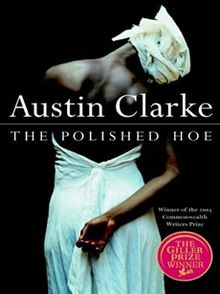
This review of The Polished Hoe by Austin Clarke was one of the quickest that I have ever written. Since I first posted this review, I found out that it has become a play. Stay tuned for a review of that in the future!
For all of the books that I have read in my lifetime, there are only TWO books that I did not finish. One of those books was The Polished Hoe. I will explain why I was not able to read it completely.
Written by Barbados-born
Austin Clarke, The Polished Hoe is about Mary-Mathilda -a black woman
who has worked on a Barbados plantation in a variety of positions including
mistress to its powerful manager. It takes place over one day, in which she
confesses a crime committed against the manager to the constable and sergeant
on the island.
Let’s start off with the
good. The book offers interesting commentary on the collective experience of
the slavery-characterized society in the Barbados, especially about the role of
women in said society. In one passage, the main character explains this to the
sergeant:
“It was common practice on plantations in Bimshire [Barbados] for a Plantation Manager to breed any woman he rested his two eyes on…. And so it was with me. And with Ma. And with Ma’s mother, until we get far-far-far back, get-back on the ships leaving Africa, sailing on the high seas, crossing the Atlantic Ocean, trying to reach Amurca, …. And they decide to jump overboard [to avoid that fate], and face the broiling green waves of the Deep; and God; taking suicides, which was better” (442-443).
I find it fascinating to read
about the past and to see how both real and fictionalized individuals deal with
the problems of their times.
Even though the book
possesses an interesting premise, it is a slog to get through. Even a snail
could move faster than this. It doesn’t help that it is over 450 pages! In the
midst of passages discussing Mary-Mathilda’s life an enslaved woman on the
plantation, it repeats itself about almost every detail. Also, for some reason,
the book likes to have its male characters picture the female ones naked every
now and then. I am not sure why. Additionally, the main character is obsessed
with her garden hoe – the title object – even to the point of sleeping with it.
What a way to shove the item’s significance down our throats! And if you are
wondering, yes, it plays a huge role in the crime that she committed. Finally,
the best (used ironically) part is that the book itself is even not divided
into chapters. In fact, it is divided into THREE PARTS! Someone should have
edited it prior to publishing it.
The book is a bestseller in Canada. It won many awards like the Giller Prize, which is a literary award given to Canadian authors (Clarke resides in Canada). In other words, there are people who have enough patience to get through it. Clearly, I am not one of them, but that doesn’t mean I have given up on it. The plot alone is compelling to explore, but it is certainly not a story that one reads before going to bed although it is great if you want to fall asleep quickly. In conclusion, this is why I could not finish The Polished Hoe.
Subscribe below to get notified when I post new updates. Also feel free to email me here for any review suggestions, ideas, or new titles!
Full disclosure: I was given
a free PDF copy of this book in exchange for an honest review.
I am not usually the type to
read about politics in a straight manner. However, since I recently read Confessions
of a Campaign Manager by Bharat Krishnan, it allowed me to have a greater
understanding of what goes on behind the scenes of a political campaign.
Confessions of a Campaign
Manager is a memoir about Krishnan’s
involvement in politics for roughly a decade. It all started with hearing a
racist comment spoken by a senator against an Indian American and ended with
him realizing that working on various Democratic campaigns was taking a toll on
his life.
Krishnan writes his memoir in
the most honest manner possible, while also balancing the fine line between
conventional and analytical prose. For instance, he has a chapter called “Race Problems”,
in which he discusses how American politics has tackled these issues within the
last decade. He takes a two-tiered approach by utilizing both various articles
and personal experience as an Indian American to discuss how America has
refused to talk about its racist past, which has now exploded into the
headlines. To balance that out, he offers some suggestions to improve race
relations like allowing all kinds of people – women, people of color, and
people of different sexual orientations, etc. – to run for all levels of
office.
In addition, it contains some
interesting stories about various campaigns that he worked for. For example, while
Krishnan was working on a campaign for an Indian American politician looking to
get into local office in northern Virginia, he gave him a discounted rate for
his services since he wanted to see a person of his own heritage win. To
justify this, he put a fundraising bonus into his contract, so when they raised
a certain amount, he got said bonus. They did reach that amount, but Krishnan
was not given the bonus because the politician refused to honor that part in
the contract. These and other stories paint a real picture of the campaigning world.
Coincidentally, the one story
that does not directly involve campaigning was arguably the most impactful.
That story was about Kevin Sutherland – Krishnan’s friend from college who was
stabbed to death on July 4, 2015. Krishnan relates that he took plenty of
advice from Kevin, including the importance of paid internships and of family.
The latter made Krishnan realize that he “didn’t want to waste [his] life in
random states in an office late at night” (p. 58).
Additionally, Krishnan gives advice
for anybody who is looking to get into politics, including how much time one is
willing to be away from family, starting out at the grassroots level, and how
much money to raise depending on the position in office. It helps that the
chapters are relatively short. However, this advice is targeted more towards Democrat-leaning
readers. While I personally do not have a problem with this, I can see it
alienating readers who could have loyalty to the Republican party.
Overall, Confessions of a
Campaign Manager by Bharat Krishnan is a very useful book for anyone
looking to work in a political campaign. Even though he has a bias for
Democrats, he is still very honest and analytical while writing in an effective
conversational tone with short chapters to help keep readers glued to the book.
Subscribe below to get notified when I post new updates. Also feel free to email me here for any review suggestions, ideas, or new titles!
Before I started this website, I had posted reviews of books on social media. Since I have been reviewing books for a year now, I wanted to show you these posts in a new series called “Book Reviews From the Vault!” starting with the excellent Where’d You Go Bernadette by Maria Semple.
I run a book club at my
workplace, and we discussed Where’d You Go, Bernadette by Maria Semple
awhile back. It is about a daughter who tries to piece together what happened
during her mom’s – the title character – disappearance as the family plans for
a Christmas trip to Antarctica. I had initially chosen this book because I had figured
that with a title like that, it would be more light-hearted and quirkier than
the previously examined books, which tended to have intense themes. It also
helped that its movie version is slated for a release date in August 2019 with
Cate Blanchett as the titular person. It certainly fulfilled my expectations of
light and fun.
The best parts of the novel
were the characters and the one-of-a-kind structure. The characters felt real
as they all had their winning traits as well as their flaws. These can be seen
especially in both the title character and her Christian-loving nemesis Audrey
Griffin. In addition, Semple writes most of the story epistolary-style aka
through letters (both print and email). This unique style allows the author to
explore various characters’ relationships to one another, beliefs, and their
motivations at their most personal. The only complaint I have is that she does
not use it throughout the entire novel. She uses for two-thirds of it, and the
third act uses a conventional first-point-of-view structure. I wonder why she
did that, for it seems odd to switch from a distinctive style to an ordinary
one. Nonetheless, I have never seen a book written in the epistolary form
before, but in terms of enhancing the story, it was very effective.
Additionally, I listened to
the audiobook, which is narrated by Kathleen Wilhoite. Wilhoite does a good job
at bringing the characters even more to life even if the vocal differences were
subtle at times. The only problem that I had with her performance was with the
character Bee – the protagonist. Bee is supposed to be 14 years old, yet
Wilhoite makes her sound like as if she was 10. This was not too much of a
problem when Bee is naïve of what was going on with her mom, but once she finds
out, it got annoying. The audiobook is still worth listening despite the vocal
realization of Bee.
Overall, I would definitely
recommend this book for anyone interested in reading something that is light, fun,
and quirky. It keeps the story interesting through its well-rounded characters
and epistolary structure.
Subscribe below to get notified when I post new updates. Also feel free to email me here for any review suggestions, ideas, or new titles!
If you were to ask me what
one of my favorite books was, I would immediately say Before We Were Yours by
Lisa Wingate. I read this book about a year ago, and I loved it the moment I
read the first page. It is historical fiction at its best; it creates an
emotionally gripping story based on an actual historical event. I re-read it
(technically I listened to the audiobook) for book club, and I didn’t realize
that this was possible, but I loved it even more.
Before We Were Yours has two separate stories that eventually come
together. The main story involves a 12-year-old girl named Rill and her four
siblings, who live on a shanty boat with their parents in 1939 Memphis. When
their parents leave for the hospital one stormy night, the children are taken
away to the Tennessee Children’s Home Society orphanage. Having been put in
charge that night, Rill fights to keep her siblings together. The other story revolves
around Avery Stafford – a federal prosecutor who comes from a privileged family
in present day Aiken, South Carolina. As she helps her senator father with his
health crisis, an encounter with an elderly woman in a nursing care facility
leads her to a journey through her family’s hidden history.
When I said that the best
historical fiction creates an emotionally gripping story based on an actual
event, I really mean it. The actual event in this case was Georgia Tann and the
Tennessee Children’s Home Society. For over two decades until 1950, Tann and
her cohorts kidnapped poor children, and sold them to wealthy
families across the country, even to Joan Crawford and June Allyson. It is
sadly estimated that some 500 children died due to disease, poor care, and possibly
abuse while in the society’s hands. (https://nypost.com/2017/06/17/this-woman-stole-children-from-the-poor-to-give-to-the-rich/).
Many of them were
molested as well.
I had no idea
that this event even occurred, and to think that this happened to children of
all ages AND that Tann managed to get away with it frightens me all the more. That
fear translated into sympathy for Rill and her siblings in their quest to not
only make it out alive, but also to tell their stories while still in the
orphanage. Even when she had no choice but to obey, I understood because for
Rill, that meant survival. This is why Rill’s story gripped me to the bone more
than Avery’s story even though I have nothing against the latter.
It was the
audiobook that made my read the second time around all the more enjoyable.
Emily Rankin and Catherine Taber put on some great vocal performances. Rankin –
a well-known audiobook narrator and creator of the popular web short Jane
Austin’s Fight Club – plays Avery, and she voices her in a professional
east coast manner with hints of a Southern accent. This is highly appropriate
since Avery lives in the east coast, but grew up in South Carolina. I extremely
respect this particular detail that Rankin made to Avery’s character. Taber is
also a well-known audiobook narrator, and she has appeared in television shows
like Jane the Virgin and Star Wars: Clone Wars as well as gaming
franchises like Final Fantasy. In my opinion, Taber is the standout.She
voices Rill as a southern 12-year-old girl, who is perfectly fine with living
by the river, yet it never gets too juvenile, especially when Rill experiences
several traumatic episodes at the orphanage. There is also a sense of maturity
in Rill that Taber also provides with such honesty. In addition, Taber shines
when voicing Georgia Tann, who could be sweet and manipulative to not only the
children, but also to the wealthy families. It is through Taber’s vocal
performance of Tann that I could imagine an evil smile draping across her face when
she said many of her lines.
If you have not
read Before We Were Yours by Lisa Wingate yet, do so as soon as
possible. The story and the horrific events that it is based on are why many
people have praised the novel. I can’t say enough good things about it, and I
will continue to enjoy it forevermore.
Subscribe below to get notified when I post new updates. Also feel free to email me here for any review suggestions, ideas, or new titles!
My name is Emily Blakowski, and I work at two public libraries in southeast Michigan. At one of them, I facilitate a book club, where we read a wide variety of novels. I started reviewing books in October 2018 with my Facebook page “Book Reviews by a Person Who Reads Everything” after a year of doing the book club because I wanted to express my thoughts on the books that we were discussing. The page has grown so much that I decided that it was time to create a website for “Book Reviews”.
For those who are not familiar with this blog, I read every kind of book from the absolute serious to the downright silly. Therefore, I review everything! If you have something of interest that you want me to review, feel free to contact me at chickwhoreadseverything@gmail.com!