Content warning: this reviews discusses sexual assault.
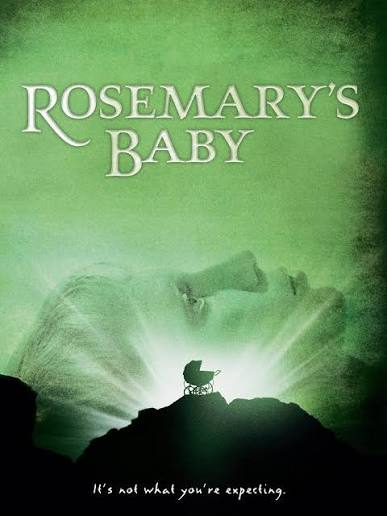
On Monday, I looked at the 1967 novel Rosemary’s Baby by Ira Levin as my 300th review. Today, I’m going to continue diving into this universe with its 1968 movie version directed by Roman Polanski. It’s a faithful adaptation of the story in all the right ways, despite its baggage.
When I talk about adaptations, I start with how different they are from the novels. In this case, the film Rosemary’s Baby is extremely true to the text. Almost every bit of dialogue and story beat in the book made its way to the script. Even Rosemary seeing Minnie Casavet through the peephole is in the novel. There are only two differences. The first is when the baby is born. In the book, the infant arrives on a specific date in August 1966, while in the flick, it comes in June 1966. This change makes it easier to understand why the occult is obsessed with the child since the latter is literally 666. The other alteration was the omission of a major scene, in which one of Rosemary’s sisters, Margaret, calls and tells her that she senses danger and urges her to stay home. That’s the night Rosemary gets drugged and raped.
This is all to say that it’s one of the most faithful movie adaptations I’ve seen. The only other one that includes so much from the source material is the 1943 film For Whom The Bell Tolls, which was based on the 1940 book by Ernest Hemingway. But, there’s a major difference between the two. For Whom The Bell Tolls is a vastly dull flick because the pacing is slow, and director Sam Wood and screenwriter Dudley Nichols either watered down or eliminated the book’s nuance and major points (ie, which side of the war are the main characters on again?).
In Rosemary’s Baby’s case, director and screenwriter Roman Polanski completely understood the gist of the source material. How so? He saw that the novel was about motherhood, specifically about the lengths one woman willing to go to protect her unborn child even when nobody believed her. It would’ve been easy to emphasize the occult and Satanism aspects of the novel, but it would’ve prettied up the window dressing, which is not the point. Every decision he makes sets up what Rosemary or what she thinks she discovers about the apartment building and its tenants. This includes the nonchalant ways she notices certain aspects like how the secretary blocks one of the closets while on the tour of the apartment she and Guy eventually move into or how they hear chanting in the next room. One doesn’t think of those things at first, but they come into play later on. Most importantly, viewers never see the baby in question. This leaves more room for interpretation about Rosemary’s mental state. These are the reasons why I’m happy that his screenplay received an Oscar nomination.
Speaking of Polanski, I have to address the elephant in the room. This movie about a woman with no control over her body was directed by a man who was charged with drugging and raping a 13-year-old in 1977. He soon fled the United States afterwards and hasn’t returned. Since then, many women have come forward with sexual assault allegations against him. I don’t condone his actions. At the same time, this is a good example of separating the art from the artist. Polanski adapted Rosemary’s Baby nearly a decade before he committed that heinous crime. In addition, Mia Farrow, who plays Rosemary, has defended him on multiple occasions. Furthermore, who knows if he would have done that if his pregnant wife Sharon Tate wasn’t murdered by the Manson Family in 1969. Again, this is no excuse for what Polanski did. While it’s a lot of baggage to deal with, knowing this didn’t affect my watch of Rosemary’s Baby because his direction is effective in telling the story, and it seemed that he was on Rosemary’s side. If this is a deal breaker for you, I completely understand.
Let’s go back to the movie, and discuss its two other highlights: the music and performances. The score is creepy, especially the lullaby sung at the beginning and end. The jazzy music is more atonal and chaotic as the story progresses. It culminates as Rosemary runs from Guy and Dr. Sapirstein in the apartment building.
The acting was spectacular. Sidney Blackmer is enchanting and devilish as Roman. Ruth Gordon plays Minnie – a role that won her the Oscar for Best Supporting Actress. She’s nosy and OCD about cleaning in all the right places. John Cassavetes portrays Guy – Rosemary’s husband. He’s charming, but increasingly insensitive to Rosemary’s pleas. It helps that Cassavetes has a punchable face, which made me want to throttle him even more.
The star performance belongs to Mia Farrow as Rosemary. She holds the film together with naivety, increasing desperation, and later confidence. I loved her acting inside the telephone booth, while she’s confronting the cult after the baby is born, and the sheer horror she has when she looks at her infant for the first time. Her look is also iconic with her short hair. It makes her appear like a skeleton, especially during the scenes where Rosemary is experiencing stomach pains. It’s a shame that she was infamously snubbed at the 1969 Oscars. She would’ve been a great nominee for Best Actress.
The film version of Rosemary’s Baby is a great adaptation of the novel by Ira Levin. Its copy-and-paste screenplay totally understands the book’s core. Polanski crafts the flick around Rosemary’s intuitions. Additionally, the music and performances are pitch perfect. Even though it frustrated me while viewing it again, it was still intentional, and I wouldn’t change a thing. I would recommend it to viewers who love psychological horrors and movies about motherhood. I’m happy that I was able to share my thoughts on both the book and the flick as part of my celebration of my 300th and 301st reviews!
In addition, here’s a friendly reminder to keep an eye out for a future Adapt Me Podcast episode, Matthew Anderson from the Lone Screenplay Nominee Podcast will come on the Adapt Me Podcast to discuss how we would adapt the book into a play in October.
Subscribe below to get notified when I post new updates. Also feel free to email me here for any review suggestions, ideas, or new titles!

