Something I Keep Upstairs Book Review

Full disclosure: I was given a free advanced reader copy of this book by the author’s publicist in exchange for an honest review.

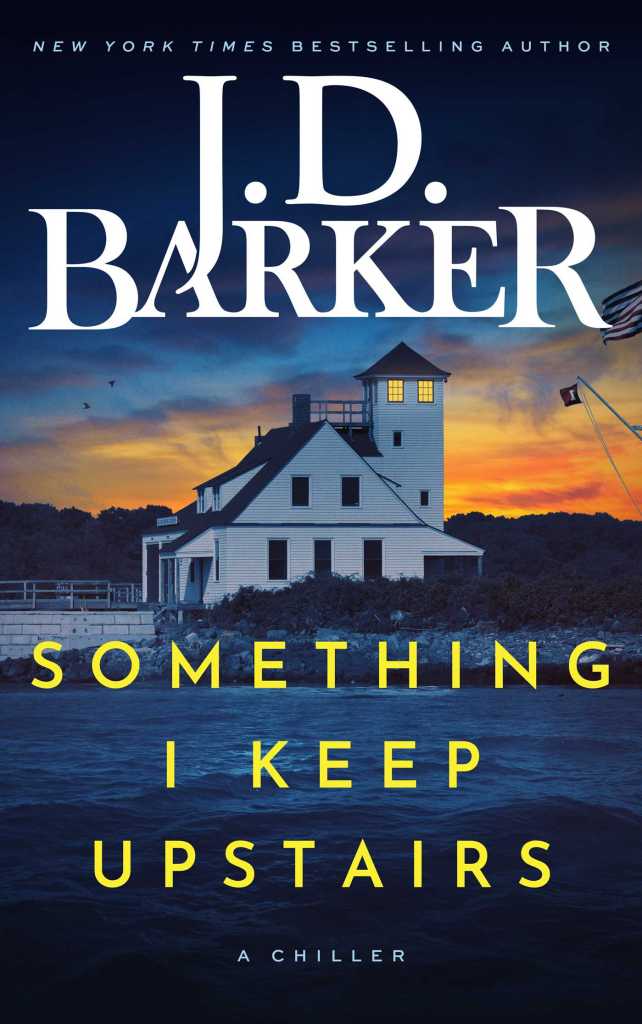
J.D. Barker is one of the most known authors in the mystery, suspense, and horror genres. His work has drawn praise from all over the literary world. Stephen King thought his novel Forsaken was so good that he granted permission for him to use one of his characters in it. On top of that, Barker has co-written a handful of books with James Patterson. I was recently given the honor of acquiring an advanced readers copy of Barker’s latest book Something I Keep Upstairs. It had me on the edge of my seat despite pacing issues.

Something I Keep Upstairs is about a haunted house on a remote island between New Hampshire and Maine. In the sleepy coastal town of New Castle, New Hampshire, seventeen-year-old Billy Hasler’s life takes a horrifying turn. When his best friend David Spivey inherits a mysterious home on a nearby island, it seems like the perfect place to hang out during the summer before college with no parents, police, or responsibilities. As Billy and his friends dig into the island’s dark part, they awaken an evil spirit that has influenced generations. What starts off as an innocent summer adventure quickly descends into a nightmare.

I was hooked from the very beginning. The likeable characters were the ones that I liked, and the unlikeable ones were those whom I was rooting against. The moral ambiguous ones were definitely in the grey area. I liked Billy quite a lot even though he was a bit bland, but I see why Barker wrote him that way. Many protagonists are written with some personality, so readers can insert themselves into the story. My favorite character was Spivey. He is socially awkward in a way that feels natural. In addition, he has been battling leukemia for a long time. When he inherits his late grandmother’s home on the remote Wood Island, he takes every opportunity to be at the house as much as he can, like having parties, so he can be a normal teenager just for the summer.

The strongest aspect of this novel is the plot. From the moment I read the first page, I knew I wanted to know more about what was going to happen. Every new development had me scratching my head in a good way even if I had some lingering questions when I finished. I wasn’t entirely sure how the home and the evil spirits on Wood Island worked, but in the end, I grasped enough of the logic and rooted for the characters that I wanted to succeed to keep going. Plus, that ending was insane. Also, I love how Barker included the musical Brigadoon to explain how the island works. I was in a production of that show when I was a teenager and had a great experience. It’s good to know that someone knows about it outside of the musical theatre nerds and the creators of the television show Schmigadoon.

If I had one complaint, it would be the pacing. I know some reviewers pointed out how slow the book was in the beginning, but I didn’t mind this. I liked how Barker gradually builds on the initial setup, which leads to the high octane finale. My issue was how he uses the two main narrators of the story. Even though Billy is the protagonist, the novel also emphasizes the point of view of Chief Whaley from the local police. Barker goes back and forth between the two, which was fine in the beginning. Billy sees first hand of what’s going on the island, and Whaley tries to obtain information on the circumstances surrounding it and later infiltrate it. It felt like the show Squid Game. However, once the third act arrives, I wanted to focus more on Billy and how he tries to escape. Everytime a new development occurred with him during that part, the novel decided to switch to Chief Whaley. This need to equally balance Billy and Whaley’s perspectives slowed down the flow.

Something I Keep Upstairs by J.D. Barker is a great chiller. It grabbed my attention from the very beginning with its likeable characters and increasingly insane plot. Even though it had some flow issues, I still was invested to see how everything would turn out. I can see why Barker has gotten a lot of praise. He is someone that I will definitely keep my eye on for future reads. I would recommend this to readers who love a mix of mystery, thriller, and horror; a good haunted house story; Stephen King; and James Patterson. Something I Keep Upstairs is out now, so grab a copy wherever you get your books. 

Before I go, I want to let you know that I had the opportunity to interview J.D. Barker for the website. The transcript will be posted soon.
Six Days in Detox Book Review

Full disclosure: I was given a free copy of this book by the author in exchange for an honest review.

Content warning: this review discusses addiction, alcoholism, mental health, and trauma.

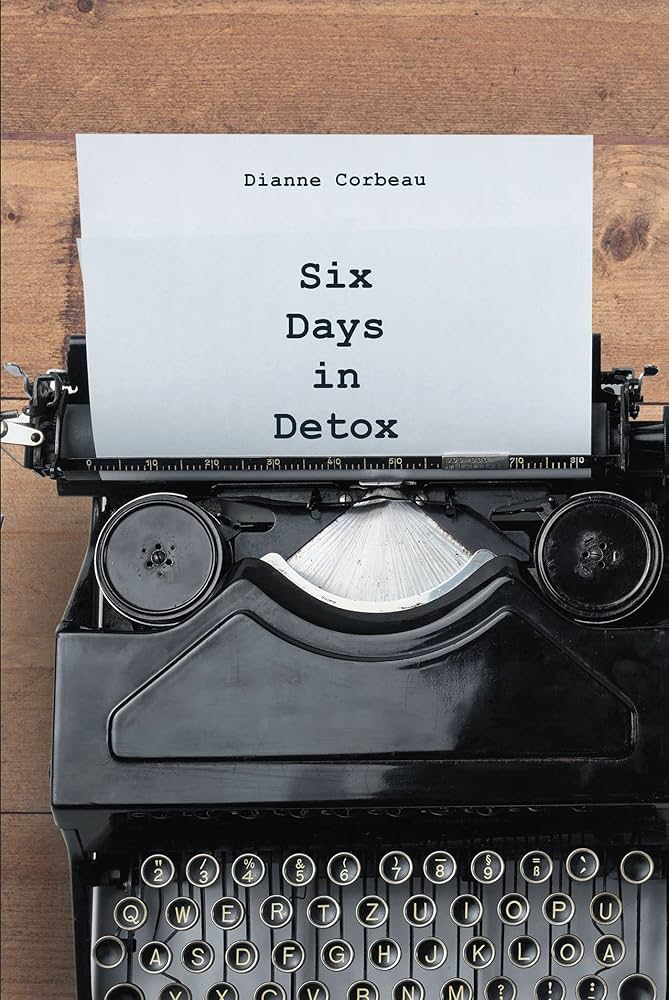
I’ve read plenty of harrowing tales both for and outside the website. Some have stayed in my mind because of how well-written they were. On the other hand, if it’s poorly communicated, then I’m not going to get into as much despite the horrific situation being described. This was the case for the memoir Six Days in Detox by Dianne Corbeau. Even though it does a great job detailing what life is like for an addict detoxing in the worst place possible, I struggled to get fully invested because of its repetitiveness and editing issues.

Six Days in Detox is a memoir about the author’s time in an institution while she recovers from addiction. Dianne picked up alcohol after 26 years of sobriety. After a near-death experience, she is placed in a mental institution, beginning her journey back into recovery. Despite certain forces in that place, she gives it her all to survive the battle of her life. It takes a hard look at what goes on with an addict internally and externally.

I know I said this quite a lot when reviewing memoirs that deal with intense situations, but I couldn’t believe that actually happened to Dianne aka the author. The mental institution she was placed in sounds like the cruelest place ever. Everyone, including Dianne, is not given the proper medication that they need despite the orders from a prior doctor. Dianne’s roommate is awful, as in she thinks that Satan is out to get her and that people are stealing her stuff. I was happy when Dianne stood up to her. The worst thing is the head nurse whose only job is to supposedly make Dianne’s life truly miserable, especially when he doesn’t call her name to get her meds. He was so horrible that the only other person who would be friends with him is Nurse Ratched from One Flew Over the Cuckoo’s Nest. I’m thankful that Dianne only spent six days in that place.

The biggest strength of this memoir is how it explores an addict’s mindset. Dianne has manic depression, and she suspects she got this from her abusive biological mother whom she left at age 8. She spends the rest of childhood being homeless and later a drug addict. Luckily, she was able to become sober at 19, but during her sobriety, she kept thinking of the unresolved issues and emotions regarding her upbringing. To avoid reminding herself of them, she turned back to drinking even though she spent nearly 30 years on the wagon and worked as a professor. It’s during her time in the mental institution that makes her realize that recovery is a life-long process, and she needs to keep working at it to avoid relapsing again. At one point, Dianne expresses fear about what life would be like after leaving the horrific place because she doesn’t know what being sober is going to look like for her this time. I like how the memoir ends on an ambiguous note as a result. 

Six Days in Detox could be a great memoir if it weren’t for the repetition and glaring editing issues. Throughout, Dianne kept bringing up certain points. These include the trauma she encountered, how awful the head nurse was, how much she needed her medications, how her organs were shutting down, and the fact that she had been sober for 26 years. In certain situations, I would overlook these repeatings. This is not one of those because it’s less than 150 pages and has seven chapters with six devoted to each day Dianne was in the mental institution. This disrupted the flow.

Before I go into the critique about the glaring editing issues, I have to make a confession. Before I publish my reviews, I have my husband Carl, who is a car journalist, look them over. It’s the reason why they are as polished as they could get. When I read certain parts of Six Days in Detox, I had to look them over at least twice and kept thinking of how the editor didn’t catch them. For example, part of a sentence is repeated twice in a single paragraph (p. 116). All I know is if Carl was editing this memoir, those errors would have been corrected immediately because he’s that good at his job (and I’m not saying that because he’s my husband).

Six Days in Detox by Dianne Corbeau has the potential to be a great memoir. It has a harrowing story about one woman’s stay at the worst mental institution possible while detoxing. In addition, it offers powerful insight into a user’s mindset when it comes to addiction and the struggle for sobriety. However, it kept repeating itself and contained some obvious editing errors. As a result, this slowed the flow and made me less invested in the story as I should be. I would only recommend this to readers who are curious to learn about what it means to be an addict. It’s a shame that the memoir is not as well constructed as it should be because the story is truly a powerful tale about recovery and overcoming addiction.

Subscribe below to get notified when I post new updates. Also feel free to email me here for any review suggestions, ideas, or new titles!

Hive Book Review

Full disclosure: I was given a free advance reader copy of this book by Mindbuck Media Publicity in exchange for an honest review.

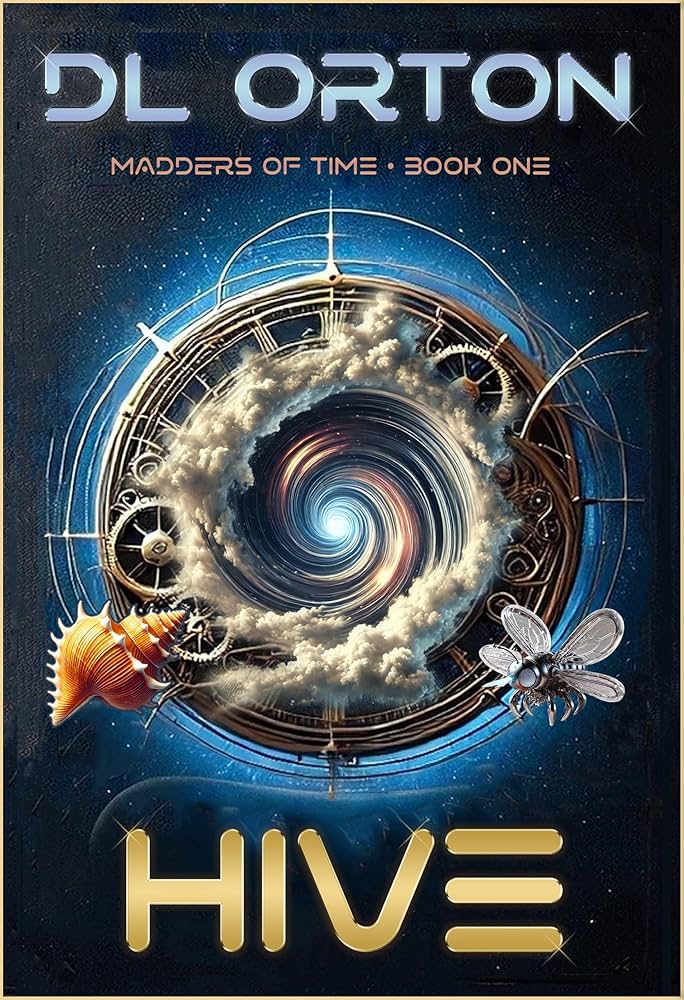
It’s been about a year since I read a time-travel romance. The last one I looked at was The 23rd Hero by Rebecca Ann Nguyen, which involved going back in time to prevent climate change. Today’s novel Hive by DL Orton does something similar but with higher stakes and a second-chance romance. It works for the most part because of the premise and the wonderful characters.

Hive is the first book in the “Madders of Time” series. Inside a disintegrating biodome surrounded by rising sea levels and deadly robot bees, the last survivors of humanity cling to hope. Time is running out for  the middle-aged couple Isabel – a dying scientist – and Diego. When she stumbles upon a long-lost spacetime bridge, the chance to change the past emerges, offering one final opportunity to rewrite history. However, going back in time means facing forgotten secrets and powerful forces seeking to control the future. 

When Mindbuck Media asked me to read this book, they mentioned that I might be interested in Hive due to my interest in titles like A Man Called Ove by Frederik Backman. I wouldn’t have necessarily pitched it like that, but I can see why. While that one doesn’t involve time travel, its aging main character has a second chance at life. In Hive, Isabel and Diego want another opportunity to prevent the end of humanity.

Hive reminded me of The 23rd Hero the most. Not only there’s time travel to prevent tragedy, but there’s also a romance at its core. The similarities end there. In The 23rd Hero, traversing through time is controlled by an organization for one goal: to prevent climate change. As for Hive, Isabel stumbles upon a spacetime bridge and wants Diego to go back in time to give a cryptic message to his younger self to save the Earth from various catastrophes and ensure the survival of their children. As much as I liked The 23rd Hero, I actually prefer Hive because there’s a bit more logic regarding the time travel, and it balances that with the romance more.

Hive also reminded me of modern Doctor Who, with how it uses time travel, romance, and humor to level the tension that the plot creates. After all, the Doctor and their companions have to save the world in a variety of ways, just like Diego and Isabel have to do here. Specifically, it reminded me of the episode, in which the Ninth Doctor and Rose go back in time to try to prevent her dad from getting killed in a car accident. Both the episode and the book constantly ponder how much timelines can diverge based on one change.

Prior to going into Hive, I had no idea that Isabel and Diego were in a previous series “Between Two Evils.” This was my introduction to them, and I liked them as a pair. I could sense how Diego loved Isabel so much that he was willing to go back in time for her. In addition, since they were former lovers prior to the disaster, their scenes of reconnecting in the cabin made me invested in their romance. Isabel was good too. She is a go-getter and cares a lot about Diego and the Earth. Plus, she’s trying to cultivate bees that could be highly beneficial for the environment. As the readers will see, it doesn’t go as well. Also, Dave – Diego’s best friend and Isabel’s ex-husband – is a great villain. He is awful on a whole number of levels, and yet, he’s the one behind the biodomes that could save people’s lives, including the main protagonists. While I enjoyed the chapters from Isabel’s perspective, I wasn’t into Diego’s all that much. He didn’t have that much of a personality outside of loving her.

Even though the focus of the novel is on Isabel and Diego, my favorite character was the third lead – Dr. Matthew Hudson. He’s the physicist who’s ordered by the government to figure out solutions when the destruction of Earth begins. I adore his scenes with his adult niece Cassie – another scientist – and his co-worker in the lab Sam. He has great banter with the government officials who try to boss him around. I absolutely wanted him to find Cassie and to get out of the lab the government put him in. He adds plenty of humor in a story that’s full of intensity.

Hive by DL Orton is a good introduction to the “Madders of Time” series. The plot is intriguing, and I certainly want to know how Diego and Isabel try to save the world. The strongest aspect is the characters. Even if Diego is underwritten, I still was rooting for him and Isabel to survive. In addition, Matthew is the best character, and I can’t wait to see what Orton does with him in the future. I would recommend this to those who watched Doctor Who as well as read time-travel romances like The 23rd Hero and other titles by DL Orton. Hive will be out tomorrow, May 6, so grab a copy wherever you get your books. The next installment Jump will be published in November!

Subscribe below to get notified when I post new updates. Also feel free to email me here for any review suggestions, ideas, or new titles!

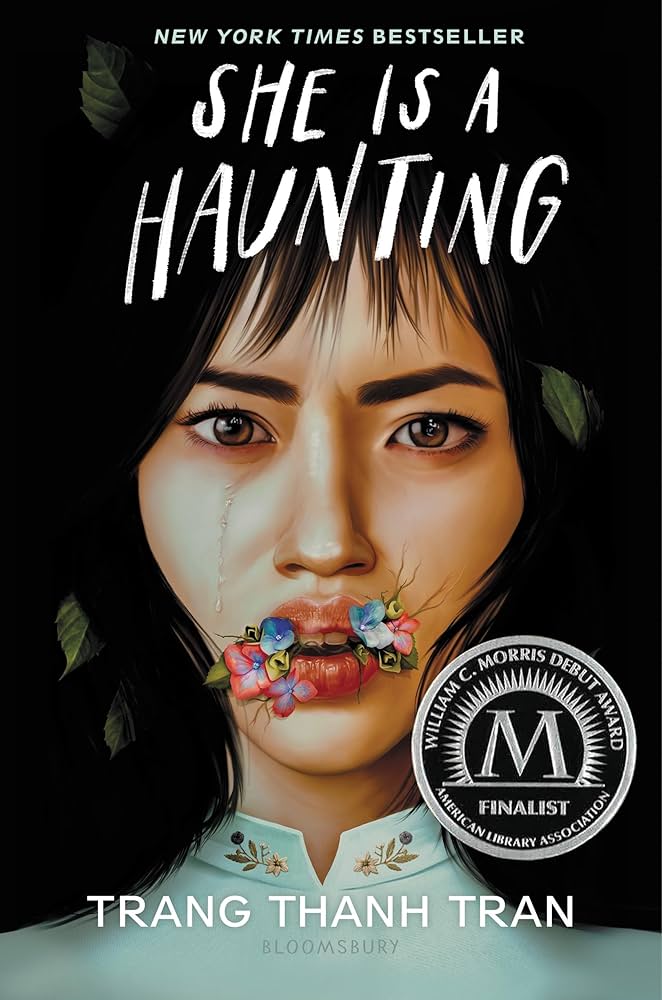
Adapt Me Podcast – She is a Haunting

Hi Everybody!

The latest episode of the Adapt Me Podcast is up right now. In it, guest and book lover Hadley and I discuss how we would adapt She is a Haunting by Trang Thanh Tran into a mini-series. We talk about how the book stands out in the gothic horror genre with how it deals with French colonialism and how its visuals can translate well to a visual medium. Also, we discuss the importance of representing Vietnamese culture in the most authentic way possible. Check it out at this link!

In the meantime, I have a review of the book itself, so check that out too!

Subscribe below to get notified when I post new updates. Also feel free to email me here for any review suggestions, ideas, or new titles!

She is a Haunting Book Review

I’ve read plenty of horror stories, but not much with a haunted house setting. How did this get away from me? I don’t know. Despite that, I’m glad that I started reading this horror subgenre. There are so many books that use that classic trope, so authors have to find ways to stand out. One such author Trang Thanh Tran did that with their debut novel She is a Haunting. It’s a good young adult gothic horror book set in Vietnam with a memorable location, critiques on French colonialism, and a multi-layered protagonist.

She is a Haunting is about a Vietnamese-American teenager who experiences hauntings in the French Colonial home her father is restoring. When Jade Nguyen arrives in Vietnam to visit her estranged father Ba, she has to survive five weeks pretending to be a happy family in a French colonial home he’s renovating. She has always lied to fit in, so if she’s straight enough, Vietnamese enough, and American enough, she can get the money she needs for college from her dad. However, the house has other plans. Each night, Jade wakes up paralyzed. The walls make strange noises, and bugs leave their legs and feelers in places they don’t belong. In the meantime, she finds interesting traces of her ancestors in the gardens they once tended to. At night, Jade can’t ignore the ghost of a beautiful bride who gives her this warning: don’t eat. Neither Ba nor her sweet sister Lily believe her when she tells them strange things are happening. With the help of Florence – a delinquent girl, Jade tries to expose the rotten appetite of a house that doesn’t want to be abandoned again.

Tran does a great job with making the house a well-defined character. The home Nhá Hoa may look beautiful on the outside, but it’s decaying on the inside and will rot the people in it. I love the ways that Tran paints the home in all of its glory, especially how the house shakes, makes the food go bad in a new fridge, and the hydrangeas climb up on its vines. The beauty and history make it appealing, especially to those unfamiliar with its colonialism backstory, but once Jade gets to know it, its ugliness becomes obvious. 

At times, it was not an easy read. Tran is very good at terrifying readers with how the house behaves and tries to warn Jade. I was especially freaked out when she discovers larvae on Lily’s head. I was rooting for Jade to get out of the home as soon as she could. In addition, parts of it focused on how Jade suffers under that roof, especially with the sleep paralysis and with her dad and sister not believing her. Luckily, she tries to find ways to outwit the house with Florence’s help.

Furthermore, since the novel takes place in Vietnam, it makes a lot of sense to dive deep in how French colonialism impacts the house. Not only was it built in the French Colonial style, but it also exemplifies the cruelty associated with colonization. Through the ghost Cam, Jade finds out about the original owners – including Marion aka the Lady of Many Tongues. Jade’s ancestors worked for Marion, and she was awful to them, constantly reminding of their “savage” state. It also doesn’t help that Cam – a Vietnamese woman – was Marion’s sister-in-law. All of that resulted in the toxic environment the house emits. On top of that, American couple Alma and Thomas are interested in seeing the home get turned into a bed and breakfast. This is especially true for the former since she wrote her dissertation about the house and the French colonization of Vietnam – a point that Tran brings up a few times throughout. Some readers have expressed annoyance about how repetitive that could get, but I didn’t mind. After all, Jade is trying to convince the people around her that the house is haunted, so she has to hammer in those points in not-so subtle ways.

The book holds together well because of Jade. Jade is a complex character. She is full of insecurities. She’s Vietnamese American and bisexual, so she never felt like her true self in one place. On top of that, she lies to the people she loves because she doesn’t want to let them down even though some of them have already done that to her. And now, barely anyone believes her about the house being haunted. Her relationship with Ba is frustrating. She hates him since he left their family years prior to the events in the novel, and yet, for tuition money and approval, she comes to him in Vietnam to help him get the house ready for its opening. There’s even a scene, in which he gaslights her into believing that she made him leave. He’s as terrible as Jack Torrance from The Shining.

I was rooting for Jade with her scenes with Florence – the niece of one of the investors. At first, Jade doesn’t care that much since she believes Florence is ditzy, but her walls come down when they spend more time with each other, especially when making elaborate pranks to show how haunted the home is. With Florence, Jade felt the need to be truthful. I’m glad that Florence believed her about the house. 

The novel is a textbook definition of the word slow-burn. The plot takes its sweet time moving from one point to another. It’s filled with Jade having the night terrors and seeing the flashbacks, then it switches to Jade doing something about the house. But, then no one believes her, and it goes into scenes, where she analyzes everything that led her up to that point, and repeats. However, the finale is insane and will burn into readers’ minds. 

She is a Haunting by Trang Thanh Tran is a good YA gothic horror novel. Having a haunted house story set in Vietnam offers so many possibilities, and Tran uses quite a lot of them. The home is equally beautiful and eerie, and I wondered what other things it could do. In addition, they do a wonderful job with critiquing French colonization by integrating in the histories of both the house and Jade’s family. As for Jade herself, she may not be the most likeable teenager, but many teen readers will certainly identify themselves in her. It’s not as easy to read because of how slow and intense it can get. I would recommend it to those who love gothic horror novels, especially Mexican Gothic by Silvia Moreno-Garcia, and stories involving Asian-identifying and/or LGBTQ+ characters. It will haunt you in the best way possible.

Before I go, I want to let everyone know that I have recorded the latest episode of the Adapt Me Podcast. Guest and book lover Hadley and I talk about how we would adapt this novel into a miniseries. Keep an eye out for the link.

Subscribe below to get notified when I post new updates. Also feel free to email me here for any review suggestions, ideas, or new titles!

Through the Glass Ceiling: Reflections on Feminism from the C-Suite Book Review

Full disclosure: I was given a free advance reader copy of this book by Sasha Stolz Publicity in exchange for an honest review.

I am a feminist. I believe in equality for both women and men in areas like pay and opportunities. There are plenty of books that discuss this subject in a variety of forms, but one of the most common is in business. This makes sense since more women have been hired in many positions, including the top leadership ones, in the male-dominating corporate world. It’s also one of the best places to show how women shattered the glass ceiling. One of the latest books that dives into this aspect is Through the Glass Ceiling: Reflections on Feminism from the C-Suite by Sheelagh Whittaker – the female CEO of a Toronto Stock Exchange listed company. It’s a funny and introspective story about one woman’s journey in the Canadian corporate world with an engaging narrator and wonderful insight on gender equality.

Through the Glass Ceiling: Reflections on Feminism from the C-Suite blends memoir, feminist history, and career guidance all into one told by a former female CEO. Sheelagh Whittaker reflects on her experiences that shaped her approach to leadership from her role models to the lessons she learned in business school. As she ascends the corporate ladder, she encounters absurdities, victories, and drawbacks that define a woman’s journey in male-dominated spaces. Along the way, Whittaker discusses how feminism seeped into her consciousness, influencing the decisions she made at work and home. Through the Glass Ceiling is not just a memoir; it’s a call to action for aspiring women leaders looking to break their own glass ceilings, even when the path is anything but clear.

Prior to reading Through the Glass Ceiling, I had no idea who Sheelagh Whittaker was. I’m an American who’s not too familiar with the business world. Regardless, I found her story to be riveting, and she tells it in less than 200 pages. I admired her tenacity as she endured the business world while balancing her personal life even if she was oblivious to certain practices. Some things had to give and take like moving across the country to take a leadership position or ending a relationship. Whittaker tells some fascinating stories about the kinds of workplace abuse she encountered. For example, after she gave a presentation to members of the Canadian Broadcasting Corporation, the network executive literally kicked her in the ankles (p. 55). I couldn’t believe it. But, did that guy meet Bill Clinton years later? Whittaker did, which I thought was amazing.

In addition, I adore her humor. One of the funniest things she recalls saying in the past is “We will have true equality when we have as many incompetent women in positions of power as we have incompetent men.”

That line made me laugh really hard because I thought of certain organizations that have ironically achieved that. And, I’m glad I wasn’t the only one who thought that it was funny. Whittaker mentions, “Over the years, some of my best friendships have evolved from people who came looking for the woman (me) who was recorded in Colombo’s Canadian Quotations for having first said that” (p. 61).

Along with the humor, my favorite part of Through the Glass Ceiling is the reflections on feminism and gender equality not only from Whittaker, but also from her sister, daughter, son, caretaker, and granddaughter. Each of them are from separate generations, which makes their views different as well as similar in some ways. For instance, I like how the granddaughter ruminates that even though no one told her she couldn’t do certain things because she was a woman, she held internal misogyny due to how she felt people would perceive her and her femininity as weak. Fortunately, she was grateful that what her grandmother helped paved the way in the initial feminist waves, so she can love and motivate herself to do what she wants to do (p. 145-148). It shows how feminism evolved from an external battle with getting a foot into the door to an internal one with embracing one’s true self.

Through the Glass Ceiling: Reflections on Feminism from the C-Suite by Sheelagh Whittaker is a fun and heartfelt memoir about one woman’s experiences in the business world and her views on gender equality. There are so many things to adore. I love the humor, the frankness, and how Whittaker and the people in her life talk about their views on feminism and how she made a difference. It’s also a quick read at less than 200 pages. Additionally, that line about achieving equality when both incompetent women and men are in higher-up positions is absolutely spot on. I would recommend this to readers who love reading about the business world and stories of women breaking the glass ceiling. Through the Glass Ceiling: Reflections on Feminism from the C-Suite will be tomorrow, April 22, so make sure you get it at your local bookstore or library.

Subscribe below to get notified when I post new updates. Also feel free to email me here for any review suggestions, ideas, or new titles!

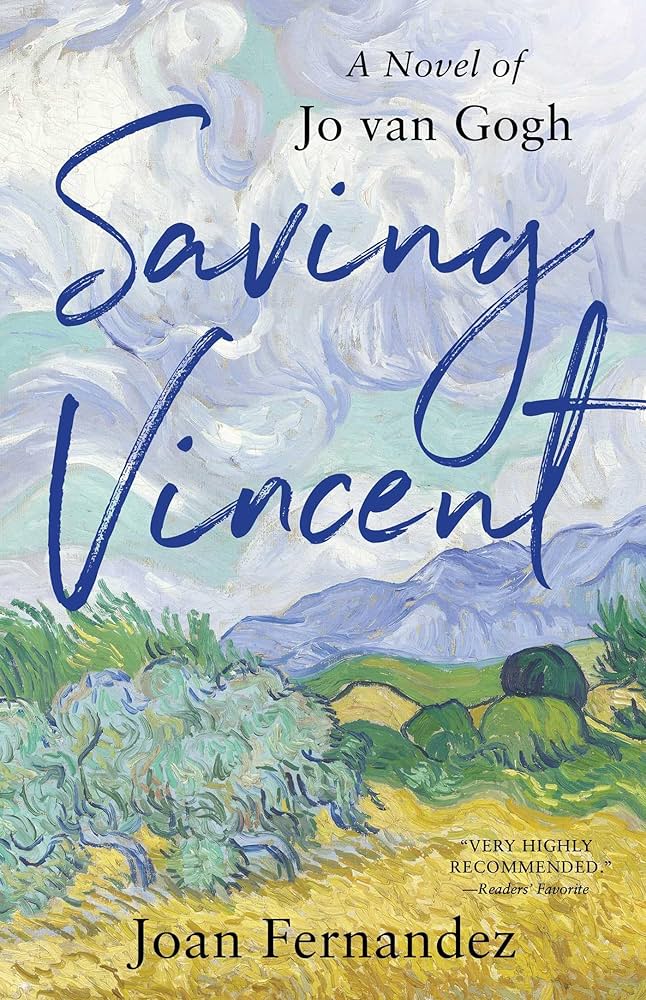
Saving Vincent: A Novel of Jo Van Gogh Book Review

Full disclosure: I was given a free advance reader copy of this book by Books Forward in exchange for an honest review.

Content warning: this review discusses mental health.

Vincent Van Gogh is undoubtedly one of the greatest artists who ever lived. His work has been admired and emulated for over 100 years. His backstory of struggling to get his paintings out there and with his mental health are well documented. But, what I didn’t know was that his sister-in-law Jo Van Gogh was responsible for saving Vincent’s work from obscurity. Author Joan Fernandez dives deep into this part of Vincent Van Gogh’s legacy with her historical fiction novel Saving Vincent: A Novel of Jo Van Gogh. It’s a wonderful story that features beautifully drawn out characters and explores what made Vincent Van Gogh so special.

Saving Vincent: A Novel of Jo Van Gogh is about one woman’s 15-year journey to preserve her brother-in-law’s paintings despite all the obstacles against her in turn-of-the-century Europe. In 1891, timid Jo Van Gogh Bonger lives safely in the background of her art dealer husband Theo’s work selling obscure artists, including his ill-fated deceased brother Vincent. When he dies unexpectedly, Jo’s brief happiness is shattered. Her inheritance – many of Vincent’s unsold paintings – is worthless. Despite being pressured to move back in with her parents, she defies tradition by starting a boarding house to raise her infant son alone and choosing to promote Vincent’s art herself. However, her ingenuity and persistence draw the opposition of a powerful Parisian art dealer who vows to stop her and to sink Vincent into obscurity.

Going into this book, I knew Vincent Van Gogh’s classic paintings like Starry Night, Sunflowers, and his self-portrait as well as his struggles with mental illness. In addition, I’m a Doctor Who fan, and I adore the episode “Vincent and the Doctor,” in which the Eleventh Doctor and his companion Amy Pond visit the painter and fight a monster. It’s best remembered for a scene towards the end, in which the Doctor and Amy take Vincent to The Gallery in 2010 to show him that his work will live on. It’s beautiful. I was also aware of his brother Theo since the Fall Out Boy album Infinity on High is lifted from a line from Vincent’s letter to him in 1888.

On the other hand, I had no idea who Jo Van Gogh was or how Vincent Van Gogh’s work became famous after his death in 1890. Nonetheless, I’m still glad that Fernandez brought Jo to life because she was a wonderful character. I loved her determination and vulnerability as she tries to sell her late brother-in-law’s work despite the obstacles in front of her. It’s one thing that she has no prior knowledge in marketing art, but on top of that, she is Theo’s widow and lives in a time, in which a woman’s place is supposed to be in the home, and Vincent was seen as crazy and deemed not worthy enough in the art world. But still, she’s determined to promote Vincent’s paintings not only to secure her son Vincentje’s inheritance, but also to show people who her brother-in-law truly was. Jo can be seen as nosy while interacting with various art dealers, which gets her into trouble, but she needed to be in order for Vincent to be recognized. 

In addition, I like how Fernandez displays how Jo’s focus on selling could be lonely for her. During the novel, her family and friends raise concerns about how isolating Jo is with her work. Overtime, she finds a way to balance being a mother, running a boardhouse, having time for herself, going to socialist meetings, and marketing Vincent’s paintings.

Even though the book is called Saving Vincent: A Novel of Jo Van Gogh, some chapters are told through Georges Raulf’s perspective. Raulf is a fictional character who stands in for all of the adversaries that Jo faced while promoting her late relative’s work. While he has his reasons for blocking every possible avenue for Jo to display the paintings, his actions can come off a bit too cartoony. This is why the novel can feel a little too melodramatic at times even though it’s already serious. Regardless, I enjoyed it whenever he got his comeuppance, especially in the second half.

The best part of this book was the research into Vincent Van Gogh’s life and how it explores why he appealed to many people even to this day. It’s apparent that Fernandez took plenty of time to dive deep into the artist himself. She references many of his paintings from his best-known to the most obscure and his letters to his brother/Jo’s husband Theo. Each section includes a quote from Vincent regarding a specific art piece and shows the work in question on the next page. Additionally, the author does a great job in showing how Jo gradually understands what made Vincent unique. There are plenty of scenes where she reads his letters and is moved by his words. Through this, she gets why Vincent wanted to paint the ordinary since he found extraordinary things in them. She soon realizes that she feels the same way on certain things like how she agrees with Vincent on how socialism can improve people’s lives. 

When it comes to Vincent’s mental health, Fernandez handles this delicately. His “madness” looms all over the book. As mentioned before, past art dealers rarely wanted to work with Vincent because of his behavior. Vincent’s mother asserts that madness runs in the family, which is sadly proven when his sister Wil is committed to an asylum later in the book. Jo often ponders if her son Vincentje has that too. Despite barely knowing him, Jo is able to see Vincent as he was – a man who went against the grain – in his letters.

Saving Vincent: A Novel of Jo Van Gogh by Joan Fernandez is a wonderful book about a relatively unknown woman who made a difference in the art world. Jo Van Gogh is fleshed out and displays many colors just like her brother-in-law’s paintings. Easily, the best part of this novel is how it investigates what made Vincent Van Gogh appealing to a wider audience while being respectful to his mental health. I would recommend this to readers who love art, historical fiction, and stories about women breaking societal norms. Saving Vincent: A Novel of Jo Van Gogh will be tomorrow, April 15, so make sure you get it at your local bookstore or library.

Subscribe below to get notified when I post new updates. Also feel free to email me here for any review suggestions, ideas, or new titles!

Old White Man Writing Book Review

Full disclosure: I was given a free advance reader copy of this book by Book Publicity Services in exchange for an honest review.

Over the years, I’ve read plenty of books that are undeniably unique, as they contain unusual storytelling methods. Anything from John Marzalkowski comes to mind as some of the best examples. However, there are others that are not as effective. Today’s subject Old White Man Writing by Joshua Gidding sounds like it could be something that interests and humors people, especially written by a man exploring his privilege. However, he fumbles the execution by doing too much and with a weak structure.

Old White Man Writing is a memoir about an old white man analyzing his life and the societal and cultural changes in the twenty-first century. As the author examines his privileged background, he explores his relationships with some of the people of color in his life and begins to address his white guilt and complex feelings that have arisen from an uneasy racial conscience despite being left-leaning. The events and reflections are conveyed through two characters. One is the author himself, who is an unreliable narrator in his own story, and the other is a fictional alter ego Joßche (or Jossche), a German literary biographer with a titanium membrane in his skull-the result of a childhood bicycle accident. With his commentary, Joßche keeps the author honest (at least he tries to), giving way to rather surprising results at the end. Ultimately, the readers and the two Joshes face a question, whose roots run deep through our contemporary culture: In an age of increasing diversity, who gets to have a biography, who doesn’t, and why?

Let’s start off with some good things about the book. The first is undoubtedly the premise itself. We certainly need more old white male authors examining their privilege, and he is more than willing. He does this with plenty of self-deprecating humor. I especially enjoyed the back and forth with Joßche. Joßche provides some good kicks to the author’s rear end. Moreover, I like how even though he claims he’s a progressive, he bravely admits that he has said and done insensitive things like gawking at a black man at a restaurant when he was a kid and flashing a group of black girls at college. In some ways, he reminds me of my husband and his friends.

The author is also not afraid to be sincere. The best part of this memoir was reading about his wife Diane’s battle with cancer and her eventual death. I could feel how much the author loved her and how hard he felt her loss. When he met Diane, he was going through a depressive episode, and she lifted his spirits. In turn, he became the best husband and father that he could be. After her death, the author tried to have a relationship with a Chinese-American woman named Mei-Li, but it didn’t work out. He does eventually find love again with a woman named Julie. I wanted to know more about that particular relationship. Regardless, I invested in his quest to find love again.

With all that being said, I had a hard time getting into it. It felt like the author wanted to introduce every possible theme all at once at the beginning instead of letting them play out naturally. This included his exploration of his white privilege, his bouts of depression, and Joßche. Speaking of Joßche, I didn’t have that much of an issue with him interrupting the author, for it’s set up well although I found the ending to be more a thud.

In addition, I was not a fan of the structure. It’s written in three parts with several sections. This could have worked if it was a one-man show performed live. But because it’s written, it should have been organized in a simpler way to offset the memoir’s ambitious nature. For example, John Marzalkowski’s work, especially Buy My Book: Not Because You Should, But Because I’d Like Some Money, is really absurd. To balance that out, he has them in chapters to make them more digestible. This structure would have been beneficial to Old White Man Writing, especially when introducing its many themes.

Old White Man Writing by Joshua Gidding is a decent memoir. Although there was plenty of humor and sincerity in examining Gidding’s privilege, the structure was wonky, and Gidding felt the need to introduce every theme all at once. These made it difficult for me to get into. That’s why I was invested in some parts, but not the whole. I will give it this: at least he’s not on his high horse unlike the author in the other book that examines white privilege I’ve reviewed for this website. If I had to recommend it, it would be to old, white readers, especially if they studied Latin and/or German (Gidding knows plenty about those languages). While Old White Man Writing is certainly unique, it could’ve been better.

Subscribe below to get notified when I post new updates. Also feel free to email me here for any review suggestions, ideas, or new titles!

A Chain of Pearls Book Review

Version 1.0.0

Full disclosure: I was given a free advance reader copy of this book by Author Marketing Experts in exchange for an honest review.

I’ve covered a lot of mysteries on this website. They usually contain a similar formula of trying to find who and why someone committed the crime. Recently, I’ve been finding myself more drawn to the characters and their relationships in these mysteries. If they are done well, readers will keep coming back to them. A good example of this is A Chain of Pearls – a novel by debuting author Raemi A. Ray. It contains a memorable character trying to find out what happened to her estranged father in Martha’s Vineyard.

A Chain of Pearls is the first book in the “Martha’s Vineyard Murders” series. When the body of a respected journalist turns up on the shores of Edgartown Harbor, the official report rules it as an accidental death. But, why was he alone on a senator’s yacht during a nor’easter? That’s the first question London-based lawyer Kyra Gibson has when she arrives on Martha’s Vineyard to settle her estranged father’s affairs. She isn’t looking for closure. In fact, she hasn’t seen him in decades since he left her with her aunt after her mother died. But as Kyra digs deeper, she discovers that he had many regrets and wasn’t as retired as she believed he was. The more Kyra finds out, the more questions she has. With world-weary detective Tarek Collins, they uncover a web of intrigue and corruption involving a powerful senator, a dubious energy company, and a brutal murder. As they chase down clues, Kyra and Tarek face danger and race against time to solve the murders and uncover the secrets lurking beneath Martha’s Vineyard’s picturesque facade.

The mystery was well done. It contained some twists and turns as well as a finale that had me on the edge of my seat. There were plenty of red herrings too, so I was pondering who did it until it was revealed at the end. I didn’t mind that Kyra – a private citizen – was actively helping the police with their investigation because of how it personally affected her. Granted, she does some stupid things that impact the search and her relationship with Tarek, yet it still works out in the end.

Additionally, I enjoyed the environment. Ray made Martha’s Vineyard, specifically Edgartown, a character in of itself. It’s a cool coastal town filled with colorful characters like Grace and Charlie – the lesbian couple that Kyra’s father knew. There’s also the back and forth between the summer people and the native islanders. Most importantly, the descriptions are exquisite. I know that many reviewers have discussed this aspect prior, but they truly made me feel like I was there on Martha’s Vineyard with Kyra and the rest of the cast. I could even feel the brisk wind on the island. I can easily see why Kyra’s dad resided there.

I truly knew I would be intrigued by A Chain of Pearls when I read its synopsis of a woman dealing with her late estranged father. This personal conflict forms the backbone of the story, and it’s easily the best part. Because of how her dad abandoned her after her mother passed away, Kyra has a hard time trusting people and developed a hardened heart. She reminded me of Emma Swan from the television show Once Upon a Time as both have trust issues and make plenty of wise cracks. I could imagine Kyra with a red leather jacket similar to what Emma wore in the series. In addition, both find themselves working with detectives to solve a mystery in a remote town in New England. I enjoyed the banter Kyra has with Tarek the investigator. I kind of wondered if they were going to get together, but the mystery was still at the forefront.

I love how Kyra’s personal conflict is woven into the entire plot. As she searches for clues, she discovers how much her father talked about her and kept some of things she made while she was a child. It makes her realize that he cared about her more than she gave him credit for. I won’t spoil it, but I have to mention that the culprit has their own problems with their family that may or not be similar to Kyra’s.

A Chain of Pearls by Raemi A. Ray is a great mystery series debut. It has a good mystery that was filled with twists, turns, and a great climax. Raemi also does a fantastic job with the sense of place as readers like myself were able to imagine ourselves there. Above all, Kyra and her personal conflict are magnificent. They add plenty of dynamics to the story and absolutely make the book worth reading. I would recommend it to readers who want more character-based mysteries like the “Armand Gamache” series by Louise Penny and novels set in Martha’s Vineyard. I can’t wait to read the rest of “Martha’s Vineyard Murders” books.

Subscribe below to get notified when I post new updates. Also feel free to email me here for any review suggestions, ideas, or new titles!

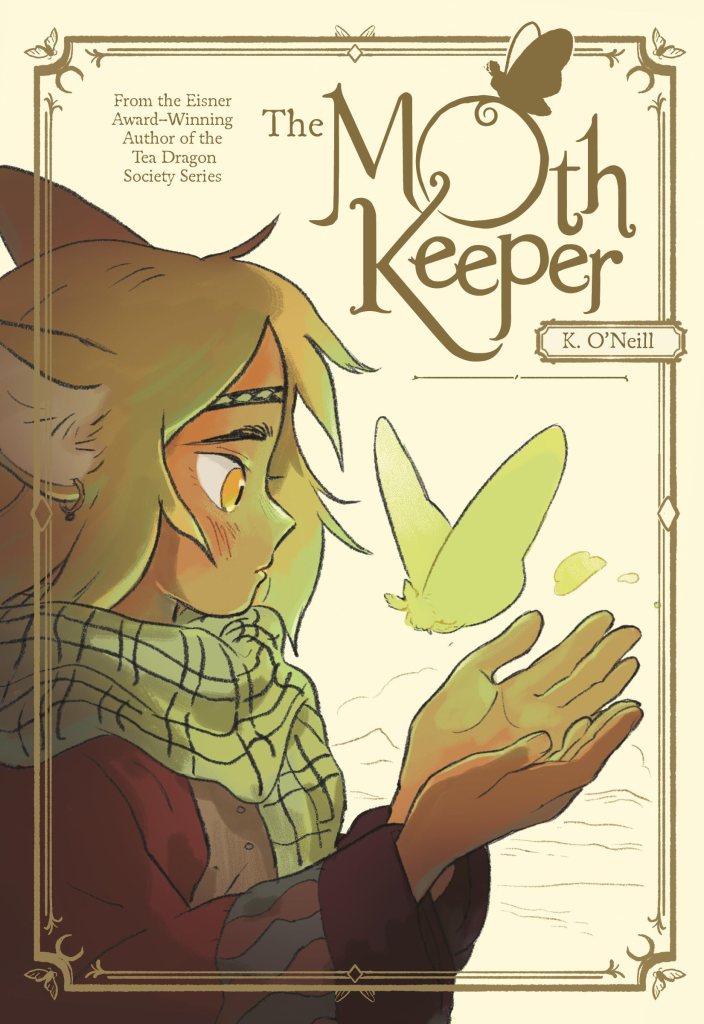
Adapt Me Podcast – The Moth Keeper

Version 1.0.0

Hi Everybody!

The latest episode of the Adapt Me Podcast is up right now. In it, bookstagrammer Alyson Wick and I discuss how we would adapt The Moth Keeper by K. O’Neill into an animated short film. We talk about the book’s illustrations and themes of community and burnout. Also, we discuss the beauty of translating graphic novels into different mediums, especially as a way to get them more exposure. Check it out at this link!

In the meantime, I have a review of the book itself, so check that out too!

Subscribe below to get notified when I post new updates. Also feel free to email me here for any review suggestions, ideas, or new titles!