What Am I Reading – Chapter Sixteen

Hi Everybody,

I hope all of my American readers had a great 4th of July! I know I did with some water sliding, fireworks, and three rounds of desserts!

Since the last chapter, I actually finished two books – the ones from Chapter 14. I will also be done with Legends of the Fall by Jim Harrison and Rolls-Royce Motor Cars: Making a Legend by Simon Van Booy and Harvey Briggs very very soon.

By the next chapter of this series, I will have a nearly new batch of titles including this one:

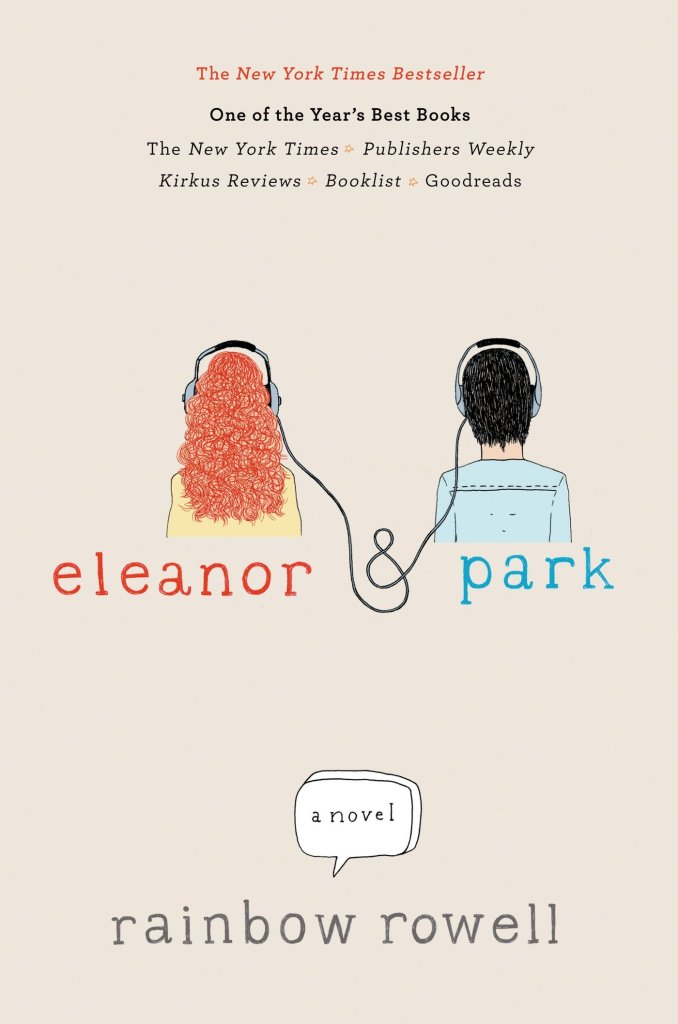
Love, Pride, Virtue, and Fate by Bharat Krishnan is a collection of 25 tales in Hindu mythology that explores the traits mentioned in the title.

The author strives to make connections between these stories to those in other mythologies. For example, much like the Greek gods taking sides in the Trojan War in “The Iliad,” the Hindu ones fought alongside both the Pandavas and Kauravas during the Kurukshetra War in the epic poem “Mahabharata.”

As someone who knows very little about Hinduism, I find the book very accessible so far. Most of the tales are no more than 5 pages long, and the language feels elevated while also believable, as in anyone from the present day would say them, hence making them timeless. Each of the stories always end with Krishnan explaining why he included it in the collection. This is easily my favorite part because of not only how he connects these to those in other mythologies, especially the Christian one, but also because he thoughtfully explains how each of them reflect a part of the Hinduism mentality and its values.

My favorite tale so far is the one that involves Shiva – the Hindu god of destruction – cutting off the head of his son Ganesha after the latter prevents entry to the former. It didn’t help that the former didn’t know that he had a son. As a result, his wife the goddess Parvathi refuses to speak to him until he finds their son. Luckily, Shiva is able to find an elephant and place that on Ganesha’s head, and makes him the remover of obstacles.

Occasionally, Krishnan will mention some thing politics-related due to his experiences in that field, but he does it in a way that doesn’t distract the reader from the overall themes.

I look forward to reading more of this title!

We have now come to the end of the sixteenth chapter of “What Am I Reading?”

For any Hindu readers out there, have fun with Puri Ratha Yatra and Guru Purnima!!

Subscribe below to get notified when I post new updates. Also feel free to email me here for any review suggestions, ideas, or new titles!

The Curious Charms of Arthur Pepper Book Review

For nearly two years, I’ve read a few curmudgeon novels, and they tend to follow similar patterns. They’re usually about a stubborn person who has a certain way of living. Then, they go on a journey (physically and emotionally) to discover more about themselves and that they grow to appreciate the people around them, thus resulting in them opening up. The Curious Charms of Arthur Pepper by Phaedra Patrick fits into this category like a bracelet on a wrist. Despite some flaws, it stands out in a couple of ways.

In The Curious Charms of Arthur Pepper, the 69-year-old title character has a strict routine, which involves getting up at 7:30am, wearing the same pair of pants and vest, watering his plant named Frederica, and gardening. On the one-year anniversary of Miriam’s – his wife – death, he discovers a charm bracelet that he’s never seen before. Each of the charms tells a different story of her life before she met him. To feed his curiosity, Arthur goes on a journey to various places like London, Paris, and even India to find out his wife’s past life, and in the process, he discovers hope, healing, and more about himself.

The other curmudgeon novels that I’ve read in the past were A Man Called Ove by Fredrik Backman and Eleanor Oliphant is Completely Fine by Gail Honeyman. At first, I wondered how The Curious Charms of Arthur Pepper was going to stand out. Luckily, unlike the titular characters of those two books, Arthur is a parent who spent a lot of time traveling for work. This made him emotionally distant from his two now adult children and not being attentive to his wife’s needs. I like how the novel shows the consequences of behaving this way and how it affects his kids, especially his daughter Lucy. 

Another thing that makes Arthur Pepper stand out from this bunch is the lighter tone. While both A Man Called Ove and Eleanor Oliphant can be quirky and fun at times, they are both balanced by a consistent dark tone. In the example of the former, Ove’s tragic backstory is revealed through stream-of-consciousness and how it resulted in him not trusting people. He also tries to end his own life multiple times. In the case of the latter, Eleanor struggles to come to terms with what happened during her childhood. Besides one scene where the main character tries to take his own life, Arthur Pepper is much peppier because he doesn’t have as much baggage as the other curmudgeons. This is good for readers who want something light.

Also, some of the characters that Arthur meets along the way are pretty colorful. These include his seemingly obnoxious, but caring neighbor Bernadette, the tiger loving Lord Graystock, and Mike – a caring homeless man. While these characters were memorable, they all seem to follow a pattern. Arthur meets or stumbles upon them, and they reveal their backstories before telling him how they know of the charm that he has questions about. After a while, it starts to get predictable, and don’t get me started on how inconceivable some of these situations are and how willing these people are to tell their stories. For example, when trying to get into Lord Graystock’s house, Arthur climbs over the fence and almost gets mauled by a tiger. If someone did that onto my property, I would be more likely to call the cops then tell them my backstory. The only time that someone was reluctant to tell Arthur their story about one of the charms was when Sonny Yardley initially refused to speak about Miriam, even when he came to the college that she worked at. She was this way because of a family tragedy that involved Miriam decades ago, and this was the only part that truly stuck with me because of this conflict.

I’m also convinced that Patrick was watching the Nudge, Nudge sketch from Monty Python when she was writing the scene, in which a random guy approaches Arthur in a café to discuss which girl he should marry. I couldn’t take this scene as seriously as the author wanted me to because I added “Nudge, nudge” every time the stranger talked. After the coyness went away and the man explained his dilemma, it began to feel realistic again. This was when I was pulled back into the story.

I listened to the audiobook, which is narrated by James Langton. I understand that readers who listened to the audiobook loved his narrations, and I can see why. He has a refined English voice that definitely carries the story. Since the book mostly takes place in York, England, he does a good Yorkshire accent for the male characters with enough differences to make each character distinct. However, the flaw with his voicing is with most of the female characters. They all sound dangerously close to Eric Idle impersonating a Yorkshire grandmother. I tolerated this when Langton voiced older women like Bernadette, but not younger ones like Lucy, even when he delivers the right emotions for them. And I can’t quite put my finger on it, but his French accent for Sylvie was off. I really want to enjoy his performance, but how he voiced most of the women really threw me off.

All in all, The Curious Charms of Arthur Pepper by Phaedra Patrick is a light curmudgeon novel that stands out from the other titles in that category. Along with the tone, the main character is a parent, which adds a dimension to this subgenre. Yes, it does have its issues, but if readers are willing to suspend their disbelief, they’ll enjoy it more. I recommend this book to those who like this particular type of novel, those who enjoy reading about self-discovery, and those who simply want a light read. It’s available in regular and large print and as an audiobook; one can also find it on Hoopla and Overdrive/Libby.

Subscribe below to get notified when I post new updates. Also feel free to email me here for any review suggestions, ideas, or new titles!
What Am I Reading – Chapter Fifteen

Hello Everybody!!!

I hope everybody had great Flag and Juneteenth Days! I sure did!

I’m currently reading four titles right now – the two I introduced in Chapter 14 as well as Legends of the Fall by Jim Harrison and Rolls-Royce Motor Cars: Making a Legend by Simon Van Booy and Harvey Briggs. So the most logical thing to do was add another book to that list.

And, here it is!

Confessions of a Bad, Ugly Singer by Collette McLafferty details a two-year period, in which the author had to go through the legal system. In April 2014, McLafferty was playing a P!NK cover band when she found herself named in a 112-page complaint. The person who sued was a personal injury lawyer, played drums for Michael Bolton, and had a dispute with the band leader claiming he stole the lawyer’s idea to form the first P!NK cover band in Long Island. Oh, and he was suing them for $10,000,000. Knowing that she was going to be involved for years to come, she took her case to the press. She made a call to The New York Post in hopes of leaving a message. However, she later discovered the headline “Singer Sued for Being Too Old and Too Ugly for P!NK Cover band” in the paper. he sensationalized headline told a story of a singer who was so “old, ugly and untalented” that her one-night performance prompted the lawyer to sue. This version of the events went viral worldwide and threatened to put an end to her 20-year professional history in the music business. The headlines alleged she “ruined” the P!NK cover band with her inferior looks and singing, triggering a deep depression. Determined to find justice, McLafferty fought the case and eventually introduced “Collette’s Law” with the help of The Lawsuit Reform Alliance of New York and Assemblyman Luis Sepulveda.

Much like everyone else reading this, I was shocked to learn that this actually happened. All of what went down felt too strange to be true, but as the saying goes, truth is stranger than fiction.

What makes the book interesting so far is that McLafferty writes what occurred several years after the fact. This allows her to process all of the events in the most objective way possible. Heck, she makes jokes about certain people and moments. That’s how one knows someone has moved from a tragedy. I can’t wait to read more of it!

We have now come to the end of the fifteenth chapter of “What Am I Reading?”

Subscribe below to get notified when I post new updates. Also feel free to email me here for any review suggestions, ideas, or new titles!

A Polar Bear in Love Manga Series Review

As a person who has watched anime in the past, it never occurred to me to read a manga, especially since a lot of those shows are based off of those Japanese graphic novels. Recently, I read my very first manga series, A Polar Bear in Love by Koromo, and it’s a cute story that’s great for beginner readers, but it’s best to take it with a grain of salt.

A Polar Bear in Love manga series is about Seal – a lost baby harp seal – who finds himself in the company of Polar Bear. Instead of eating it (like most polar bears would), the latter falls madly in love with the former. However, the fearful seal constantly misinterprets the polar bear’s romantic advances as a strong desire to eat him. 

This is the main premise and the story for the first volume. The second one deals with them encountering rivals to each other’s affections like another polar bear and an adult female harp seal. The third introduces Kathy the penguin, who counsels Polar Bear and Seal on their relationship, and her “boyfriend” Orca. In the fourth and so far last one, Seal finally learns how to swim, but Polar Bear isn’t ready to say good-bye to him just yet. Orca also tells Polar Bear his own love story.

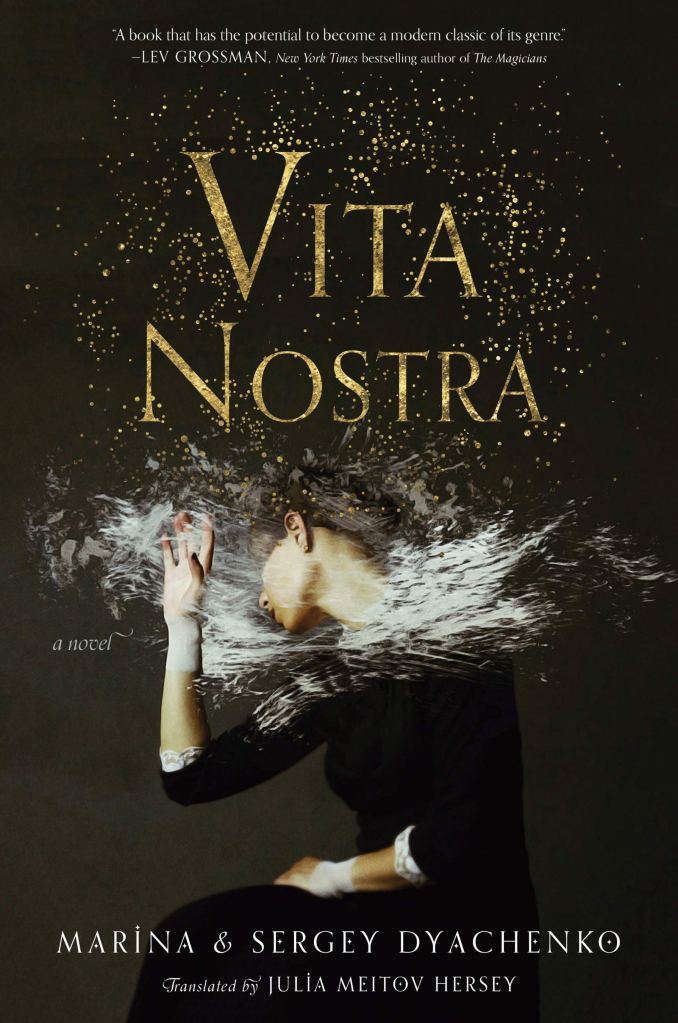
All of the volumes are a super quick read with super cute visual moments like when Polar Bear encounters Seal for the first time and the latter rapping about his gender (I know that’s weird, but in the world of cartoons, it could be more off-kilter). The black and white designs are very simple, but so expressive like all the times Polar Bear having a blank stare on his face and Seal fearing for his life. The only complaint is that there are times, in which I could not figure out who was talking, because I wasn’t sure where the bubble was pointing at. Nevertheless, the series is a great comforting contrast to something dark like Vita Nostra. 

Another thing that I like about this manga is that the main romance is between two different species of the same gender. At first, Seal is concerned about this, but Polar Bear doesn’t mind because love is love regardless of whom one falls in love with. This is a very positive message, especially for those who are still exploring who they are and who they love.

Apart from the main characters, the supporting ones stand out too. Kathy the penguin, who is actually male, acts as a romance counselor for Polar Bear and Seal. She is head over heels for her “boyfriend” Orca, whom she calls sweetie. I only put boyfriend in quotation marks because he doesn’t feel the same way about her. He’s like Squidward, for he can be grumpy and relatable.

After I read the first volume, I looked at the reviews, and two common themes emerged: how creepy Polar Bear was in trying to get Seal to love him back and how the former didn’t understand how terrified the latter was. The whole series is about a predator falling in love with its prey, so understandably, Seal is terrified.

I’m going to be honest and say that I really didn’t pick up on the problematic elements of the plot when reading the first volume because I was so infatuated with its cuteness. Knowing this now, yes, I can see where people are coming from. During the first volume, Seal struggles to voice his concerns against Polar Bear. Luckily, during the second one, Seal speaks up more, and Polar Bear gets the hints more as they encounter rivals to each other’s affections. In the following volumes, Seal continues to speak up, but it seems like no one’s listening to him. Even in the fourth one, Orca asks Polar Bear if he has ever considered Seal’s feelings. But because the former is depicted as a grouch for a good chunk of it, it seems that readers are supposed to root for the latter.

The best way that I can describe this is like the song Boy in Luv by BTS, which is about a teenage boy falling in love externally (especially in the music video, in which the members show their affections towards a girl in forceful manners). If English readers are able to read Volume 5, I hope that Polar Bear considers Seal’s feelings more, and maybe his love for him would become more internal like how BTS’s Boy With Luv is. In a way, the series wants readers to think that his love is internal, but he fell in love with Seal after he spotted his white baby fur. I hope that Polar Bear will still be able to love Seal when the latter sheds his baby fur. In other words, the title may be A Polar Bear in Love, but the series would be more worth it if it evolved into A Polar Bear With Love.

All in all, A Polar Bear in Love by Koromo is a cute shoujo manga series (ones that aim at young female teens) that explores how love is love is love. The characters are memorable, and the designs are simple and effective while telling the story. It’s best to take the plot with a grain of salt as it’s still a continuing series. I hope the fifth volume comes out soon, but I’m not sure when that will happen. If one feels highly uncomfortable with it, then they have every right not to read it. For those who want to, I recommend it to those who love shoujo mangas and arctic/antarctic animals as well as those looking to get into the genre. It’s great for beginner manga readers.

What Am I Reading – Chapter Fourteen

Hi Everybody!

We’re halfway done with this year! Can you believe it?

I finally finished all four volumes of A Polar Bear in Love recently. I’m also currently reading Legends of the Fall by Jim Harrison and Rolls-Royce Motor Cars: Making a Legend by Simon Van Booy and Harvey Briggs. And today, I have two new titles to show you!

One of them is…

Dewey: The Small-Town Library Cat Who Touched the World by Vicki Myron with Bret Witter is about Dewey Readmore Books – the library cat of Spencer, Iowa. At a few weeks old, he was stuffed into a return slot at the Spencer Public Library. He was found the next day by the library director Vicki Myron, who had struggles of her own. Dewey won her and the staff over by nudging each of hem in a gesture of thanks and love. For the next 19 years, he charmed the people of Spencer with his enthusiasm, warmth, humility (for a cat), and his sixth sense about who needed him the most. As his fame grew locally, then statewide, and then internationally, Dewey became a source of pride in the Heartland farming town pulling its way slowly back from the greatest crisis in its long history.

I’ve been needing a cat fix for awhile ever since the one that I knew passed away recently. This is a very good substitute so far. I’m only less than 10 chapters in, and Dewey has already charmed me with his lovability and determination to get attention at almost any cost. I mean, look at that face! Don’t you want to hold him in your arms after looking at him? (Hey, if you’re allergic, I totally get it.)

Of course, Myron makes it clear that it wasn’t all a walk in the park. She hilariously recounts the times where she had give Dewey a bath with mostly disastrous results. He apparently also had a habit of chewing on rubber bands and possessed a sixth sense of where to find them even in closed drawers.

I look forward to reading about Dewey’s rise in fame and his overall impact on the people of Spencer, Iowa.

Now, let’s move onto the second and final book of this latest installment…

The Water Dancer by Ta-Nehisi Coates is about a slave named Hiram Walker. When he was a boy, his mother was sold away, and he was robbed of all memory of her. However, he was gifted with a mysterious power. That same power saves his life years later when he almost drowns in a river. This brush with death empowers him to perform a daring scheme: to run away from the only home he’s ever known. Hiram goes on an unexpected journey that takes him far and wide. Even as he’s enlisted in the underground war between slavers and the enslaved, Hiram’s resolve to rescue the family he left behind endures.

I started this yesterday, and this is very compelling so far. The story immediately begins with the near-drowning episode, and then, it dives into (no pun intended) Hiram’s backstory growing up on a Virginia plantation called Lockless as the black son of the plantation’s owner. Even though I need more time to process my thoughts on it, it’s got me hooked right now.

Part of this is because of the audiobook narration done by Joe Morton. Morton has appeared in movies like Terminator 2: Judgment Day and Speed. He even won an Emmy for his role as Eli Pope – Olivia’s father – on Scandal. He is no stranger to audiobooks as he has recorded over 20 of them, including that of Invisible Man by Ralph Ellison. His narration on this novel is pretty good so far. He makes clear distinctions among various black and white characters. Also, when he has to sing as Hiram, he gives his all like his life depended on it, and it helps that he has a beautiful singing voice. I’m looking forward to listening to more of this book.

We now have come to the end of the fourteenth chapter of “What Am I Reading?”

Subscribe below to get notified when I post new updates. Also feel free to email me here for any review suggestions, ideas, or new titles!
Inside the O’Briens Book Review

Anybody who knows the name Lisa Genova will be familiar with the book Still Alice, which deals with a woman experiencing an early onset of Alzheimer’s. The novel was so successful that it was turned into an award-winning movie. Since then, Genova has written other titles in what one reviewer called the “neurotypical fiction” genre. This category involves stories about people dealing with neurotypical ailments. One of these includes our subject for this review Inside the O’Briens, which is very informative about Huntington’s Disease and honest about how people – those inflicted with and not – handle it.

Inside the O’Briens revolves around Joe O’Brien – a 44-year-old police officer, husband, and father of four adult children from the Irish Catholic neighborhood of Charlestown, Massachusetts. After experiencing bouts of disorganized thinking, uncharacteristic temper outbursts, and involuntary movements, Joe goes to a neurologist and gets diagnosed with Huntington’s Disease (HD). Sadly, the disease has no treatment nor a cure. What’s worse is that each of the children has a 50% chance of inheriting it, and a simple blood test could seal their fate. The youngest – 21-year-old Katie – struggles with whether or not she wants to know. As his symptoms get worse, Joe loses his job and battles to maintain hope and a sense of purpose. In the meantime, Katie and her siblings must find the courage to live their lives “at risk” or take the test and learn their fate.

Before I actually review Inside the O’Briens, I want to be clear that I’ve not read Still Alice. As a result, I refuse to compare it with the former because it isn’t fair for the time being. The reason that I brought up Still Alice was that everytime I see Genova’s name in some book, that title is always mentioned. I have a feeling that Still Alice is going to haunt her for the rest of her life. Someday, I hope to read it and watch the movie. Now on with the review!

I went into Inside the O’Briens knowing very little about HD. The only thing I could recall about it was that Woody Guthie inherited that disorder from his mother, and some of his children got it from him. If one is wondering, Arlo didn’t inherit the HD gene. Luckily, the book helped me to understand more about the disease in more ways than one. For instance, I liked that Rosie – Joe’s wife – noticed his HD symptoms 6-7 years before he did. Once it became obvious that something was wrong with him, Joe tries to give excuses for his more unusual behavior like stress on the job. He even doubts them at the same time, thinking that it could be something worse (a mentality he has undoubtedly developed while working as a police officer). When he gets the official diagnosis, the neurologist explains that it would take about 10-20 years to worsen.

The reason why I was able to understand HD more was that Genova framed the disorder around a family and explored a lot of the questions surrounding it. For example, the subplot of this story involves Katie debating whether or not to take the test. She gets so obsessed with this question and with imagining the future with a positive or negative HD gene that she closes herself off from her family and her boyfriend Felix. In the end, she realizes that whatever happens, she knows that she should enjoy her life and take risks and that she has her family and Felix to turn to no matter what.

I also want to point out that not much happens in the novel. Yet, when events occur, they are immediately put into the HD context. When word gets out that the son Patrick impregnated a girl out of wedlock and doesn’t want to marry her, the family reacts in a way that an Irish Catholic one would, but HD makes it worse. Another event that illustrates this well is that at one point, Joe and Rosie get a divorce not because they don’t love each other, but to give Rosie financial stability. Again, this would alarm a normal Catholic family, yet keeping HD in mind reevaluates the situation. 

Now this may seem like a whole lot of melodrama, but I assure readers that Genova peppers humor in the right places. I giggled everytime the book mentions Joe’s love for the Red Sox, especially the passing mentions of his attempts to convert Felix – a Yankees fan – into one.

If I have to nitpick, it would be Felix’s character. He basically comes off as a manic pixie dream boy (*cough Jesse from Pitch Perfect and Pitch Perfect 2). He has very little inner life, and a lot of his dialogue focuses on Katie. However, the more I thought about this, the more I realized that maybe Felix was intentionally written that way for two reasons. One was probably to show that he’s basically perfect for Katie despite him being a Yankees fan, a Baptist, and black in a Guess Who’s Coming to Dinner manner. The other reason was likely to display how Katie had been so consumed by her thoughts on taking the test that she doesn’t consider how he and her family have been feeling. 

I listened to the audiobook, and it’s narrated by Skipp Sudduth – an actor best known for his role as Sully in the series Third Watch. He gives a Bostonian vibe to the main character that doesn’t come off as a caricature. This makes sense since he was born in Warham, Massachusetts near Plymouth. In addition, he gives off similar auras to the other characters, even the female ones. Normally, I would nitpick on how he had all of the female characters sound the same. But in this case, I surprisingly didn’t care. Sudduth probably knew he couldn’t pull off female voices, so he gave them their own Bostonian touches. Honestly, if he did, then I would’ve complained.

Overall, Inside the O’Briens by Lisa Genova is a well-done novel that explores Huntington’s Disease and how a family deals with it in realistic manners. There’s plenty of humor to balance out the melodramatic aspects. I would recommend it to those who want to know more about HD in the non-medical sense and those who like reading books about people battling diseases. If Genova continues to write books in the “neurotypical fiction” genre, I wouldn’t mind at all, for she pens them so well.

Subscribe below to get notified when I post new updates. Also feel free to email me here for any review suggestions, ideas, or new titles!

What Am I Reading – Chapter Thirteen

Hi Everybody!

Since the last time I posted what I was reading, I finished Vita Nostra by Marina and Sergey Dyachenko, Turn of Mind by Alice LaPlante, and another volume of A Polar Bear in Love by Koromo.

Before I get started with the latest book that I’m reading right now, I want to address something that I came across in the A Polar Bear in Love manga series.

After I read the first volume, I looked at the reviews, and two common themes emerged: how creepy the polar bear was in trying to get the seal to love him back and how the former didn’t understand how terrified the latter was. The whole series is about a polar bear falling in love with a seal – the usual prey for that animal, so understandably, the seal is terrified.

I’m going to be honest and say that I really didn’t pick up on the problematic elements of the plot when reading the first volume because I was so infatuated with its cuteness. Knowing this now, yes, I can see where people are coming from. During the first volume, the seal struggles to voice his concerns against the polar bear. Luckily, during the second one, seal speaks up more, the polar bear gets the hints more as they encounter rivals to each other’s affections. I’m on the third volume now, and there’s one more in the manga, so I’ll have my full thoughts once I finished with the series altogether.

Now, let’s look at a book unrelated to anything else that I’ve read.

Legends of the Fall by Jim Harrison is three stories in one. The titular novella is about three brothers and their lives of passion, madness, exploration and danger at the beginning of the Great War. The other two are Revenge, which shows how love causes a man’s life to be altered in drastic ways, and The Man Who Gave up his Name, which deals with another man who’s unable to give up his obsessions with women, dancing, and food.

I started this “novel” not too long ago, and it’s off to a slow start. Nothing wrong with that now, but I hope it picks up. I’m in the middle of Revenge, and I like reading the part that details what led up to the man being beaten and tossed at the side of the road. We’ll see how I feel about the other novellas.

We now have come to the end of the thirteenth chapter of “What Am I Reading?”

Subscribe below to get notified when I post new updates. Also feel free to email me here for any review suggestions, ideas, or new titles!

Around the World in 80 Days With Michael Palin Book Review

One of the first things that I’m going to do once this pandemic is over is travel. I’m not talking about going on a day trip, but traveling out of state to somewhere that I’ve never been before. I’ve been fantasizing about this for a while, and I blame this on two things. One is on the honeymoon I’ll take next year. The other is on reading Around the World in 80 Days with Michael Palin by Sir Michael Palin – a wonderful travelogue written by a member of Monty Python in 1988.

Around the World in Eighty Days with Michael Palin is the book companion to the 1989 BBC series of the same name. In the show, the comedian-turned traveler circumnavigates the globe in the same amount of time as Phileas Fogg – the protagonist of the famous Jules Verne novel of the same name – and using the same modes of transportation that were available in Fogg’s time. Along the way, he describes his joyous and sometimes chaotic experiences.

Pandemic or no pandemic, seeing pictures of places like Venice, Cairo, Shanghai, and Aspen, Colorado make me want to travel even though they were taken over 30 years ago. Palin offers hilarious insights into them. For example, in Venice, a photo depicts an older man face down, and he muses that he was a possible Mafia victim.

I also like how every page indicates which part of the world Palin and his Passepartouts (the film crew) are in. For instance, on one page, it lists Day 5: Corinth Canal in Greece as the author talks about going through it. On the next page, it lists Day 5: Athens as he talks about his experiences in that city. It’s good to know that Palin wants readers to know where he’s at all times (in the book of course). This also makes sense as Phileas Fogg too had to keep track of the amount of days spent traveling to ensure he circumnavigates the globe in precisely 80 days.

Speaking of Fogg, Palin makes a lot of references to the famous Jules Verne novel when prompted. At one point, as he’s crossing the Atlantic Ocean, he talks about how in the book, Fogg and Passepartout burn the wood parts of a boat in order to get to Liverpool on time. This shocked me because I’ve never read the novel even though I’m familiar with the story through the Three Stooges and Looney Tunes adaptations. Another thing that I have to mention is that Palin gets to do the one thing that is commonly associated with, yet never done in the book: traveling via hot air balloon while he’s in Aspen. 

Since he’s also a member of Monty Python, he alludes to the comedy team when appropriate. One of those references (and easily a high point for me) occurs when he encounters a cockatoo in Hong Kong, who ends up doing some damage on his pants (I mean trousers). In the photo caption, he claims that the bird had mistaken him for John Cleese. He also jokes about teaching one of the birds in the Bird Market to say “John Cleese is rubbish” (p. 133-135).

The travelogue makes me want to watch the 7-part BBC series, which is available in its entirety on Amazon Prime. However, I’m aware that the book offers more details of the journey than the show does.

Much as I enjoy reading this travelogue, there are two things that need to be acknowledged. The first is that this book was clearly written by a Westerner with a lot of resources. This is not an insult. It’s something that some reviewers noticed while reading it, and I happen to agree. At one point, he calls someone an Oriental. While I was disappointed with that, I was delighted in reading the sections, in which he mingles with the locals and getting to know them. This is especially true when he bonds with the crew of the dhow that takes him from Madras, India to Singapore. This became something that Palin would do in future travel documentaries and books, so the positives outweigh the negatives. In addition, what would have happened if Palin didn’t have the backing of the BBC? I don’t know if he would’ve traveled the world in 80 days, considering the delays he encountered.

The second thing is that the book is a time capsule for 1988. The clearest examples of these are the talks about how China will regain control of Hong Kong in nine years, glasnost, the press for the film A Fish Called Wanda, and the acknowledgement that George H. W. Bush just won the American presidency.

All in all, Around the World in 80 Days with Michael Palin by Sir Michael Palin is a great travelogue that marked the beginning of the author’s second career as a travel host. His observations are pretty funny and sincere, and he genuinely wants to get to know the people that he encounters on his travels. Although the book does scream 1988 at some points, it still remains pretty timeless. I would recommend this travelogue to not only Monty Python fans, but also to travelers itching to go on vacation. As for me, I’m going to watch the BBC series to continue fulfilling my travel wishes for the time being. Thank you Sir Michael!

Subscribe below to get notified when I post new updates. Also feel free to email me here for any review suggestions, ideas, or new titles!

What Am I Reading – Chapter Twelve

Hi Everybody!!

I hope everyone had a great Mother’s Day! I sure did! When I wasn’t spending time with my mom, I was finishing the following two books in my reading bin: Inside the O’Briens by Lisa Genova and Around the World in 80 Days with Michael Palin by Michael Palin. Like before, after I got through both titles, I started two new, but truly polar opposite books/series that I would love to share with all of you.

Let’s get started!

Turn of Mind by Alice LaPlante is about Dr. Jennifer White – a retired orthopedic surgeon struggling with dementia and who’s accused of killing her best friend. When her friend Amanda is found dead with four of her fingers surgically removed, Dr. White is a prime suspect. But she doesn’t know whether she committed the crime. She and Amanda were life-long friends as well as each other’s most formidable adversary. As the investigations progress and White’s relationship with her caretaker and two grown children intensify, a question remains: is her shattered memory preventing her from revealing the truth or helping her to hide it?

I started reading this today, and one of the first things that I noticed was how disoriented the tone is. This is not a bad thing because the protagonist is experiencing dementia. Disorientation is one of the symptoms, and LaPlante captures this beautifully, especially when readers are introduced to Dr. White’s son Mark.

I will also admit that the beginning is a bit slow, but I hope it picks up the pace.

Jean Reed Bahle – an actress and co-founder of the Actors’ Theatre Grand Rapids in Grand Rapids, MI – narrates the book. So far, she brings a Glenn Close-like energy as Dr. White. I look forward to hearing more of her narration as I continue to read the book.

And now from something suspenseful and eerie to something cute and adorable!!!

A Polar Bear in Love manga series by Koromo is about a lost seal who finds himself in the company of a polar bear. Instead of eating it (like most polar bears would), the latter falls madly in love with the former. However, the fearful seal constantly misinterprets the polar bear’s romantic advances as a strong desire to eat him.

I kind of cheated with this one since I recently finished the first volume of the series over this past weekend. However, I intend to read the next three parts of the series, so that’s why I mentioned it here.

I’ve known about mangas and watched many animes, which are mostly based off of those Japanese graphic novels. But, this is the first time that I’ve actually read a manga. The first volume was a super quick read with super cute visual moments like when the polar bear encounters the seal for the first time. It’s a great comforting contrast to something like Vita Nostra. I look forward to reading the rest of the series!

We now have come to the end of the twelfth chapter of “What Am I Reading?”

Subscribe below to get notified when I post new updates. Also feel free to email me here for any review suggestions, ideas, or new titles!

Stranger in the Shogun’s City: A Japanese Woman and Her World Book Review

Warning: This review will briefly discuss sexual assault.

As a librarian, one of my tasks is to do collection development. What does this mean? It involves adding items to and removing ones from the collections that I’m in charge of as well as keeping them up to date. So, at least once a week, I look through book catalogs and websites to see what kinds of items I think patrons would be interested in. This is how I came across today’s book Stranger in the Shogun’s City: A Japanese Woman and Her World by Amy Stanley. After reading the synopsis, I decided to add it to my cart. Months passed, and I discovered an advanced reader copy of the book, so I took the opportunity to read it. Was it worth it? I say yes, but with some reservations. 

Stranger in the Shogun’s City: A Japanese Woman and Her World tells the story of Tsuneno – an unconventional daughter of a Buddhist priest who was alive during the early 19th century. She wanted to live the life that she wanted as opposed to the one her family planned out for her. After three marriages, she ran away to Edo (later Tokyo) and lived there right before Commodore Perry “convinced” Japan to open its doors. 

Through mostly her and her family’s letters and secondary resources, Stanley richly illustrates who Tsuneno is, what her life was like with all its trials and tribulations, and what Edo and Japan as a whole were like at the end of the Tokugawa shogunate (a period between 1600 and 1868, in which the country was under a feudal military government that promoted isolationism). Seriously, the research was so rich that I was almost afraid that I was going to get sucked into it. Luckily, Stanley knows when to shift the focus back onto Tsuneno to explain how what she’s talking about would have affected our female protagonist. For example, in the summer of 1841, the City Magistrates in Edo decided to put out edicts forbidding silk crepe, velvet, gold, silver, “tortoiseshell hair ornaments,” and female singing teachers; requiring smaller and dimmer lanterns for the Sanno Festival, etc (p. 168, 172). More reforms appeared. These became known as the Tenpo Reforms, and they were meant to “bolster their finances[, to allow shoguns to]…shore up their authority with regard to the domain lords,” and to impose a moral agenda onto the people by instilling frugality and diligence (p. 168). And historians called that a period of peace. 

Meanwhile, how did this affect Tsuneno? After an explanation of these reforms that lasts nearly 7 pages, Stanley proclaims that Tsuneno and her fourth husband Hirosuke ran out of money during that time, and she had to pawn personal items in order to obtain some cash. She even had to pawn clothes, which this particular society would have wanted her to have to look respectable, yet no one really knew what styles and fabrics were acceptable (p. 176-177). 

Tsuneno herself is a strong, confident woman that one would normally see portrayed in a mostly positive way in the media today. Back in those days, society wanted women to be docile, gracious, full of chastity, obedient to their families and later husbands and his kin, and have sewing skills (p. 13, 15). While she could sew, she was rather stubborn and wanted more than the safety that her family offered. She left the Echigo Province in north-central Japan – her birthplace – for Edo without telling them. In multiple letters, her older brother Giyu scolded her multiple times for her disobedience and headstrong nature throughout her time in the city, but he gave in when she asked for money and other items until he officially cut her off from the family when she remarried her fourth husband (p. 201, 221). At the same time, without Giyu’s meticulous record keeping, readers like the author herself probably wouldn’t have known about Tsuneno.

The only thing that readers might complain about is that Tsuneno’s life was not all that interesting. I can see where they are coming from. On the back cover, the summary calls her “an extraordinary woman.” The only thing that truly made her that way is how she defied social conventions, and readers can find that kind of story in any form of media within the last ten years. 

However, these kinds of tales are absolutely necessary for three reasons. The first reason is that most cultures wanted women to be docile and passive as well as serve her family and later her husband. Anybody who has studied history will know that not all women were like that, Tsuneno included. 

The second reason is that throughout centuries, histories mainly focused on the winners. These people were usually royalty or people who changed the course of history. Tsuneno was not part of nobility (although she had a little higher standing than an average Japanese person due to being a daughter of a priest), nor did she alter the ways things were run in Japan. In other words, she was an ordinary person. Luckily, histories that have been published within the last 10-20 years have focused more on these kinds of people in order to provide a fuller picture of a certain era like this one does.

The third and final one is that these stories can be universal, in that they are relatable to those who are going through similar circumstances. At one point, while Tsuneno and her companion Chikan – a junior priest from a nearby village – were traveling to Edo, something happened to her that at first she couldn’t quite explain. She felt ashamed for trusting Chikan and reluctant to admit what she thought of as her own mistake. Then one day, she found the words: Chikan had raped her. Stanley believes her despite the initial skepticism that she addressed in this fantastic article about how history deals with sexual assault. Anybody who has gone through sexual assaults will know exactly the psychological state of mind that Tsuneno was in when she went through hers.

Overall, Stranger in the Shogun’s City: A Japanese Woman and Her World by Amy Stanley is an extraordinary read about an ordinary woman who just wanted different things than what others expected of her at that time. It contains a vast amount of primary and secondary resources that paint a colorful picture that in more ways than one contradicts the period of peace that the Tokugawa Shogunate is known for. I would mainly recommend it to those who are interested in Japanese history, especially during the shogunate period, and obviously the Japanophiles (shinnichi in Japanese). It might be another story about a woman defying the conventions of her time, but the richness of the sources makes this book stand out, and readers need more stories like hers.

Subscribe below to get notified when I post new updates. Also feel free to email me here for any review suggestions, ideas, or new titles!