In Black and White: 20 Yrs to Life Book Review

Full disclosure: I was given a free copy of this book by the author in exchange for an honest review.

If I had a nickel for every time I reviewed a book that explored a black person’s experience in prison, I would have a dime for now. Last week, it was Freeman’s Challenge: The Murder That Shook America’s Original Prison for Profit by Robin Bernstein. Today, it’s In Black and White: 20 Yrs to Life: Doing time as a black correctional professional. On the other side of inside the fence by Theresa Granville, which relates the author’s experiences as a correctional officer in the Philadelphia area. Stories like these need to be told because it exposes the real dynamics of working in a prison. However, this one definitely needed more editing in order for readers to take it seriously.

In Black and White: 20 Yrs to Life is about one black woman’s time serving as a correctional professional in the PA State Corrections. According to urban research studies, Theresa could have ended up in the criminal justice system as an offender because of her circumstances growing up in Philadelphia. She believed it was divine-order that she found herself working in that system instead of being a criminal. It became a means of support since she was a single mom raising two sons. This allowed her to pursue a career as a public civil service employee. This book is her story of triumphs, trials, and eventually what she deems a win that details her journey in her 20-year career in the PA State Corrections.

Before I get started, I have something to share. One of my dearest friends used to work at a correctional facility as a librarian. A chunk of her story is similar to what Granville wrote In Black and White: 20 Yrs to Life. My friend had to cover herself up, so she wouldn’t attract unwanted attention from the prisoners. She worked at that place for 1-2 years. She realized that one needs to be strong and of a certain personality to be in a place like that; she felt that she wasn’t cut out for that line of work. Knowing my friend’s story makes me admire Theresa’s more because of what the latter went through and her decision to still work in a prison.

I adore Granville’s conversational tone. It made me feel that I was in the same room as her. I could imagine her voice as I read. In addition, I was emotionally invested to a degree because I wanted to know how she did it, how she survived working in a prison system. She went through several ordeals like dealing with racist higher ups, staff members who want to hook up, and the grudges they held when she refused to do what they wanted. I honestly can understand one has to be a certain personality to work in a prison, and Granville absolutely had it.

This has the potential to be a good memoir and one that can influence people. However, I couldn’t fully take it seriously because it was plagued with a lot of grammar errors. It’s not the first time that I encountered a self-published book that contained some pretty obvious mistakes. Last year, I looked at Six Days in Detox by Dianne Corbeau. Yes, it had errors that could have been corrected if an editor was present or looked at it closer, but they were minor compared to those in In Black and White: 20 Yrs to Life. These included typos, fragmented sentences, and odd word choices. They appeared on almost every page that I thought was a joke. 

But, those weren’t the biggest offenses. At one point, I noticed that there were two Chapter Nines, but only one was listed in the table of contents. I wondered why, yet once I read the second one, it was clear. Granville copied and pasted the first chapter in the other and elaborated on it. I genuinely don’t understand how no one noticed this before it was officially published. If someone did, the author could have easily shaved off 14 pages. If it was an advanced reader’s copy, I would be a little more lenient because those acknowledge that the titles aren’t corrected yet. This book has been out since June 2025.

I’ve never been more confused about a book than I was while reading In Black and White: 20 Yrs to Life: Doing time as a black correctional professional. On the other side of inside the fence by Theresa Granville. It has the potential to be a powerful story that instills hope in people, especially those looking to work in a prison system. On the other hand, it has some of the most glaring errors I’ve ever seen. They distracted me from being fully invested and enjoying the memoir. Let this be a lesson to those looking to write their own stories. Whatever you do, please get someone to look over your draft.

Subscribe below to get notified when I post new updates. Also feel free to email me here for any review suggestions, ideas, or new titles!    
Freeman’s Challenge: The Murder That Shook America’s Original Prison For Profit Book Review

Full disclosure: I was given a copy of this book from Coriolis Company in exchange for an honest review.

The 250th Anniversary of America’s independence is coming up this year, and I always strive to learn more about American history, even if it means uncovering some skeletons in the closet. One story that I recently discovered was about the Auburn Prison – the country’s first profit-driven correctional facility. Specifically, I learned about how a former prisoner named William Freeman murdered a family and how its aftereffects linger on in the inherent Black criminality myth. I read about it recently in the book Freeman’s Challenge: The Murder That Shook America’s Original Prison For Profit by Harvard historian Robin Bernstein. It was highly informative, accessible, and riled me up in a good way.

Freeman’s Challenge: The Murder That Shook America’s Original Prison For Profit explores the origins of prison for profit and anti-black racism. In the early nineteenth century, while slavery was gradually fading away in the North, a village in New York State invented a new form of profit-driven prisons. It used incarceration and capitalism by building a prison that enclosed industrial factories. Therefore, the “slaves of the state” were leased to private companies. Even though the prisoners didn’t earn wages, they manufactured items that were bought by consumers throughout the North. 

Then, one man challenged the system. Enter William Freeman. He was an Afro-Native teenager who was convicted of horse theft. He insisted that he didn’t commit, yet he was sentenced to five years of hard labor in Auburn’s prison. Infuriated at being forced to work without pay, Freeman demanded wages. His challenge first triggered violence against him, then by him. He committed a murder that confused and terrified white America. They struck back with ideals whose aftereffects reverberate in the myth of inherent Black criminality. William Freeman’s story reveals how the North invented prisons for profit 50 years before the 13th Amendment outlawed slavery “except as a punishment for crime” – and how famous African American figures like Frederick Douglass and Harriet Tubman invented strategies of resilience and resistance in a city full of unfreedom.

As I alluded to earlier, I knew nothing about the William Freeman case and the Auburn Prison. Bernstein provides plenty of information with lots of sources to back it up. For example, Harriet Tubman’s family actually lived in Auburn while she was on the Underground Railroad. In another, I didn’t know that William Henry Seward – future Secretary of State under both Abraham Lincoln and Andrew Johnson, as well as the guy who convinced the US government to buy Alaska from the Russians – lived and worked in Auburn and was invested in prison reform. He even defended Freeman, arguing that he was mentally ill due to his time in the correctional facility, hence he couldn’t stand trial. This was one of the earliest known cases involving insanity pleas.

The way Bernstein structures the book is accessible. It’s set up in three acts. The first provides the backstories of the Auburn Prison; William Freeman and his family, who were well-respected pioneers of the village of Auburn; and his time as a prisoner. The section involving William’s time at the prison is horrific as he’s subjected to a lot of torture, such as the shower-bath. The second deals with how William tried to get his unearned pay after his release and how that turned into payback. Bernstein uses this play on words quite a lot. It might annoy some people, yet it didn’t bother me all that much. The final act revolves around the trial and the aftermath. The book also includes tons of illustrations, including maps and photographs. It even has a series of paintings depicting the murder of the Van Nest family; it’s quite gruesome.

The strongest aspect of Freeman’s Challenge is how Bernstein skillfully imparts empathy to her subjects. She acknowledges the Auburn Prison’s politics and the harsh tactics it used to keep the prisoners in line, but she doesn’t preach on how terrible they were because it would seem redundant if she did. As for William Freeman, Bernstein paints him as a teenager who became broken after his time in prison. He did everything he could to get his wages that he believed he deserved legally, yet the author doesn’t excuse his actions of murdering an innocent white family. Despite the heinous crime, I still felt bad for him. While the whole notion that Black people were more inclined to commit crimes was present, Freeman’s crime exacerbated it. No one, not even his family, would take the time and listen to him about why he did it. At one point, Bernstein brings up that when the Cayuga Tocsin newspaper in Auburn published a portrait of Freeman, it met with great backlash because it didn’t fit with the public’s perception of the murderer. Freeman looked too neat. With the new portrait, he was more disheveled and had a sneer look on his face (p. 113-115). 

Freeman’s Challenge: The Murder That Shook America’s Original Prison For Profit by Robin Bernstein is a great book about an overlooked event in American history. I always wanted to see how we got to believe certain things for good or for worse, and this falls right into that camp. There’s a lot of information, and it’s presented in ways that any kind of reader can understand. Also, it depicts the story as is, even if it got me riled up at times. I would recommend it to those interested in American history, Black history, and prisons. With America’s 250th birthday coming up, I’ve been more curious about learning about its history, even if it means shining a light on its ugly side, and Freeman’s Challenge falls into that.

Subscribe below to get notified when I post new updates. Also feel free to email me here for any review suggestions, ideas, or new titles!    
Wuthering Heights 1958 Teleplay Review

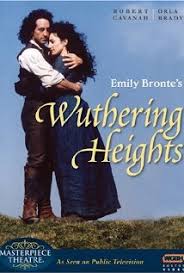
Welcome to Part 3 of looking at various adaptations of Wuthering Heights and seeing if they can capture the spirit of the book by Emily Brontë. Today, I’ll be analyzing the 1958 teleplay made by DuPont Show of the Month starring Richard Burton as Heathcliff.

Like the 1950 version, this one too is a play made for television. It was produced for the first season of the DuPont Show of the Month drama anthology series. That show ran from 1957 to 1961, and it focused more on adaptations of classic literary novels like Wuthering Heights. The DuPont Company sponsored the series, and they showed long advertisements on how they made the world better through chemistry (note: they are responsible for the microplastics in the world, so screw them). What’s interesting about this adaptation was that the kinescope version was considered lost for a long time until Turner Classic Movies showed it for the first time since its original May 9, 1958 airing in 2019.

Also, like the 1950 adaptation, the 1958 teleplay is a truncated version of the story. This one runs for 90 minutes (commercials included), and you guessed it, it omits the second half of the novel. However, it looks like it had a bigger budget than its immediate predecessor. It contains dogs; horses; rain effects; and realistic sets for the interiors and exteriors of Wuthering Heights, Thrushcross Grange, and the Moors. They all helped to enhance the sense of place.

While this one too focuses on the tragic romance between Catherine and Heathcliff, it also places a great emphasis on the supernatural elements and the torment both feel. In the very beginning, when Mr. Lockwood hears Catherine’s voice, her hand comes out to grab him. I know that’s in the book, but I was honestly surprised that the teleplay did that. Additionally, when Catherine is getting married to Edgar, she hears a robotic voice saying Heathcliff’s name over and over again. Then, when Catherine dies, Heathcliff basically condemns her to a life of purgatory and torments her until he dies.

Speaking of causing pain, there’s a lot of talk about how those lovers make each other and the people around them miserable. The story that Nelly tells Mr. Lockwood is not just about their tragic romance, but also why Catherine the ghost is tormented. Early in the teleplay, Catherine asks why Heathcliff doesn’t leave Wuthering Heights because it hurts her to see Hindley treat him like a servant. He proclaims that he stays for her. Later, when Heathcliff marries Isabella to spite Catherine, Isabella inquires why he doesn’t let her go despite not loving her. He outright states that she’s a proxy for her brother Edgar, whom he’s mad at for marrying Catherine. This proves that even though they make each other miserable, they should be together in order to stop ruining other people’s lives. It’s in this way that makes this adaptation closer to the book’s gothic horror spirit than its two predecessors.

Another thing that I want to point out is how sensual this version is. Heathcliff and Catherine share many passionate kisses throughout, which certainly will titillate and bother viewers. Moreover, Richard Burton is seen at times with a shirt that’s unbuttoned at the top and another all the way open that exposes his chest. For the latter, when Isabella goes to see Heathcliff at Wuthering Heights, she remarks that he’s half-naked. I’ll give credit to the people who made this version for intentionally making it arousing by 1950s standards.

 A pitfall that it runs into is the acting. Considering that this is a play made for television, almost everyone overemotes. The 1950 adaptation has the same flaw because it was created in the same medium, yet the 1958 one tones it down just a notch. Yes, there are certainly scenes where Richard Burton bellows in his signature baritone voice, but those are warranted given the character he plays.

Speaking of Burton, while he’s best known for his on-again-off-again relationship with Elizabeth Taylor (it’s he that Taylor Swift refers to when she sings “Burton to his Taylor” in “Ready for it?”), he’s still a good actor in his own right. By 1958, he received two Oscar nominations for My Cousin Rachel and The Robe, and his most widely acclaimed work was yet to come. And once again, I have to acknowledge the white elephant in the room with that Burton is a white guy playing a racially ambiguous character, especially with people making explicit remarks about his appearance (“dark as the devil” and “rogue g***y”). With that aside, Burton is still good in the role. He’s like Olivier in how he broods and expresses passion, yet he takes it a step further. He’s so passionate that one might think that he and Catherine did the dirty deed. Also, in the beginning when Heathcliff hears her voice, he literally breaks the windows in a fury known only to some. Furthermore, he leans more into Heathcliff’s cruelty. There’s the scene in which Isabella comes to Wuthering Heights that he comes off as predatory, especially when he kisses her nonconsensually. Additionally, he’s willing to portray Heathcliff’s violence towards others whether it’s Hindley, Isabella, etc. I appreciate how Burton portrays Heathcliff’s negative traits while retaining the spark that made him irresistible to Catherine.

With that all being said, Rosemary Harris (who’s best known for playing Aunt May in the 2000s Spider-Man movies) puts on the best performance. Her Catherine is psychologically damaged and emotional throughout, but she puts on a brave and happy face when needed. The version makes it clear that she was tormented after all the times she tried to defend Heathcliff from her brother while growing up. And yet, when Heathcliff leaves, Harris bellows out like her life depended on it while in the rain. Then, when Heathcliff comes back and tries to guilt trip her, she withers away. Harris plays this gradually, which works. 

While I have plenty of praise for this adaptation, I have two issues that hold me back from placing it at the top as of now. One is that it lifts scenes from the 1939 version even though the writers of the earlier version aren’t credited. These include the conversation between Catherine and Heathcliff before she has dinner with Edgar and Catherine’s time with the Lintons after she runs out into the rain. The other problem is the pacing. By cutting the second half of the novel, the first part would be undoubtedly stretched. Surprisingly, the 1939 and 1950 adaptations are well-paced. This one is not much. The first part moves just fine, but after Heathcliff comes back and before Catherine’s death felt sluggish. My husband got so bored that he fell asleep while watching it. I don’t know if it’s because of Daniel Petrie’s direction, the amount of commercials DuPont showed, or what else. Regardless, the pacing could have been better.

The Wuthering Heights 1958 teleplay is another truncated version of the story that captured the spirit of the book better than its predecessors. I enjoyed how it emphasized the supernatural elements and the torment the famous lovers feel. In addition, I liked how it took it a step further by showing Heathcliff’s cruelty in more explicit ways. However, it still has the same problems as its predecessors because it excludes the second half of the novel along with its issues like retreading scenes from the 1939 movie and the pacing. Even though it doesn’t fully capture the spirit of the book, it’s still a good version that I would recommend to people watching every adaptation of Wuthering Heights and diehard Richard Burton fans.

Now, let’s see how this one fits into the ranking.

  1. Wuthering Heights 1939 Movie 
  2. Wuthering Heights 1958 Teleplay
  3. Wuthering Heights 1950 Teleplay

We’ll see how this ranking evolves after I see all the others.

Stay tuned next month when I review the 2026 movie with Jacob Elordi and Margot Robbie!

Subscribe below to get notified when I post new updates. Also feel free to email me here for any review suggestions, ideas, or new titles!                                   
The Housemaid Movie Review

One of the movies I was looking forward to seeing last year was The Housemaid starring Sydney Sweeney and Amanda Seyfried.That was the whole reason why I read the book of the same name by Freida McFadden. I was curious to see how the film would translate the novel’s twists and turns. And reader, it did despite one major issue.

The movie is mostly faithful to the source material. There are some minor changes. For example, Andrew makes a big deal out of the chinaware that his family has owned for many years. This is not in the book, but it plays an important role in the second half. The main difference is the flick adds a ton of gore. There’s far more blood and horror in the movie than there is in the novel.

I love the design of the Winchester’s McMansion. It’s pristine, but it also makes people feel trapped, which is fitting for the story. This is especially true with the spiraling staircase. Even Nina mentions that the home was something out of the Guggenheim Museum.

The performances are mostly fantastic. Millie, Nina, and Andrew and their interactions are the glue to making the story work. One needs actors that understand the plot’s seriousness and insanity. For the most part, the actors in this adaptation do. Brandon Sklenar (best known for his work in the television show 1923 and the movie version of It Ends With Us) plays Andrew. He’s perfectly cast in the role since he looks like a very nice prince. What Sklenar is called to do, he excels. 

Sydney my-jeans-are-blue Sweeney takes on the role of Millie the titular housemaid. If you are reading this, you probably know who she is. If not, she’s an actress who’s known for her body, her work in the television show Euphoria, and the controversial American Eagle ads. I’m not crazy about her as a person. She always looks dead behind the eyes and relies too much on her physical appearance for attention. Even if she didn’t make as much noise as she did in 2025, I would feel the same way. As for her performance, Sweeney has little to no reactions to things, especially in the first half. However, she comes alive in the second part. She was intense and funny. In fact, she has favorite moment in the entire film, where after Millie gets covered in blood, she goes, “F***! I need a sandwich.”

If Sweeney had brought energy to the first part, then it would have been a great performance. But as it is, it’s good.

Then, there’s Amanda Seyfried, and she put on the best performance. She plays Nina, and she understood the assignment. Seyfried takes on the worst and best parts of the character with gusto. She’s a pretty actress, but I admire how far she goes to make herself look deranged. While she doesn’t put on a fat suit, Seyfried looks dangerously thin and lets all of her emotions out in the ugliest way possible. Even though they can be hard to watch, these were the most entertaining parts. At one point, she emerges with a busted lip and blush applied to different parts of her cheeks. I honestly couldn’t believe that this was the same actress who played the dumb Karen in Mean Girls and Sophie in the Mamma Mia movies. If anything this movie is worth watching mainly because of Seyfried.

As I mentioned earlier, there was one major issue I had with the flick. It does more telling than showing. Throughout the movie, director Paul Feig adds voiceovers for important bits that take lines from the book, so viewers can hear the character’s inner voice. This worked for the most part. There were two bits that bothered me. First was during the second half, where Nina’s backstory is revealed. Much is told through voiceover and flashbacks, but there were certain things that I wanted to see instead of hear. The other is in the opening scene, in which Millie puts on her glasses right as she enters through the gate to the Winchester home. After her job interview, Millie tells the audience that she doesn’t wear them, and I was like, “I know. We just saw that.”

That voiceover would have worked better if the viewers were introduced with Millie with the spectacles already on.

Finally, watching this movie made me realize that the story is best consumed mainly once. It’s so predictable that I was noting certain things being said that I initially didn’t pick up on in the book. It made me a little antsy. Granted, the novel had plenty of obvious things happening too, but it was my first time engaging with The Housemaid. However, the second halves of both of the book and the movie are worth looking at even more because of how unpredictable they are.

The Housemaid movie adheres to the suspenseful spirit of the book. It’s predictable in the first half, but oh so gutsy in the second. The best part of the film are the performances, especially Amanda Seyfried’s. I would recommend to those who love psychological thrillers, Sydney Sweeney, Amanda Seyfried, and the novel by Freida McFadden. Check it out while it’s still in movie theaters.

Subscribe below to get notified when I post new updates. Also feel free to email me here for any review suggestions, ideas, or new titles!
Anneke Jans in the New World Book Review

Full disclosure: I was given an ARC of this book from SparkPoint Studio in exchange for an honest review.

During the daytime, I’m an archivist. I help people find research material for their projects, especially about their ancestors. There are some people who have discovered so much about their families that they have written genealogy books based on what they know about their dead relatives. They are usually nonfiction as they focus on retelling the facts in a narrative format. However, there are some that are told as historical fiction novels. Author Sandra Freels found so much about her ancestors that she wrote a fictionalized tale based on the resources she came across called Anneke Jans in the New World. While it’s an inspiring tale, I wish the story and characters were more fleshed out.

Anneke Jans in the New World is about a spirited young mother who faces the unknowns of seventeenth-century New Amsterdam after leaving the Old World. It’s 1630, and Anneke Jans has just arrived in the New Netherland colony with her husband, Roelof, and two young daughters to create a new life for herself and her family. She is among the few women in the colony. In order to survive, she has to make her own rules. When Roelof dies, she marries Everardus Bogardus – the lively minister of the Dutch Reformed Church. With this marriage, she joins the colony’s elite. However, when the colony’s new director provokes war on the region’s Native Americans and her new husband emerges as the head of the anti-war opposition, she finds herself in the middle of political turmoil. As more difficulties grow, Anneke must rely on her wits to protect herself and her growing family.

I knew nothing about Anneke Jans before coming across this book. I did a little research on her, and it turns out that she’s known as the “Mother of New Amsterdam” because of her resilience, especially how she stood her ground over long-running legal disputes over her farm in that area. Her descendants kept the fight going centuries after her death, when the English took it over and transformed it into New York, and when the land became prime real estate in Manhattan. Freels claims that Anneke is one of her ancestors. She clearly had a lot to work with.

Making Anneke’s story into historical fiction was a big gamble since she is relatively unknown outside of New York State history, but Freels bit off more than she could chew. At nearly 200 pages, the narrative feels rushed. Plotlines are introduced and resolved very quickly. In addition, there’s little time for characters to sit with their emotions and reactions to various things. The closest that readers get with the latter is when Anneke finds out that her second husband died while at sea. The beauty of historical fiction is imagining how famous people felt behind closed doors and their reasonings for why they do certain things that would impact history. The writing belongs more in a textbook than in a novel because of how stilted it can be. Freels previously authored three textbooks, so that checks out. She needed to loosen up and explore more of the characters’ mindsets to succeed in the storytelling department.

As much as I complain about this book, there were things that I enjoyed when I took a step back and saw the bigger picture. I learned a lot about the New Netherland colony. It was fascinating to see how the people worked with each other and with the indigenous community as well as how those relationships changed over time. I kept going to see how Anneke Jans herself evolved over the years being in the New World. She starts off as a quiet and timid wife who didn’t know much about working the land. Over time, she learns how to utilize the property and trade with others in the most effective ways. Society pressured her to remarry after her second husband’s death, yet she remained resolved and wanted to make her own money and become the owner of her land as a widow. Since New York is celebrating its 400th anniversary soon, I hope people get to talk about her, for she’s a fascinating character. 

Anneke Jans in the New World by Sandra Freels is a fine novel. It’s nice to know that a historical fiction book about Anneke Jans was written by one of her descendants. I learned so much about the environment at the time and the titular character. On the other hand, the writing needed more work. I felt like I was reading a textbook most of the time with how plots are introduced and resolved swiftly, and it rarely stopped to let characters’ emotions sink in. I would only recommend it to those who are looking to write stories about their ancestors. While it’s not perfect, Freels should feel proud for creating a historical fiction novel about her famous ancestor.

Subscribe below to get notified when I post new updates. Also feel free to email me here for any review suggestions, ideas, or new titles!
Adapt Me Podcast – The Ruins Movie

Hi Everybody!

Grab your hand-drawn maps and hamburger legs because returning guest Carl Malek and I talk about the 2008 movie version The Ruins in the latest installment of “His/Her Reviews” on the Adapt Me Podcast. We discuss the positives, negatives, and everything that freaked us out. Check it out at this link.

In the meantime, you can see my review of The Ruins the movie here.

Subscribe below to get notified when I post new updates. Also feel free to email me here for any review suggestions, ideas, or new titles!
Top 3 Best and Worst Books* of 2025

Hi Everybody!!

Today is the last Monday of the year! You know what that means? It’s the 6th annual year-end countdown of books* I reviewed in 2025!

*This also includes movies.

For those who don’t know. I’ll pick 6 titles for this list – 3 for the best and 3 for the worst! Now, I have only one question for you!

I sure am! Let’s get started with the Best Books of 2025

This year was interesting to say the least. There weren’t as many as 5-star books that I read. After 7 years of reviewing books, I’ve been looking at titles that I come across with a more critical eye. Nevertheless, I had an easy time choosing my top 3 this year because they were all well-written in their own unique ways. Let me show you.

3. Women in Politics Breaking Down the Barriers to Achieve True Representation by Mary Chung Hayashi

Version 1.0.0

I’m going be very honest. I had a tough 2025 because of the political landscape. I was afraid of what was going to happen because I felt powerless to do something about it. However, this year, I realized could make a difference through education. Part of that shift in thinking was brought on by Women in Politics: Breaking Down the Barriers to Achieve True Representation by Mary Chung Hayashi. The book does a fantastic job with explaining what drives women to get into politics, the realistic barriers, and how gender equality can be achieved in a clear and concise manner and under 200 pages. The best part is Hayashi’s own story of how she became a politician after her sister’s death. She brings it home as to why female representation is important. Even though I never plan on running for political office, this book will definitely inspire others to do that regardless of gender, especially to combat sexism in the political world.

2. The Bluest Eye by Toni Morrison

Version 1.0.0

In the past, I’ve put banned books on my best list. If they are that good, I’ll put in on here. The Bluest Eye – the 1970 debut novel by Toni Morrison – is no different. It has been on several banned book lists over the years. Its depictions of racism and sexual assault are hard to get through, but not every novel is meant to comfort readers. Sometimes, they confront a reality that certain people don’t want to see. This novel falls into that category as it tackles society’s obsession with white beauty standards and how it impacts the black community. But, that’s not the main reason why The Bluest Eye is on the list. It’s the way Morrison tells the story of a little black girl who wants blue eyes. The prose is gorgeously dreamlike and devastating with so many quotable lines as my guest Amy Thomasson and I talked about in the Adapt Me Podcast episode on it. Every character also gets a backstory, no matter how big or small. Morrison knew exactly what she was doing when she wrote this ambitious novel. This marked the beginning of an iconic writing career.

1. Guidance from the Universe: Hopeful Messages for Everyday Challenges by Jill Amy Sager

Version 1.0.0

Women in Politics wasn’t the only book to offer me hope this year. Guidance from the Universe: Hopeful Messages for Everyday Challenges by Jill Amy Sager did that in its own way. In this memoir, Sager demonstrates how she achieved enlightenment and self-acceptance through Tarot readings. While I knew very little about Tarot cards prior to reading this book, I learned so much about how it guides people through various challenges. Sager also encourages readers to make it an active read by including a set of questions that assists readers in their own spiritual journey at the end of each chapter. What truly made this a special book to me was how the author was open and honest about her struggles with a physical disability and her mother. I felt that I was being seen. This memoir was so good that I ordered a copy of it for a friend who too was having a tough year because she loves Tarot cards. As of now, this is my favorite self-help book. I’m going to re-read it as much as I can.

Before, we get the worst list, I want to mention that this is similar situation that I encountered in 2024, in which the titles were not bad. They happened to be the weakest of the ones that I looked at this year.

Now that we got that out of the way, it’s now time to get to the Top 3 Worst Books of 2025!

3. Six Days in Detox by Dianne Corbeau

Six Days in Detox by Dianne Corbeau is not a bad memoir. In fact, it has the potential to be great. It’s a harrowing tale about one woman’s relapse and time in a mental institution with some of the most awful people on Earth. The memoir also looks at an addict’s mindset with great empathy. Yet, why is it on the worst list? Well, there are two things that prevent it from being great. The first is that it’s extremely repetitive. Corbeau reiterates certain pieces of information to the point that it got annoying because it was less than 150 pages. In addition, the memoir contains some of the most egregious editing errors I’ve ever seen. One would need to read the book to find those out. If the editor looked over this memoir one or two more times, this wouldn’t be on the worst list.

2. The Pale Flesh of Wood by Elizabeth A. Tucker

The Pale Flesh of Wood by Elizabeth A. Tucker is a fine novel. Its main character and her conflict are interesting, and there are a lot of nice tree-lace metaphors about life. Sadly, my biggest gripe is the framework. The way the novel’s blurb had it made me think it was going to show several family members’ reactions to the father’s unexpected death. It didn’t. It was mainly about daughter Lyla and how she copes. That’s not the main problem I have with it. It tells the story in a chronological order, and it takes a third of the book before the death even occurs. It also loudly hints at it, and I was like, “We know what’s going to happen!”

It would’ve benefited from a different structure whether it being a flashback, or something similar to that in Everything I Never Told You by Celeste Ng. Bringing up that novel makes me more even disappointed in The Pale Flesh of Wood because that scenario was done much better in the former.

1. A Palindrome: A Universal Theme of Life, Growth, Maturity, and Agedness by Robert C. Jones

I’ve read a lot of titles by Robert C. Jones. He writes in a sentimental way similar to what a lot of older writers tend to do when looking back on their lives, and I give him credit for a unique framing device of analyzing his name Bob. However, A Palindrome: A Universal Theme of Life, Growth, Maturity, and Agedness is not one of his best. Compared to his previous memoir A Life Well Bred, A Life Well Led, it’s not as interesting nor cohesive. Moreover, the whole palindrome framework doesn’t get a whole lot of attention. It doesn’t help that it uses some of the same poems from its predecessor. On top of that, there was a section that I was straight up confused about. I didn’t know why it was there to begin with. There are better memoirs than this one.

And that was the Top 3 Best and Worst Books of 2025! I hope all of you enjoyed it. I look forward to having plenty of new reviews for 2026! See you next year!

Subscribe below to get notified when I post new updates. Also feel free to email me here for any review suggestions, ideas, or new titles!

Interview with VoyageMichigan Magazine Part 2

Hi Everybody,

I wanted to let you all know that I was interviewed for VoyageMichigan Magazine recently for a second time! For those who don’t know, they focus on promoting small businesses, independent artists and entrepreneurs, and local institutions in Michigan. It was an amazing experience sharing my personal story along with what I think about life, my legacy, and so much more.

Check it out here: https://voyagemichigan.com/interview/an-inspired-chat-with-emily-malek-of-sterling-heights-highlight/

Subscribe below to get notified when I post new updates. Also feel free to email me here for any review suggestions, ideas, or new titles!
Wuthering Heights 1950 Teleplay Review

Content warning: this review mentions physical violence.

Welcome to Part 2 of looking at various adaptations of Wuthering Heights and seeing if they can capture the spirit of the book by Emily Brontë. Today, I’ll be analyzing the 1950 teleplay made by Studio One starring Charleton Heston as Heathcliff.

Now, you’re probably wondering what a teleplay is. A teleplay is a play made for television. Studio One – an anthology drama television series – did these pseudo proshots from 1948 to 1958. They put on original work like 12 Angry Men and adapted stories like 1984 and Wuthering Heights, and they were sponsored by the manufacturing company Westinghouse (note: it was interesting to see how that company was promoting products like colored televisions in 1950). Their episodes would run for roughly an hour (commercials included), which means that this adaptation of Wuthering Heights is even more constrained than the earlier version.

It’s not the adaptation’s fault. When this version aired on October 30, 1950 during Studio One’s third season, they were operating with a limited budget. Not only is the second half omitted (again), but the story is also reduced to the bare bones. The plot is moved forward mainly through dialogue between various characters. In addition, the sets are not as vast as the ones in the 1939 adaptation. This is especially true with the Moors, for it was clearly a backdrop. The sets depicted estates fared better. Wuthering Heights looked impoverished, and Thrushcross Grange appeared well off. The teleplay conveys them well despite the constraints. Additionally, while I complemented the romantic score in the 1939 version, the soundtrack to this one is more restricted. It mainly consists of the 16th-century tune “Greensleeves” whenever Heathcliff and Catherine have their romantic moments and ominous music when the former returns and does something cruel. In fact, “Greensleeves” comes on so much that some people might want to play a drinking game. Don’t worry, you’ll live.

A lot of what I said about the 1939 adaptation applies here. By cutting out the second half, it changes the tone from a gothic horror to a tragic romance. At the same time, it does a few things differently. For one thing, it puts a bit more focus on Hindley. Why? I’m not entirely sure since he’s a boo-hiss character in the story. In this version, Richard Waring plays him as a sad and pathetic drunk. It was effective enough. It made me feel sorry for a split second until I remembered how awful he was to Heathcliff. I also enjoyed how the teleplay shows how he gets his comeuppance by having him lose the Wuthering Heights estate and the rest of his money to Heathcliff in a game of dice. 

There were two other things I noticed too. One that I noted was how Joseph – one of the servants – mentions how Heathcliff digs up Catherine’s grave at the end. Another was that the flashback is brought on not by Nelly telling Mr. Lockwood the story, but by Heathcliff remembering after he hears Catherine’s voice. Additionally, despite their limited budget, they put on some interesting visual effects. The most effective was when Catherine is brushing her hair in her bedroom at Thrushcross Grange and sees Heathcliff in the mirror. It’s a cool visual reminder of the famous line from the book. Finally, the teleplay is willing to show the physical violence committed by Heathcliff. He puts his hand on Catherine’s throat while at Thrushcross Grange and slaps Isabella after they are married. I’m not sure if all of these changes work, yet I admire this adaptation is a bit more daring than its earlier work.

The last thing to discuss is the acting. Many of the actors ham it up, which puts the adaptation into soap opera territory. It’s like director Paul Nickell told them to project to everyone no matter where they were. Waring is over the top as Hindley. May Sinclair plays Catherine, and she chews up the scenery, especially during her death scene. The other people who don’t play to the raptures are Lloyd Bochner, who plays Edgar as one should, and Una O’Connor, an actress best known for her histrionics in 1933’s The Invisible Man and The Bride of Frankenstein, portrays Nelly. While this acting works in a theatrical play, it doesn’t fully work for television, and it might bother some viewers.

Of course, I can’t finish this review without mentioning Charleton Heston. Heston is best known for his roles in The Ten Commandments, The Planet of the Apes, and his Oscar-winning performance in Ben-Hur. This version of Wuthering Heights was at the very early part of his career. Did it foreshadow his greatness? Well, not really. Heston is miscast in the role, and I’m not just saying that because he’s a fair-haired white man playing a racially ambiguous character. He broods from the moment he pops on screen until his last scene. While this was effective in the second half, he could have lightened up in the first part. Even Olivier didn’t mope all the time in the 1939 version. Heston leans too much into Heathcliff’s negative traits. He did this too in one of his earliest movie roles as Brad the circus owner in 1952’s The Greatest Show on Earth. With that being said, I still praise him for how far he’s willing to go to demonstrate Heathcliff’s cruelty.

The Wuthering Heights 1950 teleplay is a truncated version of the story with mixed results. It shares similar problems to the 1939 adaptation, but it doesn’t have the striking imagery like its predecessor. I understand its budget limitations and can tolerate its over-the-top acting, but some might not. However, what it does differently works for the most part. Even though it doesn’t fully capture the spirit of the book, it’s still a fine version that I would recommend to people watching every adaptation of Wuthering Heights and diehard Charleton Heston fans.

Now, let’s see how this one fits into the ranking.

  1. Wuthering Heights 1939 Movie 
  2. Wuthering Heights 1950 Teleplay

We’ll see how this ranking evolves after I see all the others.

Stay tuned next month/year when I review the 1958 teleplay with Richard Burton!

Stay tuned for next week when I reveal my Top 3 Best and Worst Books* of 2025! See you then. In the meantime, Merry Christmas!

Subscribe below to get notified when I post new updates. Also, feel free to email me here for any review suggestions, ideas, or new titles!
The Ruins Movie Review

Content warning: this review contains spoilers.

I recently watched the 2008 movie version of The Ruins with my husband for our latest episode of His/Her Reviews on the Adapt Me Podcast. In it, he and I talk about adaptations of books we just watched. We discussed The Ruins based on the 2006 novel of the same name by Scott Smith in our most recent episode. While the book is better, the movie effectively captures its spirit with its gore and understanding of its schlocky-horror plot.

On the surface, the film is faithful to the novel. It retains the basic story of two American couples trapped in a Mexican jungle. However, there are some detailed changes that improve the film. This is due to The Ruins author Scott Smith, who wrote the screenplay. He did the same thing with his previous novel A Simple Plan, which garnered him an Oscar nomination in 1999. 

One of the main alterations involves the Greeks themselves, particularly Dimitri. They are not as part of the story as they are in the book. I didn’t mind this at all because the Greeks were almost pointless. Dimitri (Pablo in the novel) only comes because he’s the one who draws the map of the jungle the main cast goes to. Throughout the book, Dimitri is laid up after falling into a hole, injuring himself, and becoming the first victim to the plants. He spends more of the time dying. In the movie, he’s killed by the Mayans after Amy frightens them by shooting pictures. Matthias – the German tourist whose brother goes missing – takes his place as the injured man. 

Another is that Stacy and Amy switched personalities. In the book, Amy is “the prissy girl,” and Stacy is “the sl**.” It’s the reverse in the flick. Even though it was weird once I realized this change, I actually understood it, especially when it comes to Amy. She is dating Jeff, who is the smartest person and designated leader in the group. This creates a conflict as he tries to come up with plans to get out of the ruins while she messes them up.  It’s a similar relationship to what Moe and the third Stooge have in the Three Stooges.

One other change is that the main characters aren’t as stupid as they are in the book. They figure out some things like why the Mayans are surrounding them and keeping them on top of the ruins. In addition, they are more sensible as in they don’t do the things that occurred in the book (see my review of the novel for reference). I get why this alteration was made. Have them too stupid, and viewers won’t root for them. In the novel, Smith portrayed them as dumb and annoying, but I still rooted for them to a degree. For the flick, he made them a bit smarter, so they can be more likeable, thus more rootable. 

However, there were some changes that I didn’t agree on. One was that Stacy was the first American person to be injured and infected with the vine. In the novel, it was Eric. I’m not sure why Smith altered this. This especially true of how the plant gets into her body was executed awkwardly. The second was the lack of character development. There was time spent on character work in the book, but whatever that was present was deleted for the movie. To be fair, I kind of got bored when it was just the characters trying to figure out how to survive.

Of course, like I mentioned in the book review, this takes a back seat to emphasize the insanity of the plot. And, everyone who worked on the film, including director Carter Smith, understood this. At about 90 minutes, it’s a brisk movie with plenty of scares. The acting is good for this kind of horror movie, where everyone is desperate and terrified. There’s mainly one set with the Mexican jungle, but it looks convincing even though it was shot in Australia. 

Just like the novel, the best part is the monster. The plants are a combination of CGI and practical effects. They were well done, especially how they pulse once they’re inside their hosts. Also, the film doesn’t spare on the gore. Scenes like Matthias getting his legs amputated and Stacy cutting herself made me squeamish to the nth degree because of how bloody and horrific they were. It was one thing reading about them. Seeing them on screen added a new level of terror. In case anyone was wondering, we saw the unrated version.

The Ruins movie is a good adaptation of the book by Scott Smith. While I prefer horror movies with more character development, I was still engaged with it, even when I was squeamish and terrified. The biggest asset the film has is that it truly understands the core of the story: a group of dumb people attempting to escape a Mexican jungle. Every decision was made to serve how bonkers the story is. The monster is horrific, and the flick goes all out with the gore. I would recommend it to fans of horror movies set in exotic locations and that contain lots of carnage. Stay tuned for the His/Her Reviews episode discussing The Ruins on the Adapt Me Podcast! Keep an eye out for the link.

Subscribe below to get notified when I post new updates. Also feel free to email me here for any review suggestions, ideas, or new titles!