Laws of Annihilation Book Review

Full disclosure: I was given an ARC of this book by the author in exchange for an honest review.

There’s one topic that I haven’t discussed before on this website: celebrities writing fiction. They mainly do it to show people that they are talented in other outlets. It’s a make-it or break-it scenario since there are some that are really good at it like Tom Hanks, and there are others that are not so much like Tyra Banks. I read a book recently that thankfully falls into the former category. Laws of Annihilation by Eriq La Salle, who is best known for his role as Dr. Peter Benton on ER, is a great crime fiction story with engaging characters and story.

Laws of Annihilation is the third book in the “Martyr Maker” series. A heat wave is passing through New York City, and tensions between the black and Hasidic communities have increased since a tragic incident left a Black teenager dead. However, when two rabbis are killed in such a gruesome way, it displays the signs of retaliation. Meanwhile, agent Janet Maclin’s dreams of becoming the first female FBI director comes crashing down when she discovers that she has stage IV cancer. Despite that, she is willing to help NYPD detectives Phee Freeman and Quincy Cavanaugh find the killer as more hate crimes push the city to the edge and into an all-out war. As the body count climbs, time is running out for Janet in more ways than one.

I haven’t read the first two books in the “Martyr Maker” series, but from what I understand, the first book Laws of Depravity establishes the three main characters Janet, Phee, and Quincy; what they do; and how they work together. The second title Laws of Wrath emphasizes Phee’s personal struggles, especially while coping with his brother’s death. 

In this case, Laws of Annihilation focuses on Janet and how she wrestles death with her diagnosis and religion since she was raised Jewish even though she’s not that religious. I really liked Janet since she gave me Sandra Bullock-Mariska Hargitary vibes. Much like those actresses, Janet was tough on the outside and felt fine with being a loner, yet she could be vulnerable on the inside and realizes that having people around can be good whether it’s her co-workers/friends Phee and Quincy or her friends-with-benefit/boyfriend Losher.

Many of the other characters are also fully realized. Phee is a devoted Black husband and father, but he can also have a temper and may not always see eye to eye with Janet. He is willing to bend the rules of the law in order to catch the criminals they are after. In addition, in various chapters, two mutilated people – a African-American man named Spider and a Jewish man named Ezra – are locked up in the basement of a slaughterhouse. Both have their prejudices against each other. Spider despises Jewish people because he believes that they were responsible for his teenaged nephew’s death. Ezra, who is the son of a Rebbe, hates Black people since he was attacked by a group of them when he was in college years ago. Over the course of the book, they find ways to understand each other even if they don’t have their fingers or eyes.

Quincy, who is of Irish-Italian descent, is basically the most reasonable and middle ground of the three. He’s not as developed compared to Janet or Phee. However, the epilogue sets up what will probably be another book in the series with the focus being on him.

As I mentioned earlier, I am usually wary of celebrities writing fiction, but Eriq La Salle is a good writer. Along with character development, he is able to allow the plot to unfold in natural ways. Funny enough, many of the chapters would end on some form of a cliff hanger. Both the story and character work hand in hand that allows readers to be invested in both. It felt like the “Armand Gamache” series by Louise Penny, for the people matter as much as the plot.

Since the story involves prejudice and race wars, there are plenty of instances in which characters contemplate what it means to be a certain race like black or Jewish. Specifically, they wonder how they developed their thoughts on others throughout their entire lives. I’ve already mentioned about Janet, Spider, and Ezra, but even the son of a white supremacist business man displays moments of sadness and anger for a Black man that gets lynched at a Fourth of July celebration. What that boy does at the end is astonishing.

I will warn readers that the scenes involving violence can be gritty and gruesome. Like I mentioned earlier, Spider and Ezra are beaten to a pulp, with Spider’s fingers getting cut off, and Ezra being blinded. Even the lynching scene and descriptions of the body afterwards are intentionally horrific. It’s understandable as to why La Salle portrays those deaths and the investigations in that way. In addition to being an actor, he has directed various episodes for shows like Law and Order and CSI: NY. Those dramas would discuss crimes in great detail no matter how uncomfortable it can be for audiences because that reflects the reality of the work. This explains why the majority of the chapters would end on a dramatic cliffhanger.

Laws of Annihilation by Eriq La Salle is not only a great piece of fiction by a celebrity, but also it’s excellent in general. It didn’t matter that I never read the first two books in the series, for I immediately got the sense of who the main characters were and understood why they worked so well together. The plot was also engaging as many of the people in the novel give serious thought as to why their prejudices are what they are. It all feels like a title in the “Armand Gamache” series by Louise Penny, in which the characters, their struggles, and dynamics matter as much as the mystery and the suspense. I would definitely recommend this to those who love crime fiction, titles that deal with prejudice in a multitude of ways, and who enjoy the work of Eriq La Salle both onscreen and offscreen. The book is out, so go check it out if you haven’t already. In the meantime, I’m going to begin reading Laws of Depravity and Laws of Wrath as well as wait patiently for the fourth book to come out.

Subscribe below to get notified when I post new updates. Also feel free to email me here for any review suggestions, ideas, or new titles!
NeuroMastery: Retraining Your Brain to Conquer Anxiety, Fear, and Panic Attacks Book Review

Full disclosure: I was given an ARC of this book from Stress Free Book Marketing in exchange for an honest review.

It’s no secret that mental health has become a more prominent issue in today’s life. Plenty of self-help books have come out to address it in a variety of ways. But, have any of them gone inside the brain? I have come across one recently that explores the neurological side of having mental wellness issues called NeuroMastery: Retraining Your Brain to Conquer Anxiety, Fear, and Panic Attacks by Ugochukwu Uche MS., LPC. It’s a unique book that gives tips to readers on how they can gradually rewire their brain to overcome the problems mentioned even if it repeats itself constantly.

Based on the latest cognitive neuroscience and counseling psychological research, NeuroMastery: Retraining Your Brain to Conquer Anxiety, Fear, and Panic Attacks offers a comprehensive guide to reshaping one’s brain to improve responses to anxiety, fear, and panic attacks. One will learn about the brain’s anatomy, the trail that stress takes through the brain, and how negative thoughts contribute to anxiety and fear. The book also introduces readers to effective cognitive behavioral strategies, mindfulness techniques, and lifestyle modifications to manage anxiety. One can learn to face one’s fears through exposure and desensitization and discover how resilience and positive change can be nurtured through understanding and harnessing neuroplasticity. It’s a road map to a calmer, more controlled, and resilient life. 

As one will probably figure out from that summary, NeutroMastery focuses more on what the brain does while someone is experiencing anxiety, fear, and/or panic attacks. There are plenty of books that discuss how to overcome those states through various measures, but as far I know, not many discuss what the cerebellum functions while dealing with those emotions. The first half of this title greatly details what the brain experiences while going through anxiety, fear, and panic attacks. These involve parts of the brain like the amygdala – “a small, almond-shaped structure deep within the brain’s temporal lobes” that interprets “sensory information information and [initiates] the body’s response to danger;” the prefrontal cortex, which plays a crucial role in managing emotional responses triggered by the amygdala; and the hippocampus, which is responsible for “[storing] and [retrieving] memories related to fear and trauma” (p.5-6).

These sections will delight readers who are interested in the neurological side of mental health. Personally, I have dealt with anxiety, fear, and panic attacks, and it helps me to understand how and why my brain responds to things that trigger me. However, I can see how others can be bored by them, especially if they never really liked biology to begin with, because it is super into explaining how the brain operates in those states. 

The second half emphasizes various treatments. This includes cognitive behavioral and exposure therapies, mindfulness and relaxation techniques, desensitization, yoga, eating healthy, getting plenty of sleep, and thinking more positive thoughts (p.55-103). Uche goes through assessment and how to apply each one although he is quick to mention that one treatment may work for some, but not for others. In addition, he stresses that these should be conducted by a trained mental health professional. These sections are a lot more fascinating to read about because the author is clearly invested in exploring each option. This love even gets spilled over to the first half as a way to tease the readers of what is to come.

At the end of each chapter, Uche provides a story about a woman named Lucy who has panic attacks whenever she drives or has thoughts about driving. Her gradual journey in retraining her brain unfolds throughout the book, and it provides a good way to apply what he has been saying into a real world scenario. Without it, not many readers would fully understand the handbook.

My complaint is that Uche has a tendency to repeat himself a lot. Now, I understand that this is necessary in self-help books in order to drill what they say into the readers’ heads. In this case, the author’s repetition is frequent. What do I mean by this? He’ll introduce a concept on one page. Then, he says roughly the same thing a few pages later. I swore I was having deja vu when reading certain sections because they sounded so identical. For example, Uche talks about the feedback loop of fear, which is a “self-perpetuating cycle of fear and anxiety” (p. 26).

In the paragraph that describes the feedback loop of fear, it starts off like this:

“The feedback loop of fear starts with an initial trigger—an event, situation, or even a thought that the brain interprets as threatening. This trigger activates the amygdala, the brain’s alarm center, sparking a cascade of physiological responses—the fight, flight, or freeze response” (p. 26)

A few pages later, he summarizes his point like this:

“The feedback loop of fear begins with a trigger—a situation, thought, or sensation perceived as threatening. This trigger activates the amygdala, leading to a fight, flight, or freeze response, which involves various physiological changes such as increased heart rate, rapid breathing, and heightened alertness” (p.29).

While it’s not quite copy and paste, I had to do a double take just to make sure I wasn’t re-reading the same thing.

Another thing I thought of is that this book is certainly useful for people whose lives are divided because of the trauma they experienced. In other words, there was life before and after the event. But what about those who suffered through trauma before they even started to remember? There are plenty of people who basically grew up with anxiety, fear, and panic attacks like growing up in an abusive environment. Uche doesn’t really address that, and I wish he did.

Overall, NeuroMastery: Retraining Your Brain to Conquer Anxiety, Fear, and Panic Attacks by Ugochukwu Uche MS., LPC is a unique look at anxiety, fear, and panic attacks and how one can overcome them by understanding how the brain functions. While it’s clear that the author is very knowledgeable about the subject, he could’ve conveyed how the brain operates while under those states more effectively, so all readers regardless of their personal interests would get. Nevertheless, readers will certainly learn about the neurological side of dealing with mental wellness issues as well as how various treatments affect the cerebellum. Since the book is out tomorrow, Tuesday, October 24, I would recommend this book to those who are into the science aspects of mental health, especially those who are biology and psychology students. It may help to retrain some brains to conquer anxiety, fear, and panic attacks, but possibly not others, particularly those who would need a more traditional approach to conquering those problems.

Subscribe below to get notified when I post new updates. Also feel free to email me here for any review suggestions, ideas, or new titles!

The Ballad of Peckham Rye Book Review

In all of the five years that I’ve been reviewing books, 2023 has to be the one where I’ve looked at the strangest titles ever. I’ve read at least two of them this year. Now, I can add another one to that list, and it’s an older one. It’s called The Ballad of Peckham Rye by Muriel Spark. It’s a devilishly good take on the stranger-coming-into-town story.

The Ballad of Peckham Rye is a farcical fable about a blue-collar town in South London that’s turned upside down. When the firm of Meadows, Meade & Grindley hires Scotsman Dougal Douglas (aka Douglas Dougal) to conduct “human research” into the private lives of their workers, they don’t foresee the mayhem, mutiny, and even murder that he will stir up. He ends up changing the lives of the eccentric characters he meets from Miss Merle Coverdale, the head of the typing pool, to V.R. Druce, the unsuspecting Managing Director.

For those who don’t know, Muriel Spark was a 20th Century Scottish writer. Her best known works were Memento Mori (1959), The Girls of Slender Means (1963), and most notably The Prime of Miss Jean Brodie (1961). The last one was turned into a play and later a movie that starred Dame Maggie Smith in the titular teacher role that got her the Best Actress Oscar in 1969 (the same year that Peter O’Toole was nominated for Best Actor for playing an instructor too!). 

The first reason why I bring this up is that The Ballad of Peckham Rye was published in 1960, one year before The Prime of Miss Jean Brodie (yes, I’m fully aware that the titles are similar). The second is that it’s not among Spark’s well-known novels. I haven’t read any other books by her, but from what I’ve read from other reviewers, it’s a weird one.

I bet readers are asking how strange it is. Well, the man who comes into town and eventually wrecks havoc is one who may or may not be the Devil incarnate. Dougal/Douglas tells various people that he had horns but had them removed when he was younger, and it’s treated as if it’s completely normal. He also likes to take days off, which made me want his bosses to yell at him similar to how Alucard’s master does the same thing anytime he wants to go on a walk in the abridged version of the Hellsing Ultimate anime. But, that would be so un-British. Furthermore, he gets chummy with a bunch of employees, especially the female ones, by playing the role of the sad guy with the uneven shoulders. He has a hunch both figuratively and literally.

This isn’t just the Dougal/Douglas show even though he is the most memorable character. The rest of the cast are just as unforgettable. Spark has a knack for describing them in compact ways that I knew immediately who they were. The story is framed around why a young woman named Dixie was stood up by her fiance Humphrey at the altar. Dixie is a frugal person and works as a typist at Meadows, Meade & Grindley. She doesn’t like Dougal/Douglas because she thinks he’s putting ideas into the idiot Humphrey’s head. She wants to save and save for when they get married and purchase a home together. Then there is Miss Merle Coverdale. She’s the 38-year-old head of the typist pool at the same firm, and she’s been carrying on a loveless affair with V.R. Druce – a married man – for years. She is drawn to Douglas/Dougal since he is someone that she can talk to about her problems while still maintaining a front at work. Dixie and Miss Merle Coverdale were my favorite characters because of how defined their personalities and goals were. I always looked forward to finding out what they were up to.

I was also struck by how Pythonesque it felt. As mentioned earlier, it was farcical that Douglas/Dougal would tell people about his horns, and yet, the novel treats this as normal. However, it didn’t go all the way since the book was published in 1960, 9 years before Monty Python’s Flying Circus aired. A lot of that absurd humor was still being developed. 

In fact, the tone felt closer to that of an Ealing Studios comedy. For those who don’t know, it’s a British studio that produced plenty of comedies post World War II, and they tended to focus on “unconventional, anti bureaucratic individuals in realistic settings.” These films included Kind Hearts and Coronets (1949), The Lavender Hill Mob (1951), and The Lady Killers (1955). Coincidentally, all of these movies starred Sir Alec Guiness before he became Obi Wan Kenobi. This tone is perfectly seen in The Ballad of Peckham Rye because of its exploitation of an eccentric character in a practical setting.

Despite how much I love the characters, I wasn’t really able to get into the story. I’m not entirely sure why. There wasn’t much of a plot to begin with. It’s basically a man coming into town and causing chaos. Maybe I thought since I knew what was going to go down, I wasn’t as invested as I should be although the whole Devil scenario caught me off guard. Then, there’s also how things abruptly came out of nowhere. This is especially true of what happens with Merle at the very end.

Overall, The Ballad of Peckham Rye by Muriel Spark is strange, but delightful in a British sense. The best way to look at this book is a character study of a blue-collar English town and of the man who “invades” it. Each of the main cast have well-defined personas and goals. The tone is another highlight since it captures a lot of black comedy that British films had at that time. People will certainly have opinions about Dougal/Douglas being the Devil incarnate. I would recommend this book to those love titles by 20th Century British writers, the stranger-coming-into-town trope, Ealing Studio comedies, and other novels by Spark. 

Before I go, I want to let you all know that the latest episode of the Adapt Me Podcast is out now! It involves how guest Dashiell Silva and I would attempt to adapt this very book. Check it out at this link!

Subscribe below to get notified when I post new updates. Also feel free to email me here for any review suggestions, ideas, or new titles!

There There Book Review

I’ve read plenty of books by indigenous authors, but none of them dealt with the lives of urban Native Americans. Plus, I will be honest and say that I didn’t really know that group even existed. This gap was the reason why Tommy Orange – an enrolled member of the Cheyenne and Arapaho Tribes of Oklahoma – wanted to write about them in the first place. And he did with his debut novel 2018’s There There. Although not everything works in the book, I admire its ambitions.

There There follows twelve people from various Native communities as they travel to the Big Oakland Powwow in Oakland, California. They’re all connected in ways they may not yet realize. These voices tell the story of the urban Native American, grappling with its complex and painful history, beauty, spirituality, communion, sacrifice, and heroism.

The title refers not to the phrase that people say to quell someone’s sadness and suffering, but to a quote from Gertrude Stein. Specifically, as someone who had lived in Oakland, she said this: 

“…what was the use of my having come from Oakland it was not natural to have come from there yes write about it if I like or any- thing if I like but not there, there is no there there” (Everybody’s Autobiography, p. 298).

Stein was lamenting how she couldn’t find her childhood home when she was on a lecture tour in 1935 and how the land around it was completely changed. In the context of the book There There, the quote is used to reflect a hard truth of how indigenous people were so displaced that they couldn’t recognize their ancestral lands anymore. It’s even referred to by a character named Dene Oxendene, a filmmaker who receives a grant and and describes himself as “ambiguously nonwhite” (p. 28, p. 38-39).

A common word to describe There There is ambitious, and I completely agree. Orange sets the standards high by having a prologue that details how white people conquered the indigenous as well as the origins of the urban Native American. This happens right before the first section entitled “Remain.” Then, in the Interlude in the second part labeled “Reclaim,” he describes the meaning of powwows, how last names were bestowed onto the indigenous, and how they continue the fight to be seen in the present tense. There’s also a third and final section called “Return.” These provide a proper context of the inner conflicts each of the twelve characters go through, which unifies them as the story unfolds. The “Interlude” section comes a bit out of nowhere, but it felt necessary as everyone gears up to go to the Big Oakland Powwow at that point of the story.

On the other hand, not all of Orange’s ambitious ideas work as effectively as they should. Each chapter is devoted to one character and how they deal with being an urban Native American. All of them have their reasons for going to the powwow. However, it’s a little hard to connect to them since once I’m into one person, the book switches to another perspective. At various times, I had to go back to the beginning to see which character was who. It didn’t help that the plot is told through a third point of view. The characters I gravitated to the most were Edwin Black and Jacquie Red Feather. Edwin is an overweight half-indigenous and half-white man who still lives with his mom and has issues with her boyfriend. He wants to begin his life again by working and finding his biological Native father. Jacquie is a Cherokee woman who copes with her trauma of being raped while drunk as a teenager at Alcatraz in 1970. And yet, she longs to see her grandchildren again, who are currently staying with her half-sister Opal.

At the same time, I enjoyed how the novel reveals how each of the characters are related. It does this gradually, and it’s very effective. Even though I was reading this while in bed, it made me actively try to piece together how each is connected. 

Another reason why I had a somewhat difficult time reading it was the pacing. It was very slow for the first half because the book needed to explain each of the character’s situations. This was why each chapter was about 15-20 pages. I understand that this was done to represent their reflections on their individual and group past traumas, which is highly important to the story being told, yet it strongly affected the pacing. Fortunately, once those exposition dumps were out of the way, the pacing picked up. This is exemplified by the shorter chapters. Some of them weren’t even a page long. This approach makes sense, for something drastic happens at the powwow, which frazzles many characters’ minds.

Overall, There There by Tommy Orange is an undoubtedly ambitious debut novel that aims to tell the multiple stories of various urban Native Americans. Even though not all of the book’s ideas work, I admire Orange’s commitment to them as each character has their own yarn to weave. I would recommend this book to those who want to read more books by indigenous authors as well as about the reckoning of Native American identity. I hope there are more tales about native people living in urban areas because this needs to be explored more. Thank you Tommy for helping to fill in this gap! I also look forward to reading his next book Wandering Stars, which is going to be published next year.

Subscribe below to get notified when I post new updates. Also feel free to email me here for any review suggestions, ideas, or new titles!
The Indispensable Element: Six Keys to Lead Yourself to Success in Your Life, Work, and Relationships Book Review

Full disclosure: I was given an ARC of this book from Stress Free Book Marketing in exchange for an honest review.

It’s been awhile since I reviewed a self-help book. Yes, I listed Buy My Book, Not Because You Should, But I’d Like Some Money by John Marszalkowski as one, but it’s not a traditional title in that genre. To make it a true self-help book, one has to do two things. 1. The author has to talk about how they overcame their struggles and 2. They have to describe how one can do the same. Today’s title The Indispensable Element: Six Keys to Lead Yourself to Success in Your Life, Work, and Relationships by Micah E. Huggins, Esq. does those things in an active and engaging manner even if the religious tone can turn off some people.

The Indispensable Element: Six Keys to Lead Yourself to Success in Your Life, Work, and Relationships lays out the framework to become a better version of one’s self. Attorney, pastor, and author Micah E. Huggins teaches one to identify the things that are holding one back in life as well as how to step up and lead in relationships, work, and one’s personal life. If one is looking to become the leader God created them to be, great leadership starts with guiding one’s self. Specifically, one will learn how to do the following:

  • Naturally attract followers and supporters.
  • Strengthen your personal and professional relationships.
  • Position yourself for new and better career opportunities.
  • Break unproductive habits and develop habits that serve you.
  • Become confident enough to pursue your biggest dreams.

To sum up, the book believes that the indispensable element to become successful in life is the ability to lead. After all, dreams don’t always come true just by wishing for them. Huggins argues that one has to actively pursue them in order for them to become reality. This involves creating the plan and goals along the way as well as getting to know people with similar mindsets.

However, Huggins is very clear about what leadership actually is. He defines leadership as “the use of your gifts and talents to create positive influence and increase the value other people contribute to society and humanity for the greater good, while also fulfilling your calling and purpose” (p.9).

In other words, true leadership is all about helping others to develop their skills and taking into consideration how one’s actions can affect others. On the contrary, there’s an influencer. In Huggins’s mind, this person can “convince other people to change their beliefs and behaviors…based solely on what’s best for you [the influencer]” (p.12).

A leader can be an influencer, but an influencer can’t be a leader because they are mainly making decisions based on self-interest for good or worse. 

As one can tell from the quotes from the book, Huggins uses jargon that anybody can understand. In fact, this is not the only way he makes it highly accessible. Each of the six keys – gifts, vision, integrity, people, discernment, and faith – gets their own chapter, which are no more than 15 pages. They start off with a story drawn from the author’s own life to make his point about each of the essential aspects of becoming a leader and end with “Indispensable Action Steps.” These are a set of exercises that involve answering questions related to each of the six elements. Huggins actively encourages readers to answer them in a notebook or journal using the Assess-Decide-Act method. This is how invested he is in ensuring that people develop their ability to lead while reading this book.

On top of that, the author makes some excellent points. In the Vision chapter, he recounts how he had to take the bar exam not once, not twice, but four times in order to pass despite the many hours he spent studying and the money he paid to take it. His goal was to become an attorney, and to make that happen, he had to create a plan or a vision. After all, he states, “A leader cannot lead without a vision” (p.44).

In another example, in the “Discernment” chapter, Huggins asserts, “True discernment requires [one] to assess [the] choices based on what’s right for everyone involved and the season [one is] in at that time” (p.88). 

He illustrates this point by recalling a time, when he – as a public defender – was offered the opportunity to buy his boss’s law firm as a franchise. Instead of thinking it over and consulting with his loving and trusting wife Lauren, he took the deal, believing it would make him rich. However, he had to pay a franchise fee and a percentage of gross, not net, sales to his boss. This resulted in the author struggling to stay afloat, and it didn’t help that the staff was still loyal to his former employer. He eventually was able to get out, but had he considered more of that deal, he probably wouldn’t have taken it in the first place.

Huggins makes The Indispensable Element a very effective self-help book, but there’s one aspect that may turn off some readers. You see, he is a pastor as well as a lawyer. He doesn’t shove his religious views down people’s throats, yet his beliefs are still on display because they are part of his life. While I enjoyed his pastor-related stories, I wasn’t exactly thrilled with the passages, which he discussed about putting one’s faith into God. Now, this is a me problem since I’m agnostic, but I know that other people might have a stronger reaction with so much religious talk. Surprisingly, this is my second Christian self-help book that I’ve reviewed on this website (the first one was The Biggest Lie in the History of Christianity by Matthew Kelly). This is the better of the two because it doesn’t have any inflammatory language, and Huggins spends plenty of time examining his own personal relationship with God, which hasn’t always been perfect.

With that being said, I feel that people of any faith can read this. A lot of values that Christianity espouses can be found in other religions. So if people are able to switch certain words to fit with their beliefs, they would still be able to enjoy it the same as a Christian.

Overall, The Indispensable Element: Six Keys to Lead Yourself to Success in Your Life, Work, and Relationships by Micah E. Huggins, Esq. is a great traditional self-help book for Christians and other religious people. The author is able to communicate his ideas and thoughts in an accessible manner, and he’s actively encouraging his readers to develop their abilities to lead. All of it feels genuine. Even the cover, which features Huggins sitting on a stool, communicates that this man has faith in you to become a great leader. On the other hand, readers who aren’t religious may have a bit of a hard time getting into it due to the devout-like content, yet one could switch some words, and the point would still come across well. The book is out now, so go get it! It’s one of the better Christian self-help books that I’ve read.

Subscribe below to get notified when I post new updates. Also feel free to email me here for any review suggestions, ideas, or new titles!

Last Light: A Collection of Short Stories Book Review

Disclosure: I was given an electronic copy of the story by the author and Henry Roi in exchange for an honest review. 

With Halloween coming up, I figured it was time to read something on the spookier side. Recently, I came across the book Last Light: A Collection of Short Stories by Chris Coppel. Normally, I don’t actively seek out horror stories, but this collection gripped me with its eerie and paranoid tales.

I would usually provide my own summary here, but the actual one does a better job.

“What really happens at last light? 

Last Light will give you just enough illumination to see into the wonders and horrors that dwell deep within the darkest shadows. These tales will both entrance and terrify. Scared of the dark? Let Last Light guide you safely through these stories of the paranormal and terror that surrounds us all.”

There are nine stories in this collection, and most of them deal with the psychological side of horror. This specifically includes the paranormal and the paranoia. In case anybody is wondering about the amount of gore in them, there really isn’t any. The only thing that they have in common is how they depict the titular sight, usually as the last things the characters see. 

Each tale shows horror in similar and different ways. In Labour Shortage, a woman working for the British government drives out to a rural English town to see how the locals are growing their crops so quickly and consistently. Let’s just say it involves the supernatural. Lightning Strike deals with paranoia as a Silicon-Valley tycoon tries to protect himself and his new house from the elements after a fire consumes the old one. Lost Words is a retelling of the classic Faust tale, in which an author gives his soul to the devil in order to write one great novel. That one has a pretty clever ending. In Light Dusting, the main character’s brother gets executed for murdering his date. Years later, his sons find their dead uncle’s clothes and put them on a snowman during a rare snow day in Florida. This brings it to life. It’s like Frosty the Snowman if he was on a revenge spree even though I was confused as to why the dead brother’s clothes would bring a snowman to life.

There were two things that I found interesting with this collection. One was that every title started with the letter “L.” I found that it’s Coppel’s trademark because he’s got other books with the same letter from Lucy (his debut novel) to Lunacy (his second most recent one). Sesame Street would be very proud. 

The other was that the first and last stories contained hope. The former titled Living Water involves a rich old businessman wanting to go to a fountain of youth on tribal land in Utah despite the warnings of what happened to others when they did the same thing. The latter story titled Lasting Memories revolves around a man who was recently released from prison trying to rebuild his life when he meets an elderly lady in the same apartment building that he lives in. Coppel makes Living Water and Lasting Memories seem like they are going to be terrifying just by the way things are set up in both. Even the main character in the latter thinks that the old woman is going to seduce him like the one did to Jim Carrey in the film Yes Man. And yet, they are hopeful, and even in the case of the Lasting Memories, heartwarming. It’s clear to see the Stephen King influence on Coppel, yet the author still makes his stories his own.

My favorite stories from this collection are Lasting Memories, Last Touch, and Long Shadows. The former is about a 12-year-old boy who has the knowledge of when someone is going to die within 24 hours just by shaking their hand and feeling a shock. Complications arise when he realizes that every person who shook his hand receives that same shock. It’s one of the shortest tales in the collection, but it packs a punch. I seriously wanted this boy to figure out what was going on and solve it. Sadly, there is no hope in that one. The other story Long Shadows involves a successful horror writer who gets invited to an exclusive dinner in New Orleans. He is then told about the titular creatures who believe that the authors are writing about them and want them destroyed. These monsters are similar to the Weeping Angels in the modern Doctor Who in the eerie way Coppel writes about them. The main difference is how one should confront them. With the shadows, one has to not look directly at them, while with the Weeping Angels, one has to not blink. Unfortunately, the main character in Long Shadows gets too big for his britches and defies the rules. Afterwards, I yelled, “You should’ve listened to the guy!”

The one that I wasn’t crazy about was Lethal Assignment. That one told the tale of a teenaged boy who spends time playing an assassin-based video game and discovers similar murders occurring in real time around the world. The concept is very unique, for there are not a whole lot of science fiction-based horror stories nor ones that involve video games. I would love to see more of these. However, this one simply got a little too intricate to follow. I still enjoyed what I could of it.

All in all, Last Light: A Collection of Short Stories by Chris Coppel was an entertaining psychological horror collection. They mostly did a great job of entrancing and terrifying me. I also found it surprising that some of them contain hope in the face of abject terror. I would recommend this to readers who enjoy short stories, prefer ones with less gore, and love horror overall. The book is out tomorrow, Tuesday, September 26, so go get it soon! In the meantime, I’m going to read another one of Coppel’s works, Lunacy. No way it’ll be my last light with Coppel.

Subscribe below to get notified when I post new updates. Also feel free to email me here for any review suggestions, ideas, or new titles!
The Flight of Celestial Race Horses Book Review

In all my years spent reading, I’ve read some books that were indeed bizarre. These include Vita Nostra by Marina and Sergei Dyachenko and Transcendence by Shay Savage. Today, I can now add another title to that group: The Flight of Celestial Horses by Gurbanguly Berdimuhamedow, the former president and current Chairman of the People’s Council of Turkmenistan. It’s a cult of personality picture book wrapped up in a horse fetish.

Normally, I would describe the plot of The Flight of Celestial Horses right here, but there isn’t much to it. It’s a book celebrating the beauty and agility of the Akhal-Teke – the national horse – and praising what the government (when I mean government, I mean what Gurbanguly Berdimuhamedow) is doing to preserve that specific breed for the culture.

Vita Nostra and Transcendence are weird because they were written in that way intentionally. The Flight of Celestial Horses was not. I say this because of the man who wrote it. Berdimuhamedow created this book to show the people how much of a good leader he was in 2011 by preserving the animal in question. Keep in mind that he has committed so many humanitarian crimes that it would fill up a football field and has desperately tried to prove to people how much of a strongman he is (https://www.youtube.com/watch?v=d0Pduhdgkjk as one example). And those aren’t the most unique aspects about this dictator. Berdimuhamedow is so obsessed with horses, specifically the Akhal-Teke one, that I swear to God he wants to have sex with them. On top of that, he has written other books about this kind of equine like Akhalteke – Our Pride and Glory.

But what if a reader has no idea of any of this context surrounding Berdimuhamedow? Well, they will figure out pretty quickly that he is a dictator who is obsessed with Akhal-Teke horses. For starters, there’s this quote:

“Riding on horse, driving plane steering wheel, sea liner, driving powerful KAMAZ, Gurbanguly Berdimuhamedow not just demonstrates wonderful physical shape and high professional skills in every business, he fixes in people’s mind the image of modern jigit [strongman in the Turkmen language], who has to do a lot. He must be well-educated, physically strong and esthetically erudite. It is not just good desires” (p. 116).

What is worse is that the horses in the pictures taken look like they want to be anywhere else but near him. On top of that, many of the solo horse shots have a clear view of their penises. Ironically, much of the text discusses how one must keep that breed pure. I’m not making this up.

Propaganda is still propaganda, but I’ve noticed that people will tend to look the other way if it is presented in an effective manner. Think of Triumph of the Will or Top Gun, how they made their subjects look, and their impact on their audiences. There’s a reason why people still reference them in various works. I can’t say the same thing with The Flight of Celestial Race Horses because even if one is able to push aside Berdimuhamedow’s disturbing obsession with the Akhal-Tekes, the text and pictures are not well put together.

The book contains text in between the equine photographs. They do exactly what one expects a horse-engrossed leader would do: praise the Akhal-Tekes in all of their beauty and skills and celebrate its president in ways that are definitely not suspicious. I had to reread some of these passages because of how clunky they were when I read them out loud. Granted, this is probably because it was originally written in Turkmen, so the text didn’t quite translate as well as it should. With that being said, the people who put this book together could’ve at least had an outside person who could look it over before it was officially published in English. There are plenty of grammar and spelling errors. For example, I counted a handful of times, in which two words were stuck together like in this caption of a horse photo, “Look, Ahalteke horse, look, your star has risen, and we believe that it light your way and will neverdie out!” (p.126).

I understand that it has also been translated into Russian, but I don’t know if it contains the same problems listed here.

The photographs themselves are probably the most enjoyable part of the book. They are some nice ones of the horses and the sites in Turkmenistan if you politely ignore how bad the photoshop is. I have some skill in altering digital pictures, yet even I knew how poorly edited these were. Many of the horse models’ shadows looked off. There’s even one where I believe the people involved had to forcibly insert Berdimuhamedow while riding an Akhal-Teke horse at the 2010 Victory Day celebrations in Moscow. I know he was there at that event (go to the 32:45 mark of this video to see for your self), yet the placement of him on the horse looked so awkward. The equine pictures contain captions that detail the name of the horse model as well as their birth year and their lineage. Did I mention that the former president of Turkmenistan is obsessed with the Akhal-Teke horse?

All in all, The Flight of Celestial Horses by Gurbanguly Berdimuhamedow is one that I wondered how it came to exist. It’s a clumsy propaganda book written by a dictator who wanted to show off how strong of a leader he was by preserving a horse breed that he clearly wanted to have sex with. Even if one politely ignores the authorial intent, there are plenty of grammar issues and bad photoshop that will turn off readers. The only people I would recommend this book to are the ones who are able to read this ironically and want to laugh at dictators. It’s enjoyable in those aspects. If not, then I would suggest this video instead.

Before I go, I want to let you all know that the latest episode of the Adapt Me Podcast is out now It involves how a special guest and I would try to adapt this very book, and you can listen to it here!

Subscribe below to get notified when I post new updates. Also feel free to email me here for any review suggestions, ideas, or new titles!
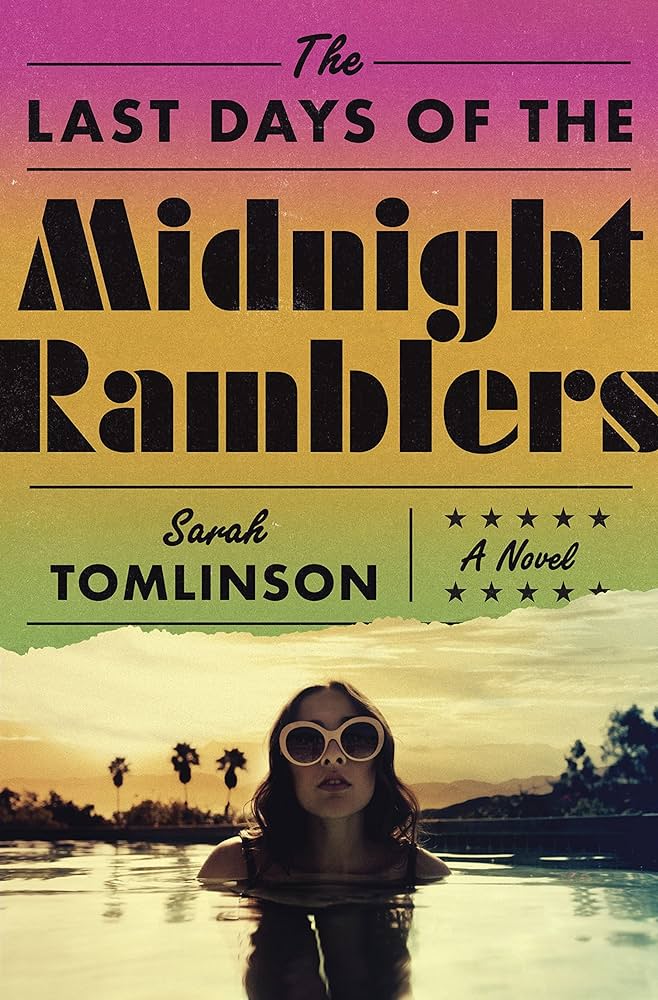
The Giver of Stars Book Review

Over the years, I’ve come to accept that some books might resemble others in a variety of ways. They might cover the same topic and/or contain similar scenes. This is often a coincidence. What matters is how the titles stand out from each other. And there’s the saga of The Book Woman of Troublesome Creek by Kim Michele Richardson and today’s subject The Giver of Stars by Jojo Moyes. Released 5 months apart in 2019, the books contained so many similarities that Richardson even considered legal action against Moyes. After finally reading The Giver of Stars, all I can say is that it wasn’t all that interesting in the first half, yet it picked up in the second half.

The Giver of Stars is about an Englishwoman who becomes a Pack Horse Librarian in Depression-era Kentucky. Alice Wright marries the handsome American Bennett Van Cleve hoping to escape her restricting life. However, she soon realizes that life in Kentucky is equally limiting, especially living with her ruthless and overbearing father-in-law. Fortunately, when a call goes out for a team of women to ride the rough terrains to give books to various patrons as part of Eleanor Roosevelt’s new traveling library program, Alice gladly signs on. She meets a variety of characters like Margery, a smart-talking, self-sufficient woman who never asks for a man’s permission to do anything. They are soon joined by three other women, and they become known as the Packhorse Librarians of Kentucky. Together, they endure many obstacles, but what keeps them committed is the thought of bringing books to people who never had much, arming them with facts that will change their lives.

Before I get started with this review, I will state this: there’s a possibility that I might’ve liked The Giver of Stars more had I read that before The Book Woman of Troublesome Creek. 

It wasn’t all that unique during the first part of The Giver of Stars. Not only did it share the same topic as The Book Woman of Troublesome Creek, but it also shared similar characters and plot points. Both Cussie from The Book Woman of Troublesome Creek and Alice are outsiders in their communities. One of them has blue skin, and the other is English. They also seek relief in working for the Pack Horse Library Project. Furthermore, they experience a bad first marriage and attacks from hillmen as well as read to bed-ridden patrons and recommend books to more suspicious citizens. And yes, they find true love with another guy who is nice and respectful of women. Although these resemblances are minor, it’s understandable as to why Richardson considered suing Moyes.

Even with the similarities, there are still some cliched scenarios that play out in the first half of The Giver of Stars. When Izzy, a young woman with polio, comes to work as a librarian, she is initially resistant because of her disability. Luckily, Alice and Margery help her to overcome this by constructing a leg brace that Izzy wears while riding a horse for her work. Honestly, since Jojo Moyes is the same author whose most famous novel involves a rich guy wanting to end his life because of an accident that made him severely disabled, I’m not surprised that she has an impaired character whose main purpose is to overcome obstacles. In addition, the whole story is essentially a fish out of the water tale. Alice is uprooted from her home in England and moves to Kentucky to be the wife of the handsome and wealthy Bennett Van Cleve. The outsider mentality is most apparent when she starts riding as a Packhorse Librarian. The book describes the horror of the living conditions of the hillfolk like how they have to cover up the walls of their homes with newspapers to keep it well insulated during winter. In The Book Woman of Troublesome Creek, these aspects are seen as part of the reality of living in one of the poorest areas in Kentucky.

At the same time, the second half made me more invested in the book. The moment where it clicked was when Alice decided to give two dolls that once belonged to her dead mother-in-law to two girls with a widowed father. This later resulted in a confrontation between her and Mr. Van Cleve – her controlling father-in-law (who is a villain in every sense of the word). He physically assaulted her over the loss of said dolls, and she resides with Margery for the rest of the novel despite demands from him. In addition, the library gets in some hot water. One involves the circulation of a book called Married Love or Love in Marriage by Marie Carmichael Stopes, Sc.D., Ph.D. Once Mr. Van Cleve hears of it, he advocates for its ban. He claims it’s smut, for Bennett tells him that Alice tried to do things to him after she read it. Considering the relevance of book bans today, one might think that the novel is trying to impose a twenty-first century lens onto a twentieth century environment. However, book bans were just as much of a problem back then as they are now. The controversy around The Grapes of Wrath by John Steinbeck when it was initially published in 1939 is a great example. Then, in the third act, Margery gets arrested over the possible murder of a hillman whose decomposed body held a copy of Little Women by Louisa May Alcott. Although it ends predictably, it was great seeing the women of the Pack Horse Library Project stand up for themselves. The second half overall made the book worth reading because I was invested in what Alice, Margery, and the other women were going to do.

Julia Whelan narrated the audiobook. She needs no introduction as she has recorded those for books like Educated and The Great Alone. She is an appropriate choice as she is good with the rougher-sounding and Southern characters. Alice is given a posh British accent, and Whelan voices her with misery, but determination. She provides Margery a no-nonsense vague Southern accent, which is great. The men have some degrees of gruff in their voices, and they sometimes can blur together. Even the way that Whelan plays Mr. Van Cleve doesn’t go far enough because she seems more focused on the dialect than the emotion. However, I liked how she portrayed Bennett vocally. He sounds like a refined, but timid Southern gentleman, which is appropriate for the character. It’s not Educated, but I like this performance more than I did with The Great Alone.

To summarize, even though The Giver of Stars by Jojo Moyes is predictable and banal in the first half, the second half more than makes up for it. There’s no denying the similarities between today’s novel and The Book Woman of Troublesome Creek by Kim Michele Richardson as well as how cliched it can get. Nevertheless, I wouldn’t dissuade someone from reading the former. It’s invested in its characters as well as what the Pack Horse Library Project means to them, and I’m always down with a book that advocates for libraries. I would also recommend it to those who have never heard of or know little about the Pack Horse Library Project, who like stories about women trapped in loveless marriages, and who love books by Jojo Moyes. There will always be novels that mostly unintentionally resemble others. What makes a tale worth reading is how it stands out from the pack.

Before I go, I want to let you all know that my latest episode of the Adapt Me Podcast is up now! It involves Goodreads reviewer and returning guest Cheyne Nomura and I figuring out how we would adapt The Giver of Stars as a movie. You can check it out here!

Subscribe below to get notified when I post new updates. Also feel free to email me here for any review suggestions, ideas, or new titles!

Box of Birds: What New Zealand Taught Me about Life and the Practice of Medicine Book Review

Full disclosure: I was given a free PDF copy of this book by Stress Free Book Marketing in exchange for an honest review.

If I had a nickel for every time I review a memoir written by a doctor detailing their self-discovery journey by traveling to other countries and practicing more holistic-based medicine, I would have a dime, which is weird, but fascinating that it’s already happened twice. The first book that I encountered that fits that description was Open for Interpretation: A Doctor’s Journey into Astrology by Alicia Blando, M.D. The second and today’s subject is Box of Birds: What New Zealand Taught Me about Life and the Practice of Medicine by Stephen Stowers, M.D. The latter is a passionate and objective look at the author’s time working as a cardiologist in that country.

Box of Birds: What New Zealand Taught Me about Life and the Practice of Medicine spells out what the memoir is. Author and cardiologist Stephen Stowers wanted to become a doctor for many reasons. The main one was that when he was a child, he witnessed his grandfather, who worked as a medical professional, save a man’s life. He wanted to help patients in the best ways possible. Over time, however, he noticed how the American medical system became more about the profit than the patient. The author was so disillusioned by this that he accepted a job offer in New Zealand. This ultimately allowed him to practice medicine in a more ethical fashion and in ways that resulted in better patient outcomes despite the more limited resources. Doing more with less permitted him to become a better doctor.

Essentially, this memoir is how one doctor discovered a better medical system than the one in the United States, but he is balanced about it. When Stephen talks about the way New Zealand practices medicine as a whole, he acknowledges that even though the medical professions spend more time with their patients to find the best treatment for them, the system has limited resources. He also admits that while he had a great time in that country overall, it wasn’t idyllic by any means. For instance, he had a Nepali patient who needed catheterization because he was breathless, had an enlarged heart, had fluid in one of his lungs, and his blood pressure would lower any time he took a breath. Unfortunately, said patient had a complication since he “bled from the puncture wound, had to go to surgery, suffered a complication course, and ended up dying” (p.125). 

Stephen only mentions this part of the story in the Acknowledges section, but it would have been more effective if he included that in the main story to further balance out the perspective.

On the other hand, when he discusses the way the United States goes about that, he notes that while they contain the best resources in the whole medical field, they have become more profit-based because of how much the system encourages doctors to spend more money on their patients. While Alicia briefly touches on this in Open for Interpretation, Stephen gives hardcore specifics. For example, he mentions that the hospital administration that he was at in Florida right before he moved to New Zealand wanted him to generate more relative value units (RVUs). These are units of measurements to quantify every type of interaction the physician had with a customer, uh I mean, patient. He points out that currently, most doctors’ salaries are based on RVUs they generate each day. A physician inserting a stent into a patient with a heart condition will receive more RVUs than one encouraging the same person to exercise, to live a less stressful lifestyle, and to take cholesterol-lowering medication. In turn, the physician would get a higher reimbursement for said stent, and more money would go back to the hospital because of that procedure (p.5). It also doesn’t help that in the United States, doctors are more likely to get sued by patients in case anything goes wrong or is perceived that way. On top of that, when he returned to the United States permanently, physicians wanted to do an invasive procedure on his 95-year-old mother to prevent a blood clot traveling to her lung despite the evidence of how such a process could affect someone her age. This all blew my mind. 

While the critiques of the New Zealand and American medical systems make up a good chunk of the memoir, the bigger point was that the time in the former nation allowed him to become a better doctor. After he travels to New Zealand, each chapter illustrates how he was able to experience less burnout, more connection to his spiritual self, and more time to share his experiences with others as well as to conduct research that could help to save lives. Even in a chapter where he discusses the excursions that he and wife went on during his days off, he always incorporates a point about doctors and the medical field could do that too in the most natural way possible.

His passion for the practice of holistic medicine is clear in his writing, Stephen communicates his stories and ideas in a conversational manner. At the end of the book, he includes a list of Kiwi slang that he learned while he was working in the Southern Hemisphere. In case anyone is wondering, the title of the memoir Box of Birds means happy, joyful, or feeling good. In addition, since he is a physician, he includes a lot of medical terminology. While some of it flew over my head, he was able to explain them in a way that I didn’t need to look them up on the Internet. This is especially true when he was discussing the research he conducted in New Zealand. He wanted to measure the amount of calcium in a patient’s coronary arteries, which can determine the risk of developing a heart attack and the course of treatment. 

Overall, Box of Birds: What New Zealand Taught Me about Life and the Practice of Medicine by Stephen Stowers, M.D. is a passion advocate for the practice of more holistic medicine. While it’s clear what his opinions are on the American versus the New Zealand medical systems, he is pretty balanced. He also writes in a way that anybody can understand, even with the amount of terminology that he uses. I would recommend this memoir to anybody working and/or studying in the medical field. The book will be out this Friday, September 9, so go check it out! It’s a good argument for the need to put patients above profit.

Subscribe below to get notified when I post new updates. Also feel free to email me here for any review suggestions, ideas, or new titles!

Oppenheimer Movie Review

July 21st, 2023 will no doubt go down as one of the most important dates in cinema history. Not only were two of the most highly anticipated movies of the year released, but also they were critical and commercial successes. One was Barbie, and the other was Oppenheimer. The latter directed by Christopher Nolan is an effectively abstract and introspective look at the man who invented the atomic bomb.

Oppenheimer follows the career of theoretical physicist J. Robert Oppenheimer (played by Cillian Murphy). It focuses on his studies, direction of the Manhattan Project, and fall from grace due to the 1954 security hearing.

Because I run a book review website first and foremost, I have to point out that Oppenheimer is based on the 2005 biography American Prometheus: The Triumph and Tragedy of J. Robert Oppenheimer by Kai Bird and Martin J. Sherwin. I haven’t read the book, but with the popularity of the film being as powerful as an atomic bomb right now, I will get my hands on it to see if it captures the spirit of the biography. This would be especially true if the movie gets nominated for and wins Best Adapted Screenplay at next year’s Oscars.

I have seen plenty of Christopher Nolan films over the years, both in the movie theater and at home. In fact, Oppenheimer was the fourth flick I’ve seen of his in the former. Seeing it on the big screen really enhanced the Nolan touch on the cinematography and the sound.

For those who don’t know, Nolan has red-green color blindness. As a result, he can’t see those particular colors. This explains why his films tend to be blue and yellow heavy. In Oppenheimer, those hues are prominent along with orange during the atomic bomb sequences as well as brown, tan, and white. On top of that, parts of the movie are shot in black and white to represent the stark reality of Oppenheimer’s situation when Lewis Strauss (played by Robert Downey Jr.) is in the Senate hearings for his confirmation as Secretary of Commerce in the Eisenhower administration, and he is asked about the former’s communist ties. The events that take place prior are in color to show how layered the famous physicist and the events leading up to the atomic bomb were. Nolan did this deliberately to demonstrate objective and subjective perspectives, and this is all done well. The switches between black-and-white and color also help to keep viewers interested in the three-hour movie.

Another Nolanism is the sound. Usually, that tends to be prominent in his flicks, especially to accentuate certain scenes. However, depending on the movie theater, that sound can be abrasive. I remember watching his last historical drama Dunkirk and getting very angry because the bomb sound effect was very loud and repetitive. Granted, they were necessary because it was about the famous British retreat during World War II, and ticking noise used indicated that something was going to happen. With Oppenheimer, the sound is better mixed, yet prominent when it needs to be. For example, during important scenes, the non-percussion score composed by Ludwig Göransson swells up, but the dialogue is not drowned out. Also, sound effects are more varied. Some include noises for uranium detection and the sound of silence followed by several powerful explosions when the Trinity Test takes place.

Nolan’s screenplay is just as abstract as the aspects previously discussed. The film has a non-linear structure with the framework being Strauss’s Senate confirmation hearings. While the jumps can be weird at times, this is well executed. When the aforementioned hearing asks Strauss about a specific thing, the movie would then show the kangaroo court inquiring about something similar to Oppenheimer, and then displaying the events and how they unfold through the latter’s eyes. The screenplay is also layered in how it portrays the titular character. While Oppenheimer is seen as a hero to many, his left-leaning views threatened to ruin his career during the height of the Red Scare in the 1950s. In addition, while he can be charming, he was a womanizer despite being married to his wife Kitty (played by Emily Blunt), and he tried to poison his physics teacher while at Cambridge. 

Finally, there’s a running theme about consequences. It demonstrates how various characters either don’t fully realize them, or they don’t want to think about them. This makes sense. After all, dropping the atomic bomb is part of one of the most famous philosophical questions ever. When the people involved in the Manhattan Project celebrate the atomic bombs dropping in Japan, Oppenheimer gives a speech about this achievement. During said speech, he envisions one woman experiencing the initial effects of the explosion with her skin getting peeled off. He clearly looks shaken up, but in the end, he decides to brush that off and fully embrace the celebration. This helps to explain why the film omits the Japanese perspective. Oppenheimer is not a bad person for not taking that into account. It’s that if he starts to think about that, it becomes too much for him. He even talks about having blood on his hands during a tense scene with President Harry Truman (played by Gary Oldman). At the same time, that doesn’t make it any better, and the movie is aware of that.

Lastly, I have to talk about the performances. Many act well in the flick, but viewers will ultimately remember two of them: Robert Downey Jr. and Cillian Murphy. Downey plays Lewis Strauss, who was the head of the U.S. Atomic Energy Commission that Oppenheimer was a part of. He plays the character with intelligence and spite. The latter comes out during the scenes between Strauss and Oppenheimer after it was revealed that the Soviet Union got their hands on the hydrogen bomb. Through Downey’s performance, Strauss is also petty, especially once it’s revealed how he was involved in the kangaroo court that questioned Oppenheimer when his security clearance got revoked. Downey is the perfect actor to play Strauss because he spent years playing Ironman – a superhero who can be just as selfish and vengeful as well.

And then, there’s Murphy who plays the title character. He brings charm and thoughtfulness to Oppenheimer that makes viewers want to root for him, while acknowledging that he was no angel. The camera loves to do close-ups on Murphy’s boney and pondering face. This is especially true with the final shot of the film. And it has every right to; the guy resembles the real-life Oppenheimer. Speaking of his face, Murphy has one that allows him to play characters of any age and still make them believable. In the flick, he plays Oppenheimer in his 20s to his 50s, and all of that was effectively accomplished with different hair styles and body languages. When the character is at Cambridge, he is agitated and impulsive through Murphy’s performance. As he ages, his body language becomes more confident and relaxed yet with some anxiety. I wouldn’t be shocked in the slightest if the actor gets nominated and wins for Best Actor at next year’s Oscars.

In summary, Oppenheimer is a thoughtful and abstract movie about the theoretical physicist who invented the atomic bomb. The choices that Nolan, Downey, and Murphy make certainly enhance the story of J. Robert Oppenheimer. I would recommend this to those who love historical dramas, especially the ones that are based on nonfiction books, learning about World War II, and stories involving the atomic bombs. Along with Barbie, this flick deserves all the praise and hype it got.

Subscribe below to get notified when I post new updates. Also feel free to email me here for any review suggestions, ideas, or new titles!