Contact
Email: chickwhoreadseverything@gmail.com
Facebook: Book Reviews By a Person Who Reads Everything page
Twitter: @ejb0092
Instagram: emily_blakowski
Bluesky: @ejm0092.bluesky.social
Genre
Authors
Titles
Genre
The Hate U Give Book Review

In this day in age, race relations are undergoing rapid change. It has gotten to a point where people are reevaluating what progress has been made since the Civil Rights Movement and how far we need to go in order to truly achieve racial equality. Since the Black Lives Matter protests started in May, people have been reading mainly nonfiction books about racial prejudice in America in order to open their eyes to the discrimination that black people face on a daily basis. I went in a slightly different direction. Sure, I have read materials and watched informative videos on white privilege, police brutality, and how racist current laws are in this county, but I decided to read The Hate U Give by Angie Thomas. As I mentioned in my The Tea Girl of Hummingbird Lane review, fiction allows writers to create stories that are based around certain facts, and they permit readers to take a look at how the people involved feel. Because I am white, I don’t think I will fully know how black people in this country live despite its inherently racist foundation, but I want to at least feel empathy for what they go through, and this is what The Hate U Give effectively provides.
The Hate U Give centers around Starr Carter – a 16-year-old who lives in a poor black neighborhood but goes to a fancy suburban prep school. She has to maintain the balance between these worlds until one day, her childhood best friend Khalil is fatally shot at the hands of a police officer. Khalil was unarmed. Soon after, his death becomes a national headline, with some people thinking that he was a thug and even a drug dealer. Even one of Starr’s white friends thinks that he had it coming. When it becomes clear that the police have little interest in investigating the situation, protests break out, and her neighborhood turns into a war zone. The only person who knows what truly happened is Starr, but revealing the truth could destroy her community and even endanger her life.
Very recently, I read a Time 100 Talks interview with the author that contained how she believed that the book and ones similar to it helps empower young voices to stand up for justice (https://time.com/5875827/author-angie-thomas-time-100-talks/), and I couldn’t be happier. She mentioned that the key is diverse storytelling, as in one has to create “mirrors, windows, and sliding glass doors,” so people can not only see themselves, but also others not like them to build empathy.
When it comes to building empathy, Thomas is a true expert. Throughout the book, Starr wants to speak out about what happened in regards to Khalil’s death, but a lot of circumstances hold her back like a rival gang harming her family for snitching, the possibility of her white friends being insensitive, and other police officers not taking her seriously and assuming other things about her friend. With clear context like these, it will make readers stop and think before they accuse Starr of not speaking up sooner. In addition, other characters, both main and supporting, are relatable in one way or another. For instance, Starr’s dad Maverick is a former gang member who is completely devoted to his children. He protects them from harm because he was in prison for a few years. As a result, he missed out on some important milestones, so now, he wants to be in their lives as much as possible. This explains why Thomas wrote a book about his life with Concrete Rose, which will be released in January. However, he has preconceived notions about white people, which prevents Starr from telling him about her white boyfriend Chris for about a year. Eventually, they meet, and he even teaches Chris how to box. Even the white officer who shot Khalil is given empathy as the news mentions that he has a family and was scared for his life when he pulled the trigger (despite that none of the black characters buy this explanation).
Like with Turtles All the Way Down, it also helps that the topic of police brutality is treated in both a palatable and non-sugarcoated manner. In the beginning, readers witness the crime through Starr’s eyes. Her frustrations with people not listening to the truth or taking it seriously are given weight. The protests are seen as both justified and non-justified. It goes into the latter when they are ransacking businesses, which worries the family as Maverick owns a grocery store in their neighborhood.
All in all, The Hate U Give by Angie Thomas is a powerful book that can appeal to everyone regardless of age and race. This has been mentioned before by other reviewers, but it is worth mentioning again: the way that the book creates empathy for all is top notch. It also makes the situation very realistic. So, if you haven’t read the book, do so soon! It can help empower people to stand up for justice.
Subscribe below to get notified when I post new updates. Also feel free to email me here for any review suggestions, ideas, or new titles!
That’s Me, Groucho!: The Solo Career of Groucho Marx Book Review

I’m a huge Marx Brothers fan; I have read a ton of books about the legendary comedy team. Usually, they tend to focus on their movies and their personal lives. When these books get around to talking about Groucho’s solo career, which entailed stage, radio, movies, and television, they do this in about a chapter or less (with the exception of You Bet Your Life). Luckily, lifelong Marx Brothers fan, co-host of the Marx Brothers Council Podcast, and author of The Annotated Marx Brothers: A Filmgoer’s Guide to In-Jokes, Obscure References and Sly Details Matthew Coniam has filled this gap with his 2016 book That’s Me, Groucho!: The Solo Career of Groucho Marx. It’s a great for any Marx Brothers aficionado, and I really mean any Marx Brothers aficionado.
In great detail, the book dives into Groucho’s solo career from being the first brother to be in Vaudeville in the 1900s to the 1976 reissuing of his book Beds the year before he passed away. Coniam clearly admires Groucho for his wit and swagger, but he can also be critical about his work at times. For example, while he likes his solo film Double Dynamite, he is more mixed on the movie A Girl in Every Port. Like other fans, he too is baffled by why Groucho participated in Skidoo. This allows him to be objective about his subject at much as possible. And of course, I have to talk about how Coniam cites his sources with a detailed bibliography and thorough chapters/appendix notes as well as provides captions with the photographs used. One might be surprised when a nonfiction book does not contain those aspects, but believe me, I have learned to be entirely grateful when one puts in the effort to show their credibility (see The Cold War review).
The book contains not one, not two, but FIVE appendixes written by Coniam and Marx Brothers Council colleagues Noah Diamond, Gary Westin, and Jay Hopkins. They touch upon a variety of aspects of Groucho’s career that were not mentioned in the actual book like whether or not he actually said the infamous cigar line and his theory of creativity. These should intrigue Marx Brothers lovers. My personal favorite was “Anatomy of a Mustache” by Diamond, which analyzes the evolution of the iconic thick, black greasepaint (and eventually real) mustache.
Throughout the book, I learned about certain aspects of Groucho’s solo career that I never would have thought about before. For instance, when Groucho reached new heights of fame with You Bet Your Life, his name and image were used in napkins that contained jokes and cartoons that he approved beforehand. He promoted them in magazine and newspaper ads, and according to Coniam, “what the napkins show us is the final and complete severing of Groucho the man and Groucho the icon” (p. 81). In other words, Groucho became immortalized not through film and television, but through napkins and other ephemeral merchandise.
One problem that I noticed while reading this is that Coniam has a tendency to phrase things that might not be immediately understandable to the readers. For example, when he talks about Groucho leaving for England to film Groucho aka the British version of You Bet Your Life, he describes it this way, “He was telling the truth, but what may have sounded an exciting new departure was undertaken, once again, à la rescherche du temps perdu” (p. 108). Luckily, Google is always there to help.
Another, and more immediate, issue that I saw with this book is that it’s not for all readers. What I mean is that it’s not for those who are just starting to get into the comedy team. For example, Coniam writes that Groucho had a gig as the host the radio program Pabst Blue Ribbon Town, but “within a year he had been replaced by Kenny Baker, the singing circus owner” (p. 40). Now, that might fly over the heads of anybody who hasn’t watched the Marx Brothers film At the Circus, in which Baker does play a singing circus owner. Even the chapter names are quotes that mainly diehard Marx Brothers fans, especially those who know a lot about Groucho’s solo films, would know like “I wish Harpo and Chico were here.”
I experienced a similar issue with Caterham Sevens: The Official Story of a Unique British Sportscar From Conception to CSR, where it contained a lot of car jargon that I couldn’t wrap my head around without looking up certain terms on the Internet (or asking my car crazy fiance.) Besides my present knowledge of the Marx Brothers, the main difference between the Caterham Sevens book and this one is how they target their audiences. In the former, the author Chris Rees tries to reach out to those who love cars even if they know very little about the vehicle in question because one is more likely to run into a car expert than into a Marx Brothers one. Rees does this through a variety of methods like car lingo and pop culture references. In the latter, Coniam is very aware that being a Marx Brothers fan is very niche. In fact, his aims for the book are “more to divert the confirmed enthusiast than to introduce the subject to the newcomer” and “to dig beneath the surface, and see if there are any surprises hiding there” (p. 3). Therefore, those who read this book should already have basic knowledge of Groucho’s solo career. Those who want to get into the Marx Brothers can read books like Groucho, Harpo, Chico, and Sometimes Zeppo by Joe Adamson and watch documentaries like Marx Brothers in a Nutshell.
All in all, That’s Me, Groucho!: The Solo Career of Groucho Marx by Matthew Coniam is a wonderful add to the Marx Brothers book universe. Even though its appeal is primarily for Marx Brothers fans, readers will appreciate the research and information that even the most diehards might not know. As a huge fan myself, it was definitely a book that I couldn’t put down.
Subscribe below to get notified when I post new updates. Also feel free to email me here for any review suggestions, ideas, or new titles!
49 Books* Ranked From Worst to Best
*I know that some are movie adaptations, but that’s besides the point.

It seems so unbelievable that I’m now approaching my 50th book review. To celebrate this, I will rate each of the 49 books that I have reviewed on this site. These are based on the rates that I gave them on Goodreads.com, but some have changed since their initial postings.
Here is the chart that I used to rate^ them:
* = Bad
** = Meh
*** = Decent
**** = Good
***** = Great
^Note: The books within each rating are in no particular order.
Now, let’s begin!
*
- The Polished Hoe by Austin Clarke
- Final Jeopardy by Linda Fairstein
**
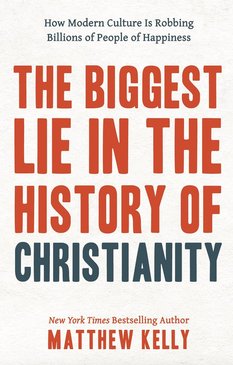
- The Biggest Lie in the History of Christianity: How the Modern Culture is Robbing Billions of People of Happiness by Matthew Kelly
***
- Richville: A Chance for Redemption in a Town Without Pity by Robert C. Jones
- The Bouncer by David Gordon
- Tangerine by Christine Mangan
- (I was originally going to put this under two stars, but I placed it here simply because I understood the reasons why it was being adapted by George Clooney’s film company.)
- The Cold War by Norman Friedman
- The Atomic City Girls by Janet Beard
- Knitting for the First Time by Vanessa-Ann Collection
- Kill the Farm Boy by Deliah S. Dawson and Kevin Hearne
- The Widow by Fiona Barton
- Secrets of Eden by Chris Bohjalian
- The Summons by John Grisham
****
- The Island of Sea Women by Lisa See
- (I originally had this as three stars, but looking back on that review, I realized that four stars is more deserving since the only real problem I had with it mainly occurred in the first third of the novel.)
- Oasis by Bharat Krishnan
- Divan of Shah by Rizvi Shah Asad
- One Day in December by Josie Silver
- You Can’t Spell America Without Me: The Really Tremendous Inside Story of My Fantastic First Year as President Donald J. Trump (A So-Called Parody) by Alec Baldwin and Kurt Andersen
- (I had this as three stars, yet recently, I realized that I wanted to go back to 2017-2018, where all we had to be concerned about with Trump was the 2016 election interference and the border wall. Also, certain kinds of comedy are meant to make people uncomfortable as well as laugh, and political satire falls into that category.)
- Richville: Another Tale of Travail and Treachery by Robert C. Jones
- The Four Sworn: Spring Equinox by Lenore Sagaskie
- The Vampire of Maple Town by Kane McLoughlin
- The Flight Attendant by Chris Bohjalian
- Caterham Sevens: The Official Story of a Unique British Sportscar from Conception to CSR by Chris Rees
- Once Upon a River by Diane Setterfield
- The Rosie Project by Graeme Simsion
- Glass Houses by Louise Penny
- Where’d You Go Bernadette Movie Version
- Where’d You Go Bernadette by Maria Semple
*****
- Charlie and the Chocolate Factory by Roald Dahl
- A Tree Grows in Brooklyn Movie Version
- Before We Were Yours by Lisa Wingate
- Always Look on the Bright Side of Life: A Sortabiography by Eric Idle
- How to Punch Kids in Bathrooms by John Marszalkowski
- Turtles All the Way Down by John Green
- Dear Fahrenheit 451: Love and Heartbreak in the Stacks: A Librarian’s Love Letters and Breakup Notes to the Books in Her Life by Annie Spence
- A Man Called Ove by Fredrik Backman
- Buy My Book: Not Because You Should, But Because I’d Like Some Money by John Marszalkowski
- Eleanor Oliphant is Completely Fine by Gail Honeyman
- The Tea Girl of Hummingbird Lane by Lisa See
- The Four Sworn: Summer Solstice by Lenore Sagaskie
- Confessions of a Campaign Manager by Bharat Krishnan
- The Great Alone by Kristen Hannah
- The Paris Architect by Charles Belfoure
- The Child by Fiona Barton
- We Need to Talk About Kevin by Lionel Shriver
- The Field Guide to Dumb Birds of North America by Matt Kracht
- What the Eyes Don’t See: A Story of Crisis, Resistance, and Hope in an American City by Mona Hanna-Attisha
- The Survivors Club by Lisa Gardner
- Tesla: Inventor of the Modern by Richard Munson
And there you have it! Let me what you think via Facebook, Twitter, Instagram, or email!
For my upcoming book review, all I can say is that it’s about one of the most famous mustached comedians of the 20th century! See ya next week!
Subscribe below to get notified when I post new updates. Also feel free to email me here for any review suggestions, ideas, or new titles!
Oasis Book Review

Full disclosure: I was given a free PDF copy of this book in exchange for an honest review.
There are some books that I finish pretty quickly and others that take me longer to read. This is not to insinuate that I enjoyed the former more because it held my interest longer than the latter. Sometimes, it is worth taking more time to read a book in order to appreciate it better. I realized this after reading Oasis by Bharat Krishnan.
In Oasis, there once was two kingdoms: one named Desperaux, which controlled the west with magic, and other named Desire, which maintained power in the east with steel and science. However, the magic disappeared, which made the world change, and Desire wanted to maintain the new order. On Juno’s wedding day, their Mengery soldiers stormed through the Nine desert and ripped his world apart. Now, Juno journeys to the east with his adopted brother, Trey, for revenge after the murder of his family. They encounter bandits and magical creatures that live in the Nine, but once they get to Desire, they will face their biggest obstacles – their own fears and ambitions.
There are some reasons why it took me longer. The first being that I don’t usually read a lot of fantasy. In fact, the last two fantasy books that I have reviewed on this site were ones that were either based on fairy tales (The Vampire of Maple Town), or a parody of the said genre (Kill the Farm Boy). I have absolutely nothing against the category. I simply take a little longer to read it. The second is that the novel contains a lot of details. It has plenty of characters and specifics related to world building. Many were pretty interesting, yet I sometimes wondered if it was too much (who was Tsoul again?). Nonetheless, every time I came back to the book, I immediately remembered where I was at. Krishnan knows how to end chapters with a bang, especially if it’s reminiscent of the red wedding from Game of Thrones.
The novel is from Juno’s perspective, but it alternates with that of Trey. It’s divided into four parts. The first part is devoted to Juno, and the second one is about Trey. The third and fourth sections swap between the two, even during a single chapter. I didn’t mind this because these characters are written with clear and distinct voices. Juno is a kind, but passive guy, who, throughout the novel, evolves into the leader of the rebel camp as their savior. Trey is a more assertive and anger-filled person with abandonment issues, who works his way up from a chief’s assistant to the king of Desire.
I really like how the novel focuses on brotherhood and the consequences of not taking any action. Usually, a lot of books in the fantasy genre have a lot of romance between the main and supporting characters. While Oasis has some of that, the focus is on the relationship between Juno and Trey as brothers. They had been together since Juno’s family adopted Trey and his sister Drea when they were kids. As the book progresses, the two become separated both physically and mentally even though both of them thought they knew one another.
In addition, I like how it acknowledges that even not doing anything can lead to some dangerous results. In the beginning of the novel, Trey gets consumed by some demons and is later separated from Juno. Those fiends grow inside Trey throughout the novel, and they even convince him that Juno is not the friend that he thought he was. Juno spends a good chunk of the novel wanting to know if his brother does not have the demons anymore. At the climax, Trey accuses Juno of not helping him fight them, but the latter asserts that it was not that he didn’t care, it was that he didn’t know what to do. Readers might see this with political implications as some might conclude that the lack of action is equivalent to contributing to something evil.
Oasis by Bharat Krishnan is a good read. For me, it took a long time because there was so much to absorb. However, what I got out of it really stuck with me. The characters are well-thought out, and some emphasized aspects like brotherhood and the consequences of not doing anything help make it stand out among other fantasy books. I recommend this book to those who like this genre, especially if they want something a little bit different.
Subscribe below to get notified when I post new updates. Also feel free to email me here for any review suggestions, ideas, or new titles!