Dewey: The Small-Town Library Cat Who Touched the World Book Review

Every now and then, a book will show up at the right place and the right time. When that happens, I’ll know I have to read it right then and there. I had this occurrence recently when I picked up the Dewey: The Small-Town Library Cat Who Touched the World by Vicki Myron with Bret Witter. I had been in need of a cat fix since one of the ones I knew passed away two months before reading this biography, and it helped that National Library Week was last week. Reading this title couldn’t have come at a better time. Not only is it a wonderful fulfillment of my love of cats, but it’s also a loveable and touching story on how one feline changed a community.

Dewey: The Small-Town Library Cat Who Touched the World is about Dewey Readmore Books – the library cat of Spencer, Iowa. At a few weeks old, he was stuffed into a return slot at the Spencer Public Library. He was found the next day by the library director Vicki Myron, who had struggles of her own. Dewey won her and the staff over by nudging each of them in a gesture of thanks and love. For the next 19 years, he charmed the people of Spencer with his enthusiasm, warmth, humility (for a cat), and his sixth sense about who needed him the most. As his fame grew locally, statewide, and then internationally, Dewey became a source of pride in the Heartland farming town pulling its way slowly back from the greatest crisis in its long history.

Within 10 chapters , Dewey charmed me with his lovability and determination to get attention (strategically of course). I mean, look at his face on the cover! Don’t you want to hold him in your arms after looking at him? (If you’re allergic, I totally get it.) It also helps that he was a people’s cat, as in he thrived when people, regardless of who, were around (except meanies).

Of course, Myron makes it clear that it wasn’t all a walk in the park. She hilariously recounts the times where she had to give Dewey a bath with mostly disastrous results. He apparently also had a habit of chewing on rubber bands and possessed a sixth sense of where to find them even in closed drawers.

Of course, along with the joy, it also recounts certain tragedies. Myron recalls the backstories of the town, the staff, and herself in the book as a way to show what kind of lives Dewey touched. She went through an alcoholic husband, breast cancer, the deaths of two brothers, and getting a Master’s Degree in Library Science while working as the library director. While there were times that I wanted to get back into the adventures of Dewey the library cat, the more I read about those backstories, my heart and understanding grew twice as big. I really felt for Myron and her story, especially when she dealt with her alcoholic husband, her distance from her daughter Jodi, and putting Dewey down in 2007.

Overall, Dewey: The Small-Town Library Cat Who Touched the World by Vicki Myron with Bret Witter is a loveable book about a loveable library cat that connected with everyone that crossed paths with him. Sure, the biography goes into a lot of detail on the author’s life, but holistically it makes sense to know what kind of lives Dewey touched. I would definitely recommend this title to those who like reading about small towns, tragic backstories, and above all, those who love cats and libraries! It will melt you like Dewey melting into your lap.

Subscribe below to get notified when I post new updates. Also feel free to email me here for any review suggestions, ideas, or new titles!
What Am I Reading – Chapter Thirty

Hi Everybody,

I hope all of you are having a great spring so far. I have, despite my pleas for warmer weather. I’ve also been going through books like they were slices of pizza recently. As of late, I’m still working on Once Upon a Winter: A Folk and Fairy Tale Anthology and American Shaolin – Flying Kicks, Buddhist Monks, and the Legend of Iron Crotch: An Odyssey in the New China by Matthew Polly. In addition, I’ve started reading two new titles that I’d love to show you all.

Let’s begin with one of the most noted books within the last 2 years!

Firekeeper’s Daughter by Angeline Boulley revolves around a teenager going uncover to help with a criminal investigation. Daunis Fontaine is a biracial, unenrolled tribal member and the product of a scandal. She feels like she could never quite fit in both in her hometown and on the near Ojibwe reservation. She dreams of studying medicine, but when her family is struck by tragedy, she puts her future on hold to care for her fragile mother. Then comes Jamie. Jamie is a charming new recruit for her brother Levi’s hockey team. As she falls for him, Daunis realizes that some things don’t add up and that he’s hiding something. Everything comes to light when she witnesses a murder, which thrusts her into the heart of a criminal investigation. Reluctantly, she agrees to go uncover. At the same time, she conducts her own investigation, utilizing her knowledge of chemistry and traditional medicine to track down criminals. But the deceptions—and deaths—keep piling up and soon the threat strikes too close to home. Now, Daunis must learn what it means to be a strong Anishinaabe kwe (Ojibwe woman) and how far she’ll go to protect her community, even if it tears apart the only world she’s ever known.

Before I go into my initial thoughts about Firekeeper’s Daughter, I want to say that I’ve been looking forward to reading it for a very long time. Its accolades go without saying, and I knew a lot of people who read and loved it. So why read it now? Well reader, I recently attended Spring Institute – a conference for youth librarians in the state of Michigan, and Angeline Boulley was a keynote speaker there. She was funny and wonderful to talk to. I even got a photo with her! In other words, she was the catalyst for me to FINALLY read Firekeeper’s Daughter!

Now, what do I think of it so far? I really like it. I’ve only gotten through the first part (and there’s four of them in the novel), but I love how the book takes it time to establish its setting and most importantly its characters. Boulley’s descriptions of the various locations in Sault Ste. Marie, Michigan and on Sugar Island were clear and precise that I could imagine them right away. They also make me want to go to those places some day.

In addition, I really got the sense of who Daunis is and her relationships within the first 50 pages. She’s a science nerd who’s going through some recent trauma with her uncle’s sudden death. It doesn’t help that she feels that she doesn’t truly belong with either her white or native relatives.

Moreover, other characters feel very real too. I really like Lily – Daunis’s best friend. She is sex-crazy who puts Daunis in her place, especially when the latter gets too science-y. She also has an on-again, off-again relationship with a guy named Travis who went to school with them. I won’t reveal the conclusion to that saga for those who haven’t read the novel yet. Then, there’s Jamie. At first, he is a cool, funny, and charming guy that I can totally see why Daunis develops feelings for. He has his secrets, and he hides them as much as she does. We’ll see how this relationship unfolds.

While some people might complain about the slow beginning, once the murder happens, it moves at a brisk pace, at least it does so far. I’m looking forward to seeing how Daunis assists with the investigation(s) and develops her true self.

Now, let’s move on to second and final title of this chapter.

Sunflower Sisters by Martha Hall Kelly is the third book in the Lilac Girls series. It revolves around Caroline Ferriday’s ancestor Georgeanna Woolsey – a Union nurse who joins the war effort during the Civil War – and how she crosses path with Jemma – a young enslaved girl who is sold off and conscripted into the army – and Ann-May Wilson – a southern plantation mistress whose husband enlists.

Georgeanna “Georgey” Woosley is not one for lavish parties or being demure. So when war ignites, she follows her passion for nursing during a time when doctors considered women a bother on the battlefield. To prove them wrong, She and her sister Eliza travel from New York to Washington D.C. to Gettysburg and witness the horrors of slavery as they become increasingly more involved with the war effort.

In the South, Jemma is enslaved on the Peeler Plantation in Maryland, where she lives with her mother and father. Her sister Patience is enslaved on the plantation next door, and both live in fear of LeBaron – an abusive overseer who tracks their every move. When Jemma gets sold by her cruel plantation mistress Anne-May at the same time the Union Army comes, she sees a path for freedom even if it means leaving behind the family she loves.

Anne-May is left behind to run the Peeler Plantation when her husband joins the Union Army, and her brother enlists in the Confederate one. In charge of the household, she uses the opportunity to follow her own ambitions and is drawn into a secret Southern network of spies. As a result, she exposes herself to the fate she deserves.

So far, I’ve noticed that Sunflower Sisters follows a similar structure to Lilac Girls. Both have multiple perspectives; have an activist, a victim, and a villain as their main characters; and most obviously, have flowers in their titles. I understand that having more than two points of view is unique in the literary world, especially when it comes to historical fiction. I guess Martha Hall Kelly thought that if it worked the first time, it can work a second, uh I mean third, time (I’ve not read Lost Roses yet, but I plan to do that in the future). At the same time, I hope that it doesn’t come off as formulaic. We’ll see as I continue to read it.

I’ve been listening to the audiobook, which is narrated by Saskia Maarleveld, Shayna Small, Jenna Lamia, and Cassandra Campbell. Campbell needs no introduction as she narrated plenty of books like Where the Crawdads Sing and most logically Lilac Girls. She plays Mary – Georgeanna’s other sister – in the prologue. I don’t know if Mary comes back into the story, but if she doesn’t, it would be a waste of Campbell’s talent. Maarleveld has recorded several audiobooks like The Secrets We Kept by Lara Prescott and lots of titles by Kate Quinn. She takes on the role of Georgey, and I like it so far. She gives off an Amy March vibe specifically from the 2019 version of Little Women with a little less selfishness. I haven’t gotten into Small’s nor Lamia’s performances yet, but I look forward to hearing them and more of Maarleveld and Campbell (hopefully).

We have now come to the end of the thirtieth chapter of “What Am I Reading?”

Subscribe below to get notified when I post new updates. Also feel free to email me here for any review suggestions, ideas, or new titles!
For Whom the Bell Tolls Movie Review

Content Warning: this review contains discussions on brown face.

Whenever a novel is adapted into film, there are three ways that it can be approached. One is to take elements from the book loosely. Another is to follow the main plot of the novel, but change certain aspects of it like structure and characters. The third way is to adapt almost everything from the book with little to no alterations. The movie version of For Whom the Bell Tolls falls neatly into the third category. I mentioned a while back that I was reading that novel by Ernest Hemingway, so I could watch the film version from 1943 starring Gary Cooper and Ingrid Bergman for The 300 Passions Podcast. Well reader, I viewed the film very recently, and it desperately wants to be the novel without fully capturing the spirit. I’ll analyze the good, the bad, and the why aspects of the movie in this context.

Let’s begin with the good. In addition, the action scenes were well shot. Cinematographer Ray Rennahan shoots these sections with a variety of angles that often includes lots of closeups of the main characters. These shots are extremely effective since they show those characters’ reactions to what’s happening around them and to others and emphasizes the stakes involved. A case in point is the scene, in which each member of the guerilla group tries to move past the fascists while on horseback as the latter shoots at them. The tension is well placed, and the long and closeup shots are appropriately used. 

Furthermore, the score by Victor Young really suits the atmosphere that the film desperately wants to be. Its sweeping dramatic and romantic melodies along with plenty of Spanish guitars capture the flair of the main location and tries to convince audiences to believe that it’s a grand epic. If it was a silent movie, I’d buy into that. It also helps that it’s pleasant to listen while cleaning the bathrooms during the overture and intermission.

In addition, I like the look of the flick. It’s not necessarily ugly, but it’s de-glamorized. Knowing how Hemingway’s novels contained a lot of realism, it makes sense to make the environment – high up in the mountains of Spain – as naturalistic as possible. This includes a color palette of white, tan, black, purple, blue, green, and brown – lots and lots of brown (we’ll get to that when we get the why section of this review). Even Ingrid Bergman as Maria, who always looks beautiful, is de-glammed with her short hair and formless shirt and pair of pants. Also, the film shows plenty of sweat and blood, especially during the action scenes. All of these elements make it look visually effective. This marks the end of the good elements of the film.

Now, let’s move to the bad, or more specifically the dull. Where to start…oh yes, there’s a lot of talking. There’s nothing wrong with that since that can be effectively used to get points across in filmmaking, but movies are still a visual medium. In other words, people go to the cinema to watch flicks, not to listen to them. Many scenes in For Whom the Bell Tolls contain scenes with heavy dialogue with little to no variety. For those not familiar with the book, these can be painfully boring to them and make it harder for them to follow along. 

To be fair, this isn’t entirely the film’s fault. The book consists of a lot of dialogue as well. The main problem with the movie is that the filmmakers involved, including director Sam Wood and screenwriter Dudley Nichols, felt that they needed to include almost everything in the book. Given that the novel is unnecessarily long, this makes the flick just the same. As mentioned earlier, the film even has overture music and an intermission. Yes, it’s almost Gone With the Wind long. Speaking of that movie, Sam Wood was briefly involved with that one, so I have a feeling that he wanted to make his own epic based on a popular book. For Whom the Bell Tolls the book sold over half a million copies when it was originally published in 1940. According to the recent Ken Burns documentary on Hemingway, the only novel that sold more at that time was in fact Gone With the Wind. In other words, by making For Whom the Bell Tolls a cinematic epic, Wood was making Oscar bait.

Speaking of translating the book to the screen, whatever nuance the novel had got eliminated or watered down in the movie. This essence mainly lied in the politics surrounding the Spanish Civil War and the trauma some of the characters face. For example, in the book, one of the guerilla members asks Robert if he’s anti-fascist. He says yes, and the guy who pondered that automatically assumes that he’s pro-communist. Robert quickly clarifies that he’s both anti-communist and anti-fascist (beliefs that Gary Cooper himself held in real life I may add). The screenplay depoliticized the story so much that outside of a few lines of dialogue, there’s barely any indication of which side the guerilla group is fighting on. I understand doing that while the United States still held its isolationist stance until 1941. Additionally, Robert himself was only involved with the Spanish Civil War to fight for democracy; he didn’t care much about the politics surrounding it. However, the film was released in 1943, and the US was fully involved in a war fighting against you guessed it – fascists! I have a feeling that Sam Wood’s staunch anti-communist beliefs played a part in that (I’m not saying that he was a fascist). 

In addition, the book talks a lot about trauma. A little of this is retained since Marie’s short hair is the result of the forceful actions of fascist thugs. However, the novel explores this more along with Robert’s family history. Robert has inner monologues about what it means to be a man, and he recalls how he wanted to be like his grandfather, who fought in the American Civil War and lived, because his own father took his own life. I’ll let that one slide because Hollywood wasn’t (and still is to a degree) exactly comfortable talking about mental wellness issues at the time.

Also in the book, Robert monologues to himself about whether or not he’s willing to die for the cause since he feels that all hope is lost on the anti-fascist side. This theme is echoed throughout the book. For example, when El Sordo and his men are fighting on top of the hill, the fascist officer at the bottom of the base wants one of his soldiers to climb up to see if they are dead. That man refuses because he doesn’t want to die. In addition, this theme comes full circle when Robert is dying by a tree after his leg gets crushed by the horse he was riding. He spots another fascist soldier and gets his gun ready, and the book abruptly ends. At first, I thought that was odd, but the more I thought about it, the more I realized that Hemingway purposely made it ambiguous to let how Robert deals with that soldier up to the reader. In the movie, a lot of that discussion on whether or not it’s worth dying for the cause is primarily contained in the El Sordo fighting scene. Missing that aspect throughout the film makes the ending less justified in its abruptness and adds more annoyance to the viewers.

What about the performances? I found a majority of them to be dull. I normally enjoy Gary Cooper and Ingrid Bergman, yet their performances were bland. Granted, their characters in the book are already mostly boring to begin with, but great actors can bring depth and dimension even to characters who are not known for those things. I’m not saying Gary Cooper and Ingrid Bergman are not good actors (the latter had finished shooting Casablanca, which contains one of her finest performances on screen, when she accepted the role of Maria). What I am claiming is that they could’ve done more with those characters. Cooper is doing his usual strong silent type with no real variation, while Ingrid is a little too happy playing a woman who recently had a traumatic experience. With the latter, she seemed more concerned with her hair than with dealing with the trauma that is associated with the short tresses. In fact, everytime she appears on screen, Bergman touches her hair at some point, even when Maria becomes more comfortable around Robert. It’s as if all of her trauma would go away if her hair grew.

Now, let’s discuss Katrina Paxinou. She won an Oscar for Best Supporting Actress for her part as Pilar in the film (the sole award that the film won out of 9 nominations). Film critics have decreed it as one of the worst Best Supporting Actress wins, and I can’t say that I disagree with them. Paxinou’s performance is basically “I’m a strong, confident, and ugly woman, hear me roar! Roar, roar, roar!”

Granted in the book, her character doesn’t have a whole lot to do besides show off how much of a better leader she is than her husband Pablo is. Additionally, The 300 Passions Podcast host Zita Short was right when she said that as Pilar, Paxinou moves and talks with purpose and always has a goal. Nevertheless, the issues that I have with Cooper and Bergman apply with her too. She doesn’t elevate the role outside of what the script calls for. It’s a shame because I was really looking forward to seeing how Pilar would be depicted on film after reading the book.

And last but not least, we must discuss the why. What is the why in this case? I’m glad you ask: it’s the brown face. All of the guerilla members that aren’t Robert are caked with brown face to make them look more “Spanish.”

Now, of course, I understand that there are some people, especially Americans, that don’t realize that a lot of Spaniards actually have a variety of skin colors, including pale. This is mainly because of the notion that white people have that Spanish-speaking people have brown skin. I easily comprehend this ignorance on Wood’s end for that decision, yet I’m not letting him off the hook. However, half of the blame for that problematic element is Hemingway himself. Throughout the novel, he describes the supporting characters as having brown skin even though he went to Spain as a foreign correspondent to cover the Spanish Civil War, so he knew what Spainards looked like. And yet, he still chose to depict the Spanish characters with brown skin. It doesn’t help that the movie has the more flawed supporting characters with darker brown skin as opposed to Marie, who is nice and beautiful and possesses a lighter hue. 

It’s because of this decision that I couldn’t take the performances of the supporting cast seriously. This is especially true of Paxinou, who won an Oscar for that role! In addition, while I was watching the film, I noticed that there was a clear line of where the brown makeup ended on her neck, and I could see a bit of her naturally pale skin below that. It frustrates me to know that the film wanted these characters with pancaked brown skin to be taken seriously. However, not only is that makeup extremely uncomfortable, but it’s also a bad job.

See the bad and obviously problematic makeup in its full glory!

Given all of my criticisms, For Whom the Bell Tolls is not the worst movie adaptation of an Ernest Hemingway work. That distinction goes to the film version of Hemingway’s short story The Snows of Kilimanjaro starring Gregory Peck, Ava Gardner, and Susan Hayward. That one is a dirge with a capital D with uninteresting visuals and characters that I didn’t care about for one second. At least, the former tried to make me care about the people involved in blowing up the bridge, and that was successful…sometimes.

Overall, the movie version of For Whom the Bell Tolls is dull with a capital D. It has some good visuals and music, but they don’t save it from its length, the amount of talking, the lack of nuance the book had, the bland performances, and the brown face. At face value, I wouldn’t recommend this movie, but if someone wants to watch it for Oscar season or for curiosity’s sake, I’m not going to stop them. If anything, the film is a good example of why filmmakers shouldn’t try to include everything that happens in the novel they’re adapting.

If you haven’t already, go listen to The 300 Passions Podcast, where I discuss the film in more detail with Zita Short!

Subscribe below to get notified when I post new updates. Also feel free to email me here for any review suggestions, ideas, or new titles!

For Whom the Bell Tolls Book Review

Let’s talk about the man, the myth, the bullfighter – Ernest Hemingway. He was known for his concise and masculine style of writing. He also received plenty of accolades for work. His best known titles are The Sun Also Rises (1926), A Farewell to Arms (1929), The Old Man and the Sea (1952), and the subject of today’s review For Whom the Bell Tolls (1940). For Whom the Bell Tolls was so successful at the time of its release that it sold over half a million copies and was considered for the Pulitzer Prize (it didn’t get it because an ex-officio chairman of the board vetoed the jurors’ unanimous choice). What do I think of it? It’s simply okay. There are parts that work, and others that don’t work as well.

For Whom the Bell Tolls shows the story of Robert Jordan, a young American from the International Brigades who’s fighting in an antifascist guerrilla unit in the Spanish Civil War. It tells of loyalty and courage, love and defeat, and the tragic death of an ideal. This is basically the fictionalized version of what Hemingway himself experienced while covering the war as a foreign correspondent for the Northern American Newspaper Alliance. Long story short, it’s about a guy who’s assigned to blow up a bridge with an antifascist guerrilla group and all the events that occur in the 3-4 days that he’s with them.

So readers would probably want to know if I have read any of Hemingway’s stories in the past. Yes, I have. In my English class in my senior year of high school, I read one of his Nick Adams stories “Indian Camp.” With that story, we learned how to detect subtext. And man, there was plenty of that knowing how Hemingway coined the phrase “iceberg theory” (or how Lindsey Ellis calls it “K.I.S.S.” [keep it simple stupid]).

Is there plenty of subtext in For Whom the Bell Tolls? There’s surprisingly not a whole lot. A good chunk of that could be found roughly in the first 100 pages. Afterwards, circumstances and motives become very clear. This makes sense as Hemingway perfected the “iceberg theory” while working in journalism, so writing a full-length novel allows him to discuss more topics explicitly.

Let me start off with the positive aspects of the novel. Hemingway is surprisingly good at writing women. At first, Robert’s love interest Maria feels like any other woman in a book written by a white guy in the mid-twentieth century, where beauty is more valued than personality. However, Maria went through sexual assault at the hands of fascists thugs. When she revealed her backstory to Robert, it made me feel a bunch of things like anger and sadness. Despite protests from him to stop, she was determined to tell her story as a way to heal herself. During a portion of the novel, Robert constantly thinks that if she had longer hair, she would be beautiful. However, when he hears of her tragic backstory, he immediately stops thinking that because he knows that her short hair is not her fault. Additionally, Pilar is a wonderful multi-dimensional woman. She can be manipulative and a bully at times, yet she’s the true leader of and mother to the group. I always looked forward to what she had to say. She’s easily more fleshed out than Maria. It makes me wonder if Hemingway inserted his third wife Martha Gellhorn into Pilar because the book is dedicated to her, and he liked to insert real people into his characters. Also, Pilar was a nickname Hemingway gave to his second wife Pauline Pfeiffer and to his boat that he had in Cuba.

Another aspect that worked was the misunderstandings within one side. During the third act, Robert orders Andres to give a note to Commander Golz calling off the bridge demolition. However, Andres runs into some obstacles like encountering antifacist officials who think he’s the enemy. It takes him hours to accomplish this. By the time Andres presents the note to Golz, Robert decides to go ahead and blow up the bridge. Moreover, early in the novel, the group gets to know one another by finding out the reasons why there’s fighting on the antifacist side. When Robert reveals that he’s an antifacist, one of the other members asks if he’s a communist (since they were backing the Republicans or those who wanted a democracy during the war). He says no, for he’s simply an antifacist. I can understand the misinterpretation since the fighters might not always share the same views as their supporters.

Now, let’s look at the aspects that don’t work as well. First, Hemingway didn’t need to make the novel 471 pages because not much occurs during a good chunk of it, and it takes place over the course of 3-4 days. There’s a lot of waiting and talking about what’s going to happen, but I’m forgiving since a lot of war involves waiting and strategizing, especially when to blow up a bridge. However, there comes a point, where there could’ve been more compelling short stories from the various parts from the novel. For example, Pilar’s recounting of the rampage at a village during the early part of the war was pretty interesting. However, once I came across Chapter 27, the book had a wake up call and started building up to the finale. This held my interest til the very end. 

Nothing and everything occurs in For Whom the Bell Tolls. During the 3-4 days that Robert is with the group, he falls in love with Maria and gets involved in a plot to kill Pablo – the designated leader and Pilar’s husband. So, there’s plenty of action. It could’ve been a lot worse, it could’ve been The Polished Hoe, which has all the events taking place during one night and is 480 pages. Was there much action? Barely!

In addition, Robert Jordan feels a bit bland, for he’s the typical Hemingway Hero. That’s the problem. He’s typical. He displays honor, courage, and endurance like any other hero in Hemingway novels. What makes Robert stand out is that he loves to think long and hard about things like his father’s suicide and contemplates about whether or not this war is worth fighting for. This helps and hinders him, especially when his group tries to convince him to kill Pablo. Heck, even Hamlet does more in the namesake play than Robert Jordan does. I found it hilarious that in Chapter 35, Robert swears like a sailor but with the word muck. In the subsequent chapter, the author inserts the word obscenity like “what the obscenity.” I guess Hemingway wanted to make sure For Whom the Bell Tolls got passed the censors? 

There’s also casual racism. During the course of the novel, Hemingway wanted to make sure that readers knew that the majority of the characters were Spaniards by mentioning their brown skin at almost every possible chance he got. You think that he would be aware of the fact that not every Spaniard has brown skin since he actually was in Spain during the Spanish Civil War, right? A lot of Spaniards have lighter skin. Moreover, there’s a Romani character named Rafael, who is seen as worthless because he’s lazy and a criminal. Robert Jordan even thinks that Rafael is those things because he’s a part of the Roma group.

Others complained about the use of thees and thous, but I really didn’t mind. Early on, Robert identifies that the Spainards speak in the old Castilian dialect. Anytime those characters used those archaic words, it meant they were speaking old Castilian Spanish, and Hemingway incorporated some real Spanish words and phrases to drive home the point.

Overall, For Whom the Bell Tolls by Ernest Hemingway is a rather okay book. I’m not sure if it should be in the literary canon today, but it has its worthy aspects that I’m sure some readers will enjoy. I would recommend it to those who love Hemingway and those interested in reading novels that take place during the Spanish Civil War. It’s no wonder why the book’s legacy basically lies in a 1943 movie version, a great Metallica song, and a Dog Man sequel.

Speaking of that film, there’s a special reason why I read this novel. I made a guest appearance on The 300 Passions Podcast, where we talked about the film version starring Gary Cooper and Ingrid Bergman as well as why it failed to make the cut on the American Film Institute’s 100 Years…Passions list. I figured it would be best to read the book first, and then see how the film translates it to the screen. So stay tuned for my movie review as well as for that episode!

Subscribe below to get notified when I post new updates. Also feel free to email me here for any review suggestions, ideas, or new titles!
What Am I Reading – Chapter Twenty-Nine

Hi Everybody,

I’ve been reading lots of wonderful books lately, and I want to show two new titles that I started recently. Both of them contain main characters attempting to avoid persecution by passing.

Let’s begin with something that’s definitely suited for my profession!

The Personal Librarian by Marie Benedict (the pen name of Heather Terrell) and Victoria Christopher Murray explores the little-known story of Belle da Costa Greene – J.P. Morgan’s personal librarian – who became one of the most powerful women of New York despite keeping a dangerous secret that would prevent her dreams from coming true. In her twenties, Belle is hired by the legendary J.P. Morgan to curate a collection of rare manuscripts, books, and artwork for his newly built Pierpont Morgan Library. She becomes a staple in New York society and one of the most powerful people in the book and art world, known for her taste and negotiating skills as she helps to build a world-class collection. However, she has a secret, one she must protect at all costs. Her darker complexion is not because of her Portuguese grandmother, but it’s because she’s Belle Marion Greener, daughter of Richard Greener – the first Black graduate of Harvard and a well-known advocate for equality. This tells the story of a women known for her style, taste, and wit and the lengths to which she must go —for the protection of her family and her legacy—to preserve her carefully crafted white identity in the racist world in which she lives.

I’m half way through the audiobook, and I really like it. Belle is a savvy librarian and art collector, and I enjoy the sections where she displays her style and wit. At the same time, Murray and Benedict are not afraid to show Belle’s vulnerability, especially when she gets close to Mr. Berenson – one of Morgan’s rival art collectors. The authors blend these two aspects together seamlessly. In addition, the fact that Belle da Costa Greene was a real person only adds to the realism of the story.

My only complaint is that the plot of The Personal Librarian feels too similar to that of Carnegie’s Maid by Marie Benedict. I haven’t read the latter, but I couldn’t help but notice that their blurbs are almost identical. Both stories deal with women from a lower class who end up working for rich men. They display their business instincts so effectively that their bosses began to rely on them and even grow closer to them. However, they have to keep their guard up because of secrets that they harbor. For Belle, it’s that she’s a light-skinned black woman, and for Clara Kelley from Carnegie’s Maid, she’s a poor farmer’s daughter who assumes the identity of an Irish maid after the latter woman has vanished. It’s almost like Benedict has the same Mad Libs sheet, and she only changed the nouns.

The audiobook is narrated by Robin Miles. While Miles has acted on and off Broadway and in tv shows like Law and Order, she’s best known as an audiobook narrator. She has received accolades for titles like Just As I Am by Cecily Tyson and Michelle Burford, Caste: The Origins of Our Discontents and The Warmth of Other Suns: The Epic Story of America’s Great Migration by Isabel Wilkerson, and Charlotte’s Web. Miles has also recorded audiobooks for The Seven Husbands of Evelyn Hugo by Taylor Jenkins Reid, The Book of Lost Friends by Lisa Wingate, and Hidden Figures: The American Dream and the Untold Story of the Black Women Mathematicians Who Helped Win the Space Race by Margot Lee Shetterly.

Miles provides the main character with the needed elegance, wit, and vulnerability to make the character believable. She also distinguishes other characters well. While her male characters tend to have a similar Mid-Atlantic accent (unless they are explicitly from another country besides the United States), she sprinkles some vocal differences in them. For example, Morgan himself has a stern tone, and Mr. Berenson displays a kinder one. I look forward to hearing the rest.

Now, let’s move on to second and final title of this chapter.

Maus II: A Survivor’s Tale – And Here My Troubles Began by Art Spiegelman recounts the horrors that the author’s father faced during the Holocaust and how he survived with the Jewish people portrayed as mice and the Nazis as menacing cats. It also weaves in the story of a fraught relationship between the two men and the legacy of generational trauma. At every level this is the ultimate survivor’s tale – and that too of the children who somehow survive even the survivors.

And if in case you’re wondering, yes, I’ve also read Maus I: A Survivor’s Tale: My Father Bleeds History, and I plan on reviewing both as a single entity. And yes, I’m reading this because of the controversy surrounding the acclaimed graphic novel. However, I’ve had a personal interest in it for a very long time, and I’ll go more in depth about that in the actual review.

Now, onto the book itself, it’s very powerful. The Jewish people as mice and the Germans as cats recalls a quote that Hilter once said, “The Jews are undoubtedly a race, but they are not human.”

Depicting these people as animals makes it devastatingly clear how the Nazis and other Germans saw the Jewish people and how race played a huge role in identity.

It also doesn’t hold back showing how Vladek – the author’s father – survived Auschwitz with every possible opportunity. The black and white images show hung dead mice and even them being burned alive. It’s definitely not for someone who is easily triggered by content like that. In addition, in one section of the book, the author is shown wearing a mouse mask at a desk that’s on top of a bunch of dead mice. Other reviewers have pointed out the symbolism, but it’s worth repeating that it’s a great depiction of one man’s burden to tell the tales of those who vanished in the Holocaust and how being Jewish doesn’t entirely define one’s identity.

Another aspect that I’ve enjoyed both in Maus I and II is that Vladek is portrayed as a flawed individual. He constantly tries to save money in extreme ways like returning already open cereal boxes and gets into constant arguments with his son about various things. Also, he barks at Art when the latter and his wife Francoise pick up a black dog (uh, I mean man) from the side of the road. Vladek feared that he would steal their groceries. His racism against black people is definitely seen as hypocritical given the persecution he faced as a Jewish person in 1930s and 1940s Europe. I can’t wait to see how it ends!

We have now come to the end of the twenty-nineth chapter of “What Am I Reading?”

Subscribe below to get notified when I post new updates. Also feel free to email me here for any review suggestions, ideas, or new titles!
The Phantom Tollbooth Book Review

As I mentioned two weeks ago, for every Battle of the Books, the Children’s Librarians at my work get to pick 10 titles to read. They have to be from a variety of genres, but one of them has to be a classic. For this year, we decided on The Phantom Tollbooth by Norton Juster, who passed away one year ago tomorrow. I can absolutely see why; it’s wonderfully silly and absurd with an important message of applying what we learn.

The Phantom Tollbooth revolves around Milo – a bored kid – and his adventures in the Lands Beyond. After coming home from school one day feeling disinterested, Milo discovers a mysterious tollbooth that appears in his room. With nothing better to do, he drives through. While there, he encounters many places in the Lands Beyond like the Kingdom of Wisdom and the Island of Conclusions, meets various characters like a literal Watchdog, and embarks on a quest to rescue the princesses Rhyme and Reason. During his travels, Milo realizes that life is exciting and beyond his wildest dreams.

Unsurprisingly, The Phantom Tollbooth gets compared to Alice in Wonderland a lot, and it’s not hard to see why. Both have bored protagonists that encounter strange and unique worlds. Those environments are laced with absurd logic that the characters have to deal with, and both come across danger frequently. However, there are some crucial differences. For starters, Alice is on her own for her journey, while Milo has two companions – the Watchdog and the Humbug – for most of his quest. Also, the latter learns from his experiences, yet it’s not entirely clear if the former does. Finally and most importantly, what happens with Milo is real, while it’s all a dream for Alice. It also turns out that Juster never read Alice in Wonderland

It’s clear that he wanted to do the whole person-goes-to-a-whole-new-world troupe, but in a special kind of way, and it works. At first glance, the Lands Beyond is the typical absurdist realm with logic that vastly differs from the real world. However, when one examines it a little closer, it’s one that’s filled with puns, lots of them! For example, in order to get to the Island of Conclusions, one has to jump. Also, one minor character is a bee that spells everything. On the other hand, since the book was published in 1961, there might be some puns that might fly over people’s heads. For instance, when the main characters are running away from the demons in the Mountains of Ignorance, one of the monsters is horned and named Dilemma. Some people might not know the phrase “on the horn of a dilemma.” 

Luckily, readers are given a break from the puns every now and then. It’s not like some of the parody fantasy books, where they go overboard on them. This is especially true with the maps (I’m looking at you Kill the Farmboy!).

Moreover, in a handful of fantasy books, if the world is absurdist or contains a lot of anti-logic, it’s that way for the sake of it. In the case of The Phantom Tollbooth, there’s a legitimate reason why it’s that way. The princesses Rhyme and Reason have been locked away by two bickering brothers who rule their own kingdoms. As such, the citizens in the Lands Beyond act more like characters in a Marx Brothers film than in the normal world. It’s up to Milo, the Watchdog, and the Humbug to rescue them.

The illustrations are a wonderful addition to the story. The map has just the right amount of detail. It shows where certain places are as well as the terrain. Furthermore, the map looks like it was illustrated in the 1700s, which adds to how important the Lands Beyond see themselves, especially since it’s all done in pencil. The rest of the illustrations are well done. Milo is depicted as a typical white boy, while the sillier characters are drawn in the ways that the author describes. At one point, Juster tries to describe a monster to the readers, but since he lacks the articulation at that moment, he basically tells them to see it for themselves.

Now, we must talk about the characters. Milo is a bit bland because he stands in for every kid who felt bored at school. He isn’t much different from other protagonists who are transported to other worlds like Alice and Dorothy. The stand out characters are the ones that Milo comes across on his journey. These include the Humbug, a bug who’s arrogant and foolish and likes to use big words for the sake of loquacity; the kings of Dictionopolis and Digitopolis, who are the brothers that bicker and argue about their superior mode of communication; and the person who’s tall to short people and short to tall ones. They all have their one defining character trait, yet they’re all effectively silly in their own distinctive ways.

The one final thing that I want to mention is the messages. Normally, when these occur in children’s media, they tend to hit their viewers over the head repeatedly, but they can come off as shallow and even condescending if not executed properly. The Phantom Tollbooth has various messages, yet Juster integrates them into the story so fluidly that some might not realize that they’ve come across one. The whole plot revolves around applying the things that we learn. At first, Milo is bored with education because he doesn’t know what to do with the stuff he’s taught. Once he goes through the tollbooth and experiences in the Lands Beyond, he discovers that there are other ways to learn beyond the school setting. This quote hammers in that point: “But it’s not just learning things that’s important. It’s learning what you do with what you learn and learning why you learn things at all that matters” (p. 233).

Now to jump to my conclusion, The Phantom Tollbooth by Norton Juster is a wonderful classic kids’ book. It’s very silly, and it contains a profound message about learning and experiencing all of the senses. I’d recommend it to both adults as well as kids, especially to those who love fantasy, absurdist worlds, and puns. Now, if you all will excuse me, a tollbooth just showed up at my place, and I’m going to explore it. Bye!

Subscribe below to get notified when I post new updates. Also feel free to email me here for any review suggestions, ideas, or new titles!

What Am I Reading – Chapter Twenty-Eight

Hi Everybody,

I hope everyone had a great Presidents’ Day last week. I sure did because it gave me plenty of time to read. The titles that I’m going through right now are American Shaolin – Flying Kicks, Buddhist Monks, and the Legend of Iron Crotch: An Odyssey in the New China by Matthew Polly, Once Upon a Winter: A Folk and Fairy Tale Anthology , and the one I just started reading.

Serafina and the Black Cloak by Robert Beatty is the first book in the Serafina series. Serafina and her pa – the maintenance man – have secretly lived in the basement at the Biltmore estate as long as she can remember. She has explored the mansion, yet she must take great care to never be seen. None of the rich folk including the owners – the Vanderbilts – know that she exists. But when various children at the estate start disappearing, only Serafina knows who the culprit is – a man in a black cloak who stalks Biltmore’s grounds at night. After she escapes, Serafina risks everything by joining forces with Braeden Vanderbilt – the young nephew of the owners. Together, they must uncover the true identity of the Man in the Black Cloak before more children vanish. In the meantime, Serafina’s hunt leads her into the forest that her pa had taught her to fear. There, she discovers a forgotten legacy of magic, one that’s bound to her own identity. To save the children of Biltmore, Serafina must seek answers that will unlock the puzzle to her past.

I’ve read two-thirds of the book so far, and I like it. Serafina is a very interesting character who wants to know her true identity. For someone who’s been isolated for most of her life, she’s able to read people’s emotions pretty well. To be fair, she’s been observing the rich people all of her life. In addition, when her pa reveals where she actually comes from, her reactions are normal for a 12-year-old who just discovered the truth to something, ranging from relief that she has an answer to angry that her dad didn’t tell her sooner. I’ve been rooting for her to discover her true identity and to connect with people beyond the basement.

I also enjoy the world building in the novel. The descriptions of the basement that Serafina and her pa give it an isolated, yet comfy environment. For the Biltmore estate, it’s portrayed as a grand, but cold place with most of the rich people being indifferent to others who aren’t like them. This is especially true when Serafina leaves the grounds for the first time and remarks on how spooky it looks from the outside.

We’ll see how the rest plays out!

We have now come to the end of the twenty-eighth chapter of “What Am I Reading?”

Subscribe below to get notified when I post new updates. Also feel free to email me here for any review suggestions, ideas, or new titles!
The Crossover Book Review

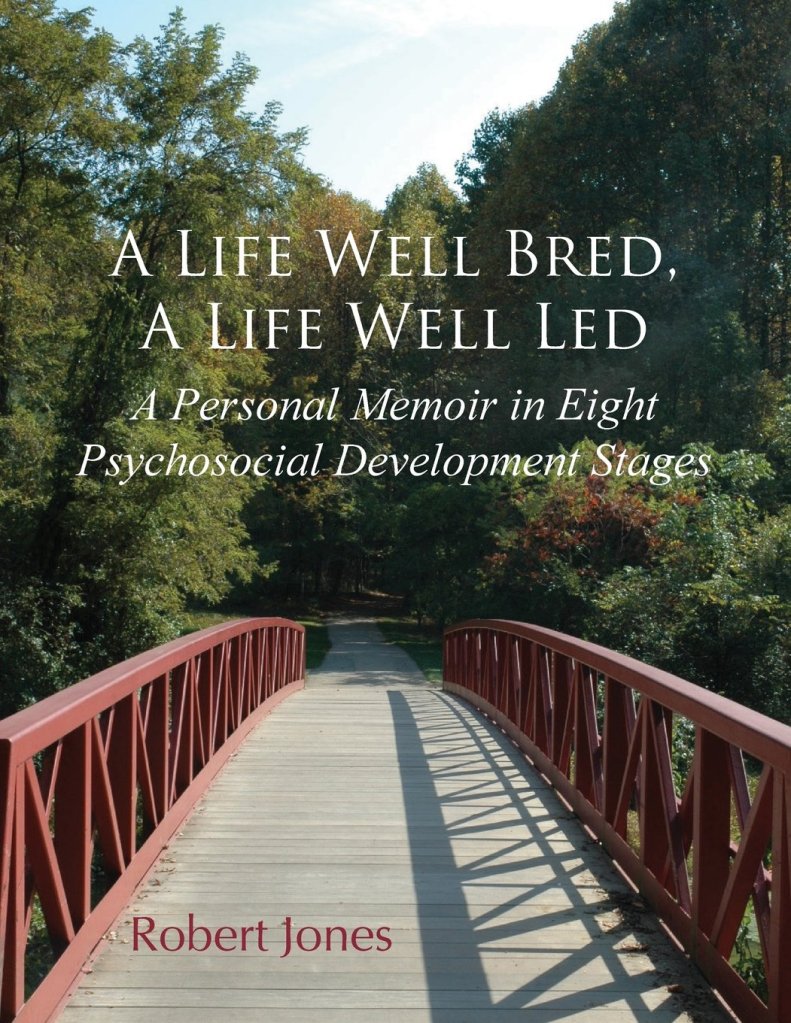
As a Children’s Librarian, one of the tasks that I have to do every year is host Battle of the Books for 5th graders. For 2022, The Crossover by Kwame Alexander was one of the titles that we picked for a multitude of reasons. It won the Newbery Medal in 2015, and it’s the only one of the batch that’s written in verse. Additionally, Disney+ will produce a series based on the novel. I can easily see why; it’s fun, honest, and heartbreaking.

The Crossover tells the story of Josh and Jordan (aka JB) Bell – twin 13-year-olds who love playing basketball and excel at it too. But once JB falls in love with the new girl at school, Josh can’t help but feel left out, and their bond starts to unravel. The twins must come to terms with growing up on and off the court. This is especially true when they realize that breaking the rules comes at a price.

I was hooked on the first page. Josh and JB act like real brothers. They play basketball, but they have their differences. Josh, who goes by the nickname Filthy McNasty on the court, loves his dreads, English, and language. He is a good dunker too, but he sometimes thinks that the world revolves around him. JB has a bald head, and he loves to place bets. He’s also good at free throws. In addition, how they interact once their bond starts unraveling feels real. Josh tries to tell JB that he’s sorry only to be given the cold shoulder many times. How they make up feels natural without being overly sentimental. I also love the supporting characters like Chuck – their dad. He’s a former basketball player who loves jazz, especially Horace Silver, but he has some health issues that the brothers have different reactions to when things take a turn for the worse.

As I mentioned before, the book is told in verse. Not all of it is in rhyme, which may appeal to those might not like poetry for that reason. Additionally, the poems themselves have a wonderful flow to them. The ways that they are written, especially when Josh tells readers his play-by-plays on the court, are how they should be spoken, and they are a blast to read out loud! I would love to see how those sections are translated in the show.

Other aspects that makes the book unique is the way that it includes basketball lessons and definitions of various words (I assume these words are part of the vocabulary test that Josh and JB have to take). Every now and then, a lesson will show up in the book, but it’s not slapdash. They’re strategically placed at certain moments to reflect the plot at that time. For instance, when Josh is feeling down about all that’s going on around him, including JB not speaking to him, he relays this basketball lesson: “Rebounding/is the art/of anticipating,/of always being prepared/to grab it./But you can’t/drop the ball.”

As for the definitions, Josh would define a word, and then put it into various sentences, including one that ties into the story at that particular moment. For example, Josh describes hypertension – the illness the dad has – including how to pronounce it. He then puts it into a variety of examples, including “As in: I think/my grandfather/died of hypertension?

It can be sugar coated in some places; that’s only because the mom doesn’t want the twins to worry too much about their dad. What is revealed about their dad’s failing health is handled in genuine ways. When the dad goes into a coma after playing some one-on-one with Josh, Josh goes into the “what if this happened instead” mode as he blames himself for stressing his father out too much. 

All in all, The Crossover by Kwame Alexander is an excellent book that anybody from a tween to an adult can enjoy. Its characters and their relationships are highly believable, and despite their flaws, readers can still root for them. Also, did I mention this is in non-rhyming verse? I would recommend this title to those who love sports, especially the obvious; coming of age stories; and reading about siblings. I can’t wait to see how it does as a series on Disney+.

Subscribe below to get notified when I post new updates. Also feel free to email me here for any review suggestions, ideas, or new titles!
What Am I Reading – Chapter Twenty-Seven

Hi Everybody,

I hope everyone’s having a great Valentine’s Day! I sure am!

I have a new book to show you all. Sadly, it’s not a romantic book, but it’s very interesting.

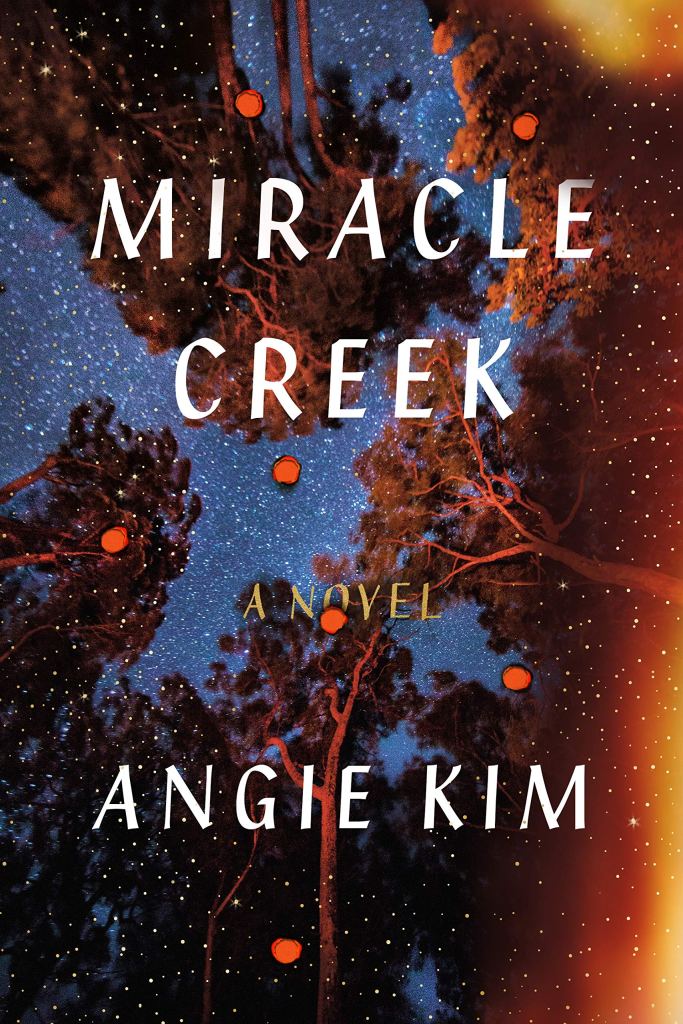
Win by Harlan Coben is the first book in the Windsor Horne Lockwood III series. Over 20 years ago, Patricia Lockwood was kidnapped during a robbery of her family’s estate. For many months, she was locked up in an isolated cabin. She managed to escape, but so did her captors, and the stolen items were never recovered. In the present day on the Upper West Side, a recluse is found dead in his penthouse apartment, alongside two objects of note: a stolen Vermeer painting and a leather suitcase bearing the initials WHLIII. Now, the police have a lead on not one, but two cases – Patricia’s kidnapping and a FBI cold case. Windsor Horne Lockwood III or Win doesn’t know how those items ended up there. However, his interest increases when the FBI tells him that the man who kidnapped his cousin was also behind an act of domestic terrorism – and that the conspirators may still be at large. The two cases have baffled the FBI for decades, but Win has three things the FBI doesn’t: a personal connection to the case; an ungodly fortune; and his own unique brand of justice.

So far, the mystery/suspense aspects of this novel feel typical, but what makes it stand out is Win himself. Win tells readers right away that he’s very rich, and he’s not afraid to flaunt it. Some might like him because of his quick wit and how he executes his version of justice. Others might not like him as much because of how arrogant he can be and how he insults almost everyone that comes in contact with him (even if they deserve it). For me, Win is like what would’ve happened if Groucho Marx got reincarnated into Aaron Eckhart’s body, was extremely rich, and became aware of the pop culture happenings of the last 50 years. So yes, I’m enjoying this from that point of view.

I’m listening to the audiobook right now, and it’s narrated by Steven Weber. Weber is best known for roles like Brian Hackett on Wings and Jack Torrance in the TV miniseries version of The Shining. He’s also recorded various audiobooks for authors like Stephen King and Harlan Coben. I’m not surprised that Coben likes having Weber narrate his books. Weber gives Win an effortless suave, confident manly voice. He’s also really good at distinguishing other characters even if they can come off as over the top. Sadie – Win’s assistant – is voiced with a no-nonsense feminist tone, but it’s doesn’t come off like a caricature. On the other hand, a drunk at a local bar is voiced like WC Fields’s less dignified drunk brother. That one sounded like as if Weber was recalling drunk people that he’d seen on TV as opposed to real life. Despite that, it’s still a good vocal performance that I look forward to hearing more of.

We have now come to the end of the twenty-seventh chapter of “What Am I Reading?”

Subscribe below to get notified when I post new updates. Also feel free to email me here for any review suggestions, ideas, or new titles!
The Water Dancer Book Review

Warning: This book review contains references to sexual assault.

Within the last two years, there’s been a call to reexamine how the United States views its racist past, slavery in particular. Many authors – mainly black – have published these kinds of narratives, especially within the last 50 years. They show up as both nonfiction and fiction, but as I’ve said on this website, the latter helps readers to better understand the feelings of the people involved in that point in history. With that being said, The Water Dancer by Ta-Nehisi Coates stands out from these kinds of stories through certain elements.

The Water Dancer is about a slave named Hiram Walker. When he was a boy, his mother was sold away, and he was robbed of all memory of her. However, he was gifted with a mysterious power. That same gift saves his life years later when he almost drowns in a river. This brush with death empowers him to perform a daring scheme: to run away from the only home he’s ever known. Hiram goes on an unexpected journey that takes him far and wide. Even as he’s enlisted in the underground war between slavers and the enslaved, Hiram’s resolve to rescue the family he left behind endures.

Every slave narrative includes some form of suffering to show how horrible it was to be a slave. A lesser book would try to have whippings and beatings up the wazoo, but that’s not much of the case here. Sure, the physical suffering is acknowledged, yet Coates focuses more on the emotional and mental kind. For example, Hiram grew up on a Virginia plantation called Lockless as the black son of the plantation’s owner. He spends a good chunk of the novel looking back on how he wanted to be loved by the only parent he had left. However, that could never happen simply because of the color of his skin. As a child, he was reminded that the people who raised him on the plantation like Thena were more like family than his biological one even when he spent days learning alongside his white half-brother Maynard.

Another thing that this book does well is that it focuses on the actions of its characters. In other words, it’s less poor Hiram and more what he’s going to do and how he’s going to accomplish it. For instance, when he is caught by Ryland’s Hounds – the slave catchers, he spends three weeks in their jail and goes through some horrendously awful things, including the white men touching him in places where they shouldn’t have. Hiram tries to keep his mind at blank while that kind of torture occurs, a similar tactic he used when his mother was taken away.

Coates uses terms like “Tasked” and “Quality” to further support the emphasis on the action. The “tasked” are the slaves since they are tasked to do things on the plantation, and the “Quality” are the masters in various capacities because they are able to live a quality life because of their skin color.

The supporting characters – both black and white – are pretty compelling. Sophia – Hiram’s love interest – is the special property of Nathanial Walker – Hiram’s uncle. When living on Lockless, Hiram has to take her to Nathanial’s plantation on the weekends, yet Sophia wants to be free as much as he wants to, especially after it’s revealed that Nathanial had raped her. At one point, she makes it very clear her yearning for her own agency when telling Hiram “But what you must get, is that for me to be yours, I must never be yours.”

Another supporting character that stood out was Corrine Quinn. On the surface, she is a refined white Southern lady who wears makeup and attends social gatherings like any other white person at that time would. But deep down, she’s an abolitionist who works for the Virginia Underground. Her plantation is a station for those who are a part of that organization. She’s highly intelligent, and contributes significantly. At the same time, she wants control and rules with zeal, much like other “Quality.” Hiram points this out to her at the end of the novel. Additionally, she and the other high-ranking members (both black and white) of the Virginia Underground don’t fully think through the obstacles that they put Hiram through. He calls them out on this as well. 

In addition, unlike most historical fiction novels, I found it interesting that the book refuses to specify the time in which the events occurred. For a while I was trying to listen for clues, but besides one supporting character being a well-known name in the Underground and the mentionings of women wearing hoop skirts, I didn’t find anything that would clearly specify which years the story took place. However, the more I thought about it, the more I realized that I didn’t care. The point was that there was slavery, and some slaves were trying to escape, and Coates probably wanted to find a creative way that they could do that.

Now, readers will want me to talk about the magic realism part of the book, and so I will. This is the aspect that obviously stands out the most. It involves water as a conductor (ha, get it!) and memory to propel one to great distances. There’s a poignant part of the story, where Moses (who also goes by the name Harriet) demonstrates this power by conducting herself, her family, and Hiram to one of the Underground stations. It turns out that Hiram possesses that ability, but for him to travel far, he has to dive into (pun totally intended) his deep memories. This lays out the main conflict in the story. He’s great at remembering things like other people’s stories, yet he cannot remember his mother, and his most profound ones involve her.

If I have to complain about something in this novel, it’s that I couldn’t really connect to it. I know I’ve said that before, but I sincerely wanted to enjoy this novel. The more I like something, the more I remember it. And yet for some reason, I wasn’t able to do that a whole lot. Even after reading it over seven months ago, I had to remind myself of certain elements in the story. One reason was because as much as Coates’s writing is intelligent and detailed, he can go off into tangents at times, and it lost me at those points. Another reason was a personal one. I wasn’t really able to relate because my life experiences as a white woman are not as simliar as those of a mixed race man in slavery. Again, I like it; I wanted to enjoy it more.

However, what kept me going with the novel was the audiobook narration done by Joe Morton. Morton has appeared in movies like Terminator 2: Judgment Day and Speed. He even won an Emmy for his role as Eli Pope – Olivia’s father – on Scandal. He is no stranger to audiobooks as he has recorded over 20 of them, including that of Invisible Man by Ralph Ellison. His narration on this novel is pretty good. He makes clear distinctions among various black and white characters. Also, when he has to sing as Hiram, he gives it his all like his life depends on it, and it helps that he has a beautiful singing voice. In fact, he gives all of his characters life and a wide range of emotions, especially when Thena explains why she can’t go to her now freed daughter.

Overall, The Water Dancer by Ta-Nehisi Coates is a well-written book that stands out among its slave-centric stories. It utilizes the power of memory in a pretty creative way, and it contains compelling characters. Most importantly, it focuses more on their actions as opposed to their suffering. I would recommend this to those who like reading about slavery, fantasy, and books by Coates as well as to those who want to read more novels by authors of color. While I did like it, I’m sure there are more people who will connect to it more than I did, and there’s nothing wrong with that.

Subscribe below to get notified when I post new updates. Also feel free to email me here for any review suggestions, ideas, or new titles!