Welcome to the fourth and final part of my series of analyzing various adaptations of Goodbye, Mr. Chips and how they hold up to the 1939 movie version. It was an interesting journey to take, but I’m glad that I did it because it made me appreciate the art of adapting a book to the screen even more.
I came up with these conclusions after watching all 4 versions:
No matter if it’s in the novella and the subsequent adaptations, Katherine will always have that “I’m-not-like-most-schoolmasters’ wives” vibe to her. This is usually code for saying that she’s beautiful, which carries a level of sexism and misogyny (*cough 1939 film). The 1969, 1984, and 2002 adaptations give her more to do, so she stands out in various ways like being a theatre person or simply wanting to improve the students’ well being through unique ways. Also, the 1984 miniseries had the best Katherine since not only does Jill Meager is charming in the role, but she also brings the spryness that allows Katherine to show Chips the ways that he could enjoy life and to see other perspectives.
Despite the age difference between Mr. Chips and Katherine, they are two consenting adults. They respect each other and don’t take advantage of each other as well as other people.
Even though each actor playing the titular character brought out certain sides, Robert Donat is still the best Mr. Chips. He embodies the sentimental, the sternness, the somberness, and realism when each of those are required. He also gets bonus points for the warmth and humor of the interpretation. However, I would say Martin Clunes comes the closest because his portrayal is the most layered, while capturing everything else.
Although none of the adaptations are perfect, certain versions perform specific story beats more effectively than others. For example, I think the moment in which Mr. Chips finds out that Katherine has died is best expressed in the 1969 version. Also, the flashbacks are best utilized in the 1984 miniseries, and the confrontation between Chips and Headmaster Ralston is the most impactful in the 2002 television movie. Nonetheless, 1939 movie version still does many of the plot points most effectively, especially when capturing the relationship between Mr. Chips and the students, the first meeting between him and Katherine, and the ending.
Even though the 1939 adaptation is the most definitive, the 2002 version is the one that comes the closest to capturing the spirit of the novella in its own way.
Bonus! Here’s my one word to describe each of the adaptations covered. 1939: sentimental. 1969: misguided. 1984: somber. 2002: realistic.
It was fun taking a look at each of these adaptations, but it’s time to go, so I’ll leave you with this clip. Goodbye, Mr. Chips!
Subscribe below to get notified when I post new updates. Also feel free to email me here for any review suggestions, ideas, or new titles!
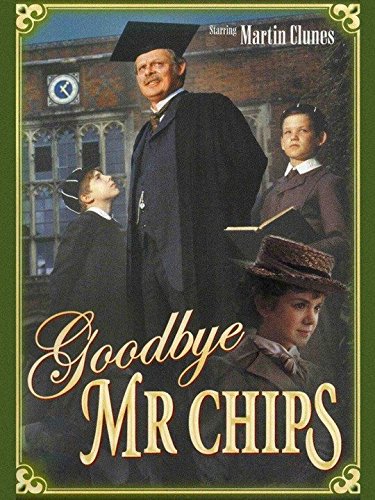
Welcome to Part 3 of looking at various adaptations of Goodbye Mr. Chips and seeing how they hold up to the so-called definitive 1939 version. Today, I’ll be analyzing the 2002 television movie made by Masterpiece Theatre starring Martin Clunes (of Shakespeare in Love and Doc Martin fame) as the titular character.
Sponsored by Exxon Mobil, the 2002 Masterpiece Theatre adaptation takes cues from the three previous versions, while making choices that enhance the James Hilton novella. From the 1939 version, this adaptation embodies the relationship that Mr. Chips has with his students and his willingness to help others before meeting Katherine. It starts off with a relatively young Chips arriving at Brookfield. During the opening credits, as he walks around campus, various boys spot him and mimic his walk. In addition, from a window, a teacher points out Chips’s ears. This establishes how different he is from the other faculty and how kids are always looking for new meat to mess with. The chaos of Mr. Chips’s first day is also similar to that of the 1939 version as the boys messing with him do so out of amusement. Heck, it even has the similar dialogue to the older adaptation when Headmaster Wetherby comes by and orders punishments for the students. One kid plays possum after he writes that word on the chalkboard. Later, when Colley slams his book twice, Chips calls him out by comparing him to a dog, thus putting the kid in his place.
In addition, before meeting Katherine, he is shown helping various students. In the 1939 version, there’s only one scene where Chips tries to comfort a child with little success before he encounters his love interest. Here, there are more scenes of him aiding various boys. In one scene, he witnesses a group of boys initiate a new kid by putting him in a barrel full of water and later hanging him like Jesus at the cross. Chips gets him down and confronts the cruel housemaster Metcalf (in previous versions, he is a headmaster). Soon after, a nerdy student named Hawthorne confides in Mr. Chips about wanting to get into Cambridge despite his background. The teacher assists him with his studying in an English-like manner, and the student eventually gets in. It’s devastating to find out later that Hawthorne is among the killed during the war. This adaptation definitely captures the playfulness and seriousness of the relationship between Chips and the students at Brookfield that’s also present in the 1939 adaptation.
Like the 1969 version, the Masterpiece Theatre one has a similar structure and gives Max Staefel more of a character and more of a purpose in the story. Both are the only ones that don’t use flashbacking as a main framework. Instead, they show Mr. Chips’s story in a linear fashion. I bet this was done because the flashback as a framing device was so well done in the 1984 miniseries that the people involved like director Stuart Orme couldn’t come up with a way to better it. Additionally, Max has more of an inner life. In the 1969 version, Max is the only friend that Chips has at Brookfield, and he puts the latter in his place when needed. Later on, when war is looming, Max is called back to Germany. He expresses to Chips, “Do you think I want to go back?”
I know that it’s not much character development, but it’s more than Max is given in other adaptations besides the 2002 one. In the Masterpiece Theatre version, Max (played by Conleth Hill who is best known for playing Lord Varys in Game of Thrones) is present from the very beginning. He meets Chips on his first day, and when the latter has his disastrous first day of teaching, Max persuades Wetherby to give Chips another chance. As a result, Chips feels grateful for Max’s intervention, and this begins a friendship that lasts for decades. When the Great War is looming and anti-German prejudice is high, the bigoted Headmaster Ralston persuades Max to retire. Even though Chips is upset by this, Max is more resigned because of the anti-German sentiment in the air. This leads to the confrontation between Chips and Ralston, in which the latter tries to persuade the former to retire. In addition, expanding Max in this way gives Chips, when as Headmaster, more of a reason to read his name when he is killed on the Western Front.
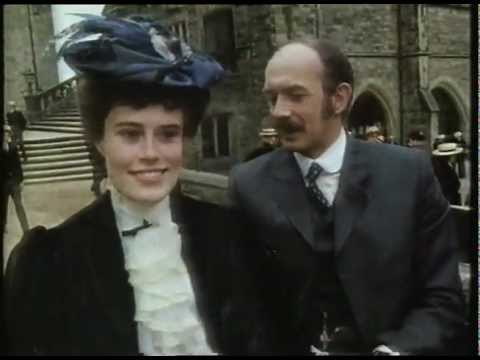
Finally, what the 2002 version takes from the 1984 series is how Katherine is depicted. Both adaptations portray Katherine’s youthfulness. While Jill Meager from the 1984 version shows this through her spry performance, Victoria Hamilton (who is best known for playing one of the title characters in the Victoria & Albert television miniseries and the Queen Mum in seasons 1 and 2 of The Crown) plays up the character’s naivety with her wide-eyed stares. This is most apparent when Katherine and Chips meet for the first time. Katherine sits on a tree branch overlooking a river to watch the fish, not aware of the peril that she put herself in. When that branch breaks, Chips is able to rescue her. This is the only version in which he successfully saves her. Moreover, both adaptations play up her socialist views and her need to make a difference in the world. When they meet, Katherine and Mr. Chips discuss women being doctors and George Bernard Shaw. Soon after, she gives Chips a book about socialism written by that man. Later on, when they marry and Katherine moves in, she strives to improve the students’ wellbeing. This involves talking to Wetherby about the bullying on campus, resolving differences between a pair of students, and organizing a social for the boys with a set of girls from a different school. Although Katherine doesn’t live for long, I’m glad this adaptation makes her active in the story, both in helping Chips become more empathic and in her own right.
The 2002 television movie also makes choices that enhance the James Hilton story. This version takes on a more realistic tone than the previous adaptations. This is apparent in how Brookfield the school is depicted. It explores the systematic bullying that occurs at said school. There are several incidents, in which students get harassed by their peers and their teachers. Chips (and later Katherine) get involved and try to help through compassion and understanding. At one point, Mr. Chips has to discipline a boy for being on the roof. After he canes the student on the palm of the latter’s hand, he throws the cane across the room, thus vowing never to punish a child in that way again. Even the sound effect the film uses for the cane sounds extremely harsh. Later on, Mr. Chips has a realization that disciplining the students in such a strict and cruel way doesn’t make them act any better. This is also true during the war scenes. Students are learning how to use bayonets on the school grounds. Even an older Colley (played by a young Henry Cavill) comes home with a leg missing. The realistic portrayal of Brookfield shows what work Chips has cut up for him and makes the results of his interventions all the more impactful.
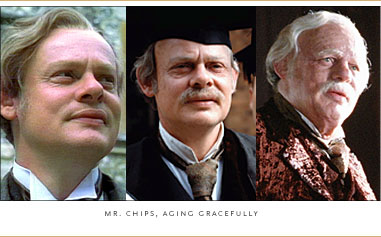
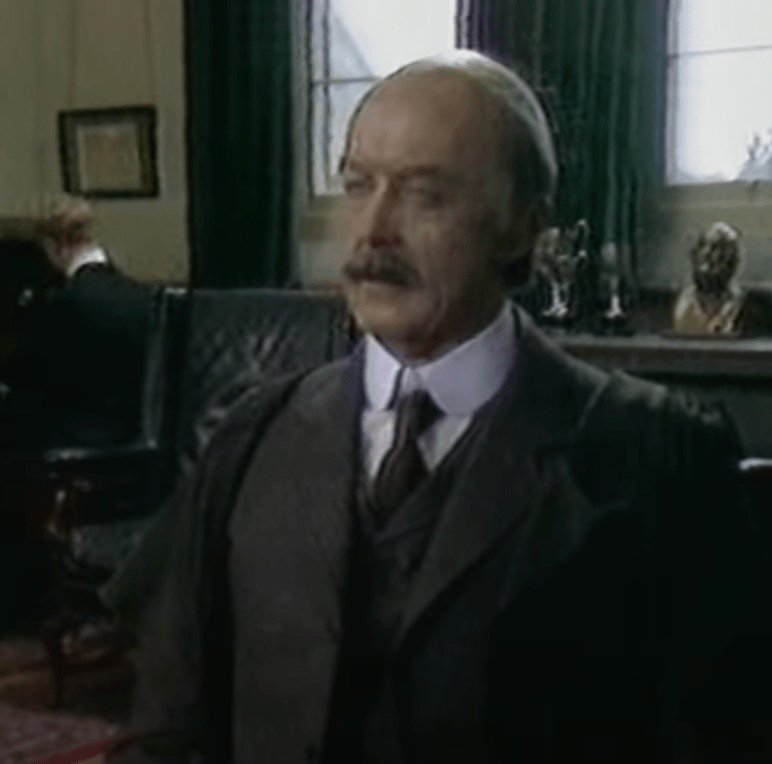
The realistic tone is also obvious in how Martin Clunes portrays the titular character. When Chips is young, Clunes plays with a sense of naivety, but not completely innocent. As Chips gets older, Clunes lowers his voice without putting on an old-man one. The makeup reflects this realism by aging Clunes naturally, and it’s the best use of it in all of the adaptations. It also helps that Clunes’s physical appearance allows him to play characters of various ages. In addition, the actor takes on the stoicism of the character, while also being emotional at various points of the story. In fact, Clunes shouts in a variety of scenes. This can be a bit much, yet it’s most effective when Chips confronts Ralston about forcing Max to retire. When this scene is depicted in the previous adaptations, Chips usually raises his voice, but never yells. Clunes takes that to another level by having Chips outright shouting at Ralston after the latter confronts him about his teaching ways and tries to get him to retire. This makes the students all the more adamant to fight for his honor, whereas in previous adaptations, they are shocked and not much else. Overall, Clunes’s performance shows that even Mr. Chips struggles himself to remain constant while the world is changing around him.
Credit: Stuart Reviews Stuff (This is the reason why the 2002 version has the best makeup!)
Meanwhile, the 2002 television movie makes some odd choices, one that works in a strange way and the other that doesn’t. The first one involves the bombing scene. In most adaptations, the bombs go off near the school, and Mr. Chips calms his pupils down by having them read from their textbook. While that happens in this adaptation, screenwriters Frank Delaney and Brian Finch (uncredited) thought it would be a good idea to have a German plane crash on the school grounds and show a dying pilot in Chips’s arms. Granted what makes this scene weird is through the cheesy special effects (still normal for a PBS production though). And yet, it works because viewers had already seen Chips read Max’s name when announcing the alumni who died during the war. This shows that his kindness and empathy extends beyond nationality.
Then, there’s the other choice that I can’t figure out why they put it there. When Mr. Chips is dying, he says his famous line about raising thousands of children and all of them being boys. Normally, he dies after he makes that statement, but not in this case. Instead, he says Katherine and then passes away. It then cuts to a boy ringing a bell and walking away. The only thing that I can think of that sort of justifies this decision is in the previous scene, an old Chips thinks he sees Katherine at a party that’s honoring him. He then gets up and keels over. I get that the writers wanted to remind the audience of Katherine’s presence despite her absence. However, the final moments of this story are reserved for Chips to state his overall reflection of his career since the core relationship is between him and the pupils he’s had over the decades. That’s why I’m confused about the ending.
In spite of all of the praise I’ve lavished on the 2002 version, I have one caveat. Many of the scenes in the television movie play and end a bit too quickly. I can understand why this was done to make time for the Exxon Mobil ads, but it’s from PBS. They don’t cut to commercials during their shows. This swiftness makes this version the shortest of all the adaptations, clocking in at 1 hour and 44 minutes. If the movie slowed down just a little, then I think it would be neck and neck with the 1939 film in terms of effectiveness.
All in all, the 2002 version of Goodbye Mr. Chips is the most effective of the adaptations outside of the 1939 adaptation. It takes elements from the previous films in order to expand certain characters and the varying relationship between Chips and his pupils. In addition, its realistic tone helps to explore the circumstances Mr. Chips is in as a teacher. Martin Clunes takes on the titular character in a way that’s familiar and different at the same time. It’s not perfect mind you, but it’s worth the watch. I would recommend it for those like Martin Clunes and want to see every version of Goodbye, Mr. Chips (like myself).
Throughout this month, Amazon Prime has been promoting the miniseries adaptation of Taylor Jenkins Reid’s beloved novel Daisy Jones & The Six. Advertisements for the show and its music have shown up on social media, and Amazon has even started marketing the outfits that various characters wear.
Depending how one feels about the novel and, more importantly, Amazon, this can be a wonderful or a highly annoying thing. I watched all 10 episodes over a four-week period, and viewer, it was worth it because it made the story whole.
Developed by Scott Neustadter and Michael H. Weber, the show is a faithful adaptation of the book, but just like any other adaptations, there are some differences between. Vanity Fair already has an article listing them in great detail, so what I’m going to do is cover the important alterations from page to screen and how that affects the adaptation. The biggest change from the book to the show is the framework. In the former, it’s an oral history of the Fleetwood Mac-like 70s band from cradle to the grave. While this was a good framing device, I couldn’t help but feel that something was missing given that Reid had lyrics for each of the songs from the Aurora album listed in the book club kit. In the series, the framework is a documentary of the group with “archival” footage. This improves the story because not only does it show what the band was like and how they interacted with each other, but it also allows listeners to hear what their music was like. I especially love how the interviewees react to what another person says about them. It felt authentic.
Another drastic alteration between the page and the screen version is the lyrics. With the exception of the song “Please,” the ones that show up in the book club kit are different from the ones that are heard in the series. The most famous line from the book version of “Regret Me” that goes “And, baby, when you think of me/I hope it ruins rock ‘n’ roll” was omitted from the miniseries.
I’m not sure why this happened, yet I wouldn’t be shocked if the reason was to make them suited to the music musicians Blake Mills, Tony Berg, Chris Weisman, Jackson Browne, Marcus Mumford of the band Mumford & Sons, and book nerd Phoebe Bridgers were composing. The book lyrics can be a bit wordy, but then again, there are songs that are just like that from artists like I don’t know Fleetwood Mac. The ones from the show feel more secondary compared to the music despite their importance, given how much the series emphasizes the tension between Billy and Daisy through their songwriting.
Another set of major changes for the Amazon Prime adaptation involve the omission and expansion of some characters. On one side, the bassist Pete was cut, and Eddie filled that role after Chuck decided to go to school to become a dentist (as opposed to going to Vietnam to fight and dying there in the book). The reason was that Pete didn’t contribute too much to the plot. Although it felt weird to have five members while still calling themselves The Six (they made Billy’s wife Camila the unofficial sixth member), I honestly don’t remember a whole lot about Pete. It was for the best, for it gives Eddie another reason to feel like a second-class citizen within the band.
On the other hand, Symone – Daisy’s friend who becomes a disco pioneer – is greatly expanded in the series. According to the Vanity Fair article, Reid, who also was a producer for the show, mentioned that she wanted Symone to be more developed. In the novel, she functions as Daisy’s friend, not much more. In the series, Symone (played by Nabiyah Be) is given her own subplot as she tries to find her own voice as a gay black woman. She goes to New York City after she meets Bernie – a black female deejay – in Los Angeles and experiences the ups and downs of trying to be successful while staying true to one’s self. This gets covered in about two episodes. It was really good to explore a story involving the true pioneers of disco – LGBTQIA+ members of color. In addition, it fits the overall story because it explores a running theme present both in the book and the show – female agency and validating one’s self.
Outside of the chemistry between Daisy Jones and Billy Dunne, the main draw of the show is the 70s-bluesy-style rock music. I’ve listened to the Aurora album – the Daisy Jones & The Six’s version of Fleetwood Mac’s iconic Rumors LP – a few times, and it’s good. Some of it feels like the 2010s’ perception of what 1970s music sounds like, especially with The Black Keys-like distorted guitars. I wouldn’t be shocked if that was the case because Blake Mills, Marcus Mumford, and Phoebe Bridgers are musicians who experienced success in the 2010s. In addition, Riley Keough (who plays Daisy) is a bit drowned out in the mixing. Considering that Daisy is the main reason for The Six’s success, one might try to emphasize that in the real album of the fake band. The best tracks evoked a more authentic interpretation of 1970s rock ‘n’ roll and have proper mixing when it comes to Daisy’s voice. This most likely has to do with the fact that two of the musicians involved Tony Berg (who was a session guitarist on many albums like The Rocky Horror Picture Show LP) and Jackson Browne were alive and working in the 1970s. My favorite tracks are “Let Me Down Easy,” “The River,” “Regret Me,” and “Look at Us Now (Honeycomb).”
As for the performances, I liked all of the actors cast in the show. They embodied the best and worst parts of their characters. Sam Clafin (best known for his performances in Me Before You and as Fiddnick Odair in the The Hunger Games film series) plays Billy Dunne – the lead singer and songwriter for The Six. I enjoyed seeing his struggle between his personal and professional life. At the same time, he can be very stubborn, in which Clafin conveys well. At first, I wasn’t a fan of his singing voice; it felt a little too nasally. But overtime, I realized that this fits the music Billy is creating for The Six and that Jackson Browne – one of the musicians involved in the real Aurora album – has a similar tone. I also was delighted whenever Riley Keough (who’s known for her performances in Mad Max: Fury Road, American Honey, and Logan Lucky) came on the screen as Daisy. The character can be tough to play because one has to embody her faults, why she became the way she did, and what makes her special as a musician. And, Keough does that well enough, yet I’ll always hear Jennifer Beals from the audiobook as Daisy’s real voice. I also can’t avoid talking about Keough’s singing since she is Elvis’s granddaughter. She sounds like a raspy Taylor Swift, especially on “Regret Me, and it works well with the music produced.
The strongest performance belongs to Josh Whitehouse who takes on the role as Eddie Roundtree the bassist. Whitehouse – most notably for playing Hugh Armitage in the third and fourth seasons of Poldark – clearly conveys his character as disgruntled with what’s been given to him despite trying to be a team player. The confrontation that Eddie has with Billy about quitting the band is rightfully memorable, but the quieter moments are what make Whitehouse’s performance special. This is especially true when Eddie in the interview segment of the first episode reveals that he had feelings for Camila without saying a word (this was also not in the book).
Another effective aspect of the performances is that all of the actors have great chemistry with one another. Since the story is about what leads up to the breakup of an uber-successful band, it’s important for the actors to communicate not only the tension, but also the love and why they stayed together for so long. And, all of the actors do that. They always feel comfortable around one another, especially in the scene in the diner, where The Six decide on their name. And yes, the chemistry between Keough and Clafin was undeniably good. They played off each other well, whether they are at each other’s throats, or are working amicably. I especially love the glances the actors give to each other during the recording session and concert scenes.
Despite my praise, I have a couple of complaints. One is obviously the wigs, particularly the ones used during the interview segments. They kind of look ridiculous, especially Timothy Oliphant’s (who plays Rod the tour manager) and they don’t make the actors look any older than their 70s counterparts. Luckily, those are compensated because they convey the world-weariness that comes with years of touring and reflecting on what happened through their body language and the tone of their voice.
The other complaint that I have is that I wish that the show explored more of Graham and Karen’s relationship (played by Will Harrison and Suki Waterhouse). Yes, I know the show devotes two episodes to them coming to terms about their feelings for one another and another two episodes to their breakup brought on by Karen’s pregnancy scare. Yet, those segments needed some transition like a scene involving them talking about what they want to live their lives and how they see themselves as a couple because it felt like everything was going very well until Karen got pregnant. Considering how the show highlights Billy and Daisy’s relationship, the one between Symone and Bernie (one that’s not present in the book), and Eddie’s resentment of his place in the band in ten episodes, I feel that it could’ve fleshed out Graham and Karen’s relationship more.
All in all, the Amazon Prime series Daisy Jones & The Six is an adaptation that makes the novel by Taylor Jenkins Reid feel whole. Although it’s not perfect, I still enjoyed the music and performances. Moreover, it made changes to bring to life a story that definitely needed to be seen and heard as well as read. Amazon definitely picked the right show to do an intense marketing campaign on. Like with the book, I would recommend it to those who love 1960s and 1970s music and female protagonists who take charge of their destinies. It was worth seeing Daisy Jones & The Six’s assets on full display in the miniseries.
Subscribe below to get notified when I post new updates. Also feel free to email me here for any review suggestions, ideas, or new titles!
Full disclosure: I was given a free PDF copy of this book in exchange for an honest review.
March is Women’s National History Month, but any time is a good time to honor women around the world from the past, present, and future. Anybody can celebrate their accomplishments and inspire others to do so. And this means everyone, including men. In fact, there are male allies. These are men who respect women and are willing to support them for their place at the table. There are male authors like Chris Bohjalian who are capable of depicting three-dimensional female characters.
This brings us to today’s subject Her She Lady: A Tribute to Womanhood by Shah Asad Rizvi. Rizvi wrote the 103-poem collection not only to celebrate the women in every stage of their lives, but also to inspire them to value themselves and to find their wings. In addition, he wanted the male readers to read the poetry and cherish the presence of women and to honor their existence. After reading the poetry collection, it’s clear that Rizvi has a certain way of looking at women, but he respects and cherishes them just the same, and the poetry is just as accessible as his previous work.
While reading this collection, I was reminded of three songs: “Golden Hour” by JVKE, “Nice for What” by Drake, and the most obvious “She’s a Lady” by Tom Jones. All three of these tunes capture the moods presented by the poems in She Her Lady. “Golden Hour” communicates the awe and inspiring aspects of the poems as the JVKE and Rizvi are both taken in by the women around them. “Nice for What” portrays ladies as independent and goal-minded and reminds listeners that they don’t need to lower themselves to please the people around them. Not sacrificing who you are just to satisfy others is an idea that Rizvi stresses in different poems. Tom Jones in “She’s a Lady” tells everyone about his woman and how special she is because of her femininity and what she does for him. Rizvi also elevates the women in his poems in similar ways, but with less emphasis on him.
These poems have two main strengths. One of them is that they have a simple, elegant, and mostly non-rhyming language. Like Divan of Shah and The Book of Love, the poems are elevated for those who love poetry, yet obvious enough for those who are getting into the genre. The other pro to this collection is that Rizvi clearly cherishes women of all ages. The poems make it very clear that he respects them and expresses outrage of their mistreatment when possible. Considering that he was born in Pakistan, grew up in Japan, and currently lives in the United Arab Emirates – countries ranked on the lower end for gender equality according to World Economic Forum’s 2022 Global Gender Gap report, I appreciate that he’s willing to empower women as much as he can as well as to be angry about gender equality as much as they are. His best poems are often ones that acknowledge the struggles the ladies go through without being on a high horse. My favorite poems are “Inner Voice,” “Resolute,” “Mammoth,” “The Pedestal,” “Hegemony,” “Rights,” “Unconditional,” and “Amen.”
As for the cons, it displays the same one as his previous work in that he is espousing the same ideas but with different words in many of his poems. I’ll give a pass on this one since one of Rizvi’s objectives for this collection of poetry is to get men to appreciate women for who they are and what makes them special. Sometimes, people need to hear the same thing but in different ways in order to fully understand the whole idea. Also, some of the poems here are from Divan of Shah.
The main problems with this work are how he words his lines and that he has a specific idea on what women are. The poems use a language that can be found in makeup commercials. I know that this is not Rizvi’s intention, but there were times that the wording felt so surface level. For example, there was a poem called “Soar,” which contained this line: “you are the rain, the thunder, and the storm.”
I literally thought the next one was going to be about trying on waterproof mascara.
Moreover, he equates womanhood with perfectionism. How do I know this? He says so in two separate poems, one called “Pioneer” and the other aptly named “Perfection.” This might be more of a me problem since I know that he’s not deliberately putting women on a pedestal. At the same time, in my review of The Shadow of Perseus, I talked about how feminism looks differently to everybody, and this applies here. Rizvi believes that women can do everything as long as they put their mind to it and not listen to the naysayers. He also acknowledges their sadness and suffering and how that is all part of surviving and learning how to overcome obstacles. There’s nothing wrong with all of those ideas. Like feminism, perfectionism looks differently to everybody as well. It’s just that years ago, I heard someone say that feminism was about drinking beer and scratching your butt like men do. In other words, feminism is all about women having agency and being human, even that means being flawed. I would’ve loved to have poems that discuss ladies and all of their flaws because everyone is imperfect regardless of what gender they are.
In conclusion, Her She Lady: A Tribute to Womanhood by Shah Asad Rizvi is another accessible poetry collection and definitely has the ability to empower those who read it. It’s apparent that Rizvi cherishes women, whether that’s a daughter, niece, sister, cousin, friend, lover, or mother, and is willing to support them. In other words, he is a good male ally even though he has a certain idea of them, specifically how they are and should be. Then, again feminism looks differently to everybody. Like Rizvi’s other poetry books, I would recommend this to those who love poetry and empowering women as well as to those who are getting into the genre. As a woman, I appreciate this collection as it gave me wings to expand more of my horizon whether that’s in books or promoting this website and my podcast. Thank you Shah Asad Rizvi for that!
Subscribe below to get notified when I post new updates. Also feel free to email me here for any review suggestions, ideas, or new titles!
As a Michigander, I always like learning about my home state’s history. Ever since the 4th grade, I’ve researched various aspects about its past. Nonfiction books like Wild Women of Michigan helped as well as fiction ones like the subject of this review The Women of the Copper Country by Mary Doria Russell. That novel takes place during the Copper Country Strike of 1913-1914 – an event I barely knew anything about. Not only did it shine light on this mostly forgotten event, but it also created wonderfully effective stories about the people involved.
The Women of the Copper Country (yes, I forgot the second the in the brief review) is about Annie Clements – the American “Joan of Arc.” In 1913, having spent her entire life in the copper-mining town of Calumet, Michigan, she had seen enough of the world to know that it’s unfair. The men risk their lives while working underground each day and have barely enough to put food on the table and clothes on their backs. The women labor at their company houses and dread the news of their husbands and sons not coming home. Annie decides to stand up for herself and the town of Calumet, but many people believe she’s biting off more than she can chew. In her hands lie the miners’ fortunes and their health, her husband’s wrath over her growing independence, and her own reputation as she faces the threat of prison and discovers a forbidden love. As she goes on her journey for justice, Annie slowly discovers how much she’s willing to sacrifice for her own independence and the families of Calumet.
Until now, the only other place where I’ve heard of Annie Clements (or Anna Clemenc) was in the Wild Women of Michigan book. For those who don’t know, she was a labor activist and an active participant in the Copper Country Strike of 1913-1914. I’ve never really heard of this event, but I learned quite a lot. The strike itself lasted nine months, and it was over the safety of the workers, who were getting killed one by one in the mines. I certainly understood the frustrations of the wives. The tragedy near the end tugged me at my heartstrings and saddened me to learn that it truly happened.
For the story itself, it jumped into the walkout so quickly that it felt abrupt. However, once the strike occurred I was all ears. There were times that I wasn’t as emotionally invested because not much was happening, yet once something drastic occurred, my attention was back on.
Now, let’s talk about the main characters. I like Annie Clements. She’s strong, caring, and frustrated about the conditions that the men are in, including that of her abusive husband. She also goes through inner turmoil with how she will be remembered, her feelings for the photographer Mike Sweeney, and the notion of thinking about herself more. I really wanted her to succeed.
Then, there’s James MacNaughton – the general manager of the mining company in Calumet. He’s a man who believes that everyone has their place in society, as in the White Angle-Saxon Protestants in the higher-up positions and the everyone else, especially the non-WASP immigrants, in the lower-class jobs. He even refuses to compromise with the strike leaders. I didn’t care for MacNaughton, but then again, who truly gets invested in villains outside of those who love or love to hate them? Even then, he doesn’t have that vibe. Even the servants hate him.
I also liked the fiction characters like Ava – a Polish 14-year-old girl, who assists Annie with the strike. She falls in love with a boy whose father was killed in a mining accident that became one of the impetuses for the walkout. However, over time, she realizes that she has to figure out what she wants, and marriage may not seem all that attractive to her.
Russell does a great job introducing the main characters through their actions. For example, readers are introduced to Annie as she makes pastries for her boarders – three young Italian immigrants who work alongside her husband. It shows how much she cares about the wellbeing of others. In addition, the thoughts and beliefs of James MacNaughton are uncovered when he reads a newspaper in his mansion. Russell clearly sets up that he’s going to be our antagonist. It’s certainly a better way to establish this than yelling or having them beat the living crap out of other characters.
Another thing that Russell does a great job with is the research. Her author’s note explains what was really true about the 9-month walkout and what was fiction. I was shocked to find out what the former was. One can clearly tell that she put in a lot of effort in the research because it paints a harsh, bleak, but hopeful atmosphere during the strike that took place in Michigan’s Upper Peninsula (UP). I even asked some of the book club ladies, who were from the UP, about how the book represents the area. They all said that that portrayal was accurate.
Cassandra Campbell is back as she narrates this book. Her vocal performance is good. She distinguishes characters of various ethnicities very well. However, she doesn’t differentiate characters of both genders. The male ones have a slightly lower voice, while the women tend to have her regular one even though Ava is voiced a little higher and more excited for a chunk of it. Out of the audiobooks that I’ve listened to that she has narrated, this is one of her weaker performances, but it was still entertaining.
To summarize, The Women of the Copper Country by Mary Doria Russell is a good fictional account of the Copper Strike of 1913-1914 in Calumet, Michigan. The characters are well defined, and I was invested in the story for the most part. Above all, it enabled me to research more about the strike. I would recommend it to those who love historical fiction, especially about strong female characters, labor disputes, and Michigan. As a Michigander, I’m glad that I picked up this book.
Subscribe below to get notified when I post new updates. Also feel free to email me here for any review suggestions, ideas, or new titles!
Welcome to Part 2 of looking at various adaptations of Goodbye Mr. Chips and seeing how they hold up to the so-called definitive 1939 version. Today, I’ll be analyzing the 1984 television miniseries made by the BBC starring Roy Marsden (best known for playing Adam Dalgliesh in the Anglia Television adaptations of the P.D. James’s detective novels) as the titular character.
The 1984 version has 6 episodes overall, and each of them run for 25-30 minutes. It’s clear that series director Gareth Davies wanted the adaptation to be more faithful than the 1939 one because it includes more scenes as presented from the novella, while adding some original scenes to enhance the story. One subplot that’s omitted from both the 1939 and 1969 adaptations is the one in which Catherine convinces Mr. Chips and the headmaster to invite boys from the slums to play a game of soccer (oh sorry, football) against the Brookfield students. I have a feeling that this was added to show the impact that Catherine had on the school. The other noted scene is how Chips meets his love for the first time. I talk about how this went down in my review of the black-and-white version, so long story short: Chips is walking in the mountains in England, and he sees a woman waving and shouting, so he climbs up, intending to rescue her and proceeds to sprain his ankle. This is presented as such in the 1984 version. It took three adaptations of the story to display that crucial moment in its original form.
As mentioned earlier, there are scenes not present in the book that are in the show. In the sixth and final episode, when the Great War is going on, a student reveals that he doesn’t want to fight even though he has already enlisted. He claims that seeing his father’s wounded body and talking to a battered soldier at the hospital convinced him that the war was not worth fighting for. Mr. Chips tries to persuade the boy that it’s his duty to fight. The student refuses, so he gets arrested for being a deserter. I wouldn’t be surprised that this scene was added since the show couldn’t do the bombing sequence from novella due to its low budget. This sequence brings an anti-war message to the story, but I’m not sure if it’s necessary. During the Great War section of the novella, Hilton makes it clear that it’s best to carry on regardless of the present situation. Instead of displaying that kind of duty, it shows that one is better off listening to Chips.
Another scene not in the book is in episode 3, where Catherine and Mrs. Wickett take care of an ill student. During a bit of the previous one, there was some tension between the women as they try to get used to the new arrangement after Chips marries Catherine. Catherine tries to make her mark with the house that she and Mr. Chips live in and to improve the boys’ welfare, but Mrs. Wickett has her own ways of doing things. Once they find out about a sick boy living in the dorm that Chips is the housemaster of, they band together to help him get well.
Having this scene in the series makes sense, for both Mrs. Wickett and Catherine are expanded from the book and previous movies. In the previous adaptations and the novella, all Mrs. Wickett does is serve Mr. Chips tea and remind him of what the doctor said. In the BBC television miniseries, she is the first person that Chips gives advice to after she – a maid at the time – tells him of her plans to run away. Because this happens on his humiliatingly first day of teaching, Chips and Mrs. Wickett form a bond that lasts until the former’s death. There are even times in which Ann Kristen – the actress playing Mrs. Wickett – gives off looks that signify that Wickett may have certain feelings for Chips, but there’s no real payoff to that. I’m not sure if it was all that crucial to enlarge her role, but it enforces her symbolism of the lasting impact Chips has on Brookfield.
With Catherine, her role is more active in this version. Jill Meager’s interpretation of the character is closer to her counterpart in the novella. Catherine is youthful and wants to make a difference at Brookfield. I wouldn’t be surprised if Meager went to the Charlton Heston School of Teeth Acting, for she shows off her teeth a lot. Regardless, that gesture simply adds more charm and spry to Catherine’s character. In addition, the miniseries plays more into Catherine’s beliefs. There are several scenes in episodes 2 and 3, in which she and Chips discuss world events and trends that showcase how different they think. Moreover, this version even addresses the question I often had with the novella and the 1939 and 1969 adaptations: what does Catherine see in Chips? In episode 2, her friend asks Catherine about this, and Catherine replies that he’s great to talk to and at listening even if he drives her mad with his old-fashioned ways.
Since we’re talking about performances now, I can’t avoid discussing Roy Marsden as the title character. His interpretation is more somber than the previous actors, but his Chips has the sternness of the Peter O’Toole one and some of the warmth of Robert Donat’s. In other words, Marsden’s portrayal is the closest to the one in the novella. Much like O’Toole, his emotional growth is more gradual. This makes sense as the miniseries gives Chips more time to reflect on the actions and relationships he made and they impacted him. Additionally, I have to mention the physical transformation. When Mr. Chips is younger, Marsden is seen with a brown mustache that’s similar to Donat’s in the black and white version but less ridiculous. He also looks like the Count of Monroth from Baz Luhrmann’s Moulin Rouge just with more forehead. Luckily, it wasn’t distracting because he appropriately resembled a 40-year-old English schoolmaster. I can’t say the exact same thing when Chips gets older. Although various camera angles hide the fact that Marsden is wearing a bald cap with pieces of hair on his sides well, there are times where viewers can spot the bald cap. Additionally, the makeup was caked onto him, especially around the eyes to make him look older. I haven’t seen that much makeup to transform an actor into an old person since Orson Welles in Citizen Kane.
Young-ish Mr. Chips with his giant forehead
Middle-age Mr. Chips with teethy Catherine
Older Mr. Chips with Max Staefel in the background
Oldest Mr. Chips with Mrs. Wickett
The makeup is part of the bigger problem with this version, which is the budget. Before I explain, I want to make one thing clear: a movie or a television series can have a low budget, but still be creative in telling the story. When watching this, it’s clear that they had to cut corners in translating it to the screen. This explains why miniseries couldn’t do the bombing scene in the novella and do the makeup effectively as mentioned earlier. Additionally, they couldn’t afford many child actors since only up to 30 appear in one scene at a time. Since the core relationship is between Mr. Chips and the students, scenes like the retirement speech are less impactful, for Chips is seen giving this to the teaching staff, not the boys. It’s most apparent when there were outdoor sequences when lots of students are present that I swear were taken from the 1969 version. The miniseries was a collaboration between the BBC and MGM, and that latter company produced both the 1939 and 1969 adaptations, so I wouldn’t be surprised if that was the case.
If the budgeting is the weakest aspect of the BBC miniseries, then the framework of the show is the strongest. Each episode begins and ends (sans the last one) with an old Mr. Chips writing his book and looking back on his actions and relationships. This is a great idea because he had talked about doing this in the novella and the previous adaptations, yet he never did. This also successfully justifies why he’s in such a reflective mood and going through each part of his life in a linear form. As much as I really like the 1939 version, it explains why Chips recalls his early teaching days (due to the new teacher at Brookfield), but not the rest. The framework of Mr. Chips writing his memoir helps explain why he’s willing to analyze each episode of his life.
To summarize, the Goodbye Mr. Chips 1984 miniseries works in some ways, but not in others. The miniseries format allows it to be more faithful to the source material. Certain expansions aren’t always necessary, but they don’t hurt the story. Obviously, the people involved had to cut corners, and it shows because it makes specific elements less effective. Despite all this, the framework is the best part of the miniseries. Like with the 1969 adaptation, I can see why viewers might like it, especially with Roy Marsden’s performance and if this one is the first version of Goodbye, Mr. Chips they’ve ever seen. I would recommend it for those like Roys Marsden and want to see every version of Goodbye, Mr. Chips (like myself). If you would like to check it out yourself, click on this link.
Stay tuned next month for the final part when I review the 2002 television movie produced by Masterpiece Theatre!
Subscribe below to get notified when I post new updates. Also feel free to email me here for any review suggestions, ideas, or new titles!
Content warning: this review discusses sexual assault.
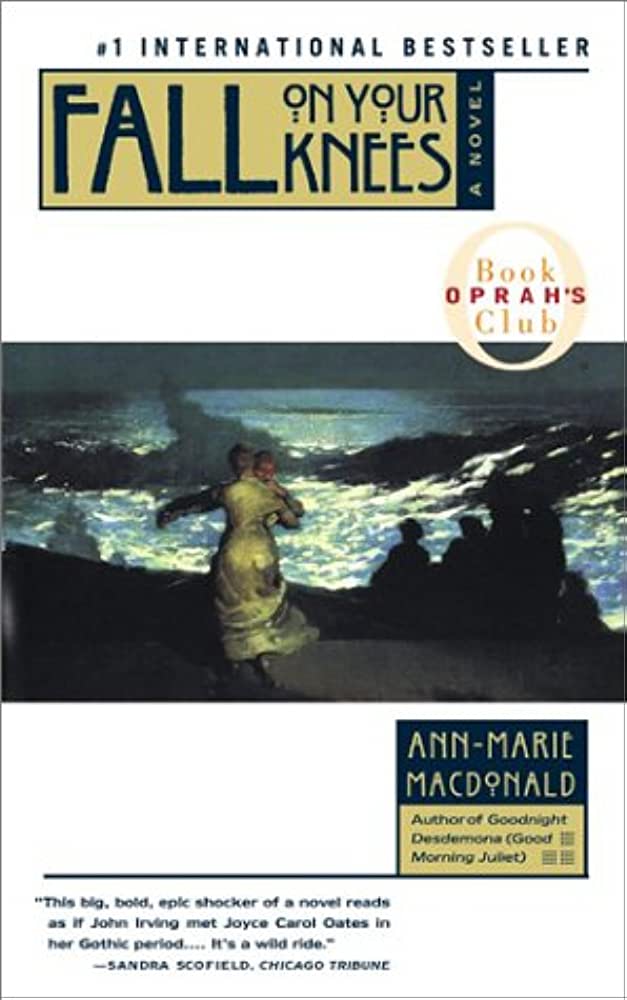
There are certain books that are designed to shock people. They stuff in many things that mainstream society deems as (mostly) taboo in order to get a reaction out of readers. Whether or not they achieve long-term success depends on the plot, characters, and the writing itself. Let’s take a look at the 1996 book Fall on Your Knees by Ann-Marie MacDonald – a novel that I liked once I got past the disturbing elements.
Fall on Your Knees follows five generations of the Piper family of Cape Breton Island, Nova Scotia in the early twentieth century. They are steeped in lies and unspoken truths and are forever conscious of the tragic secret that could tear the family apart. It specifically follows the four sisters – Kathleen, Mercedes, Frances, and Lily whose lives are filled with ambition, inescapable family bonds, and forbidden love. Their journeys take them from their homeland to the freedom that lies in New York City.
I first read a plot description of this novel on my library’s catalog page. It was pretty explicit since it talked about incest in the very first sentence. I’m not going to lie. I thought I was going to have a reaction similar to the characters in South Park reading The Tale of Scrotie McBoogerballs. And then, I discovered that it was over 500 pages long. My next thought was “Oh no, is this going to be 500 pages of one disturbing thing after another?”
Luckily, it didn’t turn out to be that way for the most part. Yes, it has elements like the aforementioned incest, mental wellness, homosexuality, suicide, gender equality in relationships, sadistic vengeance, domestic abuse, and racial tension. At the same time, it’s the characters that drew me in. They all want a better life, but something gets in their way. For Kathleen, she wants to sing to thousands, but while receiving voice lessons in New York City, she falls in love with the piano accompanist, and things go awry (but not in the way you think). For Mercedes, she yearns to go to college and marry the boy she loves, yet taking care of her family was always going to be a top priority, and their reputation in the community was less than stellar. For Frances, she yearns for a life outside the box, even if that means becoming a prostitute and performing striptease at a speakeasy. She too is held back by providing for her dad and sisters through unconventional means. And for Lily, she has visions from God and wants to know the truth behind her birth. It doesn’t help that many of the Pipers either make up stories about the past or avoid entirely.
In addition, MacDonald makes it clear that many of the characters are flawed one way or another. James Piper – the patriarch – wants to take care of his children in the best way possible despite growing up in an abusive environment. However, he guilt trips and verbally berates his Lebanese wife Materia as well as rapes two of his daughters. In addition, there’s Mercedes, who is very pious and strives to take care and to stand by her family regardless of her feelings about them. When Frances gets pregnant after having sex with a black man, Mercedes sees an emotional transformation in her sister. She fears that she won’t be able to take care of her in the same way, so when the baby is born, Mercedes takes her nephew to an orphanage behind Frances’s back. Also, she expresses outrage when Lily tells her that she didn’t want to be cured of her polio.
Furthermore, the writing style is subtle, yet clear and detailed. MacDonald’s prose gets inside the characters’ minds easily and makes the readers understand why they do certain things even if it’s wrong on many levels. This is apparent when James takes Frances to the shed after she calls the deceased Kathleen a slut. MacDonald plays that scene out like a dance. It made me think twice about what was happening, for MacDonald doesn’t lean into the disturbing elements. She simply writes exactly what was happening and the feelings involved.
Speaking of the writing, when the stage version premiered last month in Canada, MacDonald revealed in various interviews that she had initially written Fall on Your Knees as a play because she’s a playwright. However, she felt so emotionally attached to the characters that she turned it into a novel. Honestly, I wouldn’t have expected that since there were more passages about various characters’ motivations than dialogue.
MacDonald also dives into the backstories and motivations of secondary characters like Leo Taylor – the black guy who drove Kathleen to school and later became Frances’s lover – and Teresa – Leo’s sister. Did we really need them? I don’t think so. But then again, I love A Tree Grows in Brooklyn, and that can feel bloated at times with its devotion to minor characters as well. This doesn’t hurt Fall on Your Knees because it’s a family saga after all, and it’s good for the readers to know every player no matter how small their roles are.
The only thing that I would complain about is that it needed more humor. The book’s blurb mentions how it’s “hilariously funny.” I barely saw any of it outside of moments like James discovering that his hair had been braided and he starts laughing. It should’ve had more humor to balance out all of the melodrama. In fact, I have a similar issue with the 1942 movie Kings Row, which was also based on a book that deals with societal taboos (but with small town secrets as opposed to one family).
It’s more disappointing knowing that Ann-Marie MacDonald is capable of conveying humor in her work. She wrote the play Goodnight Desdemona (Good Morning Juliet) before she penned Fall on Your Knees. It’s about an English professor who’s writing a thesis about how the Shakespeare tragedies would not be so tragic if they had a fool in it, and she gets transported into the worlds of Othello and Romeo and Juliet. When I was a freshman, my college put on Goodnight Desdemona (Good Morning Juliet), and it was really funny because of the script and the performers who were able to sell the material.
To summarize, Fall on Your Knees by Ann-Marie MacDonald may have or may not have been designed to shock readers, but in the end, it allows them to get to know the flawed members of the Piper family on a deep level through many generations. MacDonald’s investment in the characters is genuine and felt on many layers, and her writing style surprisingly downplays the disturbing elements in a good way. Like the Pipers, the book is not perfect, yet it’s something I admired after thinking about it for a while. If I had to recommend this novel, I would only do so for readers who enjoy family sagas and novels that address societal taboos.
Before I go, I want to let you all know that my latest episode of the Adapt Me Podcast discusses how guest Zita Short and I would adapt it as a miniseries. Check it out here.
Subscribe below to get notified when I post new updates. Also feel free to email me here for any review suggestions, ideas, or new titles!
Full disclosure: I was given a free eARC copy of this book by Dutton Books and NetGalley in exchange for an honest review.
For many years, there have been plenty of retellings of famous stories, whether they are classic novels, fairy tales, myths, etc. The most well-known ones offer a new perspective and insight on the themes present in the original material. The most common of these is the feminist view because let’s face it, a lot of the tales that we know of were written by men and celebrate men (for the most part). Today’s book The Shadow of Perseus by Claire Heywood falls into this perspective as it displays the views of the women sidelined in the famous Greek myth. It’s not always effective, but it offers lots of insight on female agency as well as the power of stories and how people concoct theirs, even if they are false.
The Shadow of Perseus is about the three women in the story of Perseus. Danae is his mother who was cast out of her homeland thanks to a prophecy foretelling her unborn child was going to cause the death of her father, the king of Argos. Stranded in a remote fishing village, she strives to make a new life for herself and her son. Medusa is a member of the Gorgons – a reclusive band of women who live deep in the woods. She has cut off all contact from the outside world until she meets an injured stranger named Perseus in the forest. Andromeda is a member of a nomadic tribe. When her mother brags about Andromeda’s beauty, a harsh sandstorm threatens to destroy their way of life, so she volunteers herself as a sacrifice to appease the gods and end the storm. However, Perseus interferes and puts her on a new path. As Perseus becomes more obsessed with the fulfillment of his destiny, his heroic journey casts violence and destruction in the three women’s lives. They have to reclaim their voices for a better future even as Perseus tries to silence them.
Before reading this book, I knew little about the Perseus myth. The only real thing I was familiar with was that he was the one who decapitated Medusa, yet I only found that out when I was doing research. As a result, a lot of my perspective on the book stems from not knowing the story that well.
With that being said, I found that the most divisive aspect of this novel is the removal of the fantastical elements of the myth. In other words, there’s no winged sandals nor a reflective shield that would allow Perseus to see Medusa without turning him to stone. Also, Zeus is not Perseus’s father (that we know of). On one hand, I see why Heywood did this. In her “A Note on Setting” section, she wanted to make the story as historically accurate as possible. This is apparent in the locations used and the different languages that the characters speak in. Also, Andromeda is a dark-skinned woman, so thank you Claire Heywood for not whitewashing her! I see this as subverting some of the more well-known aspects of the myth as well. For example, I wasn’t expecting Medusa’s head full of snakes to actually be a gold crown containing those reptiles and representing her worth despite what had happened to her. In addition, stripping the supernatural elements further reveals the darker aspects of the story, mainly the anger that Perseus feels for being deprived of his needs and destiny even against the will of others. Heywood omits how Perseus used Medusa’s head to turn Atlas into stone after the latter refused the former hospitality. Come on! Atlas had a ton of weight on his shoulders. Can you really blame him for refusing Perseus?
On the other hand, myths, legends, and fairy tales always have fantasy elements. Many of the retellings like Darling Girl by Liz Michalski and The Match Girl by Rebecca F. Kennedy (the latter from the Once Upon a Winter anthology) retain those aspects because they are familiar with audiences who had grown up knowing the original tales. Removing those almost makes the earlier story unrecognizable. Can you have a Peter Pan retelling without at least mentioning flying or pixie dust? Likewise, I can see why people are irked by the removal of Perseus’s winged sandals, mirror-like shield, Medusa’s ability to turn men into stone if they see her face-to-face, and Zeus not being his father. Heywood could’ve kept the supernatural elements while still aiming for historical accuracy.
The way the plot articulates the feminist aspects have some reviewers divided as well. Some love how the book gives Danae, Medusa, and Andromeda agency in their stories, yet others still found them to be weak due to all the abuse Perseus inflicts on them. It doesn’t help that a grown-up Perseus has almost no redeeming qualities, so this makes the book a little harder to get through. Female strength and feminism in of itself look differently depending on who one asks. It could be female characters fighting others with swords, using wit to overcome the naysayers, reading, and/or being human. Nevertheless, all of them involve them taking charge of their destinies in some form.
In The Shadow of Perseus, the three main characters suffer and struggle, but because it’s their stories, readers get to see what they are thinking as they try to figure out what they are going to do. And sometimes, they make some really stupid decisions. For instance, Danae allows a peasant from a nearby village whom she has known for a short amount of time to come into her prison cell and make love to her after part of the roof falls down. He was her only source of company, and she enjoyed it. Secondly, Medusa permits Perseus to stay in her cave because she feels she could trust him despite the warnings that her Gorgon sisters give and being sexually abused in the past. She didn’t know what Perseus was going to react when she eventually told him to leave. Everybody makes dumb choices even if others completely understand where they are coming from. Other times, the female protagonists decide to do things that modern audiences might not gel with. While stuck in the ship as Perseus’s wife, Andromeda figures that if she can feed his ego, he won’t hurt her as much. This fawning is not exactly the most ideal way of handling an abusive relationship, but it is a survival tactic. Moreover, Danae and Andromeda bond over their pain and discover a way to get Perseus to listen to them, especially when they’re on their way back to Argos. Readers might enjoy it more if they have a broader view of what feminism is.
There are two main strengths that the novel has. It’s a quick read for the most part. It contains short chapters that readers can get through in a small amount of time. Most importantly, it offers some great insight into stories. Besides female agency, the other main theme is the power of stories, specifically how they make or break someone. When he turns 18, Perseus is sent to spend a year working on a ship. He’s not taken seriously at first, so he asserts that he can claim the snake-filled head of Medusa. Even though it’s not really that, Perseus still persuades and brags to others afterward that it was and shows it off to demonstrate his own manly power. In addition, he proclaims that he rescued Andromeda from the storm while she was chained up although he actually stole her while she was sacrificing herself to save her people. Nevertheless, he still tells other people that he freed her regardless. This and the musical Hamilton contain some of the most nuanced views on how stories are told.
Overall, The Shadow of Perseus by Claire Heywood may not be the most unique feminist retelling of a classic tale, but it provides some worthy insight on the power of stories. The removal of the supernatural elements has and will continue to divide readers, especially if they know the myth of Perseus by heart. At the same time, it shows how stories get made and who gets to tell them, no matter how distorted they can get. Although I wouldn’t recommend this for readers who love the Perseus myth and retellings of Greek mythology in general, I would suggest it for those who like feminist versions of famous tales, those who are getting into Greek mythology, and those who like insightful commentary on storytelling. The book is out tomorrow, February 21, so get it at your local library or bookstore!
Subscribe below to get notified when I post new updates. Also feel free to email me here for any review suggestions, ideas, or new titles!
Disclosure: I got a free eARC from the author in exchange for an honest review.
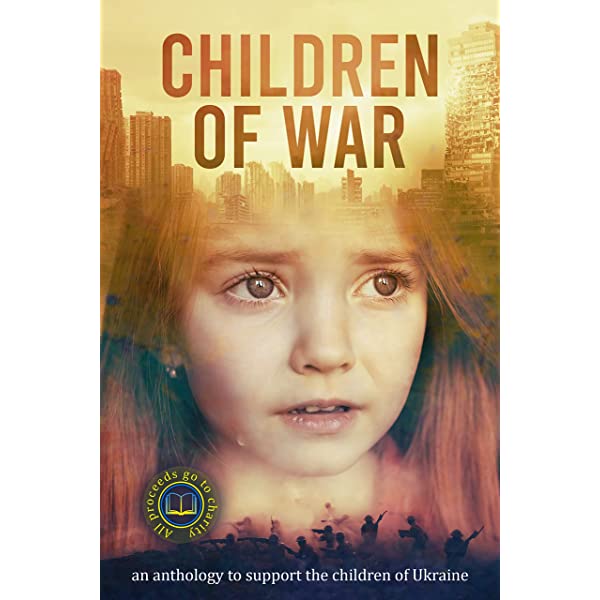
February 24 will mark one year since Russia’s invasion of Ukraine. Because of that, war has been on my mind, specifically how it can affect soldiers’ families. I recently read the short story The War Legacy by Nandita Pant Joshi, which is part of the anthology Children of War: an anthology to support the children of Ukraine edited by Astrid V.J.. This tale effectively explores how war affects the widow of a soldier and her family and how she receives the strength to carry on.
Normally, I like to summarize the plot, but the author was kind enough to provide a blurb, so I’ll use that instead.
The only thing Sarah wants is to be free of her former husband’s war legacy. But will her painful past allow for a tranquil future? Partially set in the war-torn fictitious county of Minsrin, this story is for everyone left behind due to a war.
The story itself is very poignant. It deals with Sarah – a wife with a 7-year-old son – who finds out that her husband Shaun had been killed while fighting terrorists. She faints and later discovers that she’s pregnant with her second child. It’s deeply traumatic for her since she has to figure out if she wants to be a wife or a widow first. It also gives some inklings that her son Henry feels the pain, thus giving some commentary on generational trauma. Luckily, her friend from childhood Elliot is there to help her out with physical and emotional support as well as to remember the good times with Shaun. This proves that Shaun’s life wasn’t defined by war even if that was heavily involved. Elliot even offers to marry Sarah to further that support.
Sarah is conflicted, and the story is understanding about it. It doesn’t judge her for emotions nor for marrying Elliot two months after Shaun’s death. It sees that this is what Sarah had to do in order to move on with her life while maintaining Shaun’s legacy.
In addition, the tale dives into Shaun’s story as he told it to Sarah. He came from a war-torn country, and he recounted how his family was killed in various ways. I won’t describe how they died, but I will say that the author as well as the anthology have provided several trigger warnings. Shaun experiences survivor’s guilt in a very realistic way, especially when coming to terms of his sister’s and mother’s deaths. This is only a part of what Sarah carries with her.
If I had to nitpick, I thought Elliot was a little too pushy with Sarah to move on. At the same time, I understand his intentions. He didn’t want to see Sarah sink down into a deep hole after discovering that Shaun had died. Also, a support system sometimes needs to nudge a person in the right direction even if it feels wrong at the moment. Moreover, when they’re married, he’s respectful of her intimacy boundaries.
Furthermore, I thought it was intriguing detail with Elliot writing a book about Shaun and receiving an award for it years later. I would’ve liked Sarah to have penned it, but it shows that one doesn’t have to shoulder the burden of carrying another’s legacy. It’s a group effort.
To summarize, The War Legacy by Nandita Pant Joshi paints a realistic picture of how one soldier’s family deals with loss due to war. The feelings are complicated, and the story is emphatic to that. I would recommend it to readers who enjoy war stories about the fighters’ families. I’d also encourage them to read the anthology Children of War: an anthology to support the children of Ukraine edited by Astrid V.J. I’m going to read it myself in the future. All proceeds from the book will be donated in perpetuity to Voices of Children Foundation in Ukraine or another similar charity.
Subscribe below to get notified when I post new updates. Also feel free to email me here for any review suggestions, ideas, or new titles!
After watching the 1939 version of and reading Goodbye, Mr. Chips, I discovered that there were three other versions made of this story for the screen. These are the 1969 movie musical, the 1984 television mini-series, and the 2002 Masterpiece Theater television film (there’s also a 2021 filmed opera, but that’s not accessible at the moment). This piqued my curiosity of how each of these adaptations hold up to the black-and-white movie version. So starting today, I’ll begin my 4-part series of reviewing each of these subsequent interpretations and how they measure up to the definitive 1939 one.
Part 1 will focus on the 1969 movie musical starring Peter O’Toole as the title character and Petula Clark as Catherine.
When watching this version, one will notice three major changes to the story. The first is the timeline. In the novella and the 1939 film version, the story takes place between 1870 and 1933. In this adaptation, screenwriter Terence Rattigan shifts to between 1924 and the 1960s. I wouldn’t be shocked if this was made to update the story since it was released in 1969. In addition, the flick starts with Mr. Chips fully established at Brookfield as opposed to him starting out in the black-and-white version. I suppose this was done to get straight to the point that Mr. Chips is not well liked by his students. I’m not bothered by these alterations because they don’t fundamentally change the plot.
Now, there’s the other and more obvious alteration: it’s a musical. Many reviewers and I have been confused by this since the story doesn’t really lend itself well to being sung. The podcast Musicals With Cheese and the YouTube channel Musical Hell have gone into more detailed explanation of why certain tales work better as musicals, so I’ll make this brief. Musicals deal with big emotions, feelings so huge that characters have no choice but to sing and dance. For example, Les Miserables makes for a great musical because it deals with people in depressing situations and their desires to get out of them despite the odds. The protagonist Jean Valjean especially needs to sing because he wants to prove to others that he is a person despite serving 19 years in prison and being repeatedly stalked by an officer who yearns to put him in his societal place. With Goodbye Mr. Chips, there’s not a whole lot of big emotions. The students feel these, but with the titular character, all he does is be moody and reflective. That’s not much to build a successful musical. As a result, the overall movie feels misguided, yet it’s not bad.
This film was made during the time of the big movie musicals, where they were promoted heavily in roadshows and nominated for Oscars. Well-known flicks from this time period are Mary Poppins and The Sound of Music. In other words, musicals were a huge deal back then. A lot of these movies from that time period tended to be long due to the songs as well as the overture, intermission, and entr’acte music. I can see why the decision to transform Goodbye Mr. Chips into a musical was made, but again, it doesn’t really work. For a simple story about an old former English schoolmaster looking back on his life, its run time is about two and a half hours. Talk about being bloated.
Along with the songs, it alters certain elements like the romance between Mr. Chips and Catherine. In the novella, the relationship between those characters is a quick one, but Chips remembers it fondly because of his great love and appreciation for his dead wife since she helped him turn his life around and be more open and wanting to get to know the boys at Brookfield. At first, I wasn’t crazy about this decision, because while the romance is certainly an important part of the story, it’s not the core of it. That is the relationship between Chips and the students. However, the more I thought about it and after discussing the 1939 adaptation with Zita Short, it made me realize that expanding the relationship between Mr. Chips and Catherine made the latter more important to the overall story. In the black-and-white version, when she dies, she is almost erased from the plot entirely. So, I appreciate this film’s attempt at making her more involved in the tale.
While the conflict between Chips and the boys is still essential, it certainly feels more contained than it does in the 1939 version. For instance, the scenes of the bombs going off while a lesson is going on and the April Fools’ Day prank the boys pull on Chips are combined into one. It felt like the movie spent so much time on the romance that the people involved were probably like, “Bloody hell! We have to include these scenes to ensure that it’s still Goodbye, Mr. Chips!”
In addition, since this is a musical, I have to talk about the music. The songs were written by Leslie Bricusse, and the score was composed by John Williams (yes, that one). Both were nominated for Best Score of a Musical Picture at the 1969 Academy Awards, yet I don’t think they deserve it. They’re mostly forgettable. The songs usually had dull melodies with lyrics that tell more than show. The telling part is a problem that I discovered while reading the novella, yet the tunes make that aspect worse. The lyrics are vague as a result. For example, take a look at the lyrics for “You and I,” and you’ll see what I mean.
With all of that being said, it’s not all bad. The best songs are “London is London” (Catherine’s song while she’s performing in a music hall revue [yes, Catherine being a music hall performer is another change that the movie makes to the source material]), “When I Am Older” (sung by the students as they go back to Brookfield), and “Schooldays” (the ditty that Catherine performs with some of the students at an assembly). All of them are fun and have a lot of visual elements going for them. The first tune is one the producers funded the most on as it has the most extras, costumes, and setpieces. The second one contains montages of the boys performing various activities while proclaiming what they’re going to do when they get older. “London is London” and “Schooldays” are the only two numbers, in which dancing is involved. This is strange given how first-time director Herbert Ross was a choreographer. Anywho, I especially like the latter song because it feels like the kind of ditty sung at an English school assembly, and having the one kid not know the dance completely is a nice touch. “What a Lot of Flowers” has plenty of pretty visuals, yet they tend to be so on the nose that even Tom Hopper would complain about how literal it is. “London is London” and “Schooldays” contain the most effective imagery in the movie and are the least involved with the plot, so who cares about the vague lyrics. “When I Am Older” has the most specific lyrics and are sung by characters that would definitely do so, especially since they are at an English boarding school.
As mentioned earlier, this was the directorial debut of Herbert Ross, and it shows. There’s plenty of wide shots of various locations like London, Brookfield, and Pompeii. The opening and closing shots of the boys getting checked in are effective. They look nice, but they feel mostly pointless. At one point while Chips and Catherine are in Pompeii, there are so many lens flares that I thought I could go blind. The editing is fine. It cuts like it’s supposed to. However, it sometimes goes into montages with pointless images. For example, during the “Where Did My Childhood Go?” number, the film cuts appropriately to the students celebrating the last day of school, yet soon after, it transitions to adults walking and boys singing in a choir for some reason. Later on in the flick, when Chips or Catherine remember their whirlwind of a romance, it shows their time in Pompeii. This makes sense, but the first time the movie does that, it happens 20 minutes after their initial courtship. The second time occurs is more appropriate as it’s shown during the second act. Moreover, when it came to filming the musical numbers that don’t involve dancing, Ross mostly has the actors silent while a soundtrack of the song plays. I get that this is supposed to display their inner monologues. It would’ve worked more if this only occurred maybe once or twice. Doing this multiple times feels like a cop out and that the movie is embarrassed to be a musical in the first place.
However, there are likable elements in the movie. First, there’s Petula Clark. She’s the same person who sang the famous 1965 hit “Downtown.” Clark has a lovely voice even if the songs she performs are weak and has a quirk presence in the flick. She is the best singer in the film. Second, there’s Siân Phillips. She is Ursula Mossbank, Catherine’s brassy and close theatre friend. Ursula is not in the book nor in the 1939 movie, yet she’s a delight whenever she comes on screen even if she barely does anything in it besides help thwart Lord Sutterwick’s plan to deprive the school of a generous endowment due to Catherine’s past (this is not in the book as well).
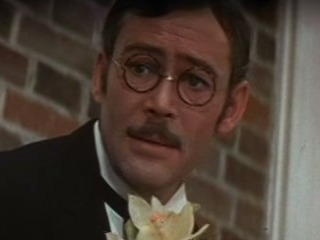
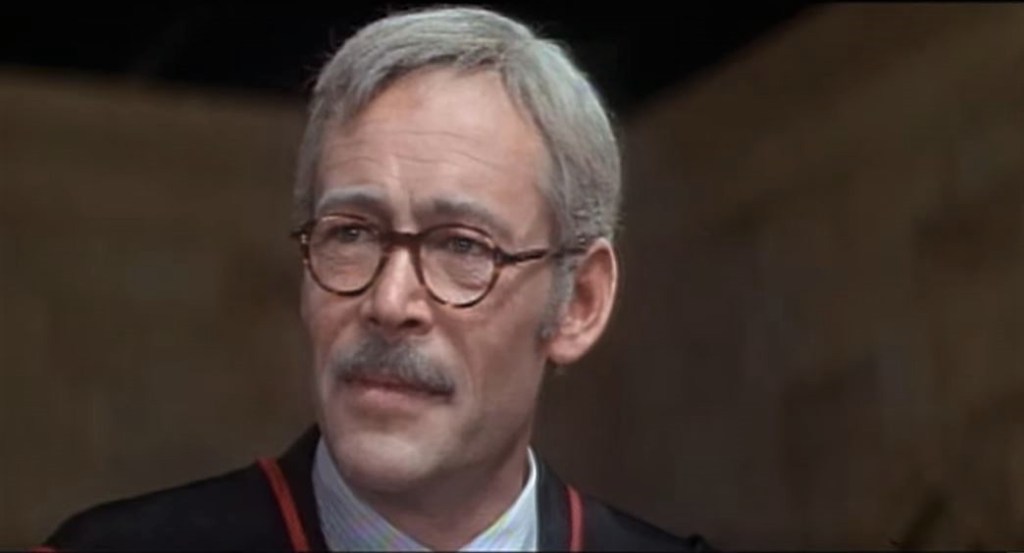
Finally, the strongest and weakest part of this flick is Peter O’Toole. He plays the titular character more stuffy and aloof than Donat did in the 1939 version. The film establishes this interpretation effectively by starting off with Mr. Chips checking the students in and then preventing them from attending a tennis match due to their low scores. This makes the emotional transformation more subtle. As for the physical appearance, O’Toole has a realistic middle-age-man-and-later-older-man look with his neat brown (later gray and white) hair and less ridiculous mustache. It suits his interpretation of the character well. The most efficient scene in the film is when Chips finds out that Katherine died when a bomb dropped on a RAF concert that she was performing in. O’Toole tries to control his emotions by slowly stacking the blank letters the students gave him as part of their April Fools’ Day prank, but he has a hard time containing it.
Young-ish Mr. Chips
Older Mr. Chips
Oldest Mr. Chips
I have two complaints about his performance. One involves his chemistry with Clark. In their early scenes together, O’Toole looks annoyed. I understand that maybe it’s part of the character as he plays Chips as more stern, but it doesn’t help that in the restaurant scene in Pompeii, Clark stares at her drink 4 separate times. I didn’t fully believe in their romance until Chips tells Catherine about his feelings standing up to Lord Sutterwick while in bed, and that was in the second act. In the book and the black-and-white version, their love is supposed to happen suddenly, so their delayed chemistry in this one is a major disappointment. The other caveat is O’Toole’s singing. His singing voice is weak and doesn’t contain much range. This was tolerable when he sang “Where Did My Childhood Go?” since it reflects his insecurities and need to open up more. However, when the song “What a Lot of Flowers” comes on, O’Toole still performs in his frail voice despite the tune needing more excitement and overall expression to sell it effectively. All in all, I can see why he was nominated for Best Actor for his performance at the 1969 Oscars even if it mainly feels like that was done because the last guy who played Mr. Chips won.
All in all, the 1969 movie musical version of Goodbye, Mr. Chips has good intentions and parts, yet it contains so many ideas to stand out from the 1939 version that it ultimately feels misguided. As a result, it falls short compared to its predecessor. Everyone involved, especially Ross, are certainly trying, yet it ends up being bloated and sort of dull. Above all, it doesn’t help that the source material doesn’t lend it well to being a musical. However, despite the flaws with O’Toole’s performance, he is the best thing about this flick. I can see why viewers might like it, especially this one is the first version of Goodbye, Mr. Chips they’ve ever seen. I would recommend it to those who are highly interested in seeing the big movie musicals of the 1960s, every Peter O’Toole and Petula Clark movie, and every version of Goodbye, Mr. Chips (like myself).
Stay tuned next month when I review the 1984 television mini-series!
Subscribe below to get notified when I post new updates. Also feel free to email me here for any review suggestions, ideas, or new titles!









 Book Reviews by a Chick Who Reads Everything