Finding Dorothy Book Review

Whenever I talk about my to-be-read pile, I often joke that it’s 3-4 years long. In truth, I have an extremely long list that I’ve been adding to since I started reviewing books. They often come from people who recommend me titles, or they are ones that I found on my own. One novel that was at the top of my list for the longest time was Finding Dorothy by Elizabeth Letts – the story of the making of The Wonderful Wizard of Oz through the eyes of L. Frank Baum’s wife Maud. I figured it was about time to find and read it as Wicked: For Good plays in movie theaters. It was a fascinating historical fiction novel about an often undervalued contributor.

Finding Dorothy is the story behind The Wonderful Wizard of Oz through the eyes of Maud Gage Baum from her family’s tough days in South Dakota to the Hollywood set where she meets Judy Garland. Maud – L. Frank Baum’s widowmet Judy, the young actress who’s set to play Dorothy in the film The Wizard of Oz, in 1939. At the time, Maud was 78, and Judy was 16. Despite the age differences, Maud connects with Judy, especially when she hears her sing “Over the Rainbow.” It reminded her of her family’s struggles in South Dakota years before her husband became a national sensation. 

The story recreates Maud’s youth as the rebellious daughter of a leading suffragette and the prairie years of Maud and Frank’s early days when they lived among the people – especially young Dorothy – who would inspire Frank’s masterpiece. Woven into this plot is one set in 1939, where on the set of the movie version, Judy is being badgered by the director, producer, and her ambitious stage mother to lose weight, bind her breasts, and perform certain emotions on command. As Maud had promised to protect young Dorothy in Aberdeen, she now vows to do the same with Judy.

The Wizard of Oz has always delighted me since I was a kid. I loved the story, the characters, the songs, and the vibrant colors when Dorothy enters the land of Oz. I recall my dad trying to sing like the Lion when he belts out “If I Were King of the Forest.” Also, I danced to the cut song from the film “The Jitterbug” at a recital when I was 7. When I was a little older, I even read The Wonderful Wizard of Oz and enjoyed it too. The movie has maintained a huge place in the American cultural zeitgeist for a long time. There are plenty of horrifying stories about what went down while making it. Almost every film-based YouTube channel has put their own spin on the behind the scenes of The Wizard of Oz. 

Prior to reading Finding Dorothy, I knew about many of the things that occurred on the set of that flick. For example, I was aware that “Over the Rainbow” was at one point cut because of the run time and how executives at Metro-Goldwyn-Mayer studios felt it was beneath Judy to sing in a barnyard. This is the reason why I loved the scene in which Maud and Judy confront Louis B. Mayer – the head of the studio – to put it back in by playing to his sentimentality. While I liked the parts when it was Maud and Judy interacting with each other, I wanted to know more about the widow’s life.

Luckily, the majority of the novel focuses on Maud and her relationships with her mother Matilda, her sister Julia, and her husband Frank. This is the best part of the novel. Maud is a strong-willed daughter of a suffragette, but not just any suffragette. It was Matilda Gage, who worked closely with Elizabeth Cady Stanton and Susan B. Anthony. She was a fascinating character. Matilda wanted Maud to go to college and earn a law degree, yet she feels miserable there due to sexism and soon falls in love with Frank – an actor. Matilda disapproves of Frank and of his occupation, yet overtime, they bond over theology, and she encourages him to write his stories down. Julia is Maud’s fragile sister. It was sad reading the sections involving her because I felt bad. She has some mental health issues and later elopes with a man ten years younger than her who’s hard headed and possibly abusive. Maud constantly wants her to stand up for herself, especially for the sake of her daughter Magdelena aka the Dorothy that she strives to protect. Soon, Maud discovers that no one else can solve your problems. 

And of course, there’s the core relationship between Maud and Frank. I love their dynamics. She is the realest, thinking about how much income they’re getting, and he is the dreamer yearning  to tell stories about far away lands, so children can have a happy place. Despite wanting him to get a real job, Maud was drawn to his theatrics and his ability as a storyteller. Her love for him and for The Wonderful Wizard of Oz is the reason why she wants the movie executives to be as faithful to the source material as possible. There was so much I didn’t know about the Baums. For example, I was surprised to learn that Frank didn’t want his fairytales to be scary. This is why The Wonderful Wizard of Oz is the way that it is. 

Finding Dorothy by Elizabeth Letts is a good take about the making of The Wizard of Oz. There have been many spins on what went on behind the scenes, but having it through the eyes of Maud Gage Baum was certainly unique and worked well. Because I already knew so much about the movie and how it was made, I found the parts involving Maud and Frank’s early years to be far more interesting since I wasn’t fully aware of their backstories. I would recommend it to those who love The Wizard of Oz and want to know more about the making of it, the book The Wonderful Wizard of Oz, and obscure tenacious women throughout history. I’m glad I finally got around to reading, for it was worth it. Now, let’s see how long it’ll take for me to get to the next title on my list: The Last Year of the War by Susan Meissner.

Subscribe below to get notified when I post new updates. Also feel free to email me here for any review suggestions, ideas, or new titles!
Wuthering Heights 1939 Movie Review

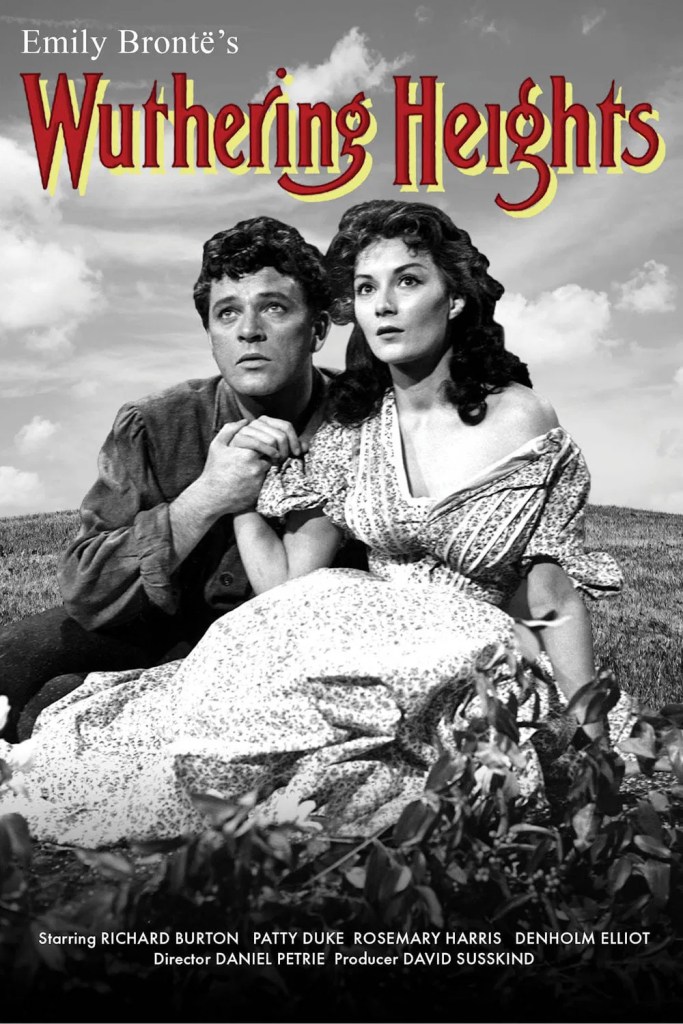
Today, I will begin my 12-part series of looking at every available adaptation of Wuthering Heights by Emily Brontë. Now, there are several versions and retellings, but I was able to whittle it down to 11 because they could be found on DVD, YouTube, or in the movie theater. Part 1 will focus on the first and best-known adaptation – the 1939 film starring Laurence Olivier and Merle Oberon.

Before I get into the review, I must add a disclaimer. The earliest known movie version of Wuthering Heights was released in 1920. However, it remains lost to this very day. Hence, the reason why I’m starting with the Oscar-nominated 1939 adaptation.

The first thing I want to point out is that a handful of versions omit the second half of the novel. The 1939 version is no exception. This may be for a variety of reasons. Screenwriters Charles MacArthur and Ben Hecht didn’t want to deal with the incest, the scene involving Heathcliff digging up Catherine’s grave, or Heathcliff’s cruelty towards the next generation. Or, it may be because the first half is more interesting than the second. Whatever the reason was, I will point this out in subsequent reviews.

With that being said, not only does cutting out the second half make this film feel incomplete, but it also changes the tone of the story. This omission alters it from being a gothic horror to a romance. This is best exemplified by the slightly different framework. Instead of Nelly telling Mr. Lockwood why Heathcliff is such a horrible person, it’s her reciting the tragic love story between the foundling and Catherine. In addition, since the second half is out, almost everything at the end feels underwhelming, yet there was great build-up and pacing throughout the flick.

However, as much as it’s easy to judge the movie by what it isn’t, it’s better to review it by what it sets out to be. And, in this case, it wants to highlight the tragic romance between two stepsiblings. Does it succeed? Yes, the chemistry between Oberon (Catherine) and Olivier (Heathcliff) is undeniable. Viewers would be wholeheartedly invested in seeing these two get together despite social obligations and their toxicity. This is remarkable considering that those actors reportedly didn’t like each other while making this movie. I wouldn’t have noticed. Speaking of their tormented romance, this flick acknowledges this from time to time, especially when Heathcliff is guilt-tripping Catherine for marrying Edgar at Thrushcross Grange. However, it’s more focused on why these two should be together.

Other elements in the film also enhance the romance. The music composed by Alfred Newman (Randy Newman’s uncle) swelters in ways that are typical for 1930s love stories. I adore how Mozart’s “Piano Sonata in A major, K.331: Rondo alla Turca” was utilized to highlight the tension among the main characters. The English Moors setting highlights how their love is vast and untamed with its open fields, rocks, and heather. Even the difference between the Wuthering Heights and Thrushcross Grange estates is stark. The former is impoverished with its bare and dusty rooms, and the latter looks like a Southern plantation straight out of Gone With the Wind. This shows that despite Catherine’s love for Heathcliff, she would like to live in wealth and away from her awful brother Hindley.

Although the movie doesn’t fully capture the spirit of the novel, the actors do with their characters. The supporting cast is good in spite of not being given a whole lot to do. Hugh Williams plays Hindley like the boo-hiss character he’s meant to be, particularly when he’s abusing Heathcliff. Anytime he was on screen, I proclaimed, “Hindley, you piece of s***.”

David Niven fits perfectly as the calm, level-headed, and morally righteous Edgar. Geraldine Fitzgerald plays Isabella and does well with her stupidity and spitefulness towards Catherine. She got an Oscar nomination for Best Supporting Actress for this role. I suspect it was because of her scene pleading to Heathcliff to love her as much as she does after they are married (even though this is in contrast to what Isabella actually does in the book).

Oberon and Olivier are fantastic as Catherine and Heathcliff. The former does a great job of playing Catherine as stubborn, spoiled, and possibly having borderline personality disorder. She also taps into the character’s tenderness, especially when she tells Nelly why she loves Heathcliff. Olivier has the most memorable role in the film, and he sells it. He infuses Hamlet-esque brooding into the enigmatic character. This makes him passionate and calculative. He is the perfect 1930s version of a Bryonic Hero. Olivier was known for his stage work at the time, so he could have gone over the top with his portrayal, but he tempers his performance just right, especially after multiple takes by director William Wyler. This earned Olivier the first of several Oscar nominations, especially in the Best Actor category. Funny enough, he lost to Robert Donat for his performance as the titular character in Goodbye, Mr. Chips. Now, I’m fully aware that Olivier is a white man, and he clearly looks like so in the movie, despite other characters describing him as “dark as the devil” and having a Chinese emperor for a father and an Indian queen for a mother. Ironically, Oberon is biracial since her mother was from India. Also, this wouldn’t be the last time Olivier would play a character of color.

This version of Wuthering Heights garnered several Oscar nominations, including the aforementioned acting categories, directing, screenplay, score, art direction, and Best Picture, yet it only won one. That was for legendary cinematographer Gregg Toland. Anyone who has taken film classes in high school and/or college would definitely have seen at least one of his films. His best-known work includes the 1940 adaptation of The Grapes of Wrath, The Best Years of Our Lives, and Citizen Kane. Toland was influential in the work of cinematography due to his use of deep focus shots and lighting. He uses both to great effect in Wuthering Heights, especially how certain characters like Heathcliff stay partially in the dark at times. And of course, I can’t forget the low-angle shot of Heathcliff opening his arms and Catherine embracing him afterwards in the moors. That’s iconic. This was the only time Toland won an Academy Award in his all too brief career, for he died in 1948. Wuthering Heights winning Best Black-and-White Cinematography makes a lot of sense.

I might like the 1939 Wuthering Heights version more if I didn’t read the book first. There’s a lot to admire about it. It’s beautifully filmed, scored, and designed. In addition, it contains some great performances by actors who understood their characters. However, the omission of the second half of the novel is felt, especially when the build-up essentially leads to nothing. It’s certainly a tame translation of the book. Also, I blame this flick for making the general public perceive the novel as a romance rather than a twisted gothic horror. Even though it doesn’t fully capture the book’s spirit, it’s still a well-made conventional movie that I would recommend to those looking to get into Wuthering Heights. It’s a good gateway into the other adaptations.

Speaking of which, at the end of every Wuthering Heights adaptation review, I will rank them. For example, I will put the 1939 flick like this for now:

  1. Wuthering Heights 1939 Movie Version

We’ll see how this ranking goes after I see all the others.

Stay tuned next month when I review the 1950 teleplay with Charlton Heston!

Subscribe below to get notified when I post new updates. Also, feel free to email me here for any review suggestions, ideas, or new titles!

Defector in Paradise Book Review

Full disclosure: I was given a free advance reader copy of this book by Author Marketing Experts in exchange for an honest review.

When people think of political action thrillers, they usually bring up Brad Thor. He has a great blend of suspense and political intrigue due to his experience in the Department of Homeland Security’s Analytic Red Cell Unit. However, there’s a new guy in the political thriller sphere, and his name is Richard E. Snyder. He’s a former intelligence officer and has written two books. One of them is Defector in Paradise. It’s an exciting title with memorable characters, and it’s effective in how it portrays the government handling the truth and people dealing with consequences.

Defector in Paradise is the second book in the “Owen Roberts” trilogy. The year is 2024, and a Russian agent is one step away from conquering the White House. Tragic circumstances force Owen to team up with a Russian defector to expose one of the Cold War’s last and biggest secrets: the identity of a high-level mole operating within the US government. After working as an intelligence officer for 20 years, Owen is no longer young and idealistic. He wants to be, but life in the world of espionage is beginning to wear on him. His career is going nowhere, and once again, he finds himself fighting against invisible forces he can’t control while he questions his own moral code. While he walks a dangerous path of death and destruction, he realizes that he has become the last man standing between the mole and the White House. What follows is a high-stakes game of cat and mouse fought at the highest levels of the intelligence community.

The first book in the trilogy is The Clandestine Education of Owen Roberts. While I haven’t read that one, I could see references to it in Defector in Paradise. Both can be read separately as well as together. Also, the latter does a great job setting up the third title, so I will certainly read the rest of the series when I have the chance.

I knew I had to read Defector in Paradise when I saw its tagline: “It’s 83⁰ and sunny with a chance of treason.”

It’s the kind of line that could be spoken by David Caruso in CSI: Miami, followed by the scream from “Won’t Get Fooled Again” by The Who. Also, most of the novel is set in Fort Lauderdale, which further proves my point.

The book lives up to the hype for a variety of reasons. One of them includes the characters. Owen has worked as an intelligence officer for 20 years and has come to a crossroads. He tries to do the right thing even though that gets him trouble with his supervisors. He wants to save the nation without sacrificing the people around him because of the events in the previous title. This all reminded me of Top Gun: Maverick, in how the consequences factor more in the main characters’ decisions because of what happened in the past. It certainly gets tricky when he falls in love with Katya. Dimitri is the Russian defector that Owen has to protect and get help from. At first, he comes off like a stereotypical Russian with the way he speaks, how secretive he can be, and how often he offers vodka. Over time, I saw how much he cares about the people around him, especially his girlfriend Nathalie; Katya; and later, Owen.

Since Snyder was a former intelligence officer, he offers some unique insight into how the government handles the truth about certain things. He mainly does this with a character called “the deputy.” He is Owen’s supervisor and often gives him real-life advice about working for the government. Towards the end, he tells him about the House of Horrors – classified information so sensitive that if revealed, it would destroy the government. The deputy explains to Owen that it has to hide certain truths from the public to maintain trust and its legitimacy, even when people know about it. In other words, the government can’t be as transparent as citizens want it to be. This devastates Owen, and it would me, too, if I were in his shoes.

The aspect I truly enjoyed the most was its exploration of consequences. Every character has to deal with this at some point. In the beginning, Owen tries to save a friend while on a mission in Mozambique, but it fails and ends up being the catalyst for getting him transferred to protect Dimitri. Later on, Nathalie tells Owen about her life in Russia, her travels around the world, and the ways she protected Katya. She tries to rectify what she did. And, there’s the mole. I don’t want to give away too much about this person, but I will say this. This character participated in some salacious behavior, but instead of getting caught, Russian and East German spies took him in and “raised” him to have more confidence in himself. As a result, he developed a huge superior complex. My favorite part was when the mole got exposed at the Democratic National Convention. I love it when evil people get their comeuppance.

Defector in Paradise by Richard E. Snyder is a wonderfully intriguing novel. Snyder does well with defining characters and their conflicts, particularly with Owen. In addition, he does a great job with themes like how the government controls certain truths and consequences. I would recommend it to readers who love political action thrillers, especially by Brad Thor. I’m glad that it had a great hook because it was an enjoyable read.

Subscribe below to get notified when I post new updates. Also feel free to email me here for any review suggestions, ideas, or new titles!
Lost My Mind Here Someplace: A Memoir Book Review

Full disclosure: I was given an eARC of this book by the author in exchange for an honest review.

Content warning: this review discusses kidnapping, drugging, domestic abuse, and trauma.

Back in my Six Days in Detox review, I mentioned that I’ve read plenty of harrowing tales that stayed in my mind because of how well-written they were. What do I mean by that? It’s not just enough for the authors to articulate their stories into the written form. It’s all about how they are able to draw readers in and connect to them. That’s what makes their tales have a lasting impact. And reader, I found another one that I will remember for a long time. It’s called Lost My Mind Here Someplace: A Memoir by Arūnė Savage, and it’s a giant roller coaster of a ride in the best way possible.

Lost My Mind Here Someplace: A Memoir is a memoir about one woman’s immigration journey. Born in Lithuania and grew up in South Africa, Arūnė always wanted to go to the United States for a better future. Armed with nothing but an oversized suitcase and certain ideas of the American dream, she made her way to “Thelandofplenty,” but soon, she realizes that the nation is far more complicated and messy than she realized. While trying to obtain her US citizenship, Arūnė transforms from a naive girl to a woman ready to embrace her defects amidst the situations she finds herself in. This is a tale of survival through a fruitless search for one’s sanity and the need to achieve the American dream in one’s own way.

When I said that it’s a giant roller coaster ride, I truly meant that. She goes through a lot. I don’t want to give it all away, but here’s a quick rundown: she has an alcoholic father and an absent mother, got kidnapped twice, was homeless for a time, was drugged by a director while auditioning in New York City, and found herself in toxic relationships with plenty of men. I understand that this is not meant for everybody because of how intense it is. While I was reading this, I truly wondered, “How did she survive?”

Usually, I read about 20-30 pages a day per book. But with this one, I consumed 50 pages because it was so addicting. I needed to know how she made it in America. What kept me interested was her writing. Savage writes with humor and honesty. She is able to describe some situations as funny even when they were not like when she was deciding to pay the rent or get some pizza. I also felt for her when she described the abortions that she was forced to have when her partners didn’t want a child even though she did. In addition, she knows how to keep an audience interested. I knew I was going to be properly seated when I read the first chapter, in which she and some other people escaped after they got kidnapped and taken to Mozambique. 

More importantly, it was Arūnė’s will to survive that made me want to read more of her memoir. In a harrowing tale like this, I would rather read about how someone pulls through after experiencing traumatic events as opposed to their suffering. That’s not to say people shouldn’t suffer. Suffering is a part of the experience, and Arūnė admits to that, especially when dealing with homelessness in New York City in the beginning and later with a husband who essentially forced her to stay inside their home in Los Angeles. It’s survival that drives people to get out, and Arūnė had that drive. It’s especially true when she went through the process of getting her US citizenship. As a natural born citizen, I knew that it took a long time to obtain that, but I didn’t realize how much money is needed and how many steps are involved. Arūnė wanted to stay in Thelandofplenty so much that she married two separate men to keep her green card. She was willing to do anything to live the American dream even if it wasn’t as romantic as she thought it was going to be.

Lost My Mind Here Someplace: A Memoir by Arūnė Savage is probably the most messed up memoir I’ve read for this website. But, it was still great. Savage has a knack for writing with humor and sincerity while also demonstrating a will to survive. I know I’ve said the following before, yet I’m going to say it again: I couldn’t believe what she went through. Savage genuinely proves that truth is stranger than fiction. While it’s not for everyone, I would recommend it to people who have been in toxic relationships, immigrants, and readers who want to know what the immigration experience is like in America. Lost My Mind Here Someplace: A Memoir is out now, so grab it wherever you get your books.

Subscribe below to get notified when I post new updates. Also feel free to email me here for any review suggestions, ideas, or new titles!
The Stonekeeper Book Review

When I became a Children’s Librarian, I was more exposed to juvenile books than ever before. Some were happy, some were sad, and some could be scary. It’s perfectly alright to have the latter kinds of books for kids as long as they know what they’re getting into. In fact, I found a graphic novel that might frighten some young readers, but it’s still a worthy read. What’s the name of the book? Well reader, it’s called The Stonekeeper by Kazu Kibuishi.

The Stonekeeper is the first book in the Amulet series. After the death of their father, Emily and Navin with their mother move to their deceased great-grandfather’s home. However, the house proves to be strange and dangerous. Before long, a sinister creature lures their mom into the basement. Desperate not to lose her, Emily and Navin follow her into another world that’s full of demons, robots, and talking animals. Eventually, they enlist the help of a mechanical rabbit named Miskit. Together, they face the most dangerous monster of all, and Emily has the chance to save someone she loves.

To show one how frightening it can be, I will let you know that the first few pages depict the horrific car accident that kills Emily and Navin’s father. It’s kind of gruesome for a kids’ book, especially with the blood. Luckily, the rest of the graphic novel is less intense, but still ominous. 

At the same time, that opening scene not only establishes the motivations of the main character Emily, but also it sets up the tone of the graphic novel effectively. Throughout the book, there’s plenty of action that is reminiscent of a manga and a video game. These flow very well as if one is flipping through a drawing in the corner pages. There’s also plenty of places where Emily and Navin have near-death experiences. I bet once all of this is over, both will scoff at the phrase “stranger things have happened.”

Another thing that reminded me of those mangas is the artwork. Its illustrations often rely on blacks, dark blues, golds, browns, and reds with bits of pink, purple, and white thrown in there to contrast the darker elements. The manga-like quality is also shown in how the characters are drawn. This is most apparent in how Kibuishi draws their eyes with how expressive they can be. The characters go through a range of emotions like anger, confusion, and determination. They made me think of the characters that have similar styles and expressions in various mangas and animes.

I also like the world that Emily and Navin encounter. It contains steampunk and fantasy elements. It’s full of robots, elves, goblins, and octopus-like creatures called the rakers. This definitely makes the book stand out from other stories that involve children discovering a new world in an old run-down family estate (Spiderwick Chronicles anyone?).

From what I’ve read, this is the first of eight books in the series, so it primarily focuses on exposition, establishing characters and motivations, worldbuilding, and the core plot. I’d love to see where it goes from here, especially how the amulet helps or even hinders the main characters’ goals.

The Stonekeeper by Kazu Kibuishi is a great beginning for the Amulet series. The illustrations are gorgeous to look at and move the story fluidly. It’s not for every kid or adult, but if one likes darker or scarier elements in juvenile books, then this one will be up one’s alley. I would also recommend it to those who like reading stories about exploring new worlds that inhabit family estates (again Spiderwick Chronicles) as well as the more fantasy-filled and action-packed mangas.

Subscribe below to get notified when I post new updates. Also feel free to email me here for any review suggestions, ideas, or new titles!
Wuthering Heights Book Review

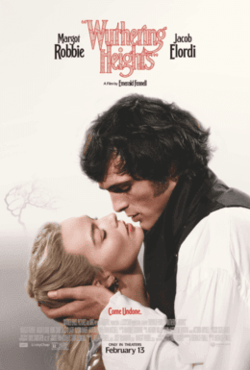
In September 2024, it was announced that Emerald Fennell was going to adapt Wuthering Heights by Emily Brontë. In addition, she had cast Jacob Elordi as Heathcliff and Margot Robbie as Catherine. Both announcements received negative attention from literary and film circles for a variety of reasons. Since that movie is going to be released in February 2026, I figured it would be a good time to read the 1847 book and watch several available adaptations. It’s a good novel if you know what you’re getting into.

Wuthering Heights is about trauma and its lasting legacy. Mr. Lockwood, the new tenant of Thrushcross Grange, situated on the bleak Yorkshire Moors has to seek shelter at Wuthering Heights – the place where his landlord lives at. The longtime maid Nelly tells him of the history of the violent events that took place years before; of the intense relationship between foundling Heathcliff and Catherine Earnshaw; and how Catherine was forced to choose between her love for the passionate, tortured Heathcliff and her to need to fulfill societal expectations by marrying the gentle, well-bred Edgar Linton. As Heathcliff’s bitterness and vengeance at his betrayal is visited upon the next generation, their innocent heirs must struggle to escape the legacy of the past.

Now, before I go into my feelings about the classic, I want to get some things off my chest. First off, like many people who come across the novel, I initially thought it was about a romance between two doomed lovers who were driven apart. When I was younger, I saw bits of pieces of the 1939 movie version, which certainly played up the love story aspect. However, when I worked at my first librarian job, I had a conversation with a fellow coworker about the books we hated the most. I had said The Polished Hoe by Austin Clarke, and she said Wuthering Heights. For her, it was because she thought it was going to be a romance, but in reality, it was about a toxic relationship. She even claimed that the famous line from the book “He’s more myself than I am. Whatever our souls are made of, his and mine are the same” was trying to justify being together with a destructible person. It’s been a few years since that talk, and I wanted to read Wuthering Heights with fresh eyes. This meant reading nothing about it beforehand. In addition, this wasn’t my first experience with a book written by a Brontë sister. I voluntarily read Jane Eyre by Emily’s sister Charlotte in college, and I loved that one. 

There are two things that readers have to understand before they go into it. The first involves our leading man Heathcliff. His backstory prior to coming to live with the Earnshaws is ambiguous. The characters nor the readers never know where he came from or what race or nationality he is. However, Emily Brontë makes it clear that he is NOT WHITE. She includes several physical descriptions of him with black hair, dark skin, and possibly being a Romani. This explains why people like Hindley are cruel to him. Even at one point early in the book, Heathcliff states that he wishes that he had fairer eyes and skin. He doesn’t deserve this treatment, and how he deals with it is fascinating even if it’s not what people should do. I bring this up because several adaptations cast a white guy in the role. Only ONE version included a non-white actor in the part. Why? YouTuber Princess Weekes has an entire video on that subject that I recommend watching. The point is that people have to keep in mind that he receives poor treatment from others because of the way he looks.

The other aspect readers have to know before reading Wuthering Heights is it isn’t a romance. Sure, there are romantic elements like the core relationship between Catherine and Heathcliff, but that only plays one part of the story. The entire novel is literally the servant telling the new tenant why Heathcliff is a horrible human being. In fact, there are a lot of horror elements like him killing Isabella’s dog and locking his niece up in his home to force her to marry his son. Additionally, people often say that everybody is terrible in Wuthering Heights. While that’s true to some extent (Hindley especially), it’s more accurate to say that all of the characters are flawed. Edgar is the most morally upright, yet he doesn’t understand how Catherine feels, and he can be a snob. Isabella is stupid. Catherine is a stubborn spoiled brat. Hindley treats everyone around him cruelly, including Heathcliff and his own son Hareton. Even the children in the second half of the novel aren’t exactly angels either. This makes them all the more compelling, and it was fun to read about what they were going to do. Even though Nelly narrates the book, I wondered how objective she truly was, especially when she spends plenty of time describing Heathcliff’s appearance.

Emily Brontë knew exactly what she was doing when she wrote Wuthering Heights nearly 200 years ago. Every character is unsympathetic to various degrees and goes to great lengths to try and achieve what they want. I’ve never read anything like it before. Its unvarnished nature is why it has endured as a classic. People may try to tame it, yet it can never be done. I would recommend it to readers who are looking to read more unconventional classic novels.

As mentioned earlier, I plan on watching every available Wuthering Heights adaptation one month at a time. This consists of 6 film versions, 1 television movie, 2 teleplays, and 2 series. Next month, I will look at the 1939 Oscar-winning movie version starring Laurence Olivier and Merle Oberon. Stay tuned for my film review of that and of the other adaptations (that I got my husband Carl to watch)!

Subscribe below to get notified when I post new updates. Also feel free to email me here for any review suggestions, ideas, or new titles!
Sisters of the Neversea Book Review

As mentioned in my Darling Girl: A Novel of Peter Pan review, I loved watching Peter Pan while growing up. However, I recognize the problematic elements of the story like the depiction of the native people and the title character being awful. There have been retellings that have tried to reconcile those aspects. The most successful ones acknowledge the problematic parts while truly understanding what made the tale special in the first place. The aforementioned Darling Girl is one of those stories that does it right, and another is today’s subject Sisters of the Neversea by Cynthia Leitich Smith. 

Sisters of the Neversea is another modern retelling of Peter Pan. Instead of focusing on the boy who never grew up, it tells the story of Native American girl Lily and her British stepsister Wendy. Lily and Wendy have been best friends since they became stepsisters. However, their parents plan to spend the summer apart, which puts the family as well as the sisters’ relationship in limbo. One night, a boy comes through the window and intends to take them away along with their brother Michael from their home to a place called Neverland. Will Lily and Wendy find a way to get back to the family they love?

This is the third novel that I’ve read from Cynthia Leitich Smith. The other two were Rain is Not My Indian Name and Hearts Unbroken. Sisters of the Neversea the first one that I’ve read since starting this series. By having a native author, the book confronts an aspect of the Peter Pan story that is easily the most problematic: the portrayal of the indigenous people. In the original story by J.M. Barrie and in subsequent adaptations, they play a small role with Peter saving Tiger Lily from Captain Hook and the peace scene afterwards (which sometimes results in a racist song). Then, they disappear from the rest of the plot. Because of the focus on the native characters, the novel isn’t able to follow the original J.M. Barrie tale exactly, but it still covers the basics.

Sisters of the Neversea effectively brings that aspect to the forefront not only with including multiple native children from various tribes on Neverland, but also with Lily being indigenous herself (she is from the Muscogee Creek Nation). Each of the indigenous kids on Neverland also have distinct personalities, and one of them is even a two spirit. In addition, Lily was always suspicious of Peter, and she’s afraid of flying. Her initial fear gets her left behind Wendy and Michael, but once she thinks happy thoughts, she flies to Neverland in order to rescue them. 

I also like Lily and Wendy as individual characters as well as their relationship as stepsisters. Smith portrays them in a way that many fairy tales do: as opposite as possible. Lily is the one who likes facts, but she can be too serious at times. Meanwhile, Wendy is the storyteller and loves using her imagination, but doesn’t always use her common sense. Instead of pitting them against each other, the author continuously acknowledges their strengths and their flaws by emphasizing how they complement each other. Lily learns to let go and enjoy things around her, especially when she’s flying, and Wendy utilizes the trivia that she heard from her stepsister. Plus, they work together to rescue Michael and to confront Peter about his shortcomings.

Another character that I liked in this retelling is Belle aka Tinkerbell. She is a sassy and glamorous fairy, who is often annoyed with Peter. Over the course of the book, she realizes that her enabling allowed Peter to destroy the island in a variety of ways, including endangering animals, even though all she meant to do was to protect him. I especially like how the novel handles the famous “I believe in fairies” bit when Belle is at her lowest.

The portrayal of Peter Pan here is not much different from the one in Darling Girl. He’s controlling, manipulative, sexist, and racist. Both Lily and Wendy express concern over this, and yet, under his “spell,” they fly away to Neverland. At the same time, readers get to see what made him think that way, especially the books that he possesses. He’s also able to have a character arc, in which he realizes that he’s the source of Neverland’s problems. After that, he at least attempts to become a better person.

In addition, I like how the book expresses the logic of Neverland and its byproducts. Along with thinking happy thoughts, the more dust one is given, the more one is able to fly and their personality gets magnified. So if one is naturally prideful, they get even more so with that magic. In this way, whoever gets the dust doesn’t feel like themselves when they fly, hence the reason why Peter Pan is able to convince many to join him in Neverland.

Furthermore, I love the worldbuilding in the novel. In previous adaptations, Neverland is an island containing a variety of groups like pirates, mermaids (merfolk in this book), and the aforementioned native people, and it looks like paradise. In Sisters of the Neversea, the island functions on its own time, as in minutes can literally be hours and vice versa. It can also stretch itself, so a 5-minute walk to the Home Under the Ground can be miles. In the meantime, the book also explains why there’s no adults, and the reason makes Peter all the more evil.

The only thing that I have to nitpick is how the narrator goes “You may be wondering…” or “In case you’re wondering…” on various occasions. Initially, I rolled my eyes over those parts because it felt condescending. But then again, from what I understand, it’s from the original Peter Pan book Peter and Wendy by J.M. Barrie. It’s the kind of narration that’s not used much anymore in today’s books. When I realized that, I became more used to that omnipresent third-person style. Also, I would love to see the narrators from this novel and Everything I Never Told You by Celeste Ng interact sometime.

Sisters of the Neversea by Cynthia Leitich Smith is the best book that I’ve read from this author so far. It’s a great retelling of a classic story that’s in serious need of an update. I would recommend to those who love Peter Pan in any iteration, middle-grade fantasy novels, works by indigenous authors, and reworkings of famous tales. Like Darling Girl, Sisters of the Neversea passes with flying colors!

Subscribe below to get notified when I post new updates. Also feel free to email me here for any review suggestions, ideas, or new titles!
Getting Lost on My Way: Self-Discovery on Ireland’s Backroads Book Review

Full disclosure: I was given a free advance reader copy of this book by Books Forward in exchange for an honest review.

Content warning: this review briefly mentions depression and suicide.

A couple of weeks ago, I went to two Ireland study abroad reunion events hosted by my college. It was a lot of fun. While I was there, I reminisced about my time there back in 2014 with other alumni. I also happened to be reading the memoir Getting Lost on My Way: Self-Discovery on Ireland’s Backroads by Diane Hartman at the same time. Not only did it put me in the best nostalgic mode ever, I was completely invested in the story of one woman’s journey towards acceptance.

Getting Lost on My Way: Self-Discovery on Ireland’s Backroads is about a woman’s solo adventures of self-discovery on Ireland’s backroads following a painful divorce. When an introverted, divorced, middle-aged mother and school librarian from the Midwest decides to travel to Ireland by herself, her desire to fulfill her dreams outweighs her fear as she dives deep into what would become an adventure of courage and self-discovery. Diane loves Irish music and Celtic spirituality, and she wants to find healing from her depression and divorce. On top of that, she had been obsessed with going to the Emerald Isle for years. Once she arrives in that country, her romantic perceptions are quickly dashed as she faces many obstacles like driving the narrow, ill-marked roads throughout the countryside. Nonetheless, her solo trip leads to three more over the next six years. Diane encounters some fascinating characters like members of an Irish rock band, a hermit nun, and her favorite Irish musician. Not only does she learn to navigate the backroads, but also her own personal and spiritual roads towards self-discovery and acceptance.

I knew I was going to enjoy this book the moment I heard about it. When I was a junior in college, I studied abroad in Ireland for four months in a village called Tully Cross. When my group wasn’t attending classes or performing internships, we went on excursions around the island, including to Derry (or Londonderry) and Belfast in Northern Ireland, Giant’s Causeway, Dublin, various monasteries and castles, W.B. Yeats’s grave, and the Cliffs of Moher. It was a blast. 

Diane goes to a lot of places in Ireland like the Cliffs of Moher and W.B. Yeats’s grave, but most of them I’ve never been to before. She travels to Tuam in County Galway – the hometown of the Irish rock band The Saw Doctors – and Cong in County Mayo – the village in which a good chunk of The Quiet Man was filmed. The way she describes them sounds as luscious as the lands I saw in western Ireland. They make me want to go to those places whenever I have the chance to travel to that country again.

In addition, I enjoyed reading about Hartman’s physical and emotional journey. This memoir exemplifies the importance of an adventure and how authors shouldn’t shortcut it. The prologue begins with the author describing her depression, which she named the Black Dog, and how hers was result of her father’s suicide and an unhappy marriage she ended. While these are mentioned throughout the travelogue, the biggest emphasis was on the trips she made to Ireland and how they transformed her into a more independent and confident woman. The way Hartman shows this is how she navigates the Irish backroads. When she gets there initially, she struggles with driving on the left side, the roundabouts, and how narrow the streets are. It reminded me of how my mom had trouble while doing similar things when she visited me on my spring break. Hartman gains more confidence at tackling those roads during each subsequent trip in the same way she develops more faith in herself as she meets various characters and has a variety of experiences.

The best part of this memoir is Hartman’s voice. The creative writing fellowship that allowed her to write stories while in the Emerald Isle during her fourth trip paid off because her voice comes through strongly. She was funny, especially when describing her encounter with the hermit “nun,” anxious while driving on the roads and battling on when to let go of her past, and sincere when developing friendships with the sisters of her favorite musician. I felt every bit of it. 

Getting Lost on My Way: Self-Discovery on Ireland’s Backroads by Diane Hartman is a wonderful memoir. Even if I hadn’t traveled to the Emerald Isle before, I would still have enjoyed it. Hartman does a fantastic job with describing her experiences in Ireland and her journey of self-discovery. Her voice is strong, and the experiences with getting lost on the Irish backroads provides the best metaphor to her solo adventure. I would recommend it to those who’ve been to Ireland or want to go, love memoirs involving self-discoveries, and enjoy or want to do some solo traveling. Getting Lost on My Way: Self-Discovery on Ireland’s Backroads is out now, so grab it wherever you get your books.

Subscribe below to get notified when I post new updates. Also feel free to email me here for any review suggestions, ideas, or new titles!
Adapt Me Podcast – The Narrative of Arthur Gordon Pym of Nantucket

Hi Everybody!

The latest episode of the Adapt Me Podcast is up right now. In it, guest and co-host of the Women InSession Podcast Kristin Battestella and I discuss how we would adapt The Narrative of Arthur Gordon Pym of Nantucket by Edgar Allan Poe as a movie/mini-series. We talk about how it influenced several authors and how it’s a product of its time. We also discuss how it needs the right people to do the novel justice and minimize its flaws. Check it out at this link!

In the meantime, I have a review of the book itself, so check that out too!

Subscribe below to get notified when I post new updates. Also feel free to email me here for any review suggestions, ideas, or new titles!
A Palindrome: A Universal Theme of Life, Growth, Maturity, and Agedness Book Review

Full disclosure: The author of the book that I am about to review is a patron at a library that I work at. All of the opinions stated in this review are solely mine.

I’ve read plenty of memoirs in the past from both celebrities and ordinary people. A lot of these people tend to write about their life when they’re of old age. This makes sense as one gets older, they usually spend time looking back on their life. Only a chunk of them have the urge to write it down and share it with others. Some might even write multiple memoirs like author Robert C. Jones. His book A Palindrome: A Universal Theme of Life, Growth, Maturity, and Agedness is the subject of our review.. It’s a nice autobiography, but I found it to be less interesting and more confusing than A Life Well Bred, A Life Well Led.

A Palindrome: A Universal Theme of Life, Growth, Maturity, and Agedness sums up what the reader needs to know about this book. It’s a memoir, in which Jones looks back on this life through the 4 themes mentioned in the title. He also ties the blandness of his name Bob to how he made an impact on the people around him.

Here’s what I like about the memoir. Majority of it covers his childhood, which is only a sliver of A Life Well Bred, A Life Well Led. I enjoyed reading the stories involving Jones’s time up north. I really got a sense of the environment and the loving and eccentric people around him. I also liked the tales he tells about his friendship with the elderly Lebanese neighbor Grace. She seems like she would be a wonderful person to talk to. I felt for him when he discussed his feelings when she passed away. In addition, I like how Jones gives even more details about stories he first covered in A Life Well Bred, A Life Well Led. For example, he first mentions the story about being hit by a car while on his way for his first day of school in A Life Well Bred, A Life Well Led, yet it’s only briefly mentioned. In A Palindrome, he elaborates on that experience a little more. It was nice to hear more about what happened. 

Outside of childhood, I liked Jones’s ode to social distancing. That phrase usually has negative connotations (especially within the last 5 years), but he puts a nice spin on it in his poem “On Social Distancing.” He’s more than happy to do that when he’s dealing with people he doesn’t like. He’s perfectly fine with being alone.

However, I didn’t find it as interesting as A Life Well Bred, A Life Well Led. This is mainly so because it was less cohesive. There was a framing device of the averageness of the name Bob and every Bob is unique, yet outside of the introduction and a few lines dispersed throughout the book, it’s not very consistent. While I was reading it, there were times that I forgot about the whole Bob name thing. Say what you want about A Life Well Bred, A Life Well Led, at least it had an interesting framing device that was clear and present. I only wish the one for A Palindrome was just as precise. In addition, A Palindrome had some of the same poems that I first read in A Life Well Bred, A Life Well Led. I wouldn’t be surprised if Jones included those again because he didn’t have enough pages.

Finally, I was confused at one section of the book. At one point, Jones discusses the funeral he went to as a child. Then suddenly, he goes into another funeral with four old men that are supposed to be Jones’s childhood friends, and they watch a video of the dead guy talking to them. I had a lot of questions during that section. Is the dead guy supposed to be Jones himself? Is this supposed to be how he wants his funeral to be? Was this a deleted scene from one of the Richville books? I wish that there was a better transition and a clearer reason to why he had it in there.

A Palindrome: A Universal Theme of Life, Growth, Maturity, and Agedness by Robert C. Jones is a fine memoir. It’s got some nice stories of him growing up and fun poems. However, it’s not as interesting nor cohesive as his previous one, for its framing device is not as developed as it should be. It doesn’t help that it has sections, in which I was baffled as to why they were there in the first place. Like I said in the A Life Well Bred, A Life Well Led, I would only recommend it to those who love reading materials from local authors.

Subscribe below to get notified when I post new updates. Also feel free to email me here for any review suggestions, ideas, or new titles!