I launched the Adapt Me Podcast this week! It’s available on Spotify and Amazon Music as of now. It’ll be on more in the coming future. I plan on releasing episodes on a monthly basis.
If you want to be a guest, feel free to email me here!
It’s been awhile since I did a Literary Travel blog post, for I’ve been busy with working on several book and movie reviews. However, I had time to go to Canada, specifically Windsor, several times over an one-year period. I had previously talked about one bookstore in that city – Juniper Books. Today, I’ll show you two more and a book festival. All of the photos used were the ones I took and can be seen at the bottom of the page.
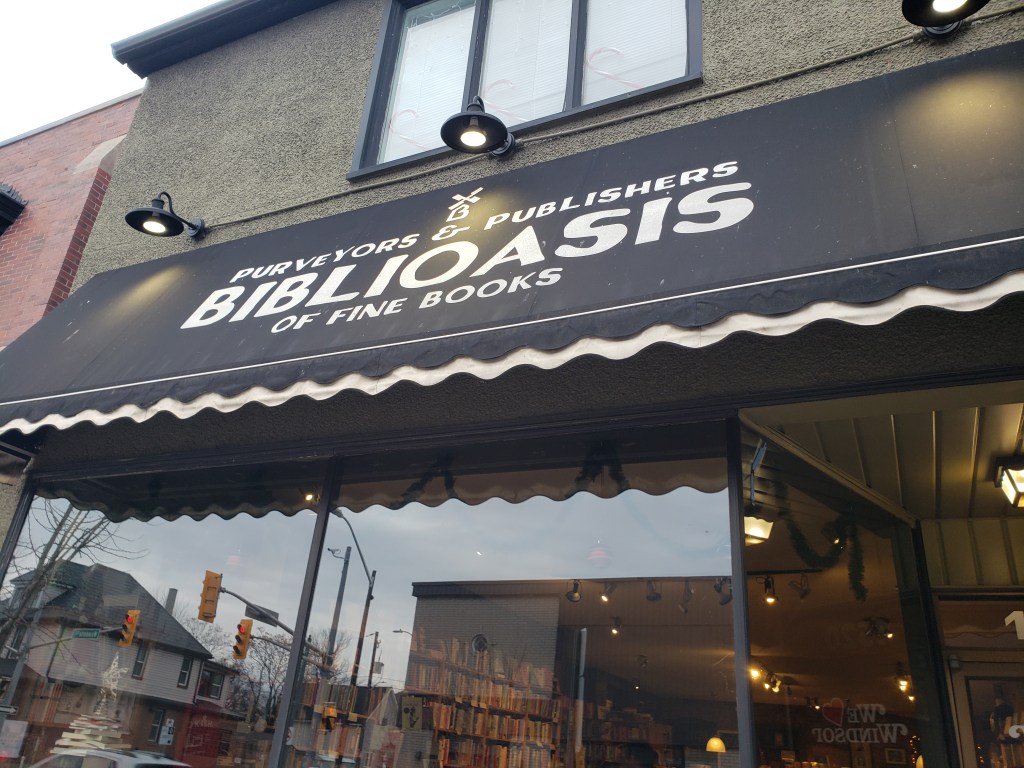
Let’s travel back to December 2024. My husband and I traveled to Windsor for lunch and to explore the Biblioasis Bookshop – an award-winning independent bookstore and publisher located in the Walkerville District of that city.
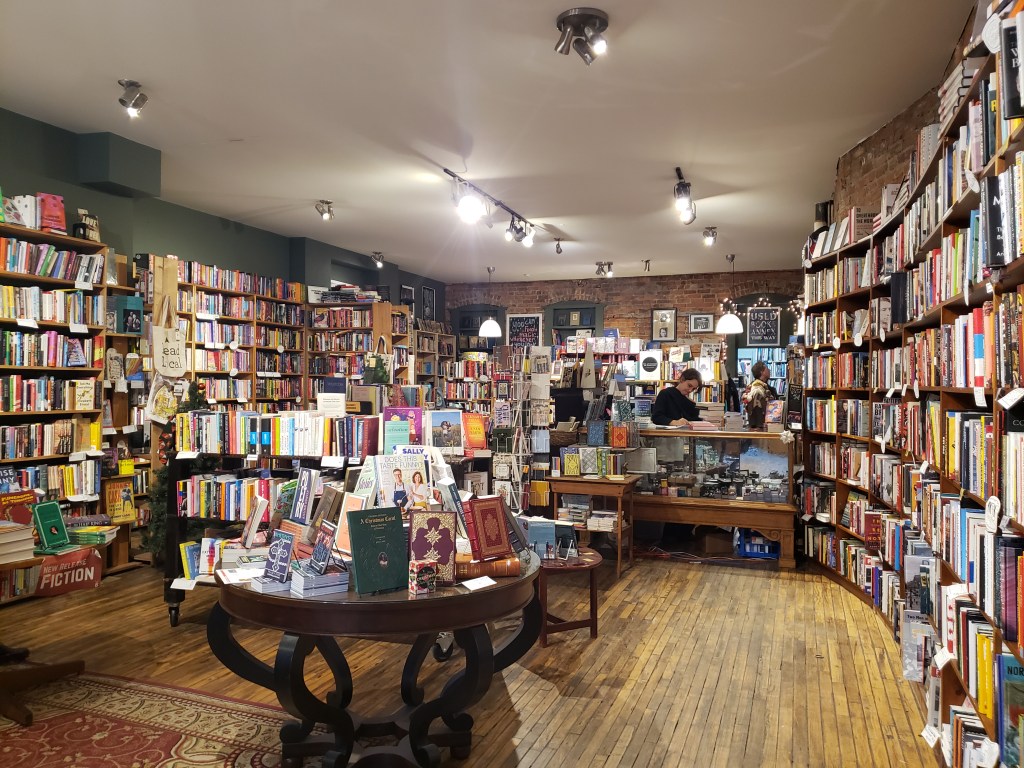
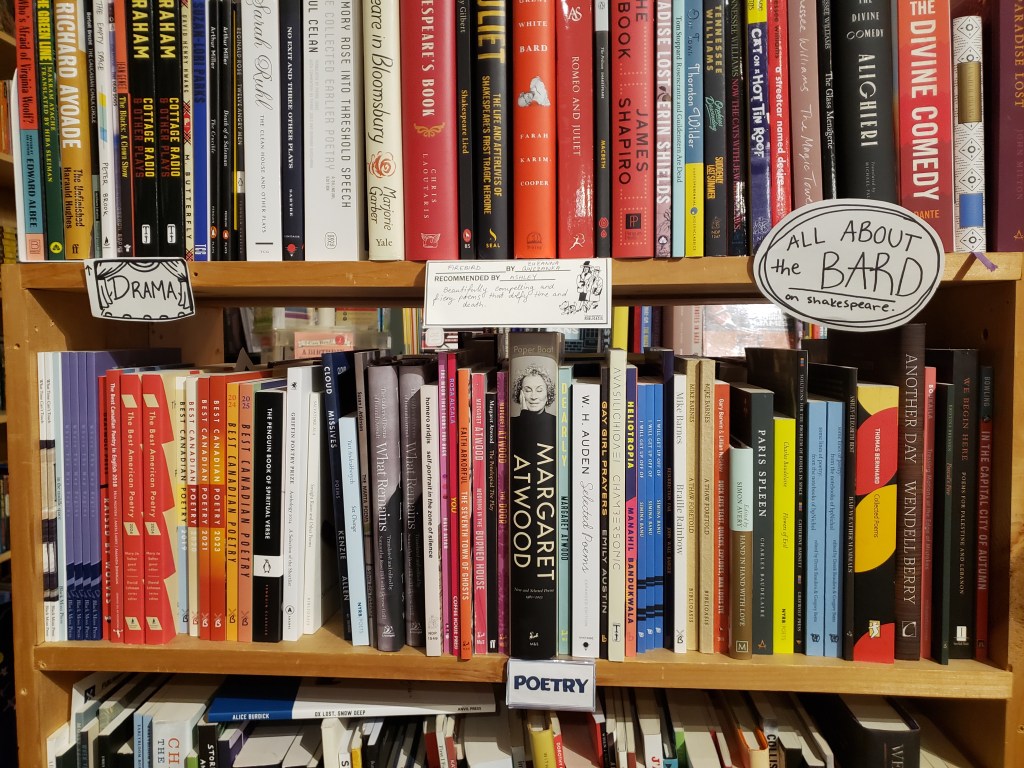
Even though it was in one small space, it was well utilized. To illustrate that, I took a normal picture and a panoramic one of the store.
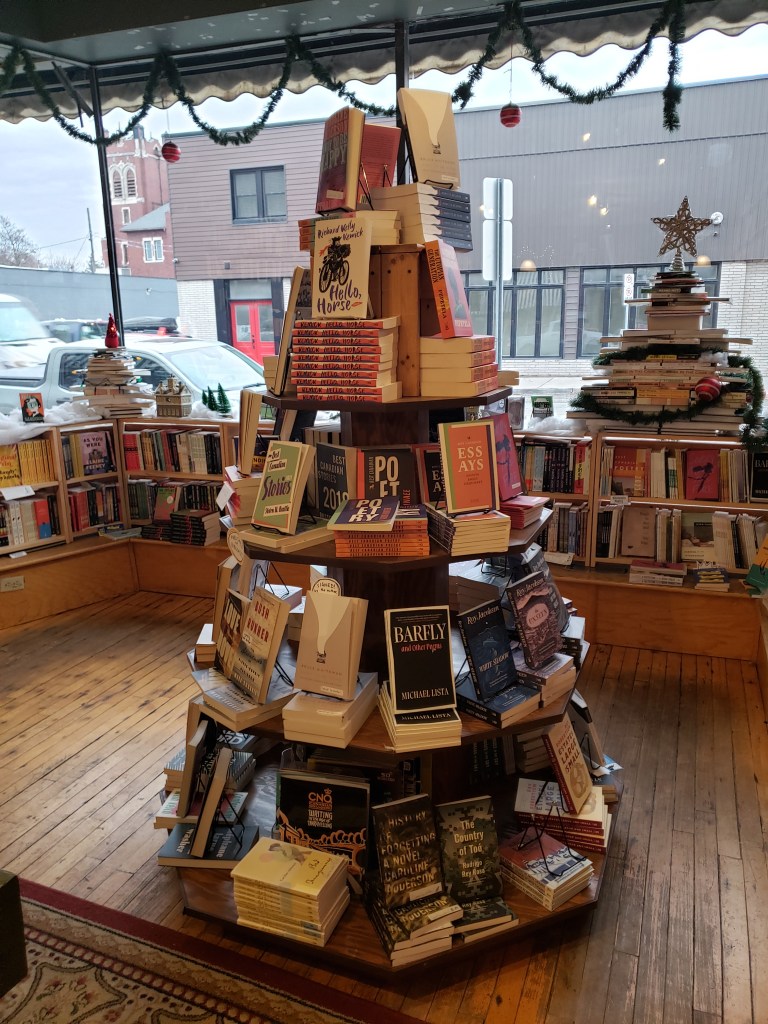
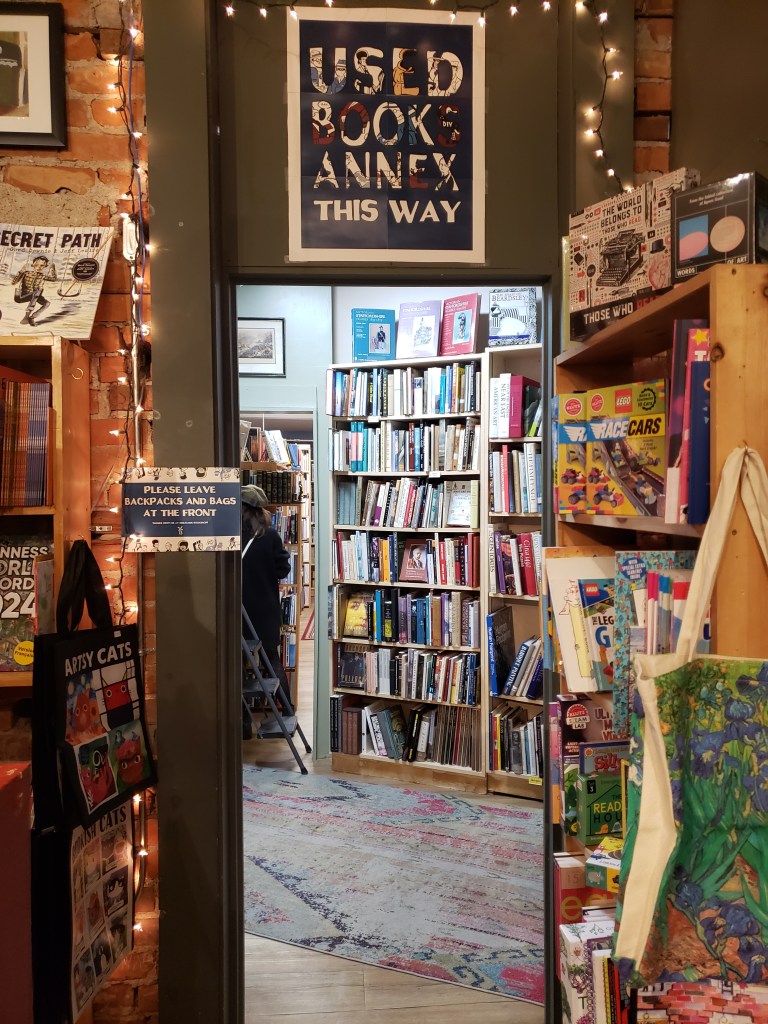
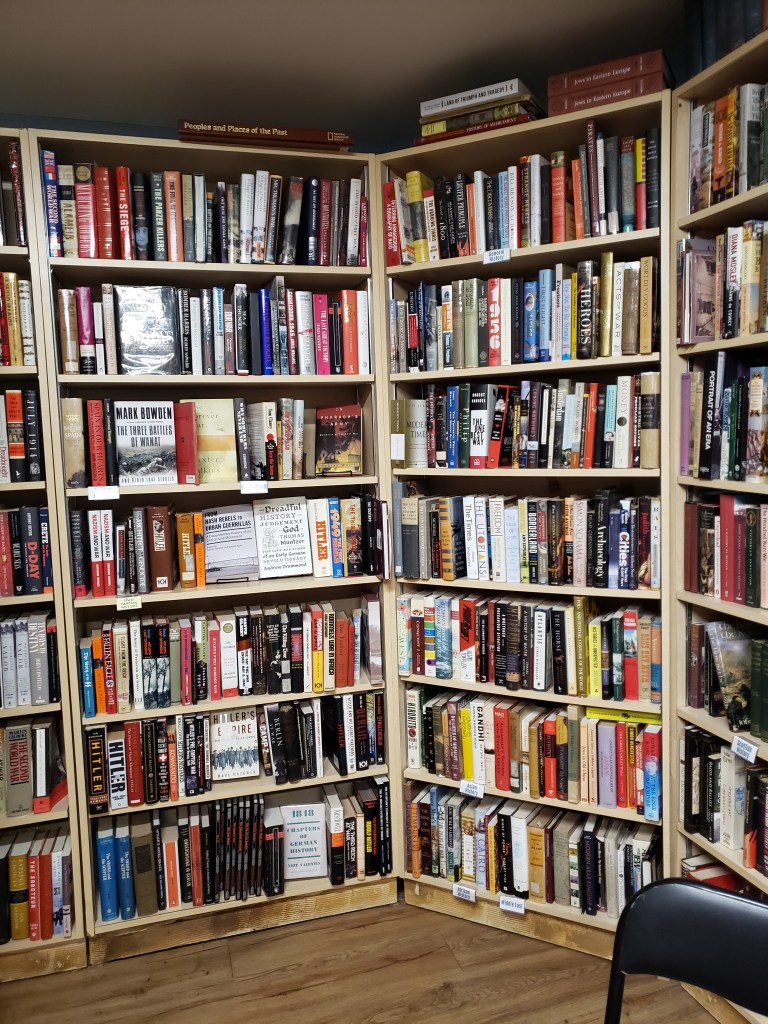
Since we came there after Christmas, they still had a lot of decorations up. I didn’t mind because they were cool. In addition, I adored how some of the displays looked like Christmas trees. There was also a room in the back for used books with a warning on the left.
The bookshop had small labels that denoted which genre were shelved there. It also contained notes explaining what book a staff member recommended and why.
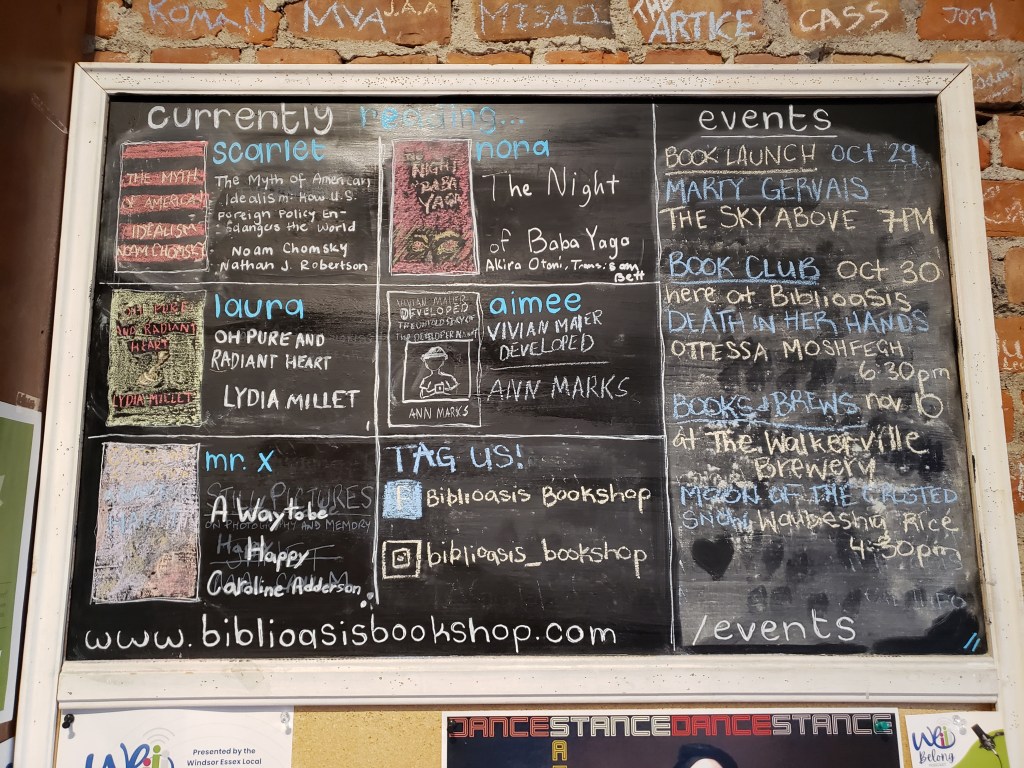
At the front of the store, a chalkboard shows what an employee was reading and programs were going on like author events and book clubs. Biblioasis hosts several book clubs like Books and Brews, Camp Coffee Book Club, the LGBT+ Club with the Windsor Public Library, Pen of Resistance, a Free Palestine Book Club, and the Poetry Book Club.
While we were there, I purchased Best Canadian Stories 2025 selected by editor Steven W. Beattie – a series Biblioasis publishes every year – and Wuthering Heights by Emily Brontë. I had a great time there, especially with its welcoming and Christmas spirit. Along with their website, you can check them out on Facebook and Twitter. It wouldn’t the last time that I saw them.
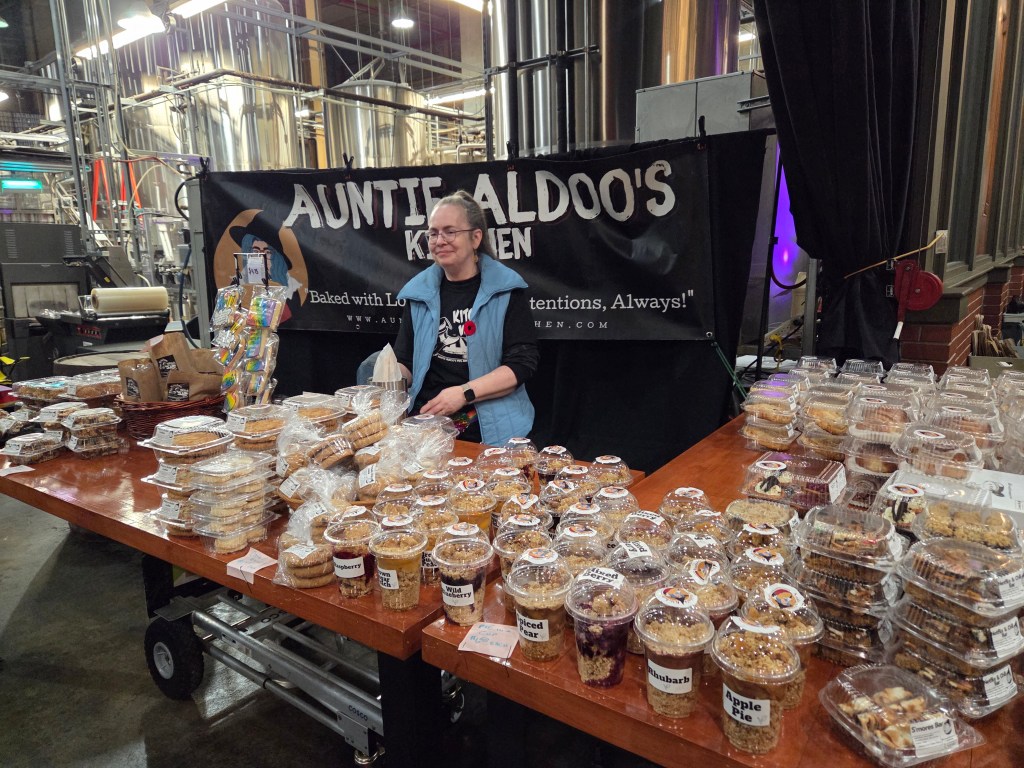
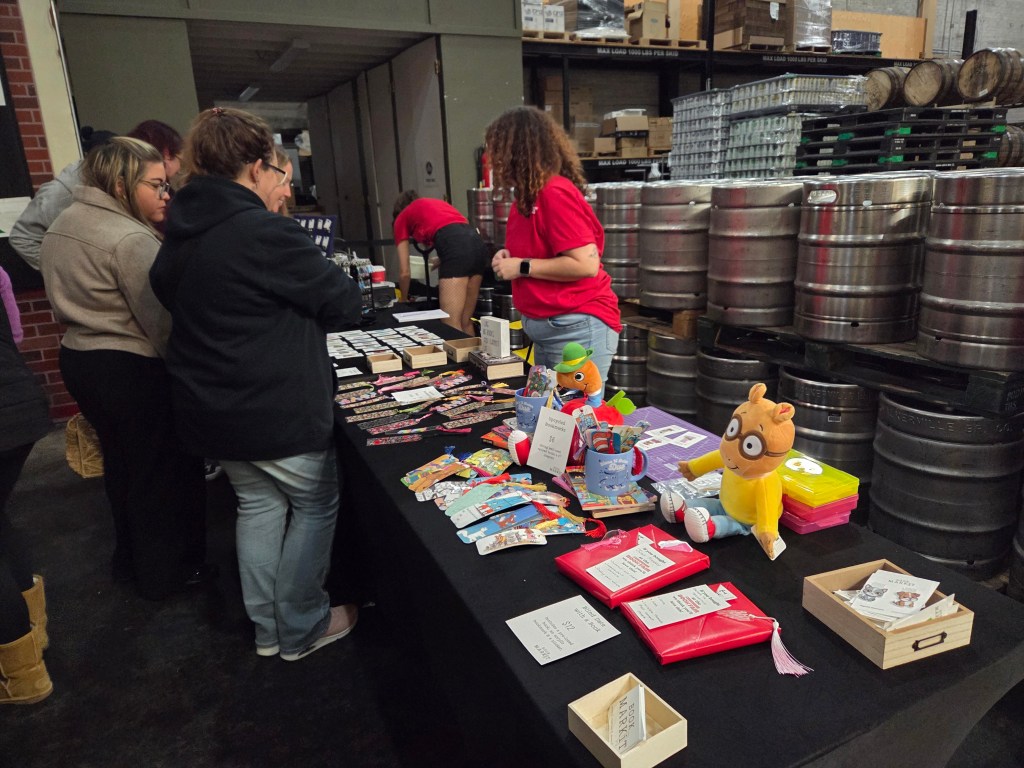
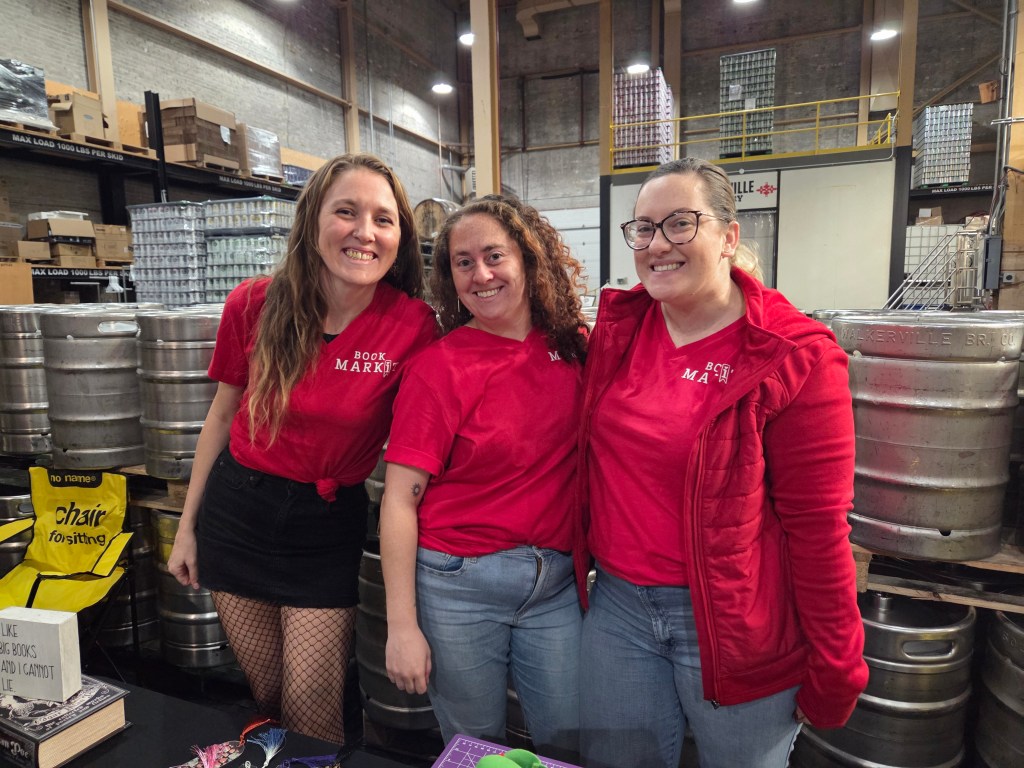
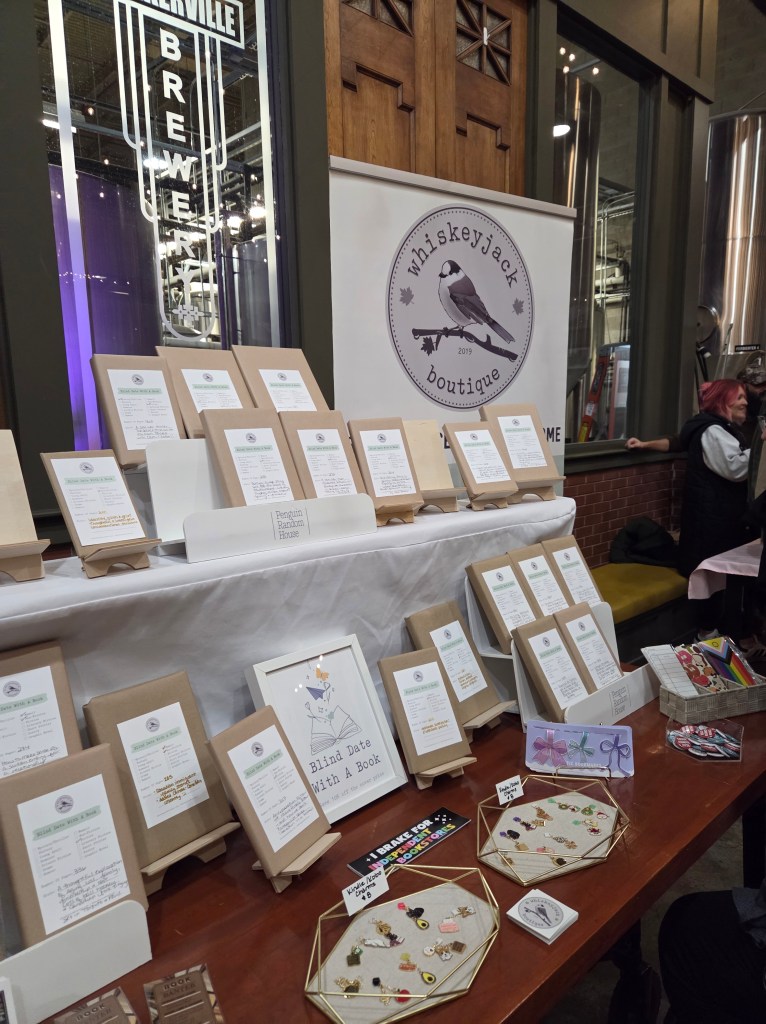
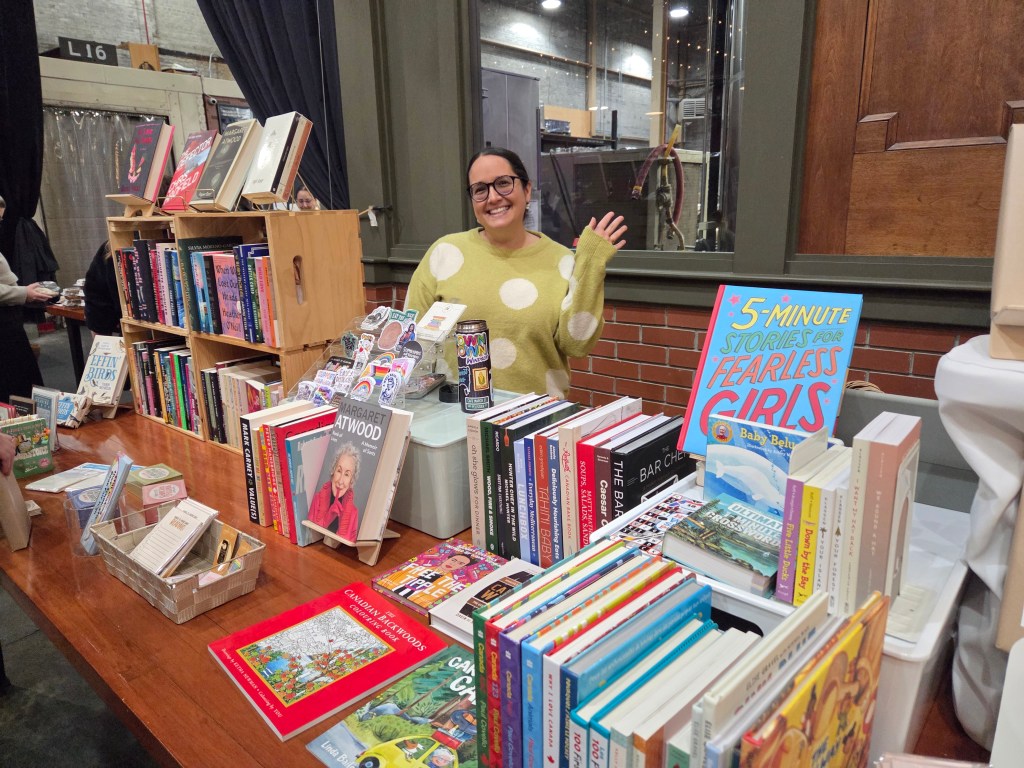
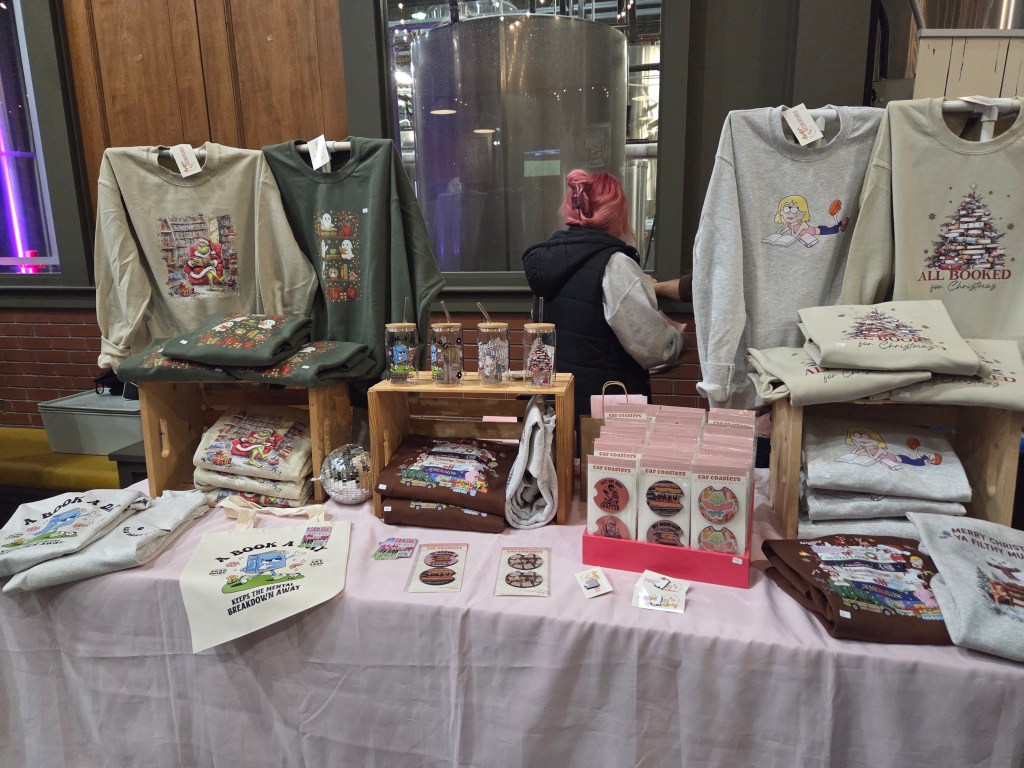
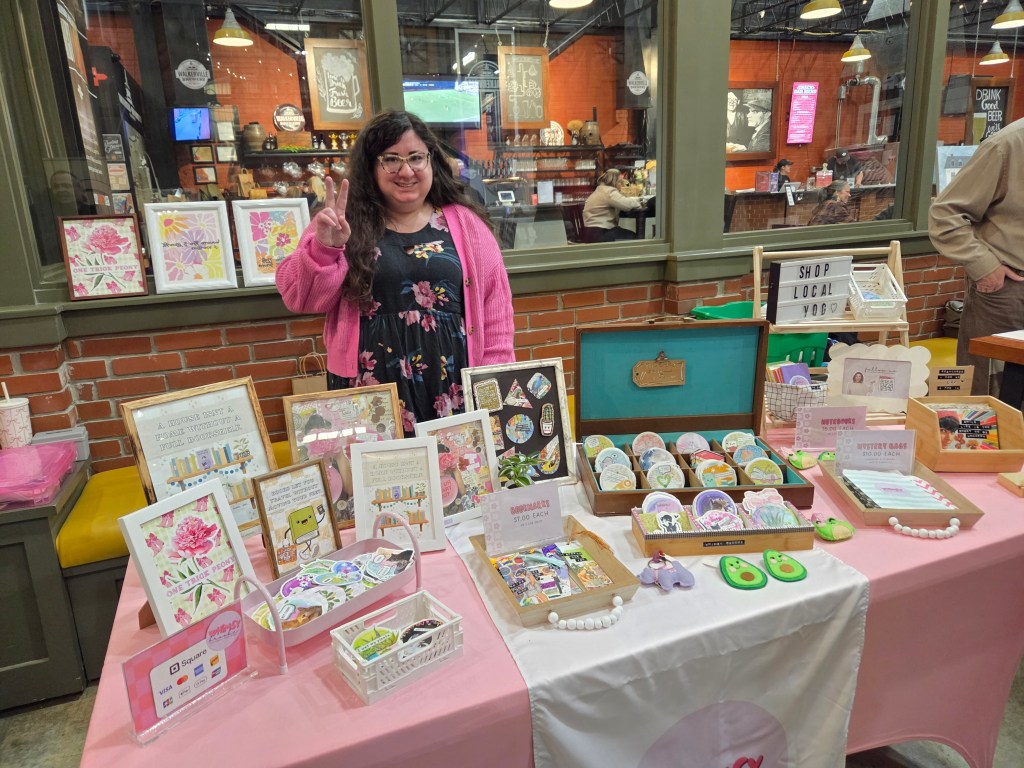
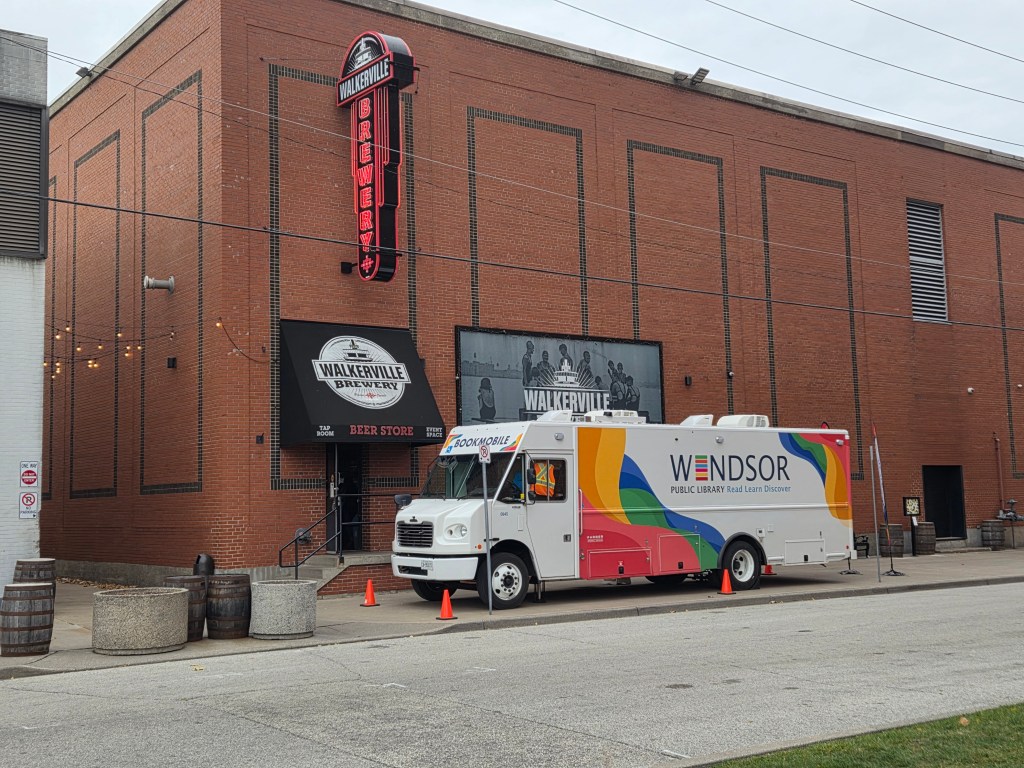
About a year later, my husband and I discovered that there was a book festival at the Walkerville Brewery called the Nostalgic Book Fair. It’s the kind of book fair schools had but for adults.
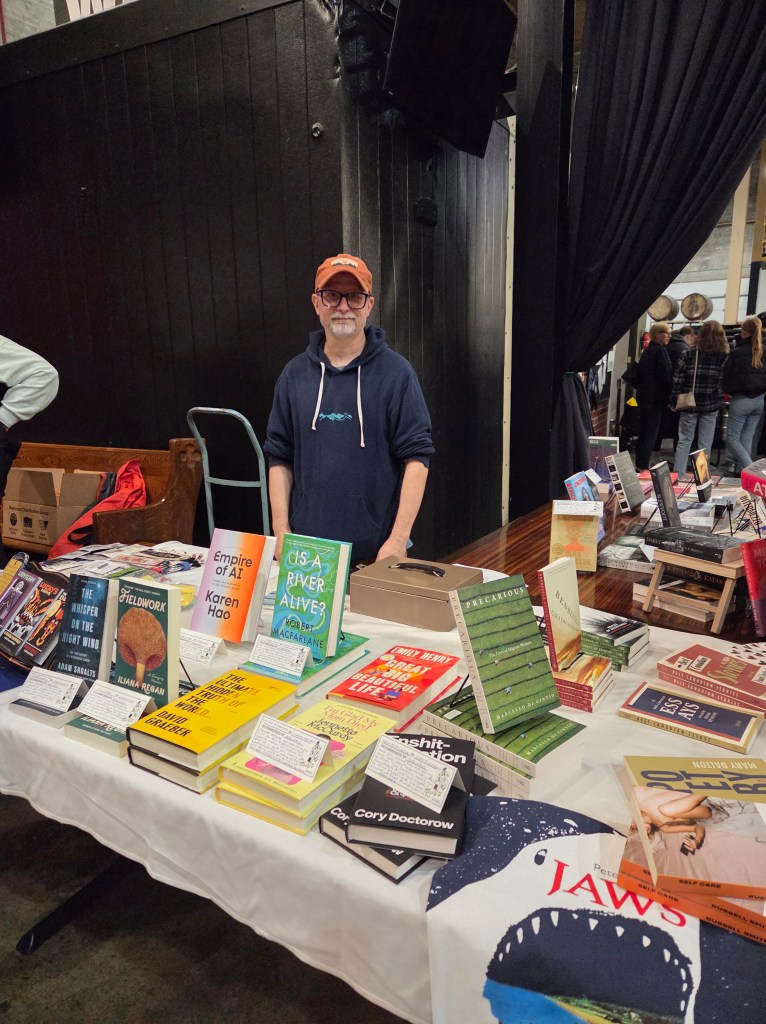
Some sold novels. Other offered bookmarks, clothing, and other book-related items. All of these vendors were utterly delightful. Even one of them told me how much she loved libraries and librarians.
As I mentioned earlier, Biblioasis Bookshop was there selling books – both ones they published and didn’t. They were kind as always, and I bought a copy of Everyone Knows Your Mother is a Witch by Rivka Galchen and a pack of library socks.
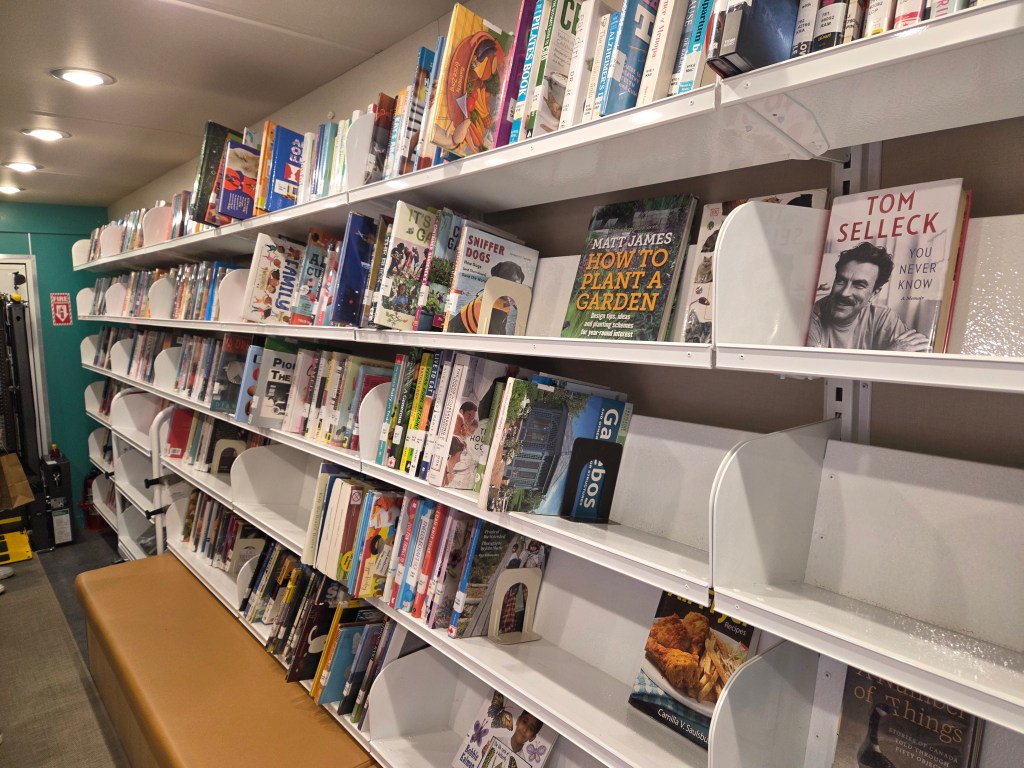
Before we left, we checked out the Windsor Public Library bookmobile. It’s one of the finest and most spacious ones I’ve ever seen. It contained lots of sturdy shelves and cushioned seats for those who want to sit down and read. We hope to stop at the library at some point this year, so stay tuned for a Literary Travel post about that.
The book fair was such a success that Walkerville Brewery held another a second this past January. I hope they have a third one soon because it was so much fun!
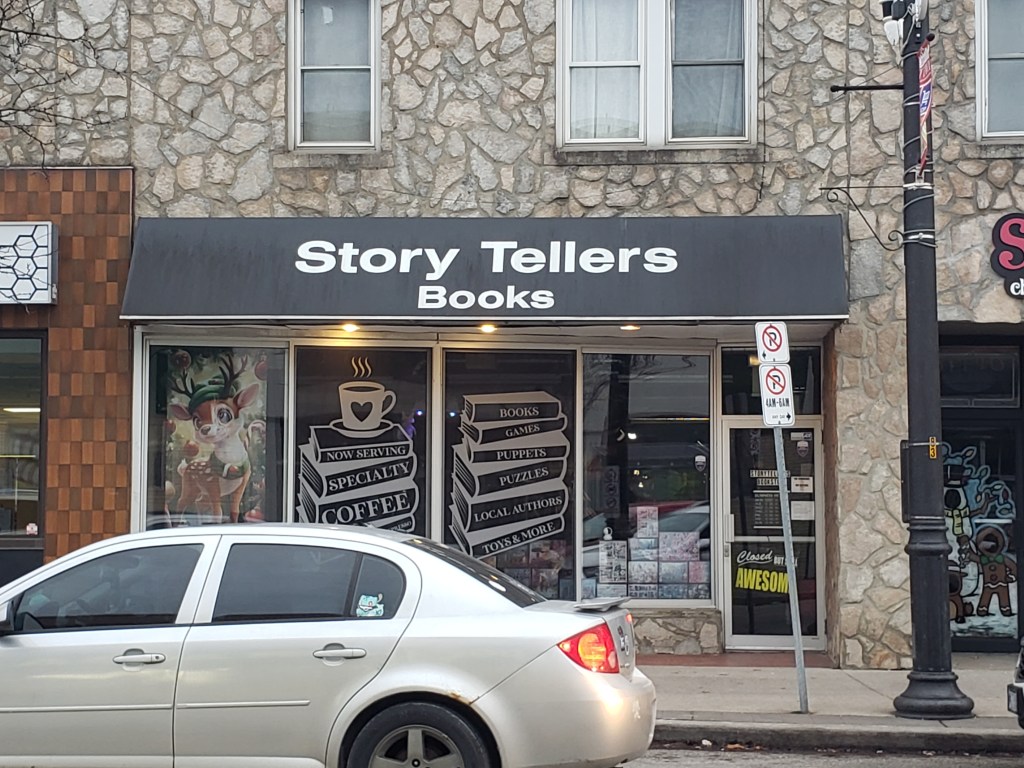
Right after the Nostalgic Book Fair, we visited the Storytellers Bookstore. This was a journey in of itself. I tried to check it out twice, but it was closed both times. It was this third time that I was successful, and it was worth it.
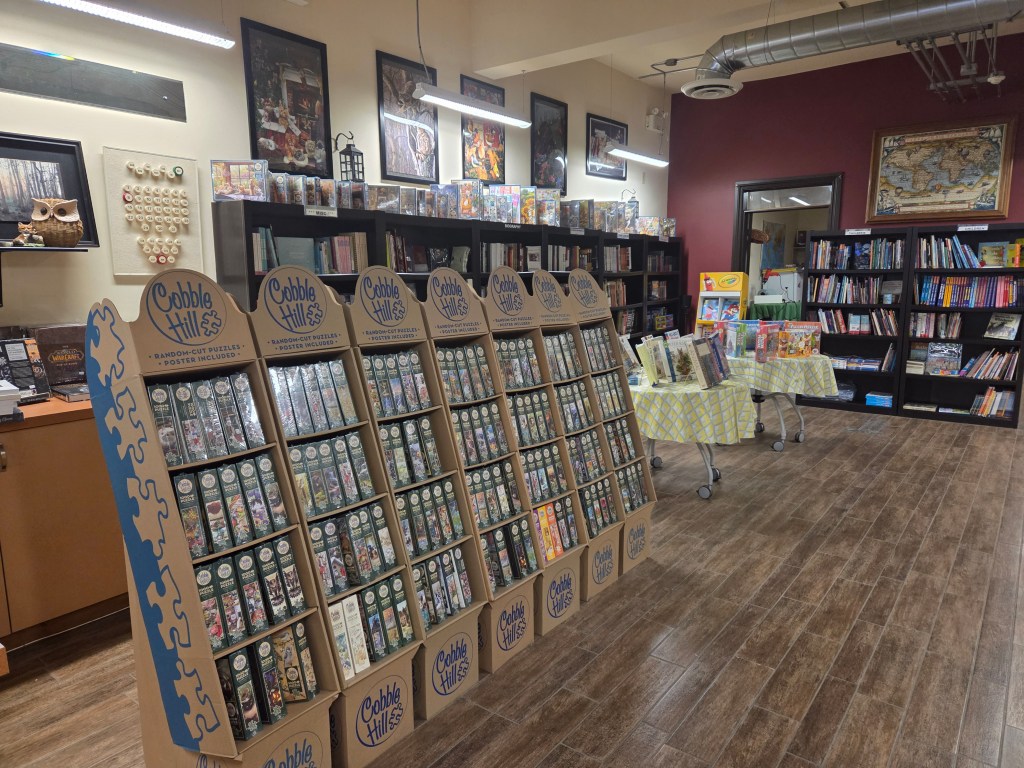
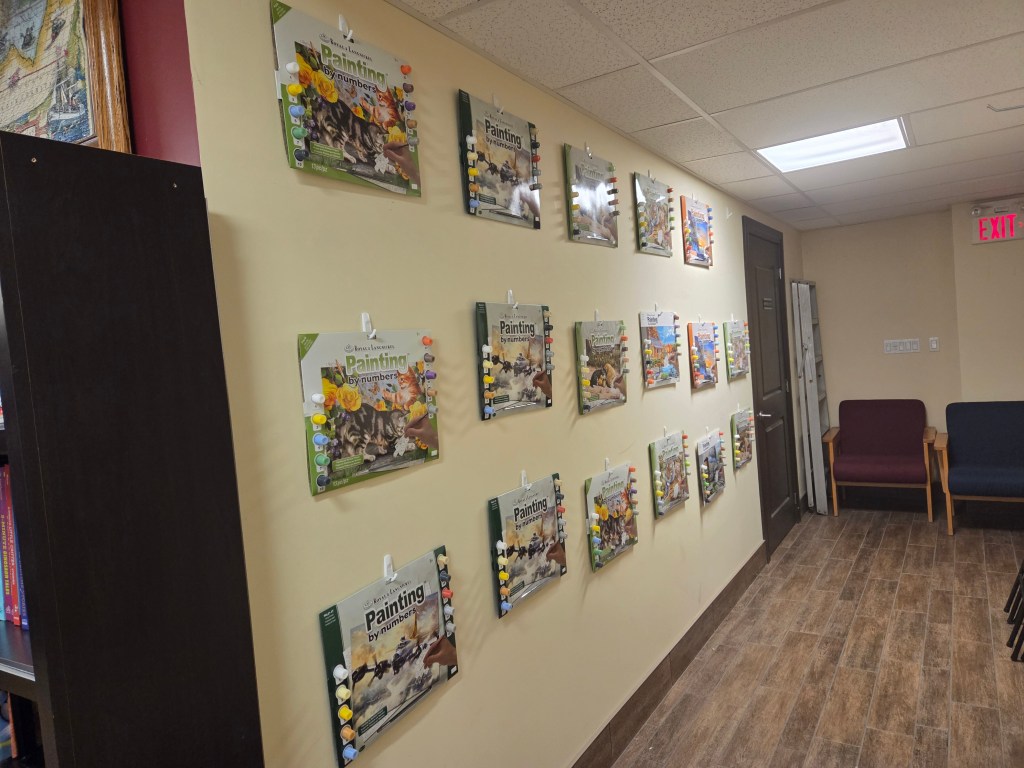
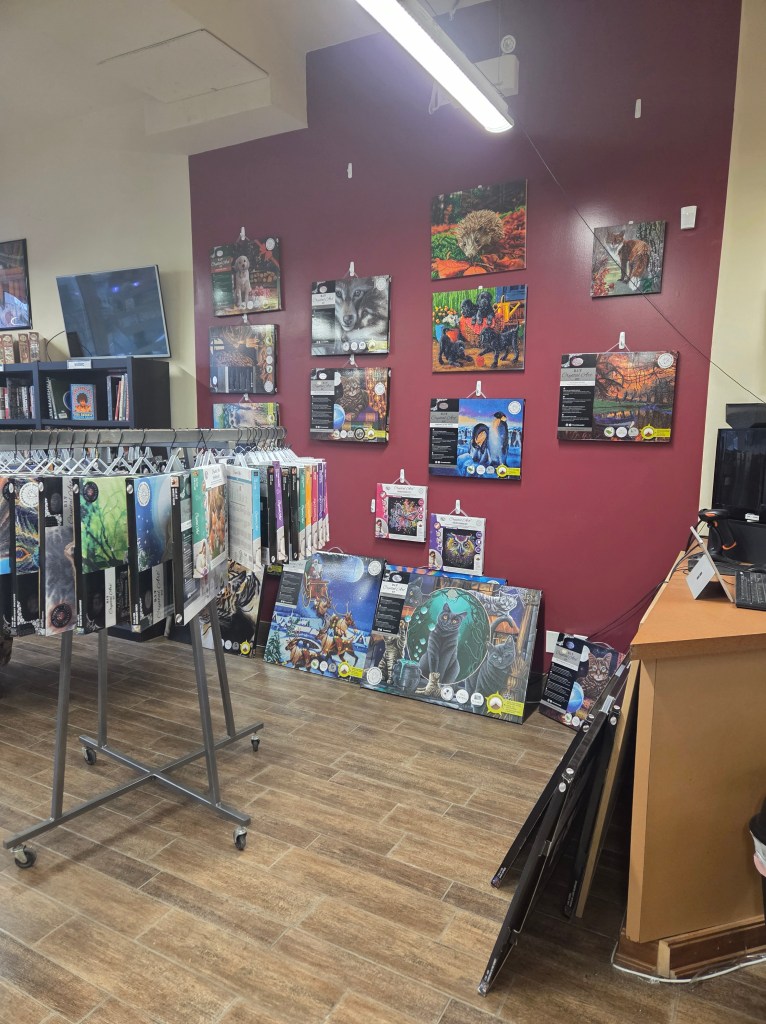
It’s in a small room, but it’s warm and inviting with comfy chairs; artwork; paint-by-numbers; puzzles; games; and of course, books. They were well organized. Along with their website, you can check them out on Facebook and Twitter.
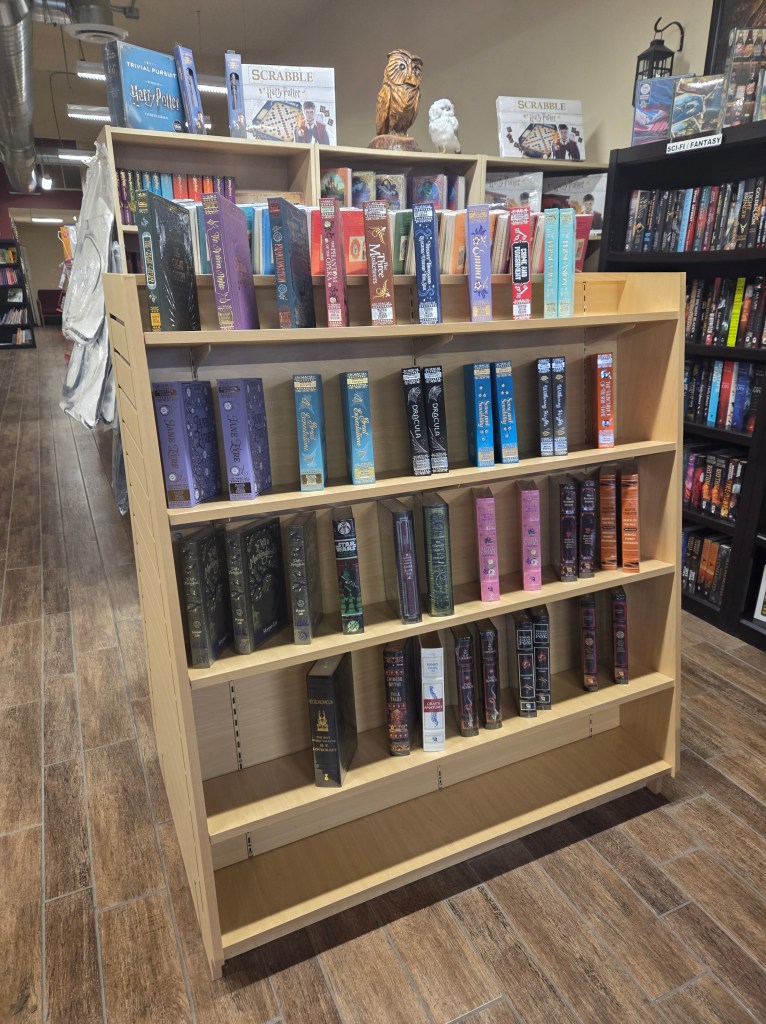
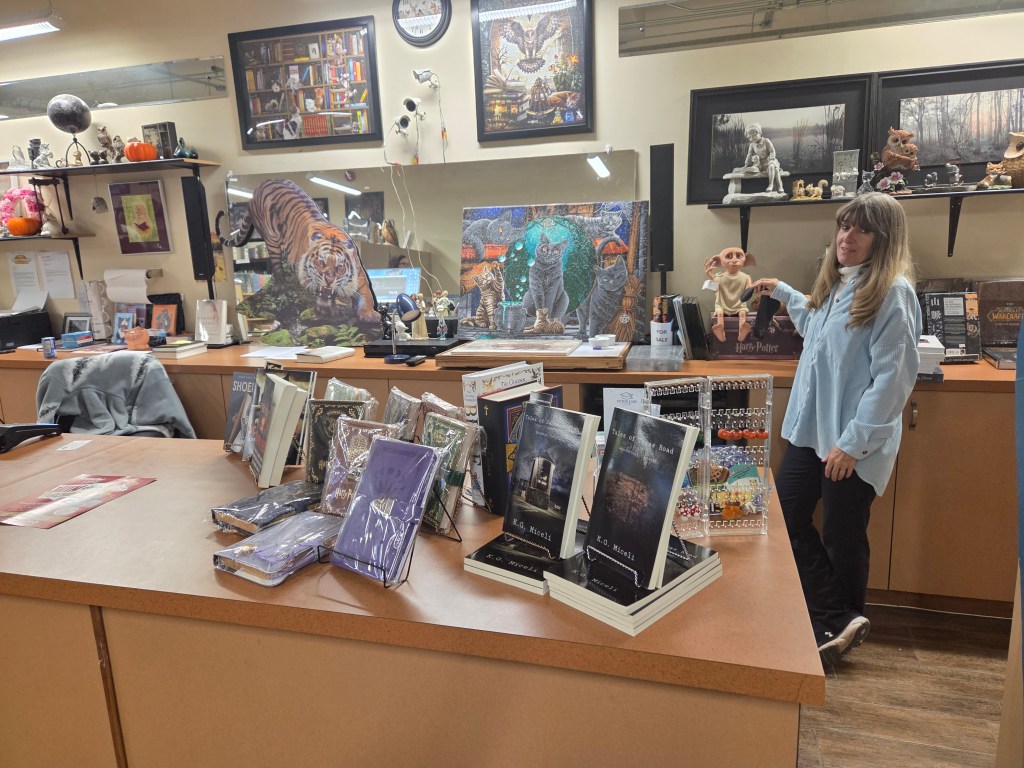
My favorite part was checking out the classic novels with the redesigned covers filled with gold lining. I even bought one of them – The Great Gatsby by F. Scott Fitzgerald. I also had a good time talking to owner Linda Ward about various things, mainly books.
While these bookstores and book fairs were on the tinier side, the atmospheres were still inviting, and we still had a blast at each.
And that concludes the eighth installment of “Literary Travel!” I hope all of you had a great time on this trip. I’m not done with Canada yet. Next week, I have an entire article about another book festival that I went to.
Subscribe below to get notified when I post new updates. Also feel free to email me here for any review suggestions, ideas, or new titles!
The latest episode of the Adapt Me Podcast is up right now. In it, guest Megan Kearns from the Women InSession Podcast and I discuss how we would adapt The Fifth Season by N.K. Jemisin as a big-budget fantasy movie. We talk about the book’s and the “Broken Earth” trilogy’s success and how an adaptation must juggle a lot of aspects like honoring BIPOC and queer stories and retaining its social justice spirit. We also discuss how traumatizing readers can be necessary in a story. Check it out at this link!
Full disclosure: I was given an ARC of this book from BooksForward and SHP Comics in exchange for an honest review.
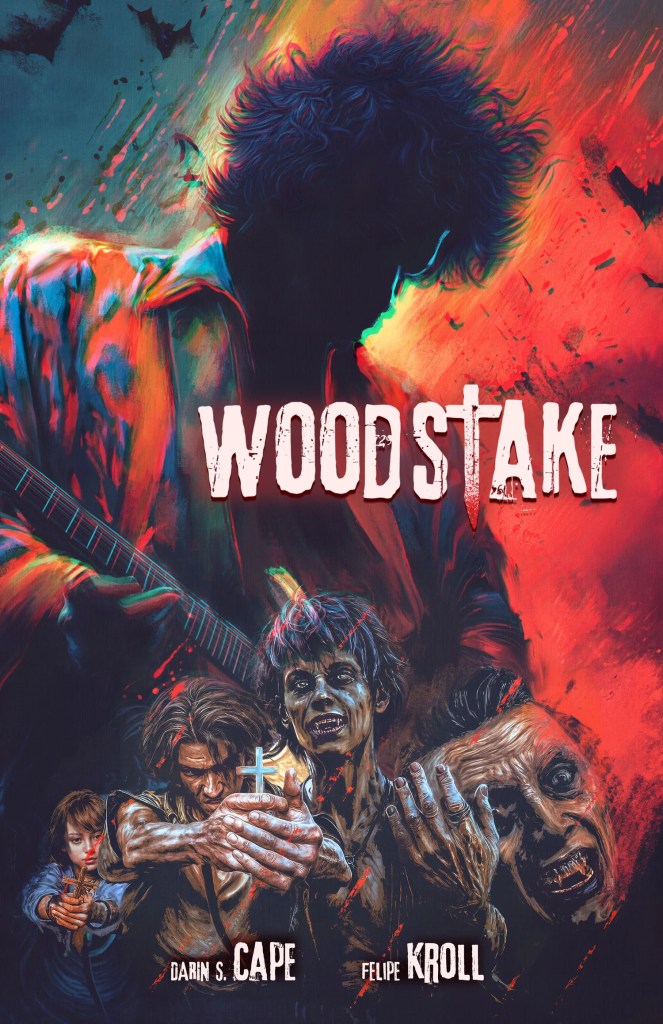
There are some books whose concepts sound so good that they need to be explored. For example, have you ever read a story that involves Dracula at Woodstock? Well, now there is the graphic novel Woodstake by Darin S. Cape and Felipe Kroll. Despite the great concept and funny bits, the story and illustrations were a letdown.
Written by Darin S. Cape (the pseudonym of Shawn Hainsworth) and illustrated by Felipe Kroll, Woodstake is a reimagining of the Dracula legend at the Woodstock Music and Art Fair in 1969. The vampire known as “the Creature” wreaks havoc in 1927, but he is defeated by Van Helsing – a descendant of the legendary hunter – and the local sheriff. He must slumber until he’s fully healed. Flash forward to 1969, the Creature reawakens to find hundreds of thousands of young people attending the Woodstock music festival on the land. As he starts to build his army, attendees John, Nina, and Artie get caught up in the paranormal struggle while dealing with their own complicated web of love, music, and ambition.
As I mentioned earlier, having a vampire at Woodstock is a great idea for a story. One can explore so many possibilities. I love how the police don’t believe that there are vampires because the attendees probably dropped too much acid. In addition, I enjoyed seeing the Creature hallucinate and hypnotize the hippies. There were also some funny bits too. For example, Artie and Nina get a guy to moon a cop while they search a van. One of my favorite lines from the book is when Artie says, “No, not Jimi! Take Pete Townsend [the guitarist from The Who]. Nobody will care if he’s a f**king vampire.”
Moreover, I like how it utilizes the music from the time period. Songs like “My Generation” by The Who, “Bad Moon Rising” by Creedence Clearwater Revival, “I Feel Like I’m Fixin’ to Die Rag” by Country Joe McDonald, and “Purple Haze” by Jimi Hendrix are not only chapter titles, but characters also are seen listening to them. The tunes reflect the mood at various points in the story as well. It can be a bit on the nose at times like how “Bad Moon Rising” plays while the Creature builds his army.
At the same time, the plot leaves a lot to be desired. The story feels rushed at times, especially towards the end. It needed to breathe and develop at certain moments. It also does more telling than showing. Normally, I wouldn’t care too much about this, but because this is a graphic novel, one would think the illustrations would have done the talking. Furthermore, the characters are either one-dimensional or unlikeable. I especially did not like John and Nina. They are supposed to be in a relationship, but he ends up cheating on her with someone else. And yet, she still refuses to leave him even though she never comes up with a good explanation.
Since this is a graphic novel, I have to talk about the illustrations. They are a mixed bag. On one hand, the cover looks amazing with its colors and striking images. The backgrounds are just as stunning with how dark, real, and psychedelic they are. On the other hand, the character designs, to put it plainly, look weird. The people in the story appear like they came straight out of a video game, and their expressions are offputting at times. I know that it’s based on photorealism, but it still comes off as strange. It doesn’t help that the characters look too contemporary. They have iPhone faces, and their hairstyles are far more modern than they need to be.
Woodstake by Darin S. Cape and Felipe Kroll could have been better. It contains a great idea with some funny bits, well-incorporated music from the time, and stunning illustrations. However, Cape and Kroll could’ve executed the concept better with a more fleshed out story and developed characters. I would only recommend it to those if the phrase “a vampire at Woodstock” peaks their interest. Even with its flaws, a novel can still sell with its concept. For those interested, Woodstake comes out on Tuesday, April 14, so grab it wherever you get your books.
Subscribe below to get notified when I post new updates. Also, feel free to email me here for any review suggestions, ideas, or new titles!
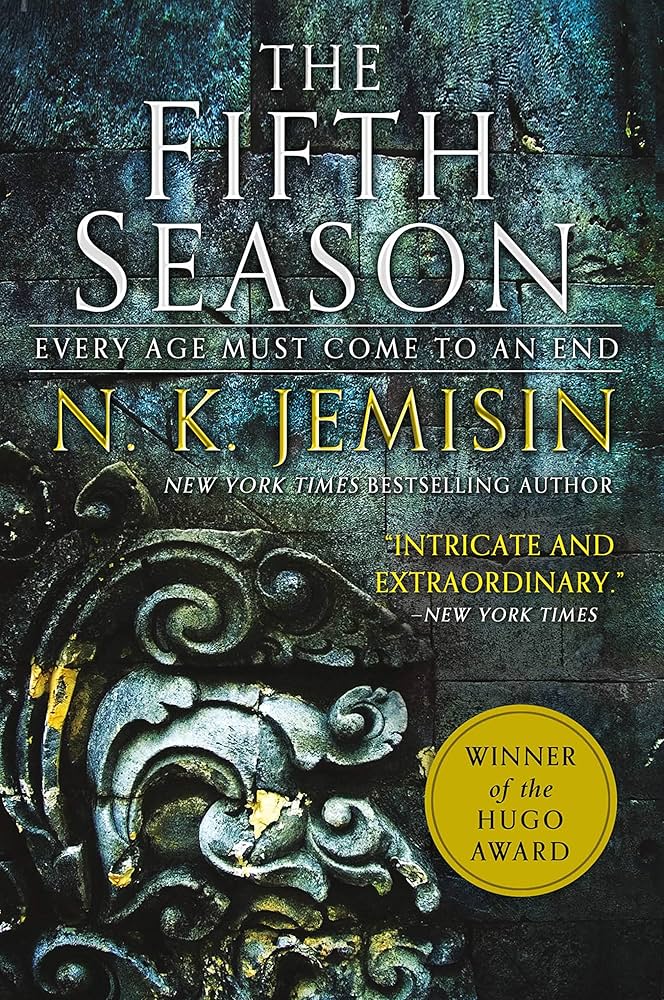
I recently found out that there’s a genre called science-fantasy. Yes, I may sound like I was born yesterday, but I never knew about it before. As the name suggests, it blends elements of both genres. Books of this nature usually incorporate fantasy elements in a science fiction context. They have worlds that appear like ones in the former, but are made believable through logic found in the latter. The Fifth Season by N.K. Jemisin is a great example of this genre, and it has memorable characters, even if it’s cumbersome.
The Fifth Season is the first book in “The Broken Earth” trilogy. In a world where catastrophic events like earthquakes and volcanoes are normal, tragedy still strikes. For one person, three terrible things occur in a single day. First, Essun, a woman living an ordinary life in a small town, comes home to find that her husband has brutally murdered their son and kidnapped their daughter. Second, the mighty Sanze – the world-spanning empire whose innovations have been the civilization’s foundation for a thousand years – collapses as most of its citizens are killed to serve a madman’s vengeance. Third, across the heart of the continent called the Stillness, a volcano has erupted, spewing enough ash to darken the skies for years or even centuries. Now Essun must pursue the wreckage of her family through a deadly, dying light without clean water or arable land and with limited supplies. Wars will be fought across the Stillness for basic resources to get through the long dark night. Essun doesn’t care if the world falls apart around her. She’ll break it herself if she can save her daughter.
The worldbuilding is marvelous. I could picture how desolate the environment was. It’s essentially a wasteland after several volcanoes and earthquakes wrecked the earth with little to no sunlight. It also doesn’t help that winters last for at least six months. There are even two separate appendices about the catalog of “fifth seasons” throughout time and definitions for words and phrases used in the novel. In addition, I love how the author defines the social environment. The Orogenes are people with the ability to move energy, and they can prevent or cause earthquakes. However, they are discriminated against because of how different they are from regular folk. Jemisin even includes a derogatory word that characters use to describe them, and it sounds like one that’s often utilized to define black people. It certainly made me wince, yet it’s a deliberate choice made by Jemisin, an African-American author. She was inspired to write the trilogy after watching the protests in Ferguson, Missouri, over the killing of unarmed teenager Michael Brown.
What also works are the characters. They are sympathetic, flawed, and everything in between. Essun – the protagonist – goes on a journey to find her missing daughter after she discovers her son’s dead body. She’s an Orogene who wants to live a normal life, but she did some things that come back to haunt her. I enjoy how Jemisin writes Essun’s chapters in second person, the one that constantly uses “you” in various sentences. This perspective is used as her consciousness. Another character I was intrigued by was Alabaster. He’s a powerful Orogene who mentors another person in the story. He can be cold, distant, and snarky, but he’s devoted even when he doesn’t show it. They have some back and forth that made me rethink what I felt about him.
As much as I liked the book, it was cumbersome to read. It’s nearly 400 pages, and I felt that. Don’t get me wrong. It had a great beginning that reeled me in and an ending that brilliantly sets up the next book in the series, The Obelisk Gate. I struggled with the middle at times. There was so much description that I got lost. However, that’s usually me whenever I read fantasy or science fiction books. At the same time, I’m not sure if anything needs to be changed. Jemisin is good at providing pieces to the puzzle and letting the readers put it together. She doesn’t insult their intelligence, and she offers enough hints. I admire that. So, even if I got lost in the description, I still knew where I was in the plot.
The Fifth Season by N.K. Jemisin is a really good story about a woman trying to regain normalcy in a wasteland. The author certainly had everything planned out for this first book in her “Broken Earth” trilogy. This is especially true with the physical and social environments the characters find themselves in. It helps that the people in the plot are multi-dimensional. Although I found it to be bulky at times, I admire the deliberate choices and that Jemisin trusts her readers to know what she’s talking about. I would recommend it to those who love science-fantasy, ones that deal with environmental and societal issues, and are written by authors of color. Regardless of its flaws, I will continue the series with The Obelisk Gate.
Before I go, I want to let everyone know that I will record the latest episode of the Adapt Me Podcast soon. Guests Megan Kearns from the Women InSession Podcast and Alyson Wick will join me to talk about how we would adapt this novel. Keep an eye out for the link next week.
Subscribe below to get notified when I post new updates. Also, feel free to email me here for any review suggestions, ideas, or new titles!
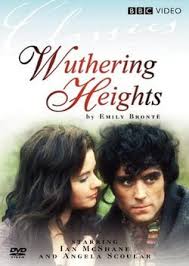
Welcome to Part 5 of looking at various adaptations of Wuthering Heightsand seeing if they can capture the spirit of the book by Emily Brontë. Today, I’ll be looking at the 1967 BBC miniseriesstarring Ian McShane (best known for his role as Winston Scott in the John Wick films) as Heathcliff.
This is a truly faithful version of Wuthering Heights. It includes the second half of the book! The BBC ran this series in 1967 with 4 episodes that were between 40-50 minutes each. It originally aired in color. However, that print is lost. What we have is the black-and-white version, and it’s available on YouTube. While it would’ve been nice to have it in color, the black and white brings out how bleak the story is. Although the print is not in the greatest quality, I’m glad that we do have it, considering that the earliest adaptation from 1920, which includes the second half as well, is lost. In addition, it was this version that inspired Kate Bush to write her awesome song of the same name.
It contains almost everything from the novel like the subplot with the next generation and Heathcliff opening up Catherine’s grave. Even the time period is accurate. The pre-1960s adaptations looked like they took place in the Victorian era. This one understood that the book’s events were in the late 1700s/early 1800s. The costumes reflect this from the tricone hats and coats for the men, the sack-back gowns for Catherine and Isabella, and the empire-waist dress for Catherine’s daughter Cathy. The only noted difference is how the story is told chronologically as opposed to through the Mr. Lockwood framework in the novel. That character still shows up, but not until the third episode, and Nelly is not even present when he arrives at Wuthering Heights. I’m perfectly ok with this because it doesn’t fundamentally change anything about the plot.
This version actually was shot on the English Moors. This brings authenticity since it’s a character in itself. I can see why Brontë wanted to have a story set in that location. The open fields and winds make it possible for anyone to be themselves and not care about societal expectations.
I like how almost every character is given empathy. In the beginning, when Mr. Earnshaw brings home Heathcliff, the first person to scoff at the child is Mrs. Earnshaw. Prior adaptations eliminated her all together, but this brought her in to show how trauma can start. Even though she lets him stay, she continues to berate her husband for bringing him in until she dies. Additionally, Mr. Earnshaw remarks why Catherine and Hindley are the way that they are, and he tries to get them to respect Heathcliff. He even attempts to throw Hindley out of the house if he doesn’t learn to treat his adopted brother fairly. Furthermore, Hindley has some moments where viewers can see what he’s going through. There’s a scene where he cries over his wife Frances’s grave, which leads to him being a drunken mess.
I enjoyed how this version embodied the book’s gothic horror tone. For one thing, there is no soundtrack outside of harrowing winds and roosters crowing. The winds are present in almost every scene. Even though they drown out the dialogue at times, it shows off how desolate the environment is even more. In addition, when Mr. Lockwood opens the windows up, not only does he feel Catherine’s hand grabbing at him, but he also sees her ghost, which is super creepy. This was the moment that inspired Kate Bush to write her famous song. What’s eerier is when Mr. Lockwood shuts the window, her hand is caught. My favorite moment is actually when Heathcliff comes back to Wuthering Heights, it’s done as a POV shot as seen in slasher movies, so viewers never see his face. I especially love Joseph’s and Hindley’s reactions when they realize that it’s him. I almost expected Heathcliff to slash them. To be fair, Hindley deserves that.
While there’s plenty of things to like about the series, there were some problems as well. First off, because this adaptation’s goal was to include as everything from the novel as possible, it rushed some relationship development. This is especially true between Catherine and Heathcliff. In the first episode, viewers see Catherine and Hindley being cruel to Heathcliff. Then some time later, Catherine and Heathcliff are bonding in the English Moors. There should have been more time with them, especially how Catherine goes from being nasty to kind. A similar issue happens with Cathy and her relationship with Hareton – Hindley’s son, but that one is more fleshed out. Moreover, it could have been trimmed down. The pacing can be sluggish at times. There were some scenes which I didn’t feel were necessary. This is true when Mr. Earnshaw is walking and carrying a young Heathcliff through the Moors at the very beginning.
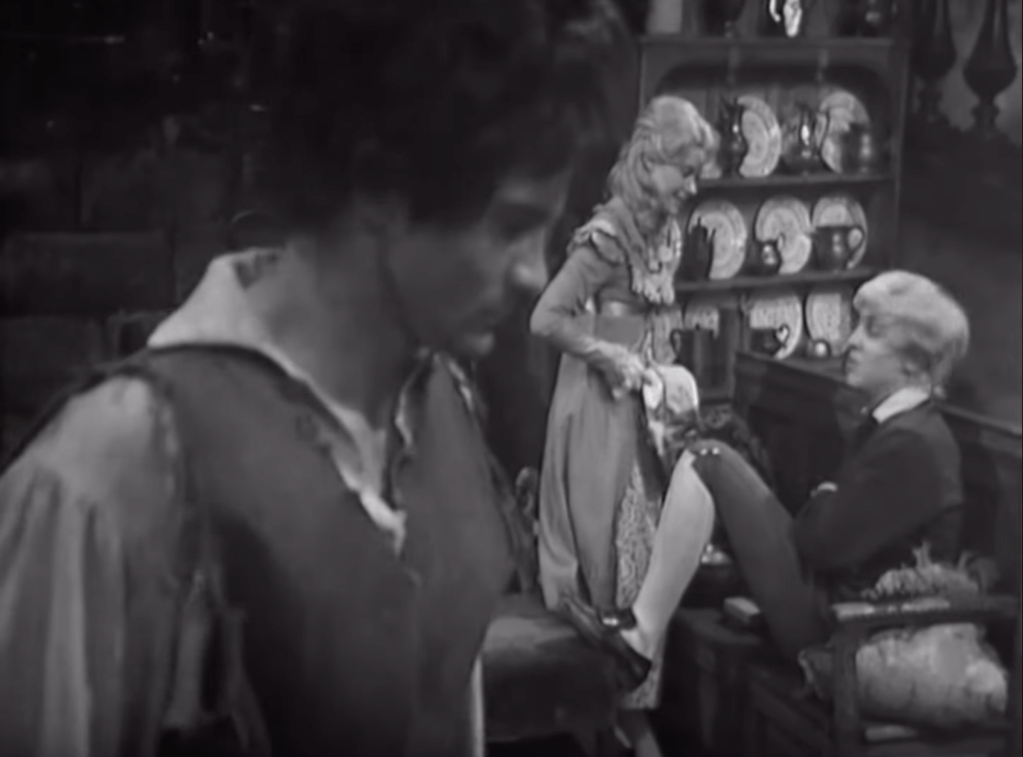
Second, the hair and makeup aren’t great. There’s this adage that people can figure out when a period film is made by looking at the women’s hairdos. In this case, that’s sort of true since the actresses have hairstyles that are 1960s-ish, yet the crew tried to make them look like the late 1700s/early 1800s. They’re fine. It’s the men’s hair, or should I say shaggy wigs, that make them appear like they’re in a 1960s rock band. Ian McShane’s wig looks appropriate for Heathcliff, but it also made me want him to sing “Wild Thing” by The Troggs. Keith Buckley, who plays Hareton, resembles Mickey Dolenz from The Monkees with his hairpiece.
Bad male wigs!
Third, there were some budget limitations with this one. Even though it’s not as egregious as the 1950 teleplay, I could tell that director Peter Sasdy had to make some shortcuts. For one, the scene of Catherine in the rain is cut drastically. The rain itself looks like water coming out of a hose running through a filter. In another, when Catherine gets bitten by the Lintons’ guard dog, I’m convinced that none were in the same shot together, judging by the way it was edited.
Everyone in this adaptation does a good job acting-wise. Ian McShane plays Heathcliff. Now, it may look like he might be a person of color because his skin appears darker than the other actors, but he’s a white guy who happens to be tan from the photos I’ve seen of him in real life. His Heathcliff is cold and distant, which is very effective in the last two episodes, yet he isn’t passionate enough. When he hears that Catherine’s dead, he is unreactive. In many ways, readers expect him to be emotional, especially in how he loved Catherine and responds to her death. Sure, McShane can be over the top, but playing Heathcliff allows him to do that, particularly when he’s abusing other characters. It’s that I wanted him to be more passionate, so I could see what Catherine saw in him. On the other hand, Angela Scoular (best known for her roles in Casino Royale and On Her Majesty’s Secret Service) is the stand out performer. She plays the brattiest Catherine I’ve ever seen. She could be cruel to the people around her like Heathcliff, Edgar, and Nelly. When Catherine has her temper tantrums, Scoular gives it her all by throwing dishes and writhing on the floor. Additionally, she does a good job as Cathy. Cathy could be nasty and emotional as her mother, yet she can also be level-headed like her father Edgar, especially when she calls out Heathcliff for spreading lies about her to his son Linton.
The Wuthering Heights 1967 BBC miniseries is automatically one of the better adaptations because of how faithful it is to the source material. However, because it seems like the goal was to include practically everything, it has some drawbacks like the pacing and the budget constraints. Nonetheless, I enjoyed how bleak it was and how it embodied the novel’s tone. While I have my issues with Ian McShane’s performance, his and the others were good, especially Angela Scoular’s. Although it’s a decent version, this is the first true adaptation of the book that I saw. For that reason, I would recommend it to people watching every adaptation of Wuthering Heights as well as diehard Ian McShane and Kate Bush fans.
Now, let’s see how this one fits into the ranking.
Wuthering Heights 1939 Movie
Wuthering Heights 1958 Teleplay
Wuthering Heights 1967 Series
Wuthering Heights 1950 Teleplay
Wuthering Heights 2026 Movie
We’ll see how this ranking evolves after I see all the others.
Stay tuned next month when I review the 1970 movie with Timothy Dalton.
Subscribe below to get notified when I post new updates. Also, feel free to email me here for any review suggestions, ideas, or new titles!
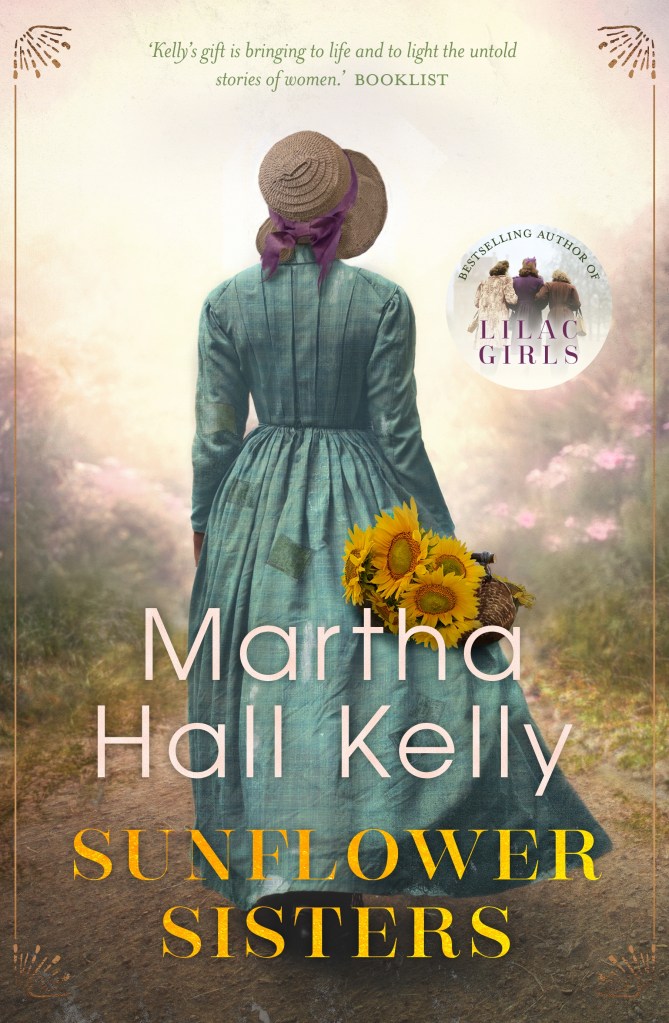
A book series has a hard job of keeping up a story’s momentum while expanding what it can do. Some have been successful like Harry Potter, while others start to feel formulaic as it progresses. Even if the series begins to feel bland, there could still be interesting aspects that make readers keep going. Case in point: Sunflower Sisters by Martha Hall Kelly – a book with highlights despite having the same old tropes in American Civil War fiction.
Sunflower Sisters is the third book in the Lilac Girls aka the “Woolsey-Ferriday” series although all three titles can stand on their own. It revolves around Caroline Ferriday’s ancestor Georgeanna Woolsey, a Union nurse who joins the war effort during the Civil War. She crosses paths with Jemma – a young enslaved girl who is sold off and conscripted into the army – and Anne-May Wilson – a southern plantation mistress whose husband enlists.
While reading it, I noticed that Sunflower Sisters followed a similar structure to Lilac Girls. Both have multiple perspectives; have an activist, a victim/survivor, and a villain as their main characters; many chapters end on cliffhangers; and most obviously, flowers in their titles. Furthermore, the victim’s tale is the heart of the story. I understand that having more than two viewpoints is unique in the literary world, especially when it comes to historical fiction. I guess Martha Hall Kelly thought that if it worked the first time, it can work a second, uh I mean third, time (I’ve not read Lost Roses yet, but I plan to do that in the future).
I probably would’ve forgiven this if it were more interesting. Lilac Girls explored the Rabbits of Ravensbrück in depth with its victim being a part of that horrible experiment, the villain being partially responsible, and the activist trying to help out that group. It was an aspect of Holocaust that I never knew about before, and it made me want to research it more. With Sunflower Sisters, the only aspect that makes it stand out from other American-Civil-War-based novels is that it’s mostly set in Maryland – a Union state that was still pro-slavery. This permitted characters to express more diverse views on the topic. For instance, Anne-May’s husband Fergus wants to free their slaves as soon as possible despite being a plantation owner, while her brother Henry fights for the Confederacy even though he wants the enslaved to be freed gradually. Everything else was something that I’ve seen before: the woman in a man’s world, a slave trying to escape, and a plantation mistress attempting to maintain her lifestyle. It does cover the New York City Draft Riots of 1863, but it’s contained to 1-2 chapters.
This is not to say that I didn’t enjoy the book. I was rooting for Jemma all the way. The relationship between her and her family was so strong that I wanted them to escape together and have a chance at freedom. My heart pounded when Jemma faced various obstacles including thrashings from Anne-May. Speaking of Anne-May, she felt like a more selfish version of Scarlet O’Hara with the only other difference between them is that the former is a snuff addict. I wanted Anne-May to get her comeuppance, and there were times that it came close.
When it came to the sections about Georgey, I felt a little less interested. It’s not that I didn’t care about her, her family, and her relationship with Dr. Francis Bacon. It was that while reading those sections, I felt like I was reading a medical dissertation. Granted, Kelly relied on the real Woolsey letters and even used them verbatim at times, and Georgey was a nurse, so I can understand that part. In addition, I knew that Georgey and Francis would get married, so the whole unrequited love situation dragged on for a little too long. It didn’t help that Francis’s fiance was mean, and I was like “Oh great! Here comes another antagonist.”
The story actually starts off with a prologue told by Mary Woolsey Howland – one of Georgeanna’s sisters. This explains why the Woolsey family became abolitionists and sets up the eventual connection between Georgeanna and Jemma. I like how it describes the slave auction that the family attends as well as their shock and horror, especially how the auctioneer lifts up the skirt of one of the enslaved females for all to see. However, I’m not sure why Mary is the one narrating it, for readers never hear from her again. I get that she was a writer (she wrote the poem that would become known as “Taps”), but so was Georgeanna. Why didn’t the latter narrate that prologue?
One of the things that a lot of reviewers agreed on was that the Author’s Note was a definite highlight. I concur 100%. Martha Hall Kelly narrates that part in the audiobook. One can tell how much she loved researching and writing about the Woolsey family. It’s a shame that Sunflower Sisters is reported to be the last in the Lilac Girls series although I wonder if Kelly is able to research even further back in that family.
In regards to the audiobook, I found it to be pretty good with narration done by Saskia Maarleveld, Shayna Small, Jenna Lamia, and Cassandra Campbell. Campbell needs no introduction as she narrated plenty of books like Where the Crawdads Sing and most logically Lilac Girls. She plays Mary in the prologue. Campbell does a fine job with conveying the shock and horror that Woolsey sisters experience while witnessing a slave auction.
Meanwhile, Maarleveld has recorded several audiobooks like The Secrets We Kept by Lara Prescott and lots of titles by Kate Quinn. She takes on the role of Georgey, and I liked the overall performance. She gives off a Jo/Amy March vibe specifically from the 2019 version of Little Women with a little less selfishness. She brings the determination and vulnerability needed for the character.
Small also previously appeared on this website for narrating The Vanishing Half by Brit Bennett. She plays Jemma. Small plays that character with bravery, nobility, and anxiety as well as having an inner strength that she doesn’t realize she has.
Finally, Jenna Lamia not only has recorded audiobooks for stories like The Shape of Water, The Help, and The Secret Life of Bees, but she’s also a writer and producer. She has created shows like MTV’s Awkward and NBC’s Good Girls. She takes on the role of Anne-May. Lamia’s performance brings out the cruelest and most selfish parts of that character. In addition, she has the most perfect Southern drawl I’ve ever heard outside of Vivian Leigh in Gone With the Wind. Her male characters tend to have the same woman-trying-to-sound-like-a-man voice, yet she gives little distinct characteristics like Jubal Smalls with his Southern drawl and Fergus with his gentility and concern.
All in all, Sunflower Sisters by Martha Hall Kelly is a fine book in the Woolsey-Ferriday series. It doesn’t really add anything new about the American Civil War despite being able to explore a lot of morally gray areas. I also felt for the characters for the most part despite being the kinds I’ve seen prior. I would recommend it to those who want to get their hands on books about the American Civil War, like stories about women being in a man’s field, and want to finish the Woolsey-Ferriday series. As for me, I plan on completing it myself by reading the 2nd book Lost Roses, so make sure to be on the lookout once that review drops in the future.
Subscribe below to get notified when I post new updates. Also feel free to email me here for any review suggestions, ideas, or new titles!
Full disclosure: I was given an ARC of this book from SparkPoint Studio in exchange for an honest review.
Content warning: this review discusses mental health.
Colleen Hoover is one of the most popular authors in the last five years. Readers have devoured her new adult books involving romances between troubled people, and two of them have already been made into movies. As of now, other authors are boarding the Hoover train with their own stories. One of them is Heather Cumiskey, whose latest novel, The Sooner I Go, involves similar themes. It’s a really good romance suspense novel with an excellent twist.
The Sooner I Go follows an 18-year-old woman reeling from loss as she’s drawn to a new and unexpected attraction, one that might expose her dark secrets. Seven months ago, Brynn’s parents and boyfriend died tragically on the same night. Once an aspiring singer, Brynn is now desperate for any paying gig to help her stay afloat and rebuild her shattered world. As an unpaid intern at an ad agency, she gets distracted by 20-year-old Micah – the associate creative director whose great-grandfather founded the company. Their enemies-to-lovers attraction ignites as both struggle with secrets that could jeopardize far more than their relationship. After things turn romantic, Micah’s battles with schizophrenia become harder to conceal. Living with his disorder has cost him relationships before, including with his father. Now, he fears that it will interfere with the one with Brynn. In addition, a mystery girl from Brynn’s boyfriend’s past comes forward with threatening information and unfinished business of her own.
I wasn’t invested too much in the beginning because it was playing by the numbers a bit. It begins with what readers expect from a story like this. They don’t like each other for one reason or another, and then, they fall in love after they see one another in a different light. However, when they had their romantic weekend getaway, I was on board. The author does a good job at developing the main characters and building their relationship in ways that feel natural to the story.
Cumiskey is also great at handling grief and mental health. Both Brynn and Micah have their traumas since they have lost their parents. Brynn’s through a tragic accident, while Micah’s mother died while giving birth to him, and his father essentially abandoned him to pursue his career as a musician. Brynn tries to move on despite being haunted by what happened. Additionally, Micah fears that his mental health issues will ruin his relationship with Brynn. At one point, he even flies to the other side of the country to seek treatment after a misunderstanding with Brynn. By the end of the novel, one gets the sense that Micah stepped in the right direction while acknowledging that he has a long road ahead of him.
What sends this novel into the next level is the twist. Obviously, I can’t reveal that. But, I will say that it works because Cumiskey plays with tension and the readers’ feelings for the characters extremely well. She knew exactly what she was doing. I honestly didn’t see it coming. It makes me want to reread it to pick up on any clues.
The Sooner I Go by Heather Cumiskey is a really good romantic novel involving troubled people. The main characters have their baggage, but the readers will be invested in them. Additionally, the author does a great job at depicting grief and mental health realistically. And, the twist! That’s what makes the book worth reading. I would recommend it for readers who love romantic suspense novels and Colleen Hoover, of course. The Sooner I Go is out Tuesday, March 10, so grab it whenever you get your books.
Subscribe below to get notified when I post new updates. Also feel free to email me here for any review suggestions, ideas, or new titles!
The latest episode of the Adapt Me Podcast is up right now. In it, returning guests Amanda and Claire from the Fictional Hangover Podcast and I discuss how we would adapt This Body’s Not Big Enough for Both of Us by Edgar Cantero as a live-action/animated movie. We talk about the possibilities with translating the story to several mediums while addressing how to adapt a book with chimera twins! We also debate on who would be the better director for the project: Robert Rodriguez or Edgar Wright. Check it out at this link!
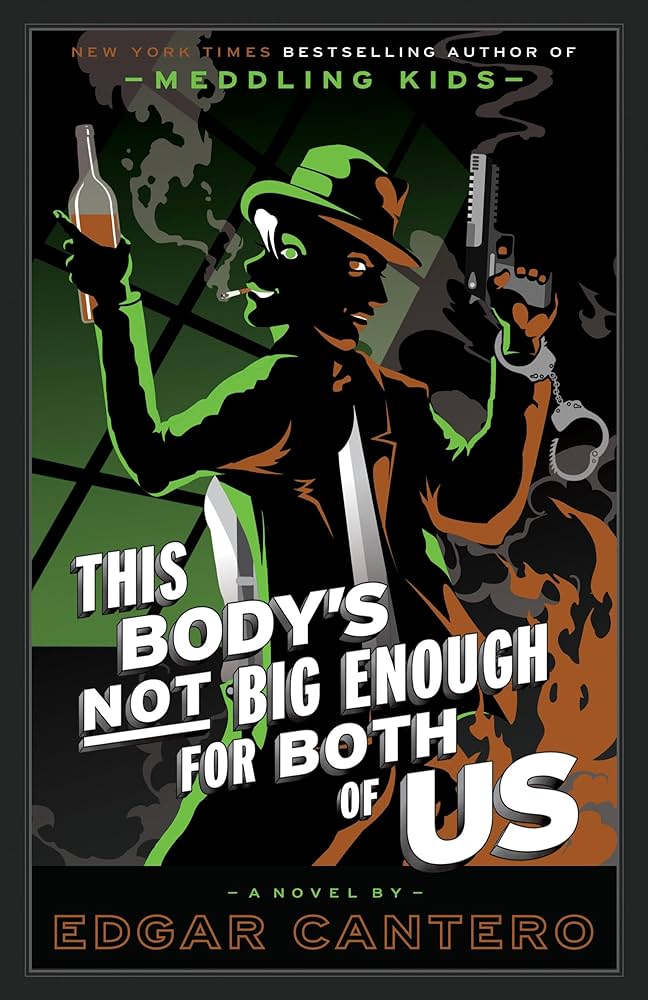
When I was listening to the Fictional Hangover Podcast last year, the hosts gave me a shoutout to entice me to read This Body’s Not Big Enough for Both of Us by Edgar Cantero – the book they were talking about. I was on cloud nine. I couldn’t have been happier to hear them talk about me and the Adapt Me Podcast. See to the end of this review for a special announcement with the Fictional Hangover Podcast. Anyway, I finally got around to reading it, and I can see why they love it. It’s one of the most insane stories I’ve ever read with some of the craziest characters in it while doing a great job satirizing the noir genre.
This Body’s Not Big Enough for Both of Us is about twin detectives who solve a case in the most subversive way possible. I usually would write my own summary of the story, but it’s so mind-blowing that I can’t do it justice. I’ll let the one from Goodreads take it from here.
“In a dingy office in Fisherman’s Wharf, the glass panel in the door bears the names of A. Kimrean and Z. Kimrean. Private Eyes. Behind the door there is only one desk, one chair, one scrawny androgynous P.I. in a tank top and skimpy waistcoat. A.Z., as they are collectively known, are twin brother and sister. He’s pure misanthropic logic, she’s wild hedonistic creativity. A.Z. have been locked in mortal battle since they were in utero…which is tricky because they, very literally, share one single body. That’s right. One body, two pilots. The mystery and absurdity of how Kimrean functions, and how they subvert every plotline, twist, explosion, and gunshot–and confuse every cop, neckless thug, cartel boss, ninja, and femme fatale–in the book is pure Cantero magic.
Someone is murdering the sons of the ruthless drug cartel boss known as the Lyon in the biggest baddest town in California–San Carnal. The notorious A.Z. Kimrean must go to the sin-soaked, palm-tree-lined streets of San Carnal, infiltrate the Lyon’s inner circle, and find out who is targeting his heirs, and while they are at it, rescue an undercover cop in too deep, deal with a plucky young stowaway, and stop a major gang war from engulfing California. They’ll face every plot device and break every rule Elmore Leonard wrote before they can crack the case, if they don’t kill each other (themselves) first.”
The main hook for this novel is a set of chimera twins – Adrian and Zooey Kimrean. They are chaotic in the best way possible. The most accurate way to describe them is that Adrian is totally left brain (all logic, but little emotion like Sherlock Holmes) and Zooey is completely right brain (social and creative, but unfocused and hypersexual). Yet, they are in the same body and are private investigators. They fight and somehow work together. Also, they have a lot of funny lines. It’s hard to choose which ones are the funniest. All I have to do is crack open to a page, and there’s bound to be at least one witty saying. Kimrean is truly bananas.
In addition, Cantero does a fantastic job with satirizing the noir genre. From the very beginning, I could tell that he knew it from the inside out. The opening paragraph had me in stitches with how he overdescribes the weather. Kimrean acknowledges and makes fun of other noir tropes like the narration and the femme fatale, the latter especially with the young girl Ursula who accompanies them. It reminded me of the Guy Noir segments of the Prairie Home Companion radio series but more unhinged.
Even with all of the comedy, the novel manages to take the mystery seriously. The case is engaging, and it had me guessing on who murdered Victor Lyon’s sons until the reveal came. I love how Kimrean constantly jumps to conclusions as to who did it, and when they do find out, they are like, “That was my third choice.”
Moreover, I was surprised at how the novel takes other aspects seriously. I adore the relationship between Kimrean and Ursula. The 11-year-old forms a strong attachment to Zooey while resenting Adrian at the same time. The big speech Zooey makes to Ursula was beautiful and powerful that wasn’t undercut by any jokes. Cantero knew when and when not to insert jokes in the story.
I’ll admit that this is not for everyone. Not every reader is going to be into the dry humor or will be on board for the fast pace the novel goes at. Furthermore, not all will like Kimrean. They’re essentially Jekyll and Hyde with a lot more booze and sex. Even other characters in the book acknowledge this.
This Body’s Not Big Enough for Both of Us by Edgar Cantero is an unabashedly chaotic novel in the best way possible. Adrian and Zooey Kimrean are a delectable hot fudge sundae. They’re good once in a while, but I wouldn’t recommend having it every day. They also make a remarkably great P.I. But, it’s not just them that make this book work. Its send up of the noir detective genre is spot on, and it takes the mystery and important story beats seriously. I would recommend to those who love the noir genre as well as authors like Terry Pratchett and Douglas Adams. It may not be everyone, yet give it a chance, it’s totally worth the read.
Before I go, I want to let everyone know that I recorded the latest episode of the Adapt Me Podcast. Returning guests Amanda and Claire from the Fictional Hangover Podcast and I will talk about how we would adapt this novel, answer some “Would You Rather” questions, and our favorite Pop Tarts. Keep an eye out for the link this week.
Subscribe below to get notified when I post new updates. Also feel free to email me here for any review suggestions, ideas, or new titles!
Content warning: this review talks about sex in various forms.
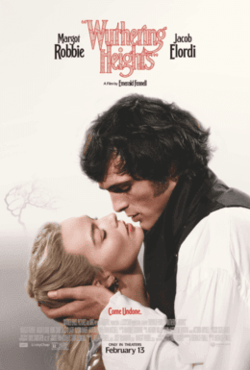
Welcome to Part 4 of looking at various adaptations of Wuthering Heightsand seeing if they can capture the spirit of the book by Emily Brontë. Today, I’ll be looking at the 2026 movie starring Jacob Elordi as Heathcliff and Margot Robbie as Catherine.
Normally, I would review this one at the very end, but because it came out this past weekend, I wanted to get my thoughts out on it while it was still fresh like the fish Catherine fingers at one point.
At this point, I would describe any differences between the book and the film in question, but the truth is that this is the least faithful adaptation of the story. I can go on and talk about all the liberties it takes, yet that would take at least 3 pages, and I have other things to dive into. What I will say are four things:
The second half of the book, the supernatural elements, and Mr. Lockwood are omitted.
Hindley is absent. Much of this character is absorbed into Mr. Earnshaw (played by Martin Clunes who was in the 2002 version of Goodbye, Mr. Chips).
Edgar and Isabella aren’t siblings. She is his ward. Why? That will be covered later in this review.
The tone goes from a gothic horror to a tragic BDSM-infused romance.
The best way to paint this movie is as a reimagination. Like I mentioned in the review of the 1939 version, I strive to judge it by what it sets out to be as opposed to what I want it to be. Writer and director Emerald Fennell has stated in interviews that she wanted to recreate the feelings she had when first reading the novel at age 14. She saw it as a shocking, bodice-ripping romance between two troubled people. When seen through those lenses, it doesn’t work.
This film tries very hard to be provocative with scenes that equate sex with violence. This is especially true with the opening scene that involves a hanging. Even kneading bread has sexual connotations. In addition, throughout, Catherine and Heathcliff have plenty of sexual encounters, something that’s purposely absent from both the book and other versions I’ve seen. And yet, they keep their clothes on, and it’s mostly a montage of them making out. The only time in which the film comes closest to being effectively sexually disturbing is Isabella’s transformation towards the end, and that mainly due to Alison Oliver’s 110% commitment to the bit. This makes it a disappointing viewing because the previews and trailer promised so much, and Fennell has implemented provocative, sexual content in her prior films Promising Young Woman (in which she won an Oscar for the screenplay) and Saltburn to a better effect. On top of that, there are two other adaptations that contain elements that are far more disturbing than anything that occurs in this one.
Despite all of my criticism with this reimagining, it wasn’t a complete bust. Say what you want about Fennell, but she can provide a visual feast with her movies. The cinematography was impeccable with brilliant shot compositions, particularly with Heathcliff riding off into the blood orange sunset. The production design is fabulous with the starkest contrasts between the two estates. Wuthering Heights the house is literally falling apart with a dilapidated roof as well as is filled with cold and bare rooms and short ceilings that Heathcliff has to crouch down. Thrushcross Grange is a rich person’s dream with an immaculate garden and a minimalistic, but beautiful interior. Even the costumes, which I was skeptical of prior, work well in the context of the movie. They might not be historically accurate, but they look good and fit the characters’ moods in plenty of scenes even though I laughed out loud when I saw Catherine’s wedding night gown. Regardless, Fennell’s got the eye for style. And, the soundtrack by British pop singer Charli XCX weirdly works. I don’t know if I will remember it, but it fits the vibe.
Finally, this review wouldn’t be complete without talking about the performances. The casting has been controversial since its announcement nearly a year and a half ago, but was it worth it? Well, not really. Margot Robbie, who’s been on this website before as the titular character in Barbie, plays Catherine. She received a lot of flack for being blonde and too old to play a teenager. My problem with her was that she looked too Malibu to come from the Yorkshire Moors. Now that I’ve seen the movie, I thought she was solid. She played up Catherine’s brattier aspect even though she still doesn’t look like she belongs in that area.
Jacob Elordi, who’s best known for his performances in the television show Euphoria, Fennell’s previous film Saltburn, and his Oscar-nominated turn in last year’s Frankenstein, takes on Heathcliff. His casting was the most controversial because he’s another white guy playing a racially ambiguous character. It also adds insult to injury because the last major film adaptation cast an actor of color as that orphan, and that was from 2011. It’s even worse when the 2026 version decided to have color blind casting with Asian-American actress Hong Chau as Nelly and Shazad Latif – an actor of Pakistani descent – as Edgar. The latter is usually played by a white guy. This is why Edgar and Isabella aren’t siblings in this one because Alison Oliver is white. I’m all for color blind casting, but Wuthering Heights is not the story to do that with, especially with all the whitewashing that has occurred with its protagonist for many years. Anyway, Elordi is not given a whole lot to do besides being a romantic hero, but he does good with what he has, especially when he shows his manipulative side in the latter half.
The rest of the performances are good. Chau depicts Nelly as more devilish than other interpretations, and Latif’s Edgar is more whipped because of his love for Catherine. Clunes is great as the grotesque and abusive Mr. Earnshaw. He’s always had a knack for playing volatile characters like his take on Mr. Chips in the 2002 PBS television movie. The best performance in this flick goes to Alison Oliver, who plays Isabella. Isabella is a character I never thought too much about. She is naive and basically exists to be a pawn in Heathcliff’s game, yet Oliver takes her to new heights (no pun intended). Her Isabella is a socially awkward and dorky psychopath. I understand that this Isabella is not the same one from the novel, but I adore Oliver’s performance. From the moment I first saw her retelling the plot of Romeo and Juliet to Edgar, I knew I would enjoy this movie. She steals the scene from almost everyone around her with her weird charm. Her character’s transformation is one to behold. Oliver has quite the range since she previously appeared in Fennell’s Saltburn as the spoiled Venetia Catton. From now on, I’m going to actively seek out films that have Oliver in it, for she’s going to be a star.
The Wuthering Heights 2026 movie is a mess. It tries to be edgy with how it recreates a teenage girl’s first time reading the book, but it eschews the gothic horror tone in favor of the horny, tragic romance. However, the romance doesn’t fully work because it doesn’t go far enough. The casting is mostly a miss. On the other hand, the technical aspects are well done, and Alison Oliver as Isabella is perfection and knows exactly what film she’s in. If Fennell wanted to make a movie with her self-insert making out with Jacob Elordi, she should’ve kept Wuthering Heights out of it. I would only recommend it to those who know exactly what they’re getting into; are Fennell, Robbie, and Elordi diehard fans; and are watching all other versions. Also, if you want a whiplash, watch it after the 1939 adaptation.
Now, let’s see how this one fits into the ranking.
Wuthering Heights 1939 Movie
Wuthering Heights 1958 Teleplay
Wuthering Heights 1950 Teleplay
Wuthering Heights 2026 Movie
We’ll see how this ranking evolves after I see all the others.
Stay tuned next month when I review the 1967 BBC miniseries with Ian McShane.
Subscribe below to get notified when I post new updates. Also feel free to email me here for any review suggestions, ideas, or new titles!

 Book Reviews by a Chick Who Reads Everything