I Was a Teenage Slasher Book Review

It’s October yet again, and that means scary content! For the rest of this month, I will review books that will focus on horror, the spooky, and thrillers. First up is I Was a Teenage Slasher by Stephen Graham Jones. It’s a great homage to iconic slasher movies despite some issues with the storytelling.

I Was a Teenage Slasher is a classic slasher story with a twist. In 1989 Lamesa, Texas, oil and cotton rule the land, and everybody knows everyone else’s business. Tolly Driver is a good kid with more potential than application, and at age 17, he is about to be cursed to kill for revenge. In his autobiography, Tolly explores the Texas he grew up in and a shared sense of being an outsider to get people to understand why he murdered a handful of people all those years ago.

Stephen Graham Jones has been on my list of authors to read for a long time. I had heard great things about his work, which are usually in horror and fantasy. I’m normally not into those genres, but that title caught my eye. Also, The Only Good Indians has been in my to-be-read pile for a long time. I’m happy to report that I Was a Teenage Slasher didn’t disappoint. 

The book does a good job with the setting. It embodies what it was like growing up in a rural Texas town in the 1980s. I especially enjoyed reading the bit, in which Tolly reveals people will go to great lengths to prove how country they are. It’s Texas after all. In addition, Jones does a great job with exploring how conservative the place is that people had to hide the unique parts of themselves. If they can’t, they will be considered outcasts like Tolly with his peanut allergy and Amber – his indigenous best friend. Although I couldn’t imagine a lot of the farming details like what a pumpjack was, I still got the strong sense of place through Jones’s writing.

In addition, the novel is a wonderful homage to the slasher horror movies that people love. It has all of the elements that make them so special like the slasher murdering people for revenge and moral reasons as well as the final girl, who is usually the last character standing in a flick like that. As much as he loves the genre, he’s willing to critique the tropes associated with it. Throughout the novel, Amber, who watched tons of those films, guides Tolly into remembering what happened during his murderous rampages and what will happen. Tolly too mentions how the movie that was based on those murders got some details wrong and emphasized certain elements over others. He also ponders why the slashers don’t use guns, but he finds out why soon enough. My favorite part was when Amber gets Tolly to put out some knives in his mom’s kitchen, so she could hear the sound they make. The “schting” sound effect is forever etched in my brain. Also, the twists and turns had me on the edge of my seat, especially the one towards the end.

The best thing about this novel is Tolly himself. Writing from a serial killer’s perspective can be difficult, yet Jones pulls it off. Tolly had my sympathies from the beginning. His dad dies prior to the start of the book, and what happens to him at the infamous party was absolutely cruel. I’m not surprised that he ended up killing his perpetrators. But, Tolly is more than his suffering. Jones proves this by giving him a distinct personality. He may not have a lot of ambition, yet he enjoys his English classes and hair metal bands. One of the most interesting things about writing is that certain words like band names are underlined. This clearly underscores Tolly’s love for music and the English language. Another thing that works about the main character is how he wrestles with the killings. Even though Tolly barely remembers what occurred when he slashed people, he makes no excuse for his actions and the following consequences. Did he really do it? Has there been a slasher with a bigger guilt complex than Tolly Driver?

I only have one complaint about the novel. The writing can be disjointed, especially at the beginning. I get why it’s written that way, especially with how Tolly tries to articulate his feelings about what had happened. It’s stream-of-consciousness. However, this was off putting since the beginning is supposed to grab readers’ attentions to make them keep going with the story. While I love the concept and the main character, I had a hard time getting into the story due to the way it was written. It got better later on.

I Was a Teenage Slasher by Stephen Graham Jones is a unique novel in the horror genre that pays a loving tribute to slasher movies and that I will never forget. The setting is great, and the main character is memorable. Plus, how many slasher stories have been told by the killer themselves? It’s not for everyone due to the amount of blood and gore as well as its stream-of-consciousness writing style. Nonetheless, I would still recommend it to those who love horror, especially slasher movies. Read I Was a Teenage Slasher while it’s still October.

Before I go, I want to let everyone know that I will be recording the latest episode of the Adapt Me Podcast soon. Returning guest Mel B – owner of DBA Publishing – and I talk about how we would adapt this novel. Keep an eye out for the link.

Subscribe below to get notified when I post new updates. Also feel free to email me here for any review suggestions, ideas, or new titles!

White Book Review

Screenshot

Full disclosure: I was given a free advance reader copy of this book by Sasha Stolz Publicity in exchange for an honest review.

Content warning: this review discusses racism, white supremacy, and mental health.

When I finish a book, it may take some time for me to formulate my thoughts on it. This can be hours, days, or even weeks depending on the title. On average, it takes me a day or two to gather my thoughts on a particular novel. In the case of White by Aviva Rubin, this process lasted three weeks. I wanted my review to do it justice while still expressing my opinion. With much thought, I can say that it’s a powerful and layered novel about one woman’s fight against white supremacy.

White is about a woman determined to destroy the white supremacist system in Canada. Sarah Cartell grew up in a white supremacist family, controlled by her grandfather whose values and violence marks them all. But, when she befriends the town librarian, who shows her how those beliefs are full of lies, Sarah begins digging up everything she can about the people her family celebrates and her grandmother and aunt who left a long time ago. Determined to dismantle that system, she infiltrates a Neo-Nazi gang by beginning a tumultuous relationship with a skinhead that excites and confuses her. As Sarah races to stop hate crimes, her new friends are put in danger, and a horrific family secret begins to emerge. This unraveling lands her in the psychiatric ward and begs the question, can anyone escape the love of a hateful family unscathed?

This book is heavy, and I’m not just talking about the amount of pages it has. The content is weighty since it deals with one woman’s goal to destroy white supremacy in Canada and the psychological fallout. The framework is Sarah talking to a therapist at a mental health facility as she unpacks everything that led up to her entering the place. This is not a book for readers seeking out light-hearted stories.

The novel is labeled as “near historical fiction” because it takes place in the 1990s before the Oklahoma City bombing, but it mainly focuses on how Sarah tries to escape her hateful family, which feels timeless. What works about this conflict is how complicated it is. Obviously, many of her male relatives, especially her grandfather Thomas, are terrible, but there are scenes in which she bonds with them. For example, growing up, Thomas wanted Sarah to be a pastor in his Church of Purity despite the naysay from her brothers Keith and Blake. While he was a white supremacist and a controlling human being, Thomas still saw potential in Sarah. In addition, the reasons why Sarah’s grandmother and aunt left as well as why Sarah’s dad and the other aunt stayed are not as clear cut. 

And of course, the strongest element of this story is Sarah herself. She is a wonderful multi-layered character. She grew up in a hateful environment, but she didn’t realize that it was so until the town librarian Mrs. Broder – who’s Jewish –  educates her and opens up her mind. Because of this, she wants to expose the entire white supremacy system in Canada. However, it takes a toll on Sarah physically, mentally, and emotionally. When she’s at the progressive McGill University, she spends most of her time researching Aryan-based/Neo-Nazi groups instead doing work for her classes, and she barely eats. Moreover, she starts a relationship with a skinhead, which she has mixed feelings about. On one hand, he sometimes takes advantage of her. On the other hand, she feels excited to be in a relationship, where she feels important. Additionally, she keeps many of her friendships at an arm’s length not to hurt them. Even though they also want to dismantle the hateful system, her friends recognize how she’s becoming more self-destructive and try to help her out with little to no avail. I wanted to tell Sarah, “You have friends that care about you. Drop your work for now!”

Despite that, Sarah is such a compelling character that one can easily understand where she’s coming from, but still point out her flaws. She is also quite funny with certain observations. This allows the book to be not such a downer. By the end, one is not sure if she is going to be completely alright given how she was raised and what happened prior to her time at the mental health facility. But the novel offers a glimmer of hope that she might find her own happiness.

White by Aviva Rubin is a powerful tale about one woman’s escape from her white supremacist family and destroying the system in Canada. This novel is heavy with how it handles several topics with sensitivity and empathy. Many of Sarah’s male relatives are horrible, but their relationships with Sarah are far more complicated, which makes severing their bond more difficult. Above all, Sarah is a memorable character. She wants to do the right thing and feel important, but she ends up going down a self-destructive path. I recommend it to those who want to read books about white supremacy and social activism as well as coming of age stories about people who lived in messed up environments (ie Educated by Tara Westover). White is out now, so go grab it wherever you get your books.

Subscribe below to get notified when I post new updates. Also feel free to email me here for any review suggestions, ideas, or new titles!
Kittentits Book Review

When I finished reading Nightbitch by Rachel Yoder a while back, I wondered if I could ever read something as insane and absurd as that. My question was answered when a dear friend, who works at a library, told me about Kittentits by Holly Wilson, which got published this year. She told me about the bonkers plot and wanted to know why the novel was called Kittentits. We both decided to read it to fulfill our curiosity. I finished first, and reader, we got a lot to unpack with this one because it’s not for everyone. Nonetheless, it was entertaining even though I was trying to figure out what was going on half the time.

Kittentits is about Molly – a rambunctious 10-year-old searching for friendship and ghosts. In 1992, Molly is tired of living in the fire-rotted, nun-haunted House of a Semi-Cooperative Living Community of Peace Faith(s) in Action (a halfway house) with her formerly blind dad and grieving landlady Evelyn. But when 23-year-old Jeanie, a dirt-bike riding ex-con with a questionable past, moves in, Molly quickly attaches herself to her. She might treat Molly terribly, but for the first time in her life, the latter feels seen because they both have dead moms and potty mouths. When Jeanie fakes her own death in a hot-air balloon accident, Molly runs away to Chicago with a stolen credit card and a pair of LA Gear Heatwaves to meet her pen pal Demarcus (who never writes her back for some reason), so she can hunt down Jeanie. Molly and Demarcus plan to perform a seance to reunite with their dead mothers in front of a live audience at the World’s Fair on New Year’s Eve.

Like with Nightbitch, I love the cover of Kittentits. I adore the shade of pink and the image of a cat with its expression all a glow like it just saw a can of tuna that the owner forgot to put away. And, the stars are the cherries on top. It’s a bizarre cover fitting for a book of that nature.

As for the content, it’s not going to be for everybody. If a reader isn’t put off by the title, they might be by some of the things that happen. Molly and other characters like Jeanie do a lot of R-rated swearing, and there are some gross things that occur. In fact, I propose a litmus test. If one can get through the first 12 pages, especially the tampon scene, then they will be able to read the rest of the book. Now, just because someone finishes reading a book doesn’t guarantee that they will like it.

The big problem with Kittentits is that it’s trying too hard. It desperately attempts to get people’s attention and shock them. For example, Molly likes to swear a lot. Given her circumstances, it makes sense for her to curse and say derogatory things, but it feels static after a while. Also, some of the gross out moments (ie the tampon scene) don’t have much pay off, so readers are simply thinking, “What’s the point?”

Also, the plot goes in so many directions that readers are forced to keep up with it if they haven’t been turned off by the vulgar language nor the disturbing imagery. In Kittentits, it’s a coming of age story of a little girl who wants to be seen as her own person, and it also has conjoined twins, hot-air balloons, a World’s Fair that never materialized in real life, and a seance. Granted, it’s not as convoluted as it seems, since most of it comes together at the end. At the same time, it could’ve been a bit more streamlined like Nightbitch. 

Despite the problems with the story and how it’s presented, I’ll admit that it got me intrigued with the main character and how it was going to unfold just like Nightbitch. Molly is not like any other child protagonist I’ve seen in a novel ever. I mean, there have been ones who are abrasive and blunt, but not on the level that she is on. She can come off as insensitive sometimes, especially when she’s writing to her penpal Demarcus. It’s no wonder that Molly gets drawn to Jeanie, who is even more vulgar and unabashed. I hated how Jeanie treats Molly, hoping that the latter will have a realization about the former. Luckily, she does. I simply hoped that Molly would achieve her goal of being seen and respected by the people around her.

Given my issues with how extra the plot is, I admire how bonkers it is. It has a wide range of elements like the ones mentioned above, and I wondered how they were going to play out. Even if it dragged in places, I wanted to see it until the end. That finale is one for the ages.

Kittentits by Holly Wilson is undoubtedly one of the weirdest novels I’ve ever read. The plot packs in so much, and even if it doesn’t always work, I admire Wilson’s gumption for putting all of it on paper. Also, Molly is a one of a kind child character whether readers like it or not. The book is unquestionably not for everybody. The only readers that I would recommend it to are ones who love shock value and coming of age stories. There hasn’t been a book like Kittentits before, nor will there ever be one again, so despite my grievances, I’m glad I read it. I wonder how my friend felt about it…

Before I go, I want to let everyone know that I have recorded the latest episode of the Adapt Me Podcast recently. Guest Sarah Rick and I talk about how we would adapt this novel. You can check it out here.

Subscribe below to get notified when I post new updates. Also feel free to email me here for any review suggestions, ideas, or new titles!

Adapt Me Podcast – Kittentits

Hi Everybody!

Grab your hot air balloons, travel to the World’s Fair, and conduct a seance because guest Sarah Rick I talk about how we would adapt Kittentits by Holly Wilson on the latest episode of the Adapt Me Podcast. You can check it out at this link.

My review of Kittentits will be up next week!

Subscribe below to get notified when I post new updates. Also feel free to email me here for any review suggestions, ideas, or new titles!

199 Books* Ranked From Worst to Best

*I know that some are adaptations and original movies, but that’s besides the point.

Holy moley! I’m now approaching my 200th review. I’ve enjoyed posting these reviews for the last six years, and to meet that milestone means so much to me. I’m also glad that I’ve expanded what I evaluate. I plan on continuing to post reviews as long as possible.

Just like before, I will rate each of the 199 books that I have reviewed on this site. These are based on the ratings that I gave them on Goodreads, Letterboxd, and IMDb, but some have changed since their initial postings.

Here is the chart that I used to rate^ them:

* = Bad

** = Meh

*** = Decent

**** = Good

***** = Great

^Note: The books within each rating are only in alphabetical order.

Now, let’s begin!

*

**

***

****

*****

And there you have it! Let me what you think via Facebook, Twitter, Instagram, or email!

Join me as I post my 200th review next week! It’s of the weirdest book I’ve ever read, and I’ve looked at plenty of strange ones.

Subscribe below to get notified when I post new updates. Also feel free to email me here for any review suggestions, ideas, or new titles!

Cancer Moon: How I Survived the Best Years of My Life Book Review

Full disclosure: I was given a free advance reader copy of this book by Books Forward in exchange for an honest review.

It’s been a long time since I read stories that were written in an informal manner. The ones penned by John Marszalkowski were so good that I wanted to look at some more. Recently, I read some informal tales written by someone not named John Marszalkowski. It’s called Cancer Moon: How I Survived the Best Years of My Life by Jenna Tico – a good collection of stories that detail how the author lived through her 20s.

Cancer Moon: How I Survived the Best Years of My Life is a series of flash-prose, essay, and poetry that takes a look at one millennial artist’s transition from late bloomer to adult and invites women to embrace their self-worth, sexuality, and weirdness. Growing up in Santa Barbara, California, Jenna yearned for validation from celebrities and spiritual F-boys until she discovered her own value. She shares personal stories in various forms like the ones mentioned above while chronicling her journey from late bloomer to a grownup, which are all grouped following the cycles of the moon. Jenna observes the world of twenty-something relationships from perspectives that range from a bachelorette party to a deathbed and validates the experiences of women who felt abandoned by the generation before. Her stories also encourage healthy lifestyle choices for young women without telling them what to do and how to live their life with a dose of humor on the side.

I had never heard of a cancer moon prior to reading this book. It turns out that a cancer moon is a person who is sensitive and nurturing, feels deeply, and possesses plenty of intuition. This comes from astrology, especially when the moon is in the cancer sign. For more information, click on this link . Tico doesn’t fully explain what a cancer moon is, but she does talk about what it means to be one in the introduction titled “Come Sit in the Palm of My Hand.” 

In addition, I love the framework of the sections being moon phases. The first part is Waning like Jenna’s self-confidence, and the second one is New, where she is shrouded in darkness. Then, sections three and four called Waxing and Full see her slowly regain her self-esteem.

Within the structure, it feels disjointed. The stories bounce all over the place, and I wasn’t really sure at what part in her twenties she was going through during a certain tale. But the more I thought about it, I realized that that decade is supposed to be full of unadulterated chaos. The fact that Tico organized it in story form shows how mature she’s become over time.

Let’s get into the content itself. I find Jenna to be absolutely relatable. Female readers will definitely connect with her story, especially her self-esteem issues and her quest to seek validation from people who didn’t really care. I certainly did when I was in my 20s, and I certainly related hard with the conflict of being used versus being invisible. She embodies humor and sincerity all throughout her work, yet she could be downright serious like in the story “Vital,” where she recounts her thoughts the moment when her Nana dies.

My favorite stories were “Cabo is the New Cabo,” “To the New Girlfriend of the Man I Used to Blame for Everything,” and “Terrible Twos, Or: How a Toddler Taught Me to Stop Regretting and Love Life.” All of them are very funny while they reveal some hard truths about life and how to navigate it. This is especially true in the first one, where she observes other women losing all inhibitions at a bachelorette party. I also enjoyed the connections from the earlier tales to the latter one. For example, the opener “Cabo is the New Cabo” gets referenced in the last official essay “I Was Told I’d Be Glowing.” Moreover, if readers want to see how Jenna evolves throughout the collection, read her one-page essays “Other People I Can Blame” and “Other People I Can Thank.” 

As much as I liked Cancer Moon, I don’t think it will ever top the work of John Marszalkowski, yet it’s not Tico’s fault. I just happened to read his essays first, so I inadvertently set expectations on informal content I would later come across. It’s like if one’s first introduction to sketch comedy was Monty Python’s Flying Circus. One would still like other shows, but they can’t look at that style of comedy the same way after viewing the aforementioned series. That’s essentially what happened. I like Cancer Moon very much, yet I can’t read informal works the same way after consuming Marszalkowski’s books because the latter set the bar high. At the same time, both excel at being funny and honest at the same time.

Like Marszalkowski’s work, Cancer Moon is not going to be for everyone. After all, how many readers can say that they’ve had relations with a celebrity? Even more so, some may be off put by the non-linear structure. But then again, an author will never please everybody when they use non-conventional methods.

Cancer Moon: How I Survived the Best Years of My Life by Jenna Tico is a good set of informal stories about how one woman survived her 20s. While not everything is going to connect with the readers, the core elements will, and Tico is funny and sincere about them. She can also be downright serious when she speaks about her life and relationships. I would recommend it to those who want to get into stories that are less formal because of how palatable they are as well as to those who want to read more books about the trials and tribulations of going through one’s 20s and the journeys toward self-love. Cancer Moon: How I Survived the Best Years of My Life is out tomorrow, September 17, so go grab it wherever you get your books.

Before I go, I want to let you know that it is my 199th review! Next week, I will rank all of the 199 titles I’ve read and/or watched (including this one) in my Ranking series. This will lead up to my 200th review in two weeks. Stay tuned for the ranking! In the meantime, check out my prior Ranking posts.

Subscribe below to get notified when I post new updates. Also feel free to email me here for any review suggestions, ideas, or new titles!

The Caiman of Inquitos Book Review

Full disclosure: I was given a free advance reader copy of this book by Author Marketing Experts in exchange for an honest review.

It’s been awhile since I read an action-packed thriller. I enjoyed the ones by Clive Cussler and Brad Thor, so I wanted to try a new author, or in this case, two. Today’s review is The Caiman of Iquitos by Piper Bayard and Jay Holmes aka Bayard & Holmes. It’s a part of the “Apex Predator Espionage Thrillers,” and it’s enjoyable due to its characters, plot twists, and environment.

The Caiman of Iquitos is the third book in the “Apex Predator Espionage Thrillers” series. Former CIA Operations Officer John Viera is doing his best to lead a normal life and start a family, but fate has other ideas. When a Russian ship is mysteriously torpedoed off the coast of Peru, untracked enriched uranium is found in its cargo. The US President, wanting to protect his multi-billion dollar business interests, blocks agency investigations into the incident. Instead, top intelligence officials call John and his team of former operatives to uncover the new player on the nuclear chessboard. They are the only ones who stand between international security and the Caiman of Iquitos.

Although it’s the third book in the series, The Caiman of Iquitos can easily be a stand alone. While it certainly made some possible references to the previous titles, it didn’t affect my overall enjoyment of the novel.

I really enjoyed the characters in the book. Each has a distinct personality. For example, Angelina is a strong, confident woman and is the only female member of the operatives team. She butts heads with John a lot, yet she can be vulnerable, especially when something tragic happens on the mission. There’s also John Viera. At first, he might seem like every other CIA officer that one may find in a spy novel, but there’s more to him. He wants to live a normal life, yet his wife leaves him at the beginning of the story. Soon, he finds out that she’s pregnant with their child. Throughout the novel, John wonders why he’s on this assignment when he should be at home trying to repair his marriage and to be the best father he could be. In all of the action/adventure spy thrillers I’ve read, I’ve never encountered something like this before.

While the plot follows a similar structure to that of a Cussler tale (one main plot and two subplots), the twists are unique. One involves Heung – a North Korean spy – trying to get the uranium for his motherland, and he “promises” a guerilla group in Peru that he will help them find their leader and get them out of prison in exchange for the metal. It’s super hilarious when they finally locate that leader. There were some plot twists that I almost missed because I was mostly reading it while I was in bed about to fall asleep. I know that I said I wouldn’t do that after reading Nighthawk by Clive Cussler, but I did. I apologize. Now, I know for real not to read an espionage thriller right before I go to bed.

What stood out to me the most was the environment. I’m not just talking about how Bayard and Holmes describe the jungles in Peru, but also the realistic political atmosphere in which the operatives have to work with. The whole reason why they are on that mission is because the current president doesn’t want citizens to find out about his own personal business endeavors (does that sound familiar?). As a result, the tension is high during the sections involving the intelligence officials and the leader of the free world. Even the head of intelligence tells one of the officers to do what they can to find the uranium culprit by whatever means necessary, even if that means committing something illegal. Brad Thor would be very proud.

Another thing that stuck out was the Truth or Fiction section that follows the end of the book. The title is self-explanatory. Additionally, it reveals some of the liberties that the authors took while crafting this story. I didn’t mind this because the environment was grounded in reality, and some details had to be eschewed to move the plot forward.

The Caiman of Iquitos by Baynard & Holmes is a fun action spy thriller. The book is enjoyable with its distinct characters and plot twists. What impressed me the most was the tense, but authentic environment the operatives have to work under for their assignment. I would recommend this book for those who have read the previous titles in the “Apex Predator” series as well as readers who have consumed Clive Cussler and Brad Thor. Now if you will excuse me, I’m going to read more Apex Predator thrillers.

Subscribe below to get notified when I post new updates. Also feel free to email me here for any review suggestions, ideas, or new titles!

Literary Travel – Wisconsin, Northern Michigan, and Canada Edition

Hi Everybody,

Over this summer, I went to a few places that I have never gone before. Each of them had a bookstore that I had to check out. Today, I’ll show them all to you. All of the photos used, except for one, were ones that I took.

First up is the Elkhart Lake Public Library in Elkhart Lake, Wisconsin.

Just like the last two years, I went to Wisconsin right before Memorial Day Weekend with my husband. But, this time, we decided to go to the Village of Elkhart Lake together, which is where Road America – one of the world’s fastest permanent road racing tracks – is located. The town itself is between Milwaukee and Green Bay.

While he spent his time driving cool cars on the Road America tracks, I took some time to explore. Even though some stores were closed during the time that we were there, it was still a nice area.

And of course, I had to check out their local library. It’s in the heart of the town right next door to the Village Hall. The library is all on one floor. It’s not as small as the Meadows Library in Las Vegas, yet it still packs in a lot of items while still being spacious.

A good example of this is the children’s area. The area is very organized with well-placed shelves, tables, chairs, and a rug while adding lots of color. This certainly would attract plenty of kids during the summer and after school. In fact, it did since when I was there, there was a group of children completing a scavenger hunt to find certain items in the library. Summer Reading started the week I visited Elkhart Lake.

I especially love the dinosaur in the background.

Every library needs a gigantic stuffed animal like this elephant.

Oh hey, Pigeon! What are you doing up there?

The adult section also had well-organized shelves. For instance, there was an orange sign on some to indicate that they were fiction. Similar signs were in the children’s area.

In addition, they had some neat displays like for new releases and for other themes.

Furthermore, I liked how the library cared about hygiene. They had these signs in the computer area.

The library also had a puzzle that people could work on. I spent a good chunk of time there trying to put the pieces together. It was so much fun.

My favorite part of being at the Elkhart Lake Public Library was their historical and vintage collection. There wasn’t a whole lot of items in them, but I can easily see people coming in to do research and read from very old books.

You know how I mentioned that Road America was in Elkhart Lake? There’s documents regarding its creation and even a DVD of footage filmed from the early days of the race in the 1950s that patrons could check out. Later on when I had dinner at a bar, I told the locals about this, and they couldn’t believe it. They didn’t know that the library held accessible artifacts relating to the history of Road America.

Lastly, the library housed a framed letter entitled “The Library Resolution,” which formally established the facility in 1906.

While the Elkhart Lake Public Library was a relatively small place, it still contained a lot of things that people could do, whether that being reading books, playing puzzles, or researching local history. Along with their website, you can check them out on Facebook and Instagram. There’s more to Elkhart Lake than Road America.

The second book place is Plot Bound Books in Gaylord, Michigan. This is the first time that I’ve reviewed a bookstore located in my home state.

Soon after I got back from Wisconsin, I was traveling once again. This time to Gaylord, Michigan, where a dear friend of mine invited me to stay with her at her parents’ house in the nearby town of Johannesburg during Memorial Day Weekend.

One day, she took me to downtown Gaylord. I’ve never been to that city, and it was a very pleasant experience. We went to the Alpine Chocolat Haus to have ice cream and lots of chocolate. Then, we walked over to Plot Bounds Books.

According to its website, it’s an independent bookstore that strives to provide customers with high-quality books that inspire, educate, and entertain as well as to create a warm and welcoming atmosphere among book lovers of all ages and backgrounds.

I immediately felt the cozy atmosphere when I walked right into the shop, which was the size of a living room. Even the Meadows Library in Las Vegas was slightly bigger than this. In addition, we managed to explore the place prior to the shop moving to a different location. Don’t worry, it’s still in Gaylord.

One of the first things that we noticed was the crafting table, where people could make their own bookmarks.

This was pretty cool, and it allowed anybody that walked in to make them. Plus, the bookstore was celebrating its birthday when we went, so I wonder if it was their way of giving back to the community. We made about two each. I made the ones seen below.

Most of the books on sale were located along a wall and a half, and many of them were popular titles. This makes sense for a smaller bookstore if they want to make a profit.

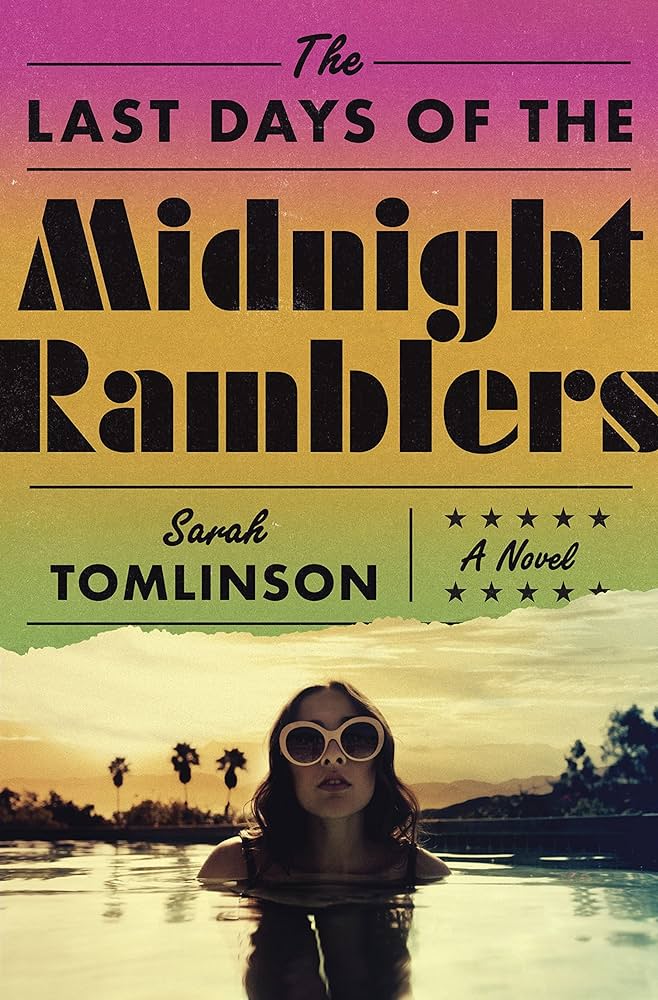
The Last of the Midnight Ramblers sounds very familiar.

At the same time, Plot Bound Books offers some unique items like Michigan-based story books and stuffed animals. These can be seen below in this adorable display.

They also got bookmarks with really cool designs. I’m glad that Plot Bound Books also sells them and not just allows customers to make them.

And don’t worry parents. They got books for the littlest of kids seen here.

Additionally, the bookshop carried wrapped books. These are ones where customers can buy them based off of certain descriptions and then find out what the title is.

As much as I was tempted to purchase a “mystery” novel, I had my eye on Wandering Stars by Tommy Orange. I’ve been wanting to read that book ever since I found out about his follow-up to his debut title There There. I managed to get it at a discount since it was the bookstore’s birthday.

While Plot Bound Books may be small, it absolutely carries high-quality materials for customers to read and enjoy. Above all, it creates a warm and welcoming environment with ease. Along with their website, you can check them out on Facebook and Instagram. Birthday or not, come into their store the next time you’re in Gaylord, Michigan.

Finally, towards the end of summer, my husband and I went to Juniper Books in Windsor, Canada.

Credit: Robert Steele

Located in downtown Windsor, Canada, Juniper Books sells used and rare books. According to its website, it also contains maps, prints, and ephemera for all kinds of readers. And no, it’s not related to the Juniper Books based in Boulder, Colorado.

This was our second trip to the bookstore since we made a visit to it earlier this summer. We were in Canada for our 10th dating anniversary, and he wanted to check out a game shop that had a Yu-Gi-Oh tournament. When the conversation with one of the clerks turned to books, he recommended checking out Juniper Books before the event began, and so we did. I didn’t take pictures the first time since we were on a time crunch, yet we knew we wanted to come back.

And, we did in August. The photos I took were from our second trip there.

As seen in the picture above, it’s covered in leaves, which makes it a magical place. I can’t think of many bookstores that have that kind of aesthetic. In addition, the bookshop was apparently a house in the past, and it shows. Each room has books nearly from the ceiling to the floor. Don’t worry, there’s enough space for customers to walk through as seen in this photo. My husband – a tall man – had a much better experience navigating this shop than he did when we were at Arcadian Books & Prints in New Orleans.

They also had a cat named Alfred roaming around the store when we were there the first time. He was very cute. Sadly, he wasn’t present when I took these photos because the owner was away, and he took the feline. Nonetheless, we still had a good time exploring the place.

Another thing that makes the shop stand out is that each room has different kinds of books. For example, the study room was filled with titles about religion. Two other spaces had popular adult as well as juvenile and young adult titles. Even the kitchen and the back room contained cookbooks and food-related books in the former and gardening ones in the latter.

They also had books in the basement and in the upstair rooms. The former had biographies and more nonfiction, while the latter contained science fiction, fantasy, and horror paperbacks. People can even look out from the window when they are on the second floor. While in the basement, my husband had to duck his head, so he wouldn’t hit it against the ceiling.

I loved the decor at Juniper Books. It’s a bit haphazard, but they are well-placed and add to the charm. Even the stairs had some nice artwork on them.

Moreover, the bookstore had movie posters as part of its ephemera, including this one of the 1938 film The Adventures of Robin Hood.

Juniper Books does more than sell books and other items. It also does bookbinding, free delivery, appraisals, and events.

In the end, I purchased Too Much Happiness by the late Canadian author Alice Munro, Fan-Tan by Marlon Brando (yes, that Marlon Brando) and Donald Cammell, and Twelve Angry Librarians by Miranda James. Coincidentally, my husband bought another book written by James titled No Cats Allowed along with car-related content.

Juniper Books is undoubtedly one of the quirkiest bookstores I’ve ever been in with the amount of books it had and how it looked. It also was one of the coziest since it was in a house. The chairs were very comfortable, and if I had my way, I could have sat in them all day. Regardless, it appeals to every reader in creative ways. I know I plan on going back when I’m in Canada again. You can check them out on their website.

And that concludes the sixth installment of “Literary Travel!” I hope all of you had a great time on this trip. There might be another one down the pipeline, so stay tuned for that!

Subscribe below to get notified when I post new updates. Also feel free to email me here for any review suggestions, ideas, or new titles!
The Mechanics of Memory Book Review

Full disclosure: I was given a free advance reader copy of this book by Author Marketing Experts in exchange for an honest review.

Science fiction is a genre that I’m not that familiar with. I’m not usually drawn to these kinds of books like I am with historical fiction. Nonetheless, I want to read more science fiction. I had the opportunity to do so recently with the novel The Mechanics of Memory by Audrey Lee. It was a good story with a unique concept, multifaceted characters, and great twists.

The Mechanics of Memory is about one woman’s journey to remember her lost year. Memory is Copeland-Stark’s business. They help patients to recall forgotten memories at their sleek new flagship facility. Yet after months of reconsolidation treatment, Hope Nakano still has no idea what happened during her lost year, or the life she was just beginning to build with Luke – her one great love. Each procedure surfaces fragmented clues that lessen Hope’s trust in her own memories, especially those of Luke. As inconsistencies mount, her search for answers reveal a larger secret that Copeland-Stark is determined to protect at all costs. But everyone has secrets, including Hope. 

I love the concept. Plenty of science fiction novels deal with memory in one way or another. Yet, none of them handle it like The Mechanics of Memory does. Copeland-Stark aims to recover memory by implanting false ones in patients in the Wilder Sanctuary, which is anything but. I’ve not read anything like that before. My one complaint about this concept was that not every treatment was made clear. I get that implanting the false memories was the start, and the recovery strategies involved therapy sessions and going through a labyrinth in order for patients to find a way to recall certain things. They also spend time in a place called The Butterfly Box, which I was never sure what it was and what it was used for. Other than that, the concept is unique, and I hope to see more of this take in future science fiction books. 

In addition, I really like Hope. She is strong, resilient, and flawed. Readers will immediately see her as determined as she tries to figure out why she was put in the sanctuary in the first place. On top of that, they will be invested in her relationship with Luke as they are wonderful together. The novel reveals that Hope was in an emotionally and verbally abusive relationship prior to meeting Luke, and she sees him as someone who treats her like an individual, and she can open up to him with no problem. Sadly, she wonders if he was the one who put her in the sanctuary. The other people at the facility are interesting too. Doctors Stark and Emerson as well as other patients like Carter, Quinn, and Spooky (aka Spencer) have their own secrets as well. Some readers complained how there were too many characters. I didn’t feel that way at all because all of them were distinct.

Even though it’s mainly Hope’s story, readers do get Carter’s and Luke’s points of view. In one chapter, tech genius Carter is in a therapy session and finds out why he’s in the sanctuary. For some parts, people get to know Luke more and how he feels about Hope being in the facility. He is just as complicated as Hope, especially the fact that he works for Copeland-Stark – the same business that placed Hope in the treatment center in the first place.

Moreover, there are plenty of twists that will catch readers off guard. Obviously, I can’t spoil any of them. What I will say are two things: 1. Many of them didn’t see it coming and 2. One blew my mind towards the end and made me squirm in my chair. I haven’t felt that way since I learned about the big reveal in Then She Was Gone by Lisa Jewell. The twists are definitely worth it.

The Mechanics of Memory by Audrey Lee is a vastly interesting science fiction novel. The concept alone makes the book worth reading, but it also helps that it has well-developed characters and twists that will leave readers thinking about them for a long time. I would recommend it for those who love science fiction with some mystery and suspense as well as reading about corrupt businesses and how memory works. The Mechanics of Memory is out tomorrow, August 27, so go grab it wherever you get your books.

Subscribe below to get notified when I post new updates. Also feel free to email me here for any review suggestions, ideas, or new titles!

Before I Let Go Book Review

Content warning: this review discusses stillborn births and mental health.

I’ve read plenty of romances, especially within the last two months. Yet, there is one trope that I’ve always been curious about, but never fully explored until now, and that is the second chance romance. This involves a couple breaking up, finding themselves, and possibly getting back together. An example of this is Before I Let Go by Kennedy Ryan. It’s a highly introspective look at a divorced couple, hope, and mental health that makes it a true standout among second chance romances.

Before I Let Go is the first book in the Skyland series. Yasmen and Josiah’s love was supposed to last forever, but one devastating blow after another, they found that love couldn’t solve or save everything. It couldn’t save their marriage.

Yasmen wasn’t prepared for how her life fell apart, but she’s starting to find joy again. Also, she and ex-husband Josiah have found a new rhythm, co-parenting their two kids, and running a business together. But, they are always drawn back together, and they wonder if they were ever truly ready to let go of everything they once had.  Soon, one stolen kiss leads to another, and they end up having secret rendezvouses. It’s all good until it reopens some wounds. Is it too late for them to find forever? Or could they even be better, the second time around?      

One of my first thoughts was how much Before I Let Go reminded me of the 1937 romantic screwball comedy The Awful Truth starring Cary Grant and Irene Dunne. In it, a rich couple splits up, but they interfere with each other’s romances because they can’t face the awful truth that they still have feelings for one another. They have similar premises and almost identical scenarios like the different partners and the trip the main couple are forced to go on together. However, there is one major difference, and that’s the tone. The Awful Truth is light and contains plenty of farce. 

On the other hand, Before I Let Go handles its situations with more gravitas. It’s grounded in the reality of how a divorced couple lives while co-parenting and running a business together. Yasmen and Josiah are, or become, aware of the consequences of their actions. This is especially true when two deaths in the family shake them in different ways. When their child Henry is stillborn, Yasmen becomes depressed and unable to do anything unless it involves their other children Deja and Kassim. Josiah buries the grief so deep that he comes off as insensitive to Yasmen, while he points out how over reactive she could be. It only takes time for them to realize what had led them to separate and why they still have feelings for another. In a subplot, Yasmen struggles to connect with their teenage daughter Deja, while Josiah has no problem getting along with her. Even though Deja certainly comes off as brooding, stubborn, and spoiled, her feelings are valid, especially when she reveals why she has so much resentment towards her mom.

Hope plays a huge role in second chance romance for obvious reasons, but Before I Let Go is realistic about it. There’s plenty of wishing, especially on Yasmen’s side because she realizes that she regrets asking for the divorce in the first place. At the same time, she is all too aware of the obstacles like Josiah dating the chef from their restaurant and her seeing someone else too. Yet, once they hook up again, their relationship becomes more complicated than ever. It becomes clear that they want to get back together, but they wonder if it’s worth it as they might reopen some wounds. Even Josiah has to lay down some ground rules while they had their rendezvous. And reader, those scenes are pretty steamy, and I was reading those parts while I was at work. Getting back to the point, I love how hope is seen in a mature light.

Another asset Before I Let Go has is the depiction of mental health and therapy. These are portrayed authentically. When readers meet Yasmen, she’s in a post-depressive state, but that doesn’t mean she’s 100%. She goes to therapy, and it took her awhile to find the right therapist, who could listen to her and give her pointers about how to deal with certain situations. When 10-year-old Kassim has some recurring thoughts about deaths of family members, Yasmen and Josiah agree to get him some therapy, so his emotional intelligence could be strengthened. While Kassim is initially reluctant, Josiah offers to go to some solo sessions to entice his son to attend his own. Again, Josiah makes it clear in the beginning that he doesn’t care all that much for therapy, thinking that it’s not for him, but I love seeing his growth and him getting in touch with feelings buried beneath him, especially when it comes to the death of his parents, during the course of the novel. The novel is fully aware of how it takes time for people to heal and therapy can help under the right circumstances. It also makes it clear that therapy is for those at the right place and at the right time. Josiah realizes that he needed it even if he was too stubborn to admit it at first. As someone who is in therapy right now, I felt that these scenes were true to life.

Of course, the biggest strength is the relationship between Yasmen and Josiah. I knew I was going to like this couple when I read how he fell in love with her when she gave him watery chicken noodle soup. It goes back and forth from each perspective, thus providing plenty of nuance to the story. They both complement each other. Josiah is neat, while Yasmen is sloppy. When he had the dream to open up a restaurant in Atlanta, she had the drive to make that happen. This is true of their faults as well. As mentioned earlier, Josiah can come off as emotionless at times, while Yasman could possibly exaggerate some of her feelings. They bring out the best and worst in each other, and they have to figure out if the relationship is worth rekindling on those merits. Even though I had a sense of what the outcome was, the book certainly had me on my toes because of all of the hoops the couple was going through. It kept me interested in their romance.

Before I Let Go by Kennedy Ryan is a wonderful second chance romance. It’s everything that readers would expect from this trope and more. The novel is grounded in reality that the main characters are all too aware of. The depictions of mental health and therapy are well-handled. And above all, the romance between Yasmen and Josiah will have readers rooting for them to get back together. I would recommend this to those who enjoy reading black romances as well as about business owners, co-parenting, mental health, and couples possibly reigniting their love for each other. After reading this, I know I’m not going to let this go for a while.

Now before I let you go, I want to let everyone know that I will be recording the latest episode of the Adapt Me Podcast soon. Guest and Bookstagrammer Asha Bartley and I will talk about how we would adapt this novel. Keep an eye out for the link.

Subscribe below to get notified when I post new updates. Also feel free to email me here for any review suggestions, ideas, or new titles!