The Four Sworn: Summer Solstice Book Review

Full disclosure: I was guided to this particular title based on the recommendation of a good friend of mine in exchange for an honest review.

Writing a sequel to a book is never easy; it can make or break a series. The author has to create more situations for their characters in order to allow them to develop. At its best, a sequel can be just as good as the first because it understands the essence of the original story and adds on in meaningful ways. At its worst, a sequel can simply be a retread of the first novel without comprehending what made the story unique in the first place. In the case of The Four Sworn: Summer Solstice by Lenore Sagaskie – the second in the Four Sworn series, it is certainly one of the better sequels that I have ever read.

The Four Sworn: Summer Solstice reunites readers with Abby, Sara, Joe, and William as they investigate a series of disappearances of girls who are Potentials – young witches coming into their full powers who have not yet decided on which path to take. In the meantime, they continue to deal with their increasing elemental powers as their popularity in Feyland wanes, and information regarding Abby’s daughter emerges.

In this volume, readers are introduced to many new characters, including Rory and Marie. Rory aka Aurora is a Potential trying to decide on which path to take – the Light or the Darkness – while also trying to figure out what she wants to do post high school. I enjoyed the gag of animals following her everywhere vying for to become her familiar. She befriends Abby as they take pottery classes taught by Joe with some assistance from Sara. Marie is Rory’s grandmother and guardian. She is kind and protective of her granddaughter; Rory’s mother disappeared when Rory was very young. Both characters are well-developed, and I could easily imagine them as I read much like with the main characters in the first one.

As for the main characters, they evolve in more ways than one. Abby continues to struggle with her fire powers as well as caring for Dan after Thaddeus attacked him in the last book. Joe and Sara encounter uncertainty in their relationship, and neither is sure on how to talk to the other. As that occurs, Sara’s neighbor’s new boyfriend tries to hit on her, and it puts her in a paranoid state. As for William, he spends more time with Dan and even befriends Abby (Fire and Water getting along get it?). While it seems that all of the main characters get some chance at development, it is clear that the female characters have evolved more than the male ones. This is not a complaint; it is something that I have noticed. I am sure that Joe and William will have more of a chance in the next volume.

The strongest aspect of this volume is that there is more of a balance among the plot, characters, and environment as there is more story than in Spring Equinox. In the first book, I felt that the plot was pushed to the wayside for characters and the atmosphere. In this one however, there is a concrete plot, which got me intrigued from the beginning to the end. There are a lot of subplots like Rory trying to figure out what she wants to do, Sara with the neighbor’s boyfriend, and the news about Abby’s daughter, and most of them pay off.

Even the writing has improved from the first one. Throughout the first volume, various characters will express their thoughts about something as they perform some action. A lot of those thoughts that they have are predictable to the situation, which makes Sagaskie’s use of this technique verbose at times. She uses it in this book, but not as much and when it is necessary.

Overall, The Four Sworn: Summer Solstice by Lenore Sagaskie is a pretty good sequel. In fact, I enjoyed this one more so than Spring Equinox. This is more plot-heavy, but Sagaskie makes good use of it along with developing the main characters and introducing new interesting ones. Fans of the first one should enjoy this one. Summer Solstice has now gotten me excited for the third volume whenever that is coming out.

Subscribe below to get notified when I post new updates. Also feel free to email me here for any review suggestions, ideas, or new titles!

Book Reviews From the Vault: Dear Fahrenheit 451, Love and Heartbreak in the Stacks

Dear Fahrenheit 451, Love and Heartbreak in the Stacks by Annie Spence was probably the most fun I ever had while reading. I laughed and learned a lot while reading the letters she wrote to the books that impacted her the most. I wanted to challenge myself while doing this review, so I hope you enjoy it.

NONFICITION–Spence, Annie

–Librarians

–Letters, Love

–Notes, Breakup

–Recommendations!!, So Many

Twilight, Making Fun of

Dear Dear Fahrenheit 451, Love and Heartbreak in the Stacks,

A lady in the book club that I facilitate recommended you to me. I had heard of you prior, but after reading your blurb, I knew that I had to read you right away. And, it was worth all the laughs, thrills, and roasts that you did on over one hundred books.

As a person who works at a Metro-Detroit public library, I was delighted to learn that you were written by Annie Spence – a public librarian who lives in Detroit. Spence writes letters to various novels as she weeds them out of the library and her home. Through writing these notes, she confesses her innermost feelings about each of the stories she selects.

You are brilliant and well-made because of how enthusiastic you are about the novels that you cover. It is very clear that Spence had a lot of fun creating you since she injects her sassy and sincere personality into every book she writes epistles to from the ones that she wants to keep around forever (like The Virgin Suicides by Jeffrey Eugenides) to the ones that she wants to file restraining orders against (like My Truck Book). She even takes the time to mimic the wording from old cataloging cards for every entry (hence my example of her example at the top).

Even though I have not read most of the books that you mention, I enjoyed hearing your, I mean her, opinions about them (*scribbles note about reading The Virgin Suicides). My personal favorites were the entries of the novels that I have read in my lifetime. For example, I nearly rolled on the floor laughing when you/she describe(s) the Twilight series like this:

Oh, he loves me! But he wants to kill me! But he really hates that about himself… But he loves me so much he’d rather die than be without me! But in order to keep him around I have to promise my mortal life to a vampire coven. Oh, look, we’re pregnant! This birth is going to break most of my bones and my baby daughter is going to start dating my werewolf ex-boyfriend. Well, we do crazy things for love!” (129).

Thank you for tearing that series into bits! These days for all I care, it can bite me!

It is also great that you cover books for all ages from Anna Karenina to the Frog and Toad Storybook Treasury. In that way, it allows the readers like me to remember how we read certain books as kids and then later as adults. In addition, it reminds us of what our book tastes were as said kids and how that has changed overtime.

I would definitely recommend you to everyone who enjoys reading as much as me and Spence do! When I mean everyone, I mean particularly adults since it is not exactly appropriate to expose children to titles like The One-Hour Orgasm: A New Approach to Achieving Maximum Sexual Pleasure. However, parents could skip that part if they are reading it with their kids. I would also recommend you to my fiancé as long as we are not having our alone time. In other words, you will become a close friend of mine, and I look forward to reading you as often as I can in the future.

                                                            Your Reader Friend and Fellow Library Colleague,

                                                                                                                                              Emily

Subscribe below to get notified when I post new updates. Also feel free to email me here for any review suggestions, ideas, or new titles!

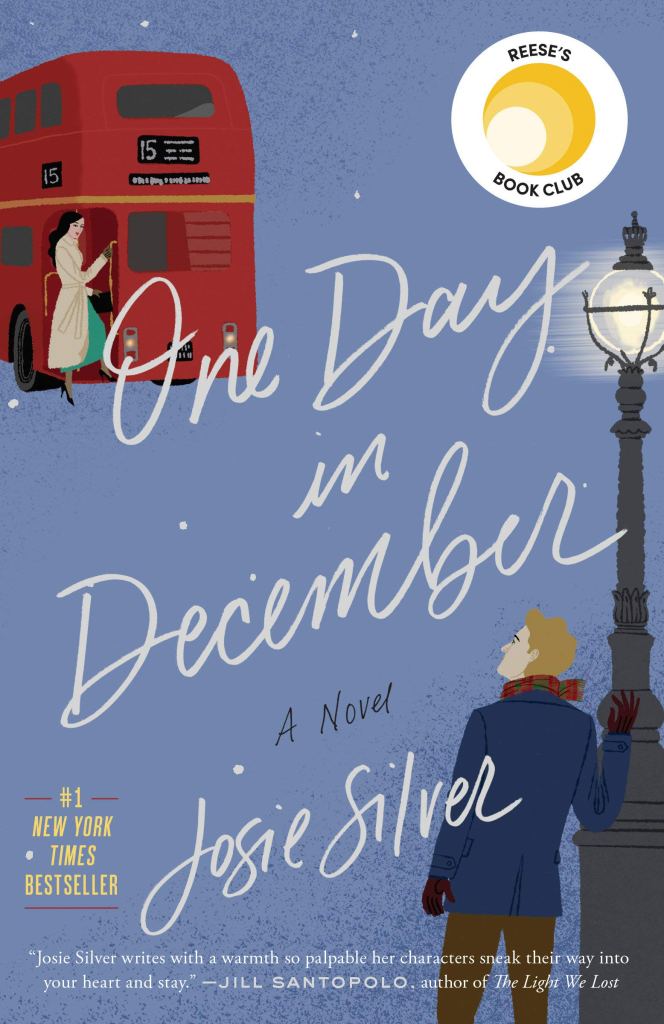
The Biggest Lie in the History of Christianity: How Modern Culture is Robbing Billions of People of Happiness Book Review

Once in a while, there comes a book that divides readers. Some people would think it is the most wonderful book in the entire world, and others would think it is not what it’s cracked up to be. The Biggest Lie in the History of Christianity: How Modern Culture is Robbing Billions of People of Happiness by Matthew Kelly falls into this category. It is a book that helps people to become better Christians (in theory) in the face of modern secular culture. For this review, I will explore why this book can divide people as they are reading it.

First, let’s look at its positive aspects. Kelly writes in a relatively understandable way. He uses layman language to connect to the average Joe. This would make a quick read. It also helps that he delivers his message very bluntly, which is good for a self-help book. If a self-help book uses flowery language to identify the problems and solutions, then readers might concentrate more on deciphering what the author is saying versus doing what they ask. 

In addition, Kelly argues that the biggest lie in Christian history is “holiness is not possible” (p. 32), but he offers a way to achieve that in the form of holy moments. In his words, holy moments are instances “where you set aside self-interest, personal desire, and embrace what you believe will bring the most good to the most people in that moment” (p. 36). 

These instances are essentially random acts of kindness. I liked how he lists the ways that one can have a holy moment from giving thanks to God for another day of life to controlling one’s temper (p. 50-51). In these ways, I can definitely see why the book has garnered a strong fan following.

On the contrary, there are a few things that bothered me about this book. Some reviewers have pointed out that Kelly treats holy moments as if they are solely a Christian idea. Since these kinds of moments are basically random acts of kindness, anybody can do them regardless of religion, and those acts do not always have be God-driven. In fact, the main mantra of the Zoroastrian religion is “Good thoughts, good words, good deeds”. 

I am aware that this book is a Christian self-help book, yet it essentially puts a very important idea upon the Christian pedestal without fully examining it.

Another thing that annoys me with this book is that it provides no sources to verify the information that he provides. He cites a piece of the Scriptures and a line from the Gospel According to Mark, but that is it. For example, in his counter argument to the claim that Jesus does not exist, he could have listed the names of Jewish and Roman historians besides Josephus who wrote about Jesus as a real person (p. 22). I looked up Josephus referencing Jesus in his Antiquities of the Jews, and it turns out that modern scholars are debating if it is entirely authentic, partially genuine, or completely forgery. All I am saying is that cite the resources, so people can validate the claims.

The main thing that bothered me the most about this book was its inflammatory language. I know that I praised it for its blunt method of delivery earlier, but one can be straight-forward without arousing anger or fear. In fact, this inflaming tone is clearly set with the book’s full title The Biggest Lie in the History of Christianity: How Modern Culture is Robbing Billions of People of Happiness. Going back to the Jesus not existing argument, Kelly asserts that the idea that “Jesus is nothing more than a figment of Christian imagination is both disingenuous and an outright lie” (p. 22). 

Calling anybody who does not believe in Jesus an outright liar is extremely shallow and petty, especially given that the author never really proved the savior’s existence.

Overall, I completely understand why readers are polarized by The Biggest Lie in the History of Christianity: How Modern Culture is Robbing Billions of People of Happiness by Matthew Kelly. While it contains some good advice on being a better Christian, holy moments can easily be done by anyone regardless of religion. Moreover, Kelly rarely cites his sources, which makes it difficult for readers to validate his opinions, and how he words his arguments would only arouse anger and fear. If I were to recommend it, I would only do it if one would want to have an open and honest conversation about it.

Subscribe below to get notified when I post new updates. Also feel free to email me here for any review suggestions, ideas, or new titles!
Book Reviews From the Vault: Kill the Farm Boy

Kill the Farm Boy is still a title that I chant every now and then, especially to the tune of “Kill the wabbit!”. Does the book fulfill the title’s high expectations? Find out here!

You know how there is always that one book whose title is so interesting that you have to read it? That was me when I saw the title of the book Kill the Farm Boy by Delilah S. Dawson and Kevin Hearne. In fact, as I began reading it, I kept chanting the title to the melody of “Kill the wabbit!”. But just because a book has a great title does not mean it will live up to the hype. Unfortunately, this was one of those cases where the novel itself did not quite live up to said hype.

About the story’s plotline, this is what you need to know in a nutshell. 1. It is a parody of a lot of tropes in the fantasy genre, especially the “Chosen One” stories. Specifically, it is a story about a Chosen One, who is unlike any other one chosen before, told in the spirit of Terry Pratchett novels and Monty Python. 2. It involves a farm boy named Worstley; a goat who calls himself Gustave; Toby, a Dark Lord who loves fine cheese; Argabella, a bard who has been turned into a half rabbit; Poltro, an assassin who is afraid of chickens; and Fia, a might warrior who wears a chain-mail bikini, and simply wants a rose. 3. It takes place in a land called Pell, and the book itself is the first book in a series called “The Tales of Pell”.

I love anything that is a parody, especially if it has a Monty Python influence, but I did not really feel the Monty Python spirit. For starters, it went off on a lot of tangents that barely had any payoffs. Monty Python would go off on tangents too, but at least with theirs, it would have a payoff like the Colonel stopping the sketch because it was too silly, or the announcer introducing a completely different sketch. Also, the book contained a lot of poop jokes. I do not have much of a problem with those kinds of jokes, yet again, they barely had any payoff. I mean, Monty Python did not do a whole lot of bodily function jokes, but when they did, it was usually treated in an adult way, thus making it more bizarre. In these ways, the book felt less like Monty Python and more like Saturday Night Live.

On a more structural note, I felt that the book had good pacing in the beginning and again in the end, yet it ironically slowed to a crawl during the middle. This made the book far less interesting than it actually should be. I wonder if it would have had similar pacing issues if it was a comedy sketch or a movie instead.

However, there are some good things that I did like. For starters, I liked the map of Pell. I bet Dawson and Hearne had a fun time while coming with names like the Bearded Plains, Muffincrumb, the Chummy Sea, and the Awfully Salty Sea. These kinds of jokes remind me of vintage Three Stooges shorts, in which they will study a map for at least a minute. They also include little side notes like on the Otters, in which they dub, “They be super cute”, and the Serpent Sea, in which they describe, “Here be Monsters, really specifically right here, not kidding”.

In addition, I rooted for the relationship between Fia and Argabella. Over the course of the journey, they develop a sense of caring towards one another that I felt believable. At one point, the group is trying to decide which path on the fork in the road to take, and Argabella has to break the tie. Fia suggests going to the Titan Toothpicks, which are supposed to be “beautiful shining pillars of stone with ribbons of color shot through them that sparkle in the sun” (94) even though there would be a great chance of dying there. Yet, Fia delivers that with a gentle tone and a smile. This impacts the half-rabbit bard as she “thought she might agree to do most anything…if Fia would just keep smiling at her like that” (94). In other words, Argabella would risk her life just so she can see Fia gently smile at her.

Overall, I felt the book was ok. There were parts that I liked and parts that fell flatter than a stack of pancakes. Some people, like Terry Pratchett fans, other Monty Python fans, people who like fairy tales, and people who like the fantasy genre in general, might like this more than me, but I was not that into it. This is disappointing, for the whole reason why I wanted to read it in the first place was because of its title. Despite this disappointment, I do not regret reading it since I can easily recommend it to the people I mentioned above and see the excitement in the eyes when they see the title Kill the Farm Boy.

Subscribe below to get notified when I post new updates. Also feel free to email me here for any review suggestions, ideas, or new titles!
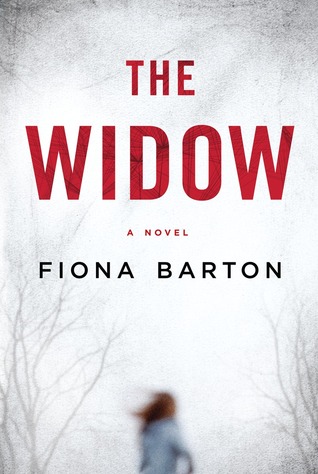
The Widow Book Review

There are plenty of books that utilize multiple narrators. This device helps the book to be more balanced, in terms of perspectives. This is especially useful in both the suspense and mystery genres. Sometimes, however, this can be misused, as in supporting characters can be given too much attention, or the main character is not given enough. The Widow by Fiona Barton falls into the second category.

The Widow is about Jean Taylor – a woman, who for many years, stands by her husband when he is suspected of kidnapping a 2-year-old girl named Bella. After his death, Jean now has the chance to speak out on what actually happened, but after living with that man for many years, does she herself really know the truth? 

The book has four main narrators: Jean; Detective Bob Sparkes, the man who tries to hunt down the kidnapper; Kate Waters, the reporter; and Dawn Elliott, Bella’s mother. This makes sense because it becomes clear during the course of the novel that Jean is unreliable due to how her husband essentially manipulates her. However, since the title is The Widow, I expected to hear more from Jean’s perspective. Instead, the book spends a good chunk of the time focusing on Detective Sparkes’ investigation and Waters’ remarks on journalism. It’s like an adaptation of Cinderella that focuses mostly on the mice (oh wait). What I am trying to say is that if you are going to name the book The Widow, most of the focus should be on that titular character.

At the same time, I thought the investigation and the remarks on journalism were kind of interesting. This is especially true when Detective Sparkes and one of his assistants try to lure Glen – Jean’s husband – into confessing the kidnapping by pretending to be someone else on an online chat. It is also clear that Barton knew a lot about the ins and outs of journalism, especially how reporters would continuously ring out information about a story until it ran dry. It turns out that Barton herself was “a journalist – senior writer at the Daily Mail, news editor at the Daily Telegraph, and chief reporter at The Mail on Sunday” (https://www.goodreads.com/book/show/25734248-the-widow). 

On the other hand, The Widow uses the multiple-narrator device more effectively than Secrets of Eden by Chris Bohjalian. In the latter, each of the four narrators are given equal time to tell their stories. This did not work as intended because as many reviewers have pointed out, one of the characters was incredibly pointless to the overall plot; therefore, her role should have been reduced. In the former, the narrators do not share equal pages. In fact, Dawn as a narrator only shows up in the second half of the book. This particular use of the tactic works, for there are certain characters that I am pretty sure that readers do not want to know their psyche like Glen. Luckily, he is only given one chapter to tell his side of the story. And that was fine by me. 

Since the book itself is marketed as a suspense novel, it logically should have some twists and turns in it. However, it regrettably does not. Along with not having enough focus on Jean, this is a major disappointment. I figured out who the kidnapper was about a quarter into the book, and I spent the rest of it feeling frustrated when the characters get so close to confirming that, but only for it to blow up in their faces. Going back to Secrets of Eden, that novel also deals with the aftermath of a crime and how the other characters react to it, yet it makes you believe that a certain character committed it, but it turns out that it was another. Maybe if The Widow did something similar, it would have put me on my toes a bit better.

Listening to the audiobook enhances the multiple-narrator aspect of the novel. Jean is voiced by Hannah Curtis, who is best known in tv shows like ER. Curtis gives Jean a mousy, but sophisticated kind of delivery, which makes Jean sound older than she actually is. This works because of the amount of stress that Jean probably went through while defending and suspecting her husband at the same time. Mandy Williams voices Waters with a confident, but accessible air to her. However, Williams sounds very similar to Jayne Entwistle – an award-winning audiobook narrator (and not related to John Entwistle) who voices Dawn Elliott. This made me a little confused on who was talking at times. Steve West plays Glen with an eeriness about him. West is perfect for this role since he played the killer doll in the movie Seed of Chucky. All of the narrators did a great job, but the one that stood out to me the most was Nicholas Guy Smith, who voices Detective Sparkes. Smith – another award-winning audiobook narrator who voiced one of my favorite books of all time A Gentleman in Moscow – performs as Sparkes with determination and frustration. He also takes it a notch higher by voicing extremely minor characters like the delivery driver with spinal issues with such distinction. 

All in all, The Widow is a fine book. It uses the multiple-narrator trope in a fairly cohesive way. A more accurate title could have been The Confession or The Kidnapping due to the amount of time spent on Sparkes and Waters. For those who have read Gone Girl or The Girl on the Train, you will be disappointed, but I will not discourage people from reading it. It contains some interesting aspects like the investigation and the double-edge sword commentary on journalism. Here is my main advice for those who are interested: lower your expectations.

Subscribe below to get notified when I post new updates. Also feel free to email me here for any review suggestions, ideas, or new titles!

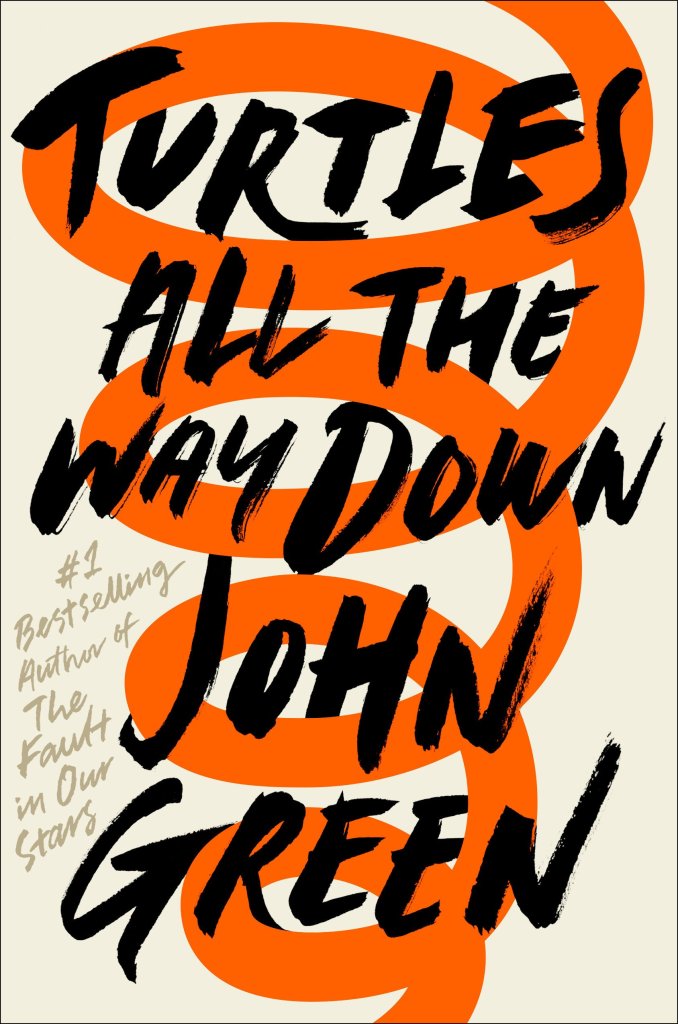
Book Reviews From the Vault: Turtles All the Way Down

Although I am no longer a teenager, I highly enjoyed John Green’s latest novel Turtles All the Way Down. Ever since I read that book, I have been continuously thinking about the ways that we can be more empathetic towards people with mental illness. Check out this review to see why.

Since I am a person who reads everything, it makes sense that I review young adult (YA) novels even though I am past my teenage years. What a better way to start off this is by reviewing a book by one of the most influential YA authors today: John Green. Green has written numerous well-loved novels like The Fault in Our Stars, and his debut novel Looking for Alaska was even on the top 100 best-loved novels on The Great American Read. He has even created many online video projects with his brother Hank like the Vlogbrothers. Even though I do not know a whole lot about him outside of those facts, Green has come off as a guy who is intelligent, caring, and accessible. Those traits are definitely on display with his latest book and today’s review – Turtles All the Way Down.

The novel itself has two plots: one external and one internal. The external plot revolves around 16-year old high school student Aza Holms and her Star Wars-obsessed best friend Daisy as they investigate the mysterious disappearance of fugitive billionaire Russell Pickett. The internal plot explores how Aza deals with her ever-tightening thought spirals related to anxiety and Obsessive-Compulsive Disorder (OCD).

I will say this right now: I found the internal plot a lot more interesting than the external one. Mysterious disappearances are found in a variety of books, yet mental illness as the main subject is not-so numerous. On the other hand, the latter allows the former to unravel even more, especially when Aza and Daisy meet Davis – Russell Pickett’s eldest son and when Aza develops feelings for him.

Mental illness is never an easy subject to talk about for various reasons, yet Green demonstrates the ability to describe the indescribable. For example, as Aza makes out with Davis for the first time, she doubts if she wants to let him kiss her because of her fear of getting bacteria that can multiple and live inside her forever and possibly turning into C. diff although she makes it clear that she likes him kissing her. Throughout the novel, Aza also opens up her never-fully-healed callus on her finger in an effort to drain out what she believes to be pathogens. According to her, it sometimes works.

At the same time, Green acknowledges the frustrations of the people around Aza while dealing with her condition. Davis wants to get close to her, but Aza’s fears of microbials get in the way even though both clearly care about each other. Additionally, Daisy expresses her frustrations with Aza in her Star Wars fan fiction and even calls out Aza for being self-centered and never asking about her life and family. While some people like myself wanted to punch Daisy in the face, it is understandable that this was her way of coping with Aza’s increasingly erratic behavior since she understood very little of what was actually going on. It helps that Daisy tries to be more empathetic about Aza’s situation towards the end of the novel despite her slightly imperfect ways.

Green is capable of depicting mental illness in a non-sugar-coated and balanced way because he himself has OCD. I found this out while doing research for this review, and it makes Aza’s internal struggles all the more believable. This is especially true when Aza builds up the courage to explain what her greatest fear is to Daisy while in a dark tunnel. Daisy expresses fear of being in a creepy and dim tunnel, yet Aza is not creeped out by that, for she has a flashlight. That flashlight represents control over her circumstances. Without it, her fear of not having control takes over. I thought this was the most moving part of the entire novel. What also needs to be acknowledged is that Green never says anxiety and OCD in the book. Some people have complained about that, yet I do not find this as a problem at all. In fact, showing what Aza goes through daily allows readers to develop empathy for her rather than telling them outright, which may allow them to develop pre-conceived notions based on those labels.

As for MY complaints, I felt that the story ended a few times like Lord of the Rings: Return of the King did. There were plenty of moments that when they occurred, it made want to say, “And roll credits”. However, this is minor to the overall story. Other reviewers complained of how pretentious the teenagers, especially Aza and Davis, were. I can see where they are coming from, particularly when they start reciting poetry that I was not familiar with. However, I was not bothered by that overall. Both characters are intelligent and demonstrate unique perspectives on life given their circumstances; Green finds ways to express those thoughts according to those situations.

I listened to the audiobook version, which is narrated by Kate Rudd. Rudd has also recorded The Fault in Our Stars audiobook, so this is not her first rodeo narrating a John Green book. She does a great job at voicing various characters like the outspoken Daisy and the quiet Aza as well as to the thoughts inside Aza’s head, which are portrayed as sterner than what Aza usually is.

I would definitely recommend Turtles All the Way Down to anybody regardless of age, especially to teenagers who may or may not struggle along the same lines as Aza. In fact, this book will be made into a movie sometime very soon! Although John Green is known for YA novels, anybody can learn about and maybe even empathize with what goes on with people who have mental illness. For those people, there are days that might be good and days that might not be so good. But in the end as Green explains, life goes on.

Subscribe below to get notified when I post new updates. Also feel free to email me here for any review suggestions, ideas, or new titles!
The Island of Sea Women Book Review

In my review of The Tea Girl of Hummingbird Lane by Lisa See, I mentioned the concept of how fiction can help connect readers to the facts. For a brief bit, I also discussed that if the author focuses on the facts too much, then it would start sounding like a Master’s Thesis. Not only would this alienate readers, but it would also cause them to not bond with the story as much. While I liked reading See’s follow-up The Island of Sea Women, I could not get into the story as much as I should have due to the over emphasis on facts.

The Island of Sea Women is about the friendship between Young-sook, who is from a long line of haenyeo (female divers), and Mi-ja, who is the daughter of a wealthy Japanese collaborator, on the Korean island of Jeju – a place where the women are the primary breadwinners, and the men stay at home. Despite their differences, they become best friends as they dive together as part of their village’s haenyeo collective. Their friendship is tested throughout many decades starting in the Japanese colonialism period in the 1930s and 1940s up until 2008. Forces outside of their control ultimately push their friendship beyond the breaking point, and it is up to one of them to forgive the other.

Don’t get me the wrong. The information that I learned while reading this book was very fascinating. For example, it was interesting to learn about the working habits of the haenyeo. They would continue to work even when they are pregnant. In addition, I liked how See explained the various historical events that impacted Korea and tied them into the story.

However, I could not emotionally connect to the story for the first third of the book. See crams a lot of information about the haenyeo, what was occurring on Jeju Island in the 1930s and 1940s, and the shamanistic rituals during those passages. While these facts were interesting, they barred me from being fully invested in the main characters until they received marriage proposals. This was disappointing because See did such a fabulous job of balancing fact and fiction in her previous book The Tea Girl of Hummingbird Lane that it made me wonder why she was not able to strike that lightening twice.

Luckily, there was one thing that made an impact on me, and it was the line, “To understand is to forgive”.

During one crucial part of the novel, a massacre occurs, and some of Young-sook’s family members lose their lives. She blames Mi-ja for not doing anything to save them. It takes Young-sook decades to finally look at Mi-ja’s perspective on why she was not able to save them, and when she does, she is finally able to forgive her.

I listened to the audiobook, and Jennifer Lim – an actress who has appeared in the Broadway show Chinglish and in movies like 27 Dresses – narrates it. As far as I remember, Lim does a good job, but it was not really memorable. The only thing that I recall from her vocal delivery was how she makes most of the women from Young-sook and Mi-ja’s diving collective sound like they were Asian versions of Phyllis Diller. This is such a shame since Lim also narrated Little Fires Everywhere – a book that I enjoyed very much in the past mostly because of her vocal performance.

All in all, The Island of Sea Women by Lisa See is a good book. The story was compelling when I finally got into it after the first third of the novel, yet I learned a lot on what occurred on Jeju Island from the 1930s to 2008. I sadly did not really connect with the story because See seems to consume herself with facts so much that it got in the way of the plot itself. I would still recommend this book to people, especially to those who are interested in historical fiction; female friendships; and reading stories about strong, confident women. If one has read her other books, I would also recommend to lower their expectations on this one.

Subscribe below to get notified when I post new updates. Also feel free to email me here for any review suggestions, ideas, or new titles!

Book Reviews From the Vault: Glass Houses

I usually do not read a lot of mysteries, but when I first started reading the Chief Inspector Armand Gamache series by Louise Penny, it got me hooked! Find out why with my review of the 13th book in the series Glass Houses!

With a lot of book series, there is a risk of quality decline with each subsequent book. However, according to a lot of readers including the ladies in my book group, the Chief Inspector Armand Gamache series by Louise Penny gets better and better with each installment. Today, I will review the 13th book in that series – Glass Houses – and test that theory as much as I can.

Now a reader might ask, “Who is this Chief Inspector Armand Gamache?” Well reader, Chief Inspector Armand Gamache is a part of the Sûreté du Québec, a provincial police force in Quebec, and he investigates a lot of murders that coincidently happen at or near Three Pines – a village where he and his wife reside. By the time Glass Houses rolls around, Gamache is now the Chief Superintendent at the Sûreté Academy.

Also, a reader might inquire, “Do I need to read all the other books to understand what is going on?” That answer, my friend, is no. According to the author herself, it is not essential as all of them are stand-alone books, but if you want to know more about the main characters, it is vital to read the other installments to understand how those people have evolved. For more information, Penny has a FAQ page on her website: https://www.louisepenny.com/faqs.htm

Now to the actual plot: the situation that Gamache finds himself in for Glass Houses is that a cobrador del frac has appeared on the Village Green in Three Pines on All Saints Day. It stands there on a consistent basis, and it makes everybody uneasy. Tensions rise when a body is discovered in the church basement. Flash forward to July when Gamache takes the stand to share details about the murder, and he reveals that it was far more complicated than anybody expected.

The only other book that I have read in the series was the previous book, A Great Reckoning. To me, A Great Reckoning had more compelling new characters like tattooed and pierced Amelia than Glass Houses, but the latter expanded on the recurring characters in ways readers will not expect. For example, readers will get a bit of a back story on Ruth – the profane, crabby, old poet – and why she initially came to Three Pines. In addition, there is a subplot involving fentanyl that is a bit boring to me, but all I can say to anyone who has not read Glass Houses yet is that it will reveal how far Gamache is willing to go in order to serve justice.

In terms of structure, I would have to go with A Great Reckoning over Glass Houses. The former has the beginning-middle-end structure in present day, which makes it pretty consistent. In contrast, the latter switches from the present aka the trial to the past almost constantly. Many people have found this difficult to keep track of. Even a lady from the book club stated that she barely knew if a part was in the present or in the past until Penny mentioned the weather.

Finally, any mystery should keep readers on their toes. One of the main aspects that I noticed about A Great Reckoning was that it contained very loud hints, as in hints that are not all that subtle and that may ruin the excitement and enjoyment. For instance, those loud hints in A Great Reckoning made me figure out who the killer was very early in the book. Luckily, these kinds of hints are almost non-existent in Glass Houses, as in I had an idea who might have been the killer, but I was right and wrong at the same time. Finding out who the killer was had kept me on my toes at times, which is what a mystery should do. All in all, Glass Houses is an improvement over A Great Reckoning to a certain degree.

Additionally, I listened to the Glass Houses audiobook, and I thought that Robert Bathurst aka Sir Anthony Strallan in “Downton Abbey” did a good job in bringing each of the characters to life, even when the vocal differences between each character were only subtle. He also recorded the audiobook for the previous book too, and I enjoyed that one for the same reasons.

Overall, I would recommend Glass Houses as well as any other book in the Chief Inspector Armand Gamache series, especially to those who love mysteries and character-based novels. It does not have much emphasis on the plots themselves, but the author did that on purpose to focus more on the characters. I want to see how the characters deal with the future crimes.

Subscribe below to get notified when I post new updates. Also feel free to email me here for any review suggestions, ideas, or new titles!
The Four Sworn: Spring Equinox Book Review

Full disclosure: I was guided to this particular title based on the recommendation of a good friend of mine in exchange for an honest review.

Books have many focuses or stress different elements. Some are plot-driven; some are atmosphere motivated, and others emphasize characters. When a novel does this, the other elements can sometimes fall to the wayside. However, a reader might forgive this if the elements in focus are developed well. The Four Sworn: Spring Equinox by Lenore Sagaskie clearly stresses characters and the environment, which are well executed, yet the plot gets lost along the way.

The Four Sworn: Spring Equinox is the first novel in the Four Sworn series, which follows Abby – a metalsmith; Sara – a jeweler who is Abby’s best friend; William – an English watercolor painter, whose work can predict catastrophic events; and Joe – a Native American art teacher who works with clay and eventually starts dating Sara. One day, an incident happens when all four people are struck by strange forces with powers associated with earth, water, air, and fire. Meanwhile, Thaddeus – the brother of the Queen of Feyland, the land of the fairies – wants to combine both worlds and be the ruler. The Four Sworn eventually realize that they have to fulfill their destiny and work together to defeat Thaddeus and prevent fairy and human worlds from tearing each other apart.

All in all, the story is essentially Power Rangers, Avatar: The Last Airbender, and the Chosen One trope with fairies and nymphs thrown in. The Avatar elements are obvious, but it reminds me of Power Rangers the most because these ordinary people are given extraordinary powers to defeat various villains and to protect various worlds. The main difference between this book and Power Rangers is that the Four Sworn receive powers based on what they do for a living, not on who they are.

As I mentioned before, the plot falls to the wayside in exchange for placing importance on the characters and the environment. This is especially true in the beginning, where the book establishes each main person. There is so much of this that I had to look back and find where they got their superpowers. In addition, I felt that the pacing was incredibly slow right until the third act due to nothing really happening that could move the plot forward. Yes, there is a scene, in which Sara first encounters Thaddeus in her front yard, which got me intrigued. However, the novel also balances that out with slightly unnecessary backstory. For example, does the book really need an entire chapter devoted to Joe spending Christmas with his family? It was nice in all, but it contributed very little to the overall story. The plot could have been beefed up with more action to move the story along quicker.

Luckily, I am willing to put my grievances about the thin plot aside because of how developed each of the characters and the environment are. Sagaskie gives so much description to these people that I could vividly imagine all of them, quirks and all. The most developed of the main four is easily Abby, who struggles with controlling her fire power so much that it affects her relationships with the others as well as with her husband Dan. Like the characters, the environment is also well created. I could feel the water or what is like to be thrown through the air and land alongside a tree that the author describes during one of the major battles in the third act.

For the most part, The Four Sworn: Spring Equinox by Lenore Sagaskie is a well written first novel-in-a-series book. There is not a whole lot of action before the third act, which can be a slog to some readers, especially if they are reading it before going to bed. On the other hand, the main characters and the environment are so fully realized that I am willing to put my complaints aside. I recommend this to readers interested in Chosen One stories, fantasy, and overall character-driven books. This will not be the last time one will see the Four Sworn; I guarantee it.

Subscribe below to get notified when I post new updates. Also feel free to email me here for any review suggestions, ideas, or new titles!
Book Reviews From the Vault: Always Look on the Bright Side of Life, A Sortabiography

There were a multitude of reasons why I started reviewing books and sharing them with others. One of them was this particular author Eric Idle. He has a reader’s blog on his website, and he would promote it on Twitter. I thought that this was so interesting that I wanted to do it myself. So thank you Eric! Now please enjoy my review of Always Look on the Bright Side of Life, A Sortabiography! ( I did my best not to let my inner fangirl takeover, really I did!)

For nearly six months, I anxiously waited for Eric Idle’s new book Always Look on the Bright Side of Life, A Sortabiography as I am a huge Monty Python fan. When it got to my door in October, I picked it up and started reading it immediately. Was it worth the wait? Absolutely! I completed the book in three days! Well, there are other reasons as to why I enjoyed it, in which I will explain here.

The book made me laugh and nearly cry as Idle tells his story and how he managed to persevere by always looking the bright side of life. He uses his cheeky wit to tell various stories about his childhood in an austere orphanage/boarding school; rise to fame as a member of Monty Python; friendships with various celebrities like George Harrison and Robin Williams (Warning: expect a lot of name dropping!); and personal life, especially how he met his second and current wife – former model Tania Kosevich. It is with the latter two that I was nearly brought to tears because of how sincere and kind he is to the people he is/was closest with.

If there was one thing to complain about, it would have to be that I wish he would have talked more about the origins of the sketches he wrote for Monty Python even though he did reveal the origins to the “Nudge, Nudge” sketch. However, this is not a big deal because this book is about HIS LIFE, not his skits although they do intertwine at times. Besides, I can either read about them in one of the many books about Monty Python along with this title or ask him on Twitter; he is really good with responding back.

Overall, I enjoyed this book from start to finish, and I would recommend it to all Monty Python fans as well as to anyone looking for a humorous book to read! And yes, it will make you hum and whistle “Always Look on the Bright Side of Life”!

Subscribe below to get notified when I post new updates. Also feel free to email me here for any review suggestions, ideas, or new titles!