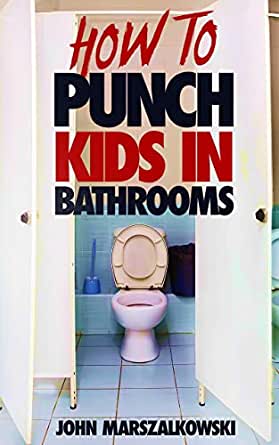
I always look forward to reading and reviewing informal essays by John Marszalkowski, and How to Punch Kids in Bathrooms (no child was harmed in the making of that book) is no different.
Full disclosure: I was given a free PDF copy of this book in exchange for an honest review.
In his latest book How to Punch Kids in Bathrooms, John Marszalkowski recounts various stories in the informal essay format, while keeping it at 32 pages and having no regrets about it. According to him, 32 is the minimum number of pages for a book for some printers. Personally, I thought that would be a little bit more. Nevertheless, in honor of how short this collection of informal essays is, I will try to be as brief as possible with this review.
How to Punch Kids in Bathrooms is essentially filler for his official second book Uncredible Thoughts: Essays, Spiels, and Poppycock, but I don’t mean it in a bad way. For example, while the book didn’t make me laugh out loud, it made me smile, and that is just as important. Like his previous collection of essays Buy My Book: Not Because You Should, But I’d Like Some Money, Marszalkowski still talks about whatever is on his mind even though he is not credible on every topic. The main difference between the two is that this book feels more cohesive and self-assured. He mainly talks about his childhood (and yes, as a kid, he did get punched in the bathroom) as well as his family, especially how he will do anything for his wife. That latter part made me go, “Awwwwwwww”.
He is also as silly as ever, especially with the random quotes inserted between the chapters (my favorite is the one from Harold Ramis).
In other words, How to Punch Kids in Bathrooms by John Marszalkowski is a good organized chaos of a filler, and I would recommend it to readers who are interested in something completely different as well as to fans looking for someone else while waiting for Uncredible Thoughts: Essays, Spiels, and Poppycock.
Subscribe below to get notified when I post new updates. Also feel free to email me here for any review suggestions, ideas, or new titles!
When the name Linda Fairstein is mentioned, what things come to mind? For some, she was the renowned prosecutor and head of the Manhattan Sex Crimes Unit who is “credited with helping shift the conversation around sexual violence in the United States” as well as a best-selling author (https://www.vox.com/the-highlight/2019/6/27/18715785/linda-fairstein-central-park-five-when-they-see-us-netflix). To others however, she is a villain, who oversaw the prosecution of Raymond Santana, Kevin Richardson, Antron McCray, Yusef Salaam, and Korey Wise in the Central Park Jogger case. Ever since the series When They See Us aired, people “cancelled” Linda Fairstein due to her involvement in the case and how she was portrayed in the show. In fact, her publishing company even dropped her soon after the series came on. From what I have read about Fairstein from various accounts, it seems like she was devoted to catching assaulters, but the main goal for her was to achieve fame as opposed to giving justice to the victims. This is my two cents. I am here to review books, and it just so happened that I recently read the first book in Fairstein’s Alexandra Cooper series called Final Jeopardy without knowing anything about the author prior. Is it possible to separate the art from the artist? Let’s find out.
In Final Jeopardy, Alexandra Cooper – Manhattan’s top sex-crimes prosecutor – wakes up one morning to discover a headline annoucing her own murder. However, the real victim was actress Isabella Lascar, who sought refuge at Alex’s haven in Martha’s Vineyard. She has to find out if Isabella was being stalked, or if she was mistaken for her. She is in danger, and she has to get to the killer before they get to her.
There were some aspects that I liked about the novel. First, I liked how balanced Alexandra Cooper is. She can be tough, but she expresses empathy towards various victims and a willingness to put the perpetrator behind bars. Also, she loves ballet and shopping. This proves that a woman does not have to be an ice queen in order to be a prosecutor. Second, her friendship with fellow colleague Mike Chapman was fun to read, especially how both troll each other and race to answer the Final Jeopardy question (yes, this is what the title is partially referring to). Third, I enjoyed reading how Alex handled the cases, especially the trial, in which the judge blames a mentally handicapped woman for being sexually assaulted because she had been before. It added a lot of realism to the profession.
Meanwhile, the plot seemed promising when Alex read the headline announcing her own death, but my attention waned once she found out who was actually killed. It did not help that the book dragged on because of how dry it was. In fact, even though I praised the sections, in which Alex handles other cases, those were simply filler. Ironically, I enjoyed that filler more than the main plot itself. There were parts that were somewhat interesting like finding out who Isabella’s main companion was and the climax, but it took a long time to get to those. I am surprised that I was able to get through the entire book.
Now, I would like to address whether or not the book actually exhibits racist aspects and to what extent as some people have pointed out. I had to raise an eyebrow during the part, in which one victim – a black girl named Shaniqua Simmons refuses to press charges against her boyfriend Nelson since she was the only victim of color and the only one to not to do so. Also, her voicemail plays “Sexual Healing” by Marvin Gaye. However, that was a relatively minor scene. Meanwhile, a reporter named Ellen Goldman interviews Alex earlier on in the novel, and then, she maintains a constant presence in the latter’s life. Initially, Ellen reveals that she is a sabra (a Jewish person born in Israel) with an Israeli mother and an American father. It is later revealed that Ellen used to fight for the Israeli Army. SPOILERS: she was the one who killed Isabella. However, when Alex learns about erotomania, she quickly identifies it with Ellen, whom she notes that other than that condition, Ellen is otherwise a normal functioning person.
All in all, Final Jeopardy by Linda Fairstein was pretty boring and dry. Yes, it contained realistic characters and situations, yet it was so drawn out that I wonder why I didn’t stop reading it right then and there. If readers like legal thrillers and are willing to look past the controversy surrounding the author, go ahead and read it. Outside of those aspects, I am not sure if I would recommend it to anybody else or read any more in the series not because of the cancel culture surrounding Fairstein, but because the novel was so tedious that I am afraid that other books will be just like it.
Subscribe below to get notified when I post new updates. Also feel free to email me here for any review suggestions, ideas, or new titles!
Last year, I started knitting, and Knitting for the First Time by the Vanessa-Ann Collection was one of the first resources that I looked to for understanding the concept. How effective was it? Find out here!
Lately, I have been taking up knitting as part of a club that I facilitate at a public library. As a result, I have been immersing myself in that world with videos, help from my co-workers, and especially, books. One of those books that I read in order to understand more about knitting is the 2003 book Knitting for the First Time by the Vanessa-Ann Collection. It details not only the knitting basics, but it also provides some projects for beginners to do. While this book does a great job at telling readers about knitting, it falls short on showing them how it is done.
I’ll start off by listing the aspects that the book successfully accomplishes. The Vanessa-Ann Collection establishes the tone of the book by comparing the notion of learning how to knit with learning how to speak a new language. In other words, the book is essentially a language dictionary/travel guide. This makes a lot of sense because when people do anything outside of their comfort zone, it feels like they are dealing with a new language, and having a guide helps them to navigate around the “shock”. Another aspect that works is its first section, which talks about knitting basics. The Vanessa-Ann Collection pens this section with a sense that it clearly knows what it is talking about without condescending the audience. This effectively aids novices like me to understand the fundamentals. The book also contains plenty of photographs of various knitting related-items. Within these photos, it clearly labels what is what and the differences among them. For instance, when it talks about yarn textures, there are clear labels underneath each texture and descriptions left of the picture. This makes it easier for beginners to refer to the visual while reading the text. Having a language-metaphor to the book and a great first section is basically the equivalent to learning how to read a foreign language.
However, it does not live up to the expectations when showing readers how to knit, or for the metaphor’s sake, speaking that language. For example, no matter how many times I read how to actually knit, the pictures that show each step in the knitting process did not help me at all. I am a visual and a hands-on learner, so it should have aided me, yet it did not. Nonetheless, I am not blaming the Vanessa-Ann Collection for this. It is hard to show activities that require lots of movement only in photos. That is why I think it is better to learn how to knit through YouTube or from another person. In addition, I looked at the projects that are found in this book, and not only was I confused on how they were done, but I was also confused on what was needed. For instance, when it comes to knitting a dishcloth, it states that the yarn should be “100% mercerized cotton, 2 oz: red, 1 ball; red/black variegated, 1 ball” (p. 40). I kept asking myself, “Do they mean use two balls of yarn? If so, why not make them with the same color?”
It almost feels like the reader needs some experience knitting before really tackling the projects mentioned in the book. Overall, it talks the talk, but I had a hard time understanding its walk.
To summarize, Knitting for the First Time is great for studying the tools and terminology needed for knitting, but when it comes to showing how to knit, it fails. The pictures were efficiently used for the tools, but not for the knitting techniques. Not only would I recommend this book for advanced beginners, but I would also recommend the newcomers to start learning through either YouTube, or another experienced knitter in order to save them from massive headaches. With any new language, one needs to learn how to communicate it, both in written form and orally. This book can help novices to read the knitting language, not on how to speak it.
Subscribe below to get notified when I post new updates. Also feel free to email me here for any review suggestions, ideas, or new titles!
Full disclosure: The author of the book that I am about to review is a patron at a library that I work at. All of the opinions stated in this review are solely mine.
When I had reviewed Richville: Another Tale of Travail and Treachery by Robert C. Jones, I encountered a unique problem: I found that no other person had reviewed it online. Guess what? Jones’s follow-up Richville: A Chance for Redemption in a Town Without Pity has the same issue. In other words, get ready for the very first review of this once-again-Hallmark-movie-for-older-people book. It was not as effective as the previous one.
Richville: A Chance for Redemption in a Town Without Pity brings readers back to the town of you guessed it: Richville and all of its colorful characters. However, the town has hit a low point. Trust among the citizens has evaporated after a number of them were involved at a gathering in a historic home to find a valuable teapot and coin. It also does not help that the Reign brothers – Huey, Dewey, and Louie – have constructed a slaughterhouse through corrupt methods. These cartoon villains plan on taking control of the whole town and eschewing tradition (*gasp). Will there be redemption?
Much like the last book, this one also tends to mainly focus on the characters and how they deal with the situations at hand. Unlike the last one however, I didn’t connect to the characters as much as I should have. The ones that I grabbed onto in the previous novel are not in it for very long with the exception of the Thank Goodness I’m Alive and Kicking Club. It has new characters like the crew at Cooky’s, including Big Tina, as well as Mandy Menage – a hardcore feminist fashionista and president of the Effervescent Rose Society. I didn’t care much for Big Tina since her whole spiel is being floozy with truckers. Mandy was someone that I thought I was going to not like at first since she acts all domineering and thinking she is better than everyone else as she tries to spruce up the town. However, she has a change of heart after someone broke into her home and physically assaulted her. Even though it was a bit contrived, she realizes that she is still that small-town girl and is willing to appreciate the do-gooder spirit of Richville.
That point that I made in the review for the 2nd Richville book still stands. It still contains melodrama, favors idealism, and has a rose-tinted narrative. In addition, most of the do-gooders aka heroes are over the age of 50, while the villains are younger. However, I did not connect as strongly as I did with the previous novel since not much happens. To be fair, not much occurred in the last book, but at least it had a substantial plot. Here, the plot is mainly how the citizens deal with mistrust and greed. Moreover, most of the main characters don’t really do anything besides mope and whine. That is why for a while I struggled to figure out what the plot really was. I wanted to see how the events of the preceding book affected everyone, yet it was far more passive than I expected.
Overall, Richville: A Chance for Redemption in a Town Without Pity by Robert C. Jones was okay. It was kind of a letdown compared to the earlier book simply because not much happened. However, I would recommend itto older people, especially if they have read the last two books. I would still not discourage young readers from taking a look at it. In the past, I mentioned that the Richville series would be a trilogy, but I just got word from the author himself that there will be a fourth book. I look forward to it.
Subscribe below to get notified when I post new updates. Also feel free to email me here for any review suggestions, ideas, or new titles!
Last year, Oprah revealed the list of the top 20 greatest ever romance novels according to Goodreads Reviews, and The Rosie Project by Graeme Simsion was on it. At first, I was a little shocked, but after reading it, I had to agree.
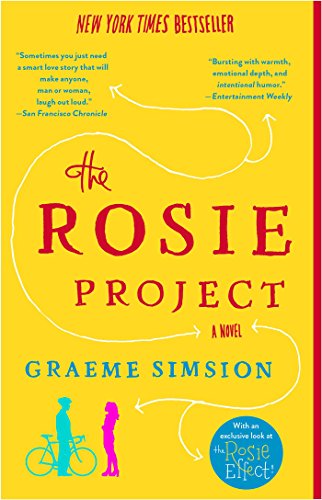
Lately, I have been reading a lot of books about curmudgeons and how they slowly let other people into their lives. I can’t help but read about them. They are so unique and quirky. Don Tillman from The Rosie Project by Graeme Simsion is no different. He is a socially awkward genetics professor who tries to find a wife through a survey called The Wife Project – a 16-page survey to filter out the drinkers, smokers, and late arrivers. Awhile back, Oprah Magazine listed it as one of the top 20 greatest ever romance novels (according to Goodreads Reviews): https://www.oprahmag.com/entertainment/books/g26090153/best-romance-novels-of-all-time/
After reading it, I have to agree as well.
Like A Man Called Oveand Eleanor Oliphant is Completely Fine, The Rosie Project is about a person whose sheltered life gets interrupted by the unlikeliest of people. In this case, Don Tillman’s life gets turned upside down by a psychology student named Rosie. Even though he immediately declares that Rosie is totally unsuitable for the Wife Project, he finds himself infatuated by her and is even willing to help her find her biological father. Instinct and reason are at constant odds until he eventually realizes that Rosie has won his heart.
I found myself laughing at Don throughout the book. Although he is very intelligent and organized, it was his total ineptness in social situations that made me chuckle. I also liked how Don didn’t care about what others thought of him (until Rosie came into his life) since he basically made himself to be the class clown, and this is coming from a person who exhibited some signs of autism.
Right now I am sure that someone is saying, “Emily, since you say that you yourself exhibited some signs of autism, what do you think of how the author portrays Don and his Asperger’s?” Well reader, I go back and forth on that depiction. On one hand, I enjoyed how Don talks about the difficult notion of fitting in and him realizing that he may have Asperger’s, yet he doesn’t get a formal diagnosis because he is doing well in life as is. I also loved his limited self-awareness, especially how he brings up the idea that humans can’t see “what is close to them and obvious to others”, and but, it is towards the end that he realizes that Rosie always had feelings for him.
On the other hand, there was an instance, in which Don proclaims that he does not feel love, which sort of bothered me. As some autistic people will tell you, our feelings might be intense, but there might not be a way to express them, which leads to avoiding those kinds of emotions. At the same time, I am not going to chastise Simsion for inserting a stereotypical autistic trait. In fact, in an interview with Cathy Lamb in 2014, he mentioned that he based Don on people that he met while working in IT and in academia: https://cathylamb.org/2014/01/author-interview-graeme-simsion-the-rosie-project/. Although the author is not autistic himself, he realistically depicts Don as a human, and that is the most important thing that any author can do with their protagonists.
With the story itself, readers have complained on how predictable it is, especially if one watched the romantic comedies that the characters mention during the course of the novel. Personally, I had no problem with that because Don always has struggled to fit it with classmates, colleagues, etc. By having the book go through the various romantic comedy clichés – making over-the-top romantic gestures to someone that they don’t know, the realization that the right person was in front of them the whole time, forcing someone to go to great lengths to prove their love, etc. (https://bestlifeonline.com/romantic-comedy-cliches/), it proves that he can find love like any other romantic comedy protagonist, thus fitting in with those movies.
The only real complaint that I had was with the audiobook narrator Dan O’Grady – Australian actor who has appeared in numerous BBC shows. While O’Grady does a good job with giving Don an intelligent and socially awkward appeal in an approachable way as well as a more brash vocal performance with Gene, Don’s best friend, I found myself confused on which character he was voicing because there was very little distinction among them. I was also annoyed whenever he spoke as Rosie, for he would give her a quieter performance. Even when Rosie was angry at Don for something, O’Grady would still voice her like a mouse. This forced me to adjust my volume several times to understand what she was saying. Overall, the audiobook was solid despite the barely noticeable differences among the various characters and problems associated with voicing the title character.
In whole, The Rosie Project is a lighthearted book that I am sure that everyone will enjoy, and it deserves to be recognized by Oprah as a great romance novel. While there are times that Don can be a Sheldon Copper-like caricature, Simsion makes this up by allowing readers to travel deep inside his mind. I would also recommend readers the book instead the audiobook since one can imagine the various characters’ distinct voices better than Dan O’Grady did. For anyone who has not read the book, here is something you should now: if you meet one autistic person, YOU MET ONE AUTISTIC PERSON. There is no one size fits all. Don is only one person on the spectrum.
Subscribe below to get notified when I post new updates. Also feel free to email me here for any review suggestions, ideas, or new titles!
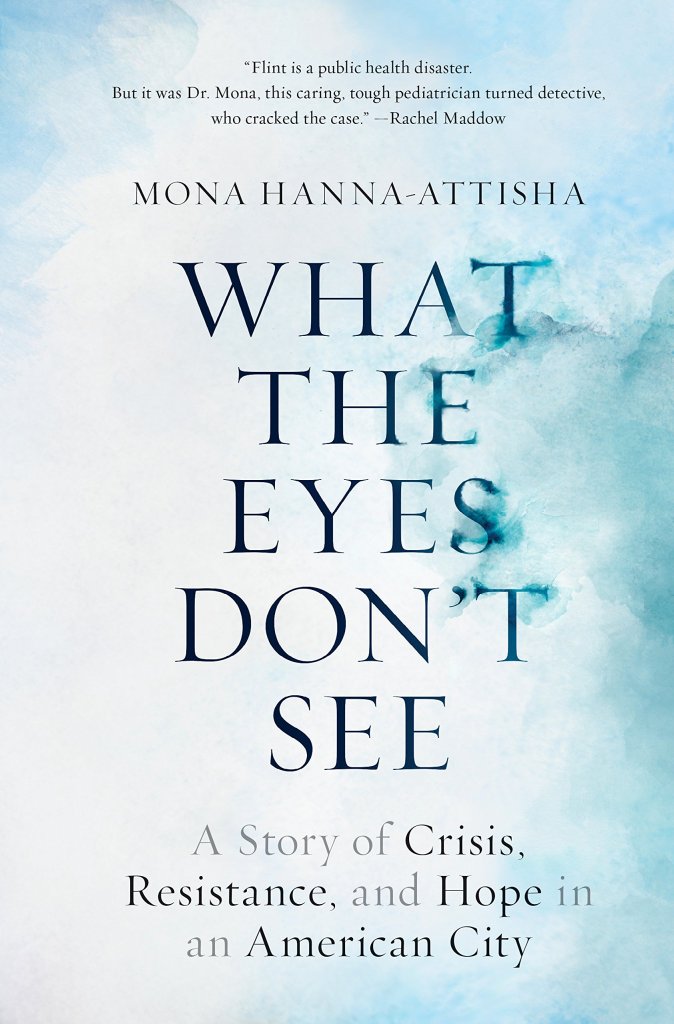
As a Michigander, I read books about and involving my state whatever chance I get. Recently, I came across What the Eyes Don’t See: A Story of Crisis, Resistance, and Hope in an American City by Dr. Mona Hanna-Attisha – a pediatrician at the Hurley Medical Center in Flint, and it opened my eyes up to a load of things. 2015 was the year of the Flint Water Crisis, and it was Hanna-Attisha, who broke the news of the dangerous lead levels in the water and how children were getting exposed to it. The book itself specifically details how she heard about the dangerous lead levels, her research, and despite the backlash from government officials, how she did not back down in order to help the children affected. I remember hearing about it at the time, yet this book allowed me to understand not only the roots of the disaster, but also why the author did it in the first place.
Even though the beginning was filled with statistics that some might find confusing, Dr. Mona Hanna-Attisha uses everyday language to explain the entire situation. This allows for readers like me to get riled up (in a good way) as well as to learn more about it. It certainly angered me to know that General Motors (GM) noticed a high amount of chloride in the water in 2014 and switched to using Lake Huron as a source to prevent corrosion of the metal engine parts (p. 98-99). You would think that some GM officials would let other businesses and facilities know about this, but no, this did not happen. In addition, I learned of the various causes of the crisis itself, and spoilers: it’s more than the lead. Other factors were the structural racism, officials looking the other way, and the fact that Flint was under an emergency manager law. That means the mayor was stripped of real power. In 2011, Governor Rick Snyder appointed an emergency manager (EM) since the city was near bankruptcy; however, they only answered to him. Hanna-Attisha declares that by 2013, “half of all African-American citizens in Michigan were living under an EM, compared with 2 percent of white residents” (p. 28). If lead was found in the waters in a city like Seattle or Des Moines, I can guarantee you that the officials would have fixed the problem pretty quickly.
In addition, Dr. Hanna-Attisha weaves in her own story to explain why she was determined to get the news of the lead levels in the Flint water out there. I thought that these parts were well done as they show readers the real person behind the stand holding a baby bottle full of lead-contaminated water and how her beliefs in helping others developed. Her family escaped Saddam Hussein-dominated Iraq. They wanted to return, but something always prevented them like the increasing atrocities of the regime. Moreover, she was always passionate about helping others like being in the environmental club in high school. And while the author retained the need to help others, the knowledge of government officials not looking out for the greater good made her see the reality, even at a young age. These stories are usually found in chapters separate from the ones, where she is talking about gathering the research. If I had a complaint, it would be that the times in which she talks about her family bog down the pacing a little, but I would like to think that the sum is greater than its parts.
Overall, What the Eyes Don’t See: A Story of Crisis, Resistance, and Hope in an American City by Dr. Mona Hanna-Attisha is a highly inspirational and realistic account of the Flint Water Crisis. Using layman language permitted Dr. Hanna-Attisha to relay information about the catastrophe to readers effectively. Interweaving her own story is a mostly effective choice since it permits the readers to see the real person and why she was devoted to aiding others. I would definitely recommend this book to anybody interested in learning about the Flint Water Crisis. And not only that, I would make it a requirement for any Michigan-based reader to take a look at it because it will always be a part of Michigan history.
Subscribe below to get notified when I post new updates. Also feel free to email me here for any review suggestions, ideas, or new titles!
The Summons is the very first John Grisham book that I have ever read. Despite its flaws, I actually quite liked it and look forward to reading more of his books.
In the past, I have only heard of John Grisham – an author known for his legal thrillers, but never read any of his books. This all changed when a little book called The Summons came my way. It was published back in 2002, but that did not deter me at all. Since Grisham is one of the most popular authors ever, it only made sense to get to know him as a reader by starting off with The Summons, and it made for a good, not great, introduction to his work.
The Summons is about a lawyer named Ray Atlee, who (along with his drug-addict brother Forrest) receives a summon from his father Judge Atlee to return to his childhood home in Clanton, Mississippi to discuss the will. Upon arrival, Ray discovers that not only the judge is dead, but also over $3 million in cash that was not previously accounted for. While Ray tries to figure out where his dad got the money from, another person knows about the cash and makes veiled threats against Ray because of it.
The book definitely grabbed my attention in the beginning with the main characters’ back stories and the moment that Ray discovers the money. However, my interest varied throughout the novel. For example, Ray spends a good portion of the first half gambling the found cash to see if his father managed to get them that way. This would have made sense if he did this for a chapter or two, but no, this gambling goes on for multiple chapters. Luckily, I became intrigued again when Ray starts receiving the photographs indicating that someone else knows about the money too. But it waned again when Ray was meeting with minor characters to talk about where the money really came from. I realized that whenever something happened, it held my interest, yet when there was a lot of talking, it did not hold it as much. And that depended on what they were talking about. I get that there is a lot of legal speak, which I am not fluent in, but whenever the subject turned to the money, I was all ears.
Speaking of the money, readers and reviewers alike have noticed that everything revolved around it in this novel. Characters – major and minor – can’t stop talking about it, but then again, when someone finds a lot of money, it will weigh heavily on their minds for days, weeks, and even months on end. As a result, I didn’t mind that Grisham made the it the most interesting character in the novel with perfectly good stakes around it.
And yes, there is a twist at the end that definitely threw me for a loop. I will not spoil it, but I will say this: the twist makes the story a cautionary tale about how people use money. Too bad the story had to end abruptly after that.
Overall, The Summons is a good, not fantastic, introduction to John Grisham. It contains characters that people can be intrigued by and a really interesting turn at the end. Also, no one can go wrong with finding tons of cash. At the same time, I can’t help but notice the parts that dragged on and how it ended suddenly. I would recommend it to people who are either John Grisham lovers or want to get into his work. Either way, people will like it for the most part.
Subscribe below to get notified when I post new updates. Also feel free to email me here for any review suggestions, ideas, or new titles!
Every now and then, there is a book whose premise is so interesting that I feel the need to read it right there. Sometimes, it is worth it, and other times, it is not. The former was the case for The Paris Architect by Charles Belfoure.
The Paris Architect involves Lucien Bernard, a gentile architect in Nazi-occupied Paris who is given a commission by a wealthy industrialist to design secret hiding spaces for Jewish people. As someone who is initially not empathetic to their plight, he accepts it to get some money and for the challenge. However, when one of the hideouts goes terribly awry, and when the hidings become personal, Lucian can no longer deny the reality of the situation.
One can easily see how intriguing the plot is. It got me emotionally invested, especially during the episodes when the Jewish people used the spaces that Lucien built. I wanted the Gestapo not to find them just so they could be safe. In addition, the novel brings up the moral ambiguities present during wartime. It depicts most French people as mainly apathetic to the Jewish situation. However, this was not because they were anti-Semitic (even though there was prior). This was mainly because they wanted to survive, and if they were caught hiding Jews, they would have been executed by the Gestapo in one way or another.
The main characters (with the exception of Schlegal who is essentially a cartoon villain) are well developed. All of them have reasons for why they do what they do during the Occupation. During the course of the novel, Lucien takes in a 12-year-old Jewish boy named Pierre. Pierre’s family was taken away from him and feels grateful for the architect being a fatherly figure. Since he feels that Lucien went so much out of his way to protect him, Pierre decides that he should do the same when he finds out that someone has been spying on the architect.
Additionally, one could easily tell how much investment the author put into it. Belfoure is an actual architect. This explains how he goes into much detail about the buildings, rooms, and the hideouts. Even though I am not into architecture, it was still fun to learn. Speaking of detail, Belfoure put a lot of historical ones into the story despite some mistakes like using the word dumbass, which was not identified as a word until the late 1950s – nearly two decades after this book’s events. To be fair, this is not as egregious as One Thousand White Women by Jim Fergus. That took place in 1875, but it used words like abort and phrases like coyote ugly.
Despite my praise, I will admit that I did not connect with the story as much as I wanted. This was mostly because of Lucien being a terrible person. He is willing to commit infidelity for a commission and even has a mistress at the beginning of the book. He even assumes at one point that a woman that he is seeing has a lover after she doesn’t immediately come to the door. I somehow could not get past that, which prevented me from being emotionally invested in his transformation.
Once again, I listened to the audiobook, which was narrated by Mark Bramhall. This is not the first time that Bramhall has voiced a book that I have read. He was Reverend Drew in Secrets of Eden, and he was fantastic as he emoted about doubting his faith and being a possible suspect in the case. In The Paris Architect, he delivers a variety of convincing emotions as Lucien, especially when one of the hideouts goes wrong. Bramhall also puts on French and German accents. He does a good job with making the French dialect believable, but his interpretation of the German one was iffy as it sounded pretty French at times. In addition, I could barely tell the difference when he voiced the female characters. I imagine how hard audiobook narration is, especially when one has to voice several characters and perform a variety of accents.
All in all, The Paris Architect by Charles Belfoure is a pretty good read. The premise is interesting enough to get people hooked, yet readers might be turned off by how terrible and indifferent Lucien is at the beginning. I would definitely recommend this novel to anyone interested in World War II-based historical fiction and in architecture. In one way or another, it will keep readers on their toes.
Subscribe below to get notified when I post new updates. Also feel free to email me here for any review suggestions, ideas, or new titles!
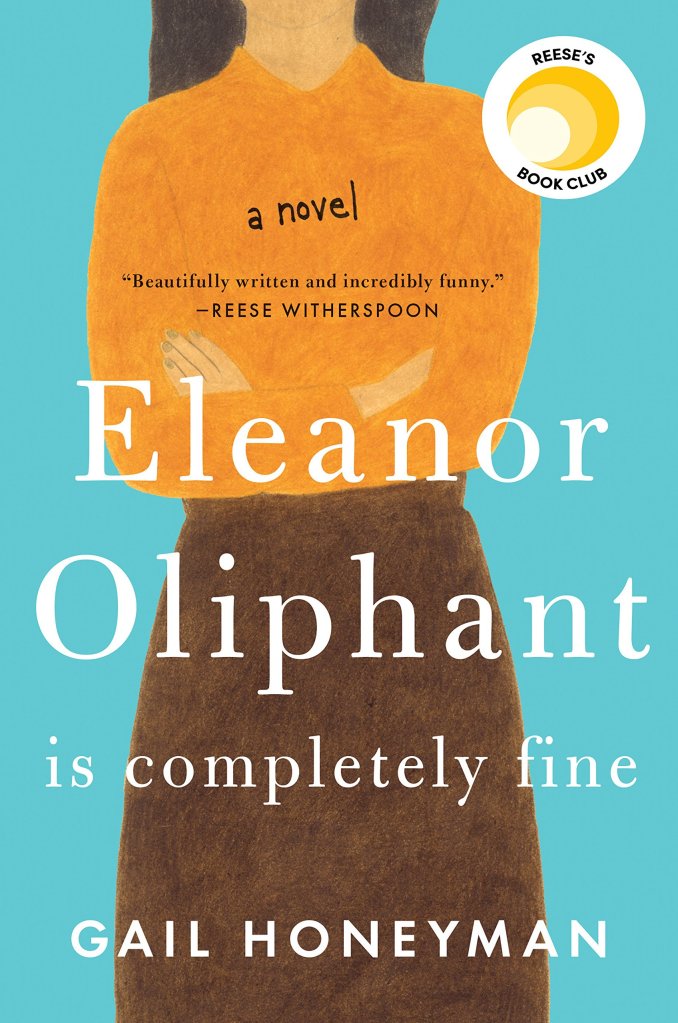
Eleanor Oliphant is Completely Fine by Gail Honeyman is part of a series of curmudgeons that have invaded popular books within the last 15 years. Even though its blue print is from A Man Called Ove, Eleanor Oliphant and the book that she is in stand out in more ways than one.
What do you get when you make the title character from A Man Called Ove a 30-year-old woman living and working in Glasgow? You get Eleanor Oliphant is Completely Fine – the debut novel by Gail Honeyman. These curmudgeons have a lot in common, and readers will remember both for a very long time, but Eleanor Oliphant stands on her own as a character while she learns that life should be better than fine.
The Nicholas Sparks-penned description that I used in my A Man Called Ove review (specifically the “how healing can occur with the unlikeliest of people, in the unlikeliest of ways”) is definitely applicable to Eleanor Oliphant is Completely Fine. Our young female Ove struggles with social skills, avoids social interactions with almost everybody, and says exactly what she is thinking. Outside of work, her life consists of making pasta during the week, reading books, watching TV, “phone chats” with Mummy, and consuming frozen pizza and vodka during the weekend. All that changes when she and her unhygienic IT co-worker Raymond witness an elderly man named Sammy collapse on the sidewalk. The three become friends that rescue each other from their isolated lives, and it is Raymond’s big heart that helps Eleanor to slowly repair her own damaged one.
I will not lie. When I had first read the description to Eleanor Oliphant is Completely Fine, I knew that I had to read it immediately, and I am glad that I did. Honeyman flavors with the story with lots of humor, especially when Eleanor learns to laugh at herself, but I was not expecting the dark elements. Luckily, both are fairly balanced. At the same time, A Man Called Ove also has a great balance of humor and sadness.
Speaking of A Man Called Ove, I am pretty convinced that Honeyman used that novel as a blueprint for Eleanor Oliphant. Both title characters can come off as judgmental, contemplate suicide, are given cats, express stubbornness in everyday situations, and have personal demons due to past events. In addition, both find healing with people that they initially did not like. Ove originally did not like Parvenah and her family because they nearly ran over his mailbox; Eleanor initially dismissed Raymond due to his unkempt appearance.
However, they differ in a number of ways. Where the humor comes from in both stories is different. In A Man Called Ove, the humor mainly comes from the fact that his neighbors need his help every time he tries to kill himself. In Eleanor Oliphant, the humor comes from the situations, in which she tries to figure out what to do from getting the right clothes for a concert to getting her bikini area waxed. With Ove, readers will probably laugh since he is forced out of one state of misery into another state of misery. With Eleanor, readers will probably feel sorry for her, yet they are encouraged to laugh at her as well due to her ignorance. Moreover, while Ove’s personal demons were developed by his experiences with being taken advantaged by various people and the loss of his wife, Eleanor’s personal demons were developed by her abusive mother, her experience with the foster system, and having survivor’s guilt. But the main difference is how they heal. Neighbors constantly need Ove’s help, and begrudgingly, he helps. This eventually allows him to open up about the loss of his wife and let him die in peace. As for Eleanor, Raymond and Sammy invite her to parties, and later on, Raymond convinces her to go see a therapist and gives her a cat to show her that she has a purpose in life outside of vodka and “phone chats” with Mummy.
What truly works in both stories is that their healings are not snap-out mentalities. Both characters are still themselves, yet they are willing to open up to others. This is especially true with Eleanor, who by the end of the novel is more empathetic and willing to mend the past, yet she acknowledges that it is a long road to recovery. With Raymond helping her out, readers might assume that they might fall in love, but that never happens. Thank god! Eleanor constantly asserts that she is fine with nobody else in her life (even though there is a subplot involving her trying to meet her crush – a musician – to help fight off her mother). Having her and Raymond hook up would have reaffirmed the notion that romance always rescues people from self-destruction, which is not always true. With the tools that Raymond, the therapist, and Sammy’s relatives provide, Eleanor learns to save herself by opening herself up more.
Listening to the audiobook also makes Eleanor’s story all the more entertaining. Kathleen McCarron narrates the audiobook with finesse. McCarron voices Eleanor perfectly, whether she is trying to be formal, assertive, scared, or depressed with an accent that blends both English and Scottish dialects. She gives Raymond a thicker Scottish accent with a bumbling and laid-back attitude – a complete complementary opposite of Eleanor’s. McCarron voices other characters with great distinctions, but it is with Eleanor and Raymond that stood out the most.
Overall, even though Eleanor Oliphant is Completely Fine uses A Man Called Ove’s design, the title character of the former stands on her own because of how wonderfully developed she is. Readers will laugh, cry, and desire to put her mother in her place alongside Eleanor as she opens herself up to other people that truly care about her. I recommend this book to everybody, especially to people who loved A Man Called Ove.
Subscribe below to get notified when I post new updates. Also feel free to email me here for any review suggestions, ideas, or new titles!
One of the things that I didn’t realize when I was working on my review of The Widowby Fiona Barton was that it was the first in the Kate Waters trilogy. Since I liked Kate very much, it made me want to read the next book in the series, which has the most generic title in recent book history – The Child. Despite its bland and somewhat misleading title, I enjoyed this one more than The Widow because of its greater emphasis on Kate Waters and how gripping it was.
In The Child, a paragraph in a newspaper article reveals that the bones of a baby were found in the grounds of a house being demolished. Sensing an interesting story, Kate Waters gets on the case to find out who it was. As she digs deeper, she finds out that a baby was stolen from a maternity ward at a local hospital decades ago. There is more to the story, as she discovers the pasts of the people who lived in the area where the baby was found. She then finds herself as the keeper of unexpected secrets that disrupt the lives of three women – Emma, a book editor who was pregnant at age 15; Jude, her mom; and Angela, the mother of the missing child.
The reason that I didn’t recognize that The Widow was the first in the trilogy was that Kate Waters felt like an overemphasized side character. Since it is her series, it makes sense to put her front and center, and The Child does that effectively. Kate Waters is a wonderful protagonist as she is active in what she wants while displaying empathy for her interviewees. In fact, I felt that Kate is more humanized in this one than in the last. I’m not saying that she was a one-dimensional character; I’m only saying that she is given more situations to display her compassionate side in this one. For example, when Emma reveals her secret to Kate, she sits and listens. Afterwards, Kate drives Emma home knowing what a night she has had.
While the book mostly focuses on Kate, I found the new characters – Emma, Jude, and Angela – to be just as compelling. At age 15, Emma gave birth to a baby and later buried it in her backyard. She spends a good chunk of the novel feeling guilty for what she had done and thinking if that was revealed, she would go to jail. Jude – her mother – is a woman, who wants to do things her way, including having a child so she could keep her man. When that does not work out, she starts dating Will – a professor that she knew when they were students at the same university. Jude loves Will so much that she is willing to kick Emma out of the house to retain him. Angela never forgot her missing baby even when she had other children. Her feelings for the lost child are so strong that it even affects the family dynamic. All of these characters are fleshed out, thus making their stories far more fascinating.
Much like The Widow, The Child follows a similar structure. For starters, both plots involve a child who has disappeared. In fact, my initial thought was that the latter was a continuation of the former since that one ends with a buried child. However, both are fairly standalone pieces. Second, one male main character in both novels is a horrible person, and they are both voiced by Steve West (I will get to that soon). Granted, they are terrible in different ways, but awful, nonetheless. And, they are given one chapter to explain their side. Third, both stories contain the multiple-narrator structure for different reasons. In The Widow, it becomes very clear that Jean Taylor is not reliable, hence the perspectives from characters like Kate and Detective Bob Sparkes. On the other hand, in The Child, that structure is used to create a bigger picture of the events that led to the baby being buried, and how it affected the main characters. Finally, both have endings that many readers (including me) predicted early on. However, the difference with that one is that even though I figured out who the child was a third of the way in, The Child contains some red herrings, which made me doubt my initial conviction at times. It is a nice improvement over The Widow.
As alluded to earlier, I listened to the audiobook, which was compelling and contained fairly good performances from its narrators. Mandy Williams, who voiced Kate in The Widow, is back, and she performs with determination and empathy. She has a tendency to read very slowly, which annoyed some listeners, but I didn’t have much of a problem. Steve West is also back, but this time, he voices Will – Jude’s on-again off-again boyfriend. His performance is just as eerie as when he narrated as Glen Taylor, but as Will, he delivers his lines with such suave that I see how the character was seen as a charmer. Now, let’s move on to the newcomers! Rosalyn Landor – English actress and audiobook narrator, who has made guest appearances in shows like Star Trek: The Next Generation and Matlock, plays Emma. At first, I thought Landor was miscast because she sounds older than Emma (even older than Jude), who is supposed to be 42, but then I realized that Cate Blanchett has a deep voice too. After imagining Emma as Blanchett, Landor’s performance made all the more sense, especially during the scenes, in which she tells her secret to Kate. Jean Gilpin – an actress who is known for voicing characters from video games like James Bond 007: Nightfire, The Elder Scrolls V: Skyrim, and Halo 5: Guardians – takes on the role of Jude. She does a good job in voicing an older character, who is self-entitled and wants things done her way. Actress and audiobook narrator Katherine McEwan voices Angela. She too does a credible job on taking on what Angela has felt ever since her child disappeared. However, I could not imagine Angela as a 60-year-old woman because I felt that McEwan sounded too young for the role.
While The Child by Fiona Barton is similar in style to its predecessor, it is a slight improvement. Having Kate as the protagonist creates a drive in the story, which mainly existed in flashbacks in The Widow. It also helps that the new characters are fleshed out and interesting in their own ways. I would recommend this one to anybody who has read The Widow and likes stories about missing people. While it may not have the exciting twists and turns like The Girl on the Train or Gone Girl, The Child is a very good follow up.
Subscribe below to get notified when I post new updates. Also feel free to email me here for any review suggestions, ideas, or new titles!





 Book Reviews by a Chick Who Reads Everything