Full disclosure: this interview has been edited for clarification.
Hello Everyone,
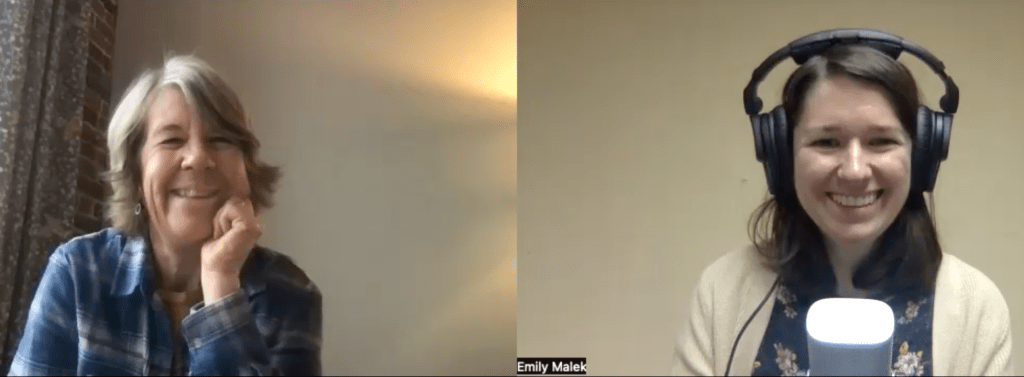
We got something special for you all on Book Reviews by a Chick Who Reads Everything today. We have a guest who is the author of the new memoir The Only Way Through is Out, a book coach, and who works with LGBTQ+ nonfiction and memoir writers. Please welcome, Suzette Mullen! Hi Suzette!
Suzette: Hi Emily! I’m so happy to have this conversation with you.
Emily: Same here! I have a lot of questions for you, and I know you’ll certainly enjoy them.
Suzette: I hope so!
Emily: What was the catalyst for writing this book?
Suzette: Great question, and I’m smiling because when I start working with a writer, this is the question I ask them. Why write this book? I’ve had to think about that question and the answer myself, and the first reason I wrote this book was I was trying to understand this experience that I had been through, and I think that’s very typical for memoir writers. We’ve had this profound experience or some event that has happened in our lives, and we know it’s important, but we maybe don’t fully understand it, so we write to unpack the experience and connect the dots and look into our past to see how we got here. That was the initial catalyst for me to write the book.
As I continue to write and to continue to understand for myself, then it began to become a story to share with other people, and particularly other women and any human who is contemplating a big change, particularly at mid-life after when they had an established life. I was a part of a Facebook group that was a support for women that were questioning their sexuality and/or coming out later in life. I know we were all looking for other people’s stories to see if there were people that got to the other side, so I wrote my book for them. The dedication of the book is really for every human who is longing to live out loud and that isn’t afraid of the cost.
Emily: That’s wonderful, and I really enjoyed those sections when you’re talking about the La-Las and how wonderful they really are.
Suzette: They were, and many of them remain as very close friends of mine. The original Facebook Group that I speak about in the book no longer is in existence although there are several other groups that splintered off from that group, but I got to not only know many of those women online, but also got to know several of them in person, and some of them I count them among my closest friends, and they really were a lifeline for me.
Emily: That’s wonderful. Everybody needs a lifeline. As you mentioned, there was a part where you discuss the difference between someone worrying you and someone being concerned about you. I’m glad those friends, especially Jen, were concerned and threw you a line. That was wonderful to hear about. Sure, the part when you were going through your nervous breakdown was tough, but the fact that you had the members of the La-Las be there for you from the very start of your journey is a very beautiful, breathtaking experience.
Suzette: Thank you. Yes, I think that one of the learnings in this whole experience, then certainly living it, and now writing it is I got a much deeper understanding of what true friendship is really about and the importance of community because we all have struggles in our lives, and I’ve certainly had some before this, but this was the big one of my life, and hopefully, it will be the biggest one of my life. I have no idea what’s coming up on the other side. I needed friends and community more than I ever had, and I was very fortunate to find those people.
Emily: You expressed a lot of fears of coming out, especially how it would impact your marriage and family. How did you deal with them?
Suzette: The whole coming out process for me (and I don’t think this is terribly unusual) was a process. It wasn’t one day I woke up and was like, “I’m gay! I’m coming out!”
It was the first awakening to the feelings. Then the questioning was, “Is this really real, or is this just in my head?”
So, when I finally came to terms with what was true for myself, I had a big decision, which really was, “Okay, this is true, and what do I do about it?” because I was in an established life. At the time, I was in a marriage that was close to 30 years, and every marriage has its challenges, but I say, overall, I had a pretty good marriage with this one very large exception, and I really needed to make the decision. I think it was less about coming out in terms of coming out as queer. It was more about leaving an entire life that I had because I didn’t know what it was like to be queer. I didn’t know what it was like to live as a queer person. I think that’s true for anyone before they come out, and you don’t really understand what this new life is going to be like. For me, I don’t think it was a real fear of what it would be like to be a queer person living that life in the world. Of course, it’s the fear of the unknown, the fear of not knowing what it’s going to be, but for me, I think the deeper fear of what kept me in the struggle for as long was this push and pull between what I was longing for in my desire and this life that I knew that had a lot of good in it and with the people, particularly my husband and others that I deeply cared for. I didn’t want to hurt them.
Emily: That’s completely understandable. There are books that talk about very similar things where they were, “How will this affect my life? Can I keep the life I have?”
But, as you have realized in your book that there were some things that were going to happen, and you were going to leave some things behind. I can’t imagine what you went through, but at least, you’re happy, and you honored your vows as you quote in the book.
Suzette: What we’re talking about here, I think this is what I hope my readers will connect with: this more universal struggle because people that are in a similar situation where they come to terms with their sexuality later in life, they have to make a decision: do I stay or do I go. Yes, they can relate to my story, but I also really deeply believe that many of us, if not all of us, will face situations in our lives where there’s something else out there we have a desire for or that we’re longing for. There’s some clarity inside us that this is something for us, and going after our desires in many situations will impact the other people in our lives, and there’s this push and pull of do I have the right to go after what I want, is that “selfish?,” is that the right thing to do?
I can’t answer that for anyone else, but I hope my story will provide to those readers that someone else was struggling with those same kinds of questions. They are not alone, and this is my story of how I resolved these questions.
Emily: How has your family and Reenie reacted to this book (or do they even know) that you wrote this book?
Suzette: My family definitely knows I’ve written the book, and at the time of this recording, they have not read the book yet, but they know generally what’s in it. I would say to the extent that they’ve shared with me, they are very supportive. My two sons have been wonderful through this whole process. My sister [came] to my book launch, and my mother is in failing health, so she’s not able to come to any of my events. My family has generally been supportive, and they know about the book. Reenie, I know that she knew at some point that I was writing a book. We are no longer in a relationship, so I can’t really answer that question of whether she knows or she doesn’t know. She definitely did know at one point when we still had a bit of a connection that I was working on a book.
Emily: How and why is it possible to be in decades-long denial about your sexuality?
Suzette: That’s a good question. I have spent quite a bit of time thinking about that, so I can only answer it for myself, but I assume that there’s other people, who’ve had a similar situation, who can relate to some of this. I would say for me, there’s at least three reasons. One is the time that I grew up in. I’m in my early 60s now, so I was in high school in the 70s. I’m sure there were people in my entire high school that were gay. There was literally nobody who was out openly and same thing with teachers. After the fact, many years later, I learned that they were definitely gay people in my high school, so some of it, I think was the time.
I didn’t really have role models. Being gay was in the shadows, and it was shameful, and people routinely were using slurs to refer to gay people.
I have also looked back and seen this pattern of a life where I chose to be a rule-follower. I chose to make safe choices, and those safe choices led me to a very nice life, but a life where I was afraid to take risks, so I think some of this was also just my childhood imprinting and conditioning that I didn’t even allow myself to go there. As readers will see when they read the book, there were definitely signs along the way, and it all seems so obvious right now on the other side, but it wasn’t at the time.
So, I think the times, childhood imprinting, lack of any role models, and maybe the other reason was that I was in a nice life. I really was. Maybe there was something around me that was not willing to go there. I really have come to believe that people come out when they are ready, and for whatever reason, there were probably many many reasons, some of which I hope I have just shared, I was not ready until I was ready. Then, there was a moment that set things in motion, and I started seeing things that were definitely true for me that I hadn’t been able to see before then.
Emily: All those reasons are completely understandable. How did you navigate divorce and dating in mid-life?
Suzette: With divorce, what I’ve come to realize is no matter what, it’s very hard. I was fortunate that mine was relatively amicable, and it’s still very hard. It’s the loss of a dream, the loss of a life that you expected to have. I never expected in a million years to be divorced. It was scary. I hadn’t lived by myself ever in my entire life. I’ve gone from college to having a roommate and having roommates in law school, and then getting married. I have never navigated life on my own really without a partner. It was scary, and there were a lot of things that I had to learn much later in life, just a lot of practical things that my now ex-husband did in our relationship. It was hard. Dating was definitely interesting because I had met my husband when I was 22, and I had virtually no dating experience ever in my entire life, and here I was in my mid-50s navigating not only a completely new world of dating with online dating, but also I was dating women. I do discuss a good amount of that in the book. I don’t want to give too much away, but it’s definitely an adventure, and I did not have any disastrous experiences. I know that some people do. It was a brave new world out there, let’s just put it that way. Internet profiles, and learning what was appropriate, what was safe, and all other things.
Emily: As someone who is a child of divorced parents, seeing that first hand, while I was still living with them and doing graduate school, was tough. It started off amicably, but it soured over time. Reading those sections certainly brought up some things about that time period when my parents were divorcing, but absolutely real on that.
Suzette: It was interesting, and this is something that many of the women in the later-in-life support groups that I was in. I’m still in several others. When the couple decides to divorce, and not everybody does, but for those who do, the whole thing about telling your children no matter what age they are is hard. Different ages, different challenges. One of the almost universal experiences is that with the children, whether they are younger children or mine were young adults, there was less trauma about the coming out part, but it was the divorce part. Of course, that’s hard. It’s hard to hear that your parents are no longer going to be together. Even with my children, who were no longer living at home, it didn’t impact their day-to-day life, but it impacts their life for sure. That was one of the things that I struggled with. I didn’t want to cause anybody pain.
Emily: That’s another recurring theme. You talked about taking risks and being safe, and that falls into how you didn’t want to hurt anybody. That’s why you took the path of being safe.
Suzette: Exactly.
Emily: Speaking of taking risks and being safe, I have a question relating to that. Have you taken any risks as of late?
Suzette: Well, let’s see. To state the obvious, writing this book and putting my story out into the world does feel risky, and it does feel very vulnerable. I’m thrilled that I am where I am, so I took a big risk in my life that led me to this story. One of the decisions I made on the other side of leaving my marriage and coming out was a professional decision. I pivoted from some other work that I was doing, and I decided to become a book coach. On its face, that doesn’t sound like a big risk, but one of things that I have chosen to do in the past two to three years is to really focus my business on working with LGBTQ+ writers. How I would answer your question is I feel like I have taken risks in terms of being more and more visible as a member of the LGBTQ+ community, both in terms of my professional life and in my personal life. One of the things in the book was an email I sent to some friends shortly as I was coming out, and I was not able to really label myself at that point. To be clear, I don’t think anybody has to label themselves, but I certainly at the time wasn’t able to. In the email, I said, “I’m not ready to wrap myself in a rainbow flag.”
I was just feeling my way into my new identity in life. So, I am no longer afraid to wrap myself in a rainbow flag. If you look at my website or my social media, I’m wrapped in a rainbow flag a lot. In America today, depending on where you live and who you were doing life with, that is risky. It’s a risk I’m willing to take obviously.
Emily: That leads into a follow-up question. How would you respond to people who say, “You’re shoving your lifestyle down our throats. We don’t want you to do that.”
Suzette: Here’s how I’ll answer that: anyone that uses the term lifestyle is not an ally of the LGBTQ+ community, doesn’t understand that it’s not a lifestyle. It’s an identity. I had a book coach on, and we are always thinking of who’s our reader and who’s our audience. What I would say is anyone who would say that is not my audience, and there are going to be haters out there. I am preparing as well as anyone can be prepared for those kinds of comments. I had an essay go viral on today.com a couple of summers ago. It was called “The Subaru Should Have Been a Sign.” It went viral. I made the rookie mistake of reading the comments, and the first few comments were really positive, and then, there was vitriol and also just sort of cluelessness. There were all these comments like, “I drive a Subaru, and I’m not a lesbian.”
They didn’t get the irony in the comment, and there were those ugly comments. That just comes with the territory, and those are not my readers. That’s not who I wrote the book for.
Emily: Every book is going to have their audience, especially whether they are intended for or ones who are willing to open their minds.
Suzette: Exactly. I do have a hope that I may have readers who find their way to my book, whether someone buys it for them, or hands it to them, someone who is in the LGBTQ+ community wants to hand their book to a family member to maybe help them understand their experience. Maybe some hearts and minds will be changed, and if that’s the case, that will be fantastic.
Emily: Absolutely. Earlier, you were talking about your work as a book coach. Could you tell us more about your work?
Suzette: Yay, I’d love to. So, I have a group mentorship and community called “Write Yourself Out.” It’s exclusively for LGBTQ+ memoir and nonfiction writers. I launched that in April 2023. I currently have 17 writers in there, and they are amazing humans, who are getting clear on the story they want to tell, and I’m meeting where they are. They are working on their books, and they’re in a safe, supportive community, and that’s really important to me. That’s the joy for me, and I love that work. I also do work with writers one-on-one, and I do work with straight writers occasionally, especially if their project aligns with my values, and they have something important to say. I have a client right now, whose book is coming out in August, Sarah Wells, and the book is called Go Ask Your Mothers, and it’s about supporting moms returning to work. It’s a really important topic and a really important book. I feel very privileged at this stage of my life to have found work that I love and feel aligned with who I am, and that’s one of the deep joys of this chapter in my life.
Emily: That’s wonderful. I’m glad that you are able to find meaningful work, do what you love, and help others to achieve their goals and their own happiness. It’s using your own platform to help others. That is wonderful because I know there’s always this pressure when you have a certain platform, you have to commit to it 100%, and if you don’t, then people might see it as performative, but the way that you talk about it, it’s absolutely genuine. I just feel how much you love working with the writers, regardless who they are. I’m looking forward to reading their books sometime, and who knows, maybe their books will appear on Book Reviews by a Chick Who Reads Everything.
Suzette: That would be an amazing full circle moment. One of the things that I’ve come to discover in this whole journey of this professional and personal leaps that I’ve made at midlife is that when you’re not living authentically in one aspect of your life, it spills over into everything, and the converse is true. When you are living authentically in one area of your life, it spills over to the rest of your life. When I made this big change in my personal life, all of a sudden, my professional life started blossoming as well. I was finally feeling at ease in my life and in my own skin, and it really did spill over into my professional life as well.
Emily: That’s fantastic! I’m glad you’re living the most authentic life as it can be.
Suzette: Thank you!
Emily: You’re welcome. There are so many memoirs about people realizing that they are queer in midlife. Did you feel pressure to stand out from those books at any point?
Suzette: That’s a great question, and it’s certainly something that I’ve talked to my writers about. Not that all of my writers are at mid-life, or even writing about coming out. There’s this, “Somebody else wrote a coming out story.”
I know that and that you did a review of one that came out this summer, and I’m fully supporting that writer, and I’ve amplified her book on my platforms. Here’s what’s true. There is a limited number of categories that books fall into. There’s grief memoirs, coming-out memoirs, there’s travel, etc. There are these categories and these buckets of books, and what makes each story different is the particular specifics and the particular details and obviously the writing voice. While on the plot level the actual things that happened, there could be a lot of similarities in people’s stories, the internal experiences, how it’s expressed, and the specificity, that’s what makes the book stand out. I didn’t get too wrapped up about that. I was focused on writing the truest story that I was able to write and to dig as deep as I could dig to uncover what my story was really about.
In addition to this theme of safety and choosing safety over risk throughout a good deal of my life, there was this persistent character of my inner voice. In the earlier drafts, that inner voice was in the story all along, but I didn’t really see the thread of that inner voice or view that voice as a major theme that turns into a major character. Once I saw that, that helped me see connections in my story. For anyone who is thinking about writing whatever their story is, there is that natural feeling of, “Oh, there’s these other books out there that are on the same topic.”
It doesn’t matter what the topic is. If you can write your story authentically, you have something to say, and you’re clear on why you want to say it, there’s room for your book too. When I was working on my book, Untamed came out of all things, so you have Untamed by Glennon Doyle – multi-million-copy bestseller. The context of that book is her coming out later in life, but I don’t think we would necessarily call it a book about coming out later in life, but it’s easy to let those things stop you, and I would encourage those writers to focus on what their story is and what their particular angle is of how they can add to the conversation about a topic that other people have written about.
Emily: So, it’s just like any other book where you’re always going to find books that have similar themes and topics. It’s like you said. You have to be authentic about it, and hone it on what your focus is. If they’re honest about it, then readers will feel that and gravitate towards it.
Suzette: Yeah, absolutely. When I had an exchange with the editor, who ultimately decided to take my book to the University of Wisconsin Press, one of the things that he said was that one of the reasons they were attracted to my book and my story was that the introspection, the internal struggle that I had over these things that we’ve been talking about and how I, as he said, “effectively communicated what that struggle felt like.”
And that’s the angle of my book. Your people have a different angle. I think that’s how I would answer your question.
Emily: One of the best parts of your memoir is the conflict between you and your inner voice, like how your inner voice tells you to do this, but then, sometime later, it’ll go, “Umm, I don’t think that’s a good idea.”
How you wrestle with it is like “How should I trust my inner voice? I’m all confused!”
Suzette: I think that’s another place that I’m tapping into something universal for everyone. Every human has an inner voice. Every human hears something inside them. What is it, the voice of fear that you’re hearing, or is it your intuition, your truth? Sometimes, that can be hard to distinguish, so that whole idea of listening, what is true, and finding the courage to act on it. Whatever it is, it doesn’t have to be about later-in-life sexuality. It can be about a bunch of different things.
Emily: I have a specific question for you. I run the “Adapt Me Podcast,” where a guest and I talk about books that have never been adapted and how we would go about it. If The Only Way Through is Out ever becomes adapted, who would you cast as yourself in a possible adaptation?
Suzette: That is such a great question, and I have actually thought about it. And if she’s listening, please, I would love Laura Linney. I adore Laura Linney. She’s about my age, and I think she’s just an amazing actress. My sister was in college for one year with Laura Linney. She didn’t know her well, but she knew of her. My sister and I went to see a Broadway play last year, and we waited at the stage door. Laura Linney came out, and we had a little exchange. I think I even have a photograph of her. Laura Linney, if you are listening, I would be so honored if you would play me.
Emily: That’s wonderful. She is such a great actress. I love her in The Truman Show.
Suzette: Yeah, she’s great. It’s so funny that you asked that question because it’s one of the fantasies that “Oh my god! The book will be picked up and turned into a screenplay or a tv series.”
There’s an audiobook that is in production as we speak. That book will be out in the summer. I was able to have a role in choosing the narrator. That’s a wild experience to hear somebody else read your words.
Emily: If you don’t mind me asking, who is the narrator?
Suzette: I don’t know if that’s public or not, so I’m not going to share it just because I honestly don’t know if that’s public or not. But, what I can say is that the narrator is a very experienced narrator. She has narrated at least 150 books, so I’m really excited, and in fact, literally yesterday, I got the first draft of her recording. Part of my job with somebody at the publisher is to listen to it word by word, and we have a spreadsheet to note anything that we want changed. It’s like a whole other edit, but it’s for audio instead of on the page.
Emily: That’s amazing! Wow! From an author’s perspective, that’s got to be exhilarating and also stressful. In a way, you do have some control like how it’s being presented through the audiobook, but at the same time, you’re letting this person interpret your life. I’d imagine so many things going through your head while you’re listening to that, especially how this person eventually will voice your family members as opposed to voicing the inner voice.
Suzette: Right, right. I’m learning a lot. It’s a very interesting process. I think every narrator has their own style. Some narrators do more voices like they really change the characters. Some narrators just slightly change the voice, so it’s clear that someone else is speaking, and my narrator is more in that style. But yay, you hit the nail on the head. There’s this tension between what I would expect the toning, the inflections, and all of the other things to be and also allowing this professional actor to interpret the book, so I think we’ll find a middle ground there if there’s something. We already have samples that we got to listen to and give some feedback on. It’s a very interesting process. It really is.
Emily: That’s amazing to hear about! I had no idea that the book was going to be adapted as an audiobook, so I can’t wait to hear more about it.
Suzette: I did not know it was going to be either, and that was a really lovely surprise. In fact, it’s only the second audiobook that my publisher has commissioned, and they’re anticipating doing many many more, but audiobooks are by far the fastest growing format of books right now. It’s really exciting to have that as an option for my audience.
Emily: What are some other projects that you are working on?
Suzette: The book promotion is the number one thing, running my “Write Yourself Out” community, and doing my book coaching with my one-on-one clients. I have started working on a second memoir, and it’s in the very early stages. I want to explore what happens after the leap, after the big change, and I have a specific angle that I’m looking at, so once I’m on the other side of the real intense book promotion and after Pride month, I can take a deep breath, and turn my attention to the next book project.
Emily: That’s fabulous. I certainly can’t wait to read that book and listen to the audiobook when they come out. Thank you, Suzette, for coming on. Where can people find you?
Suzette: Thanks for asking. The two best places to find me are my website yourstoryfinder.com, and I’ve got all the information on my book and about my book coaching and on Instagram @urstoryfinder. And, I want to mention one more thing. I have created a really fun, free, and interactive resource called Behind the Scenes: An Insider’s Guide to The Only Way Through is Out. It’s a little mini-ebook, where I have shared five scenes that didn’t make the cut in the book, and I analyzed why I wrote them in the first place, why I decided to cut them, and I got some tips on revision for writers. Also, there are some scavenger-hunt questions for readers. It turned into this fun project, and I think readers will enjoy it because it gives them a little more context. For example, I’ll share a deleted scene. I’ll say all the things of why this scene got deleted for this reason, this reason, and this reason, but there’s a sentence from this scene that made it into the book, and I’ll give people a little bit of clues about where they might find it in the book. It’s like a playful scavenger hunt in some ways. It’s a free resource on my website.
Emily: I don’t think that there has been any other book that has done this, at least not to my knowledge. That’s amazing!
Suzette: It ended up being really really fun, and I think it actually turns out to be a really meaty resource for writers, and it’s also a fun behind-the-scenes look for readers.
Emily: Perfect! I can’t wait for readers to actually take a look. Before we go, are there any other things that you wanted to talk about?
Suzette: One of the things that I ask my writers is to always think of their readers, think about what they want their readers to feel, and what’s the takeaway for their readers. I’m pretty clear on what my takeaway is, and I’d love to share that. I hope that when my readers finish my book, they will feel the message of it’s never too late to live their life, it’s never too late to live out loud, it’s never too late for a new beginning, and that my story will give them confidence, if they are contemplating changes in their life and maybe they’re wondering if it’s too late. I know that it doesn’t matter what age you are. You often think it’s too late wherever you are in your life, and that’s really the message I do want to leave people with that it’s never too late to live out loud, and there is a cost to choosing authenticity. In my opinion, it’s worth the cost.
Emily: That’s wonderful. Thank you, Suzette, for coming on. It’s absolutely a pleasure talking with you today. I cannot wait for people to read your memoir, feel the things that you went through, see if they want to share it with other people, and identify, if they are LGBTQ+, the things you have been through and what they’re going through, and even relating that to straight members and allies.
Suzette: At the end of the day, writers write because they want to connect with readers. We want to make an impact. We want to make a connection, and my hope is that my story will connect with people who are both LGBTQ+, also people who are straight, and people who are longing for something in their life and maybe they’re afraid to step into it, or they’re afraid that it’s too late.
Emily: Thank you for coming on. I love talking with you, and I hope you have a wonderful rest of your day.
Suzette: Thank you so much, Emily. I really appreciate you taking the time and reading the book and doing all the things. I thank you so much!
Emily: You’re very welcome! For those who are reading Book Reviews by a Chick Who Reads Everything, please go out and get The Only Way Through is Out by Suzette Mullen. It’s out now, so go grab it at your local bookstore, or check it out at the library.
Subscribe below to get notified when I post new updates. Also feel free to email me here for any review suggestions, ideas, or new titles!





 Book Reviews by a Chick Who Reads Everything