Content warning: this review contains a major spoiler alert.
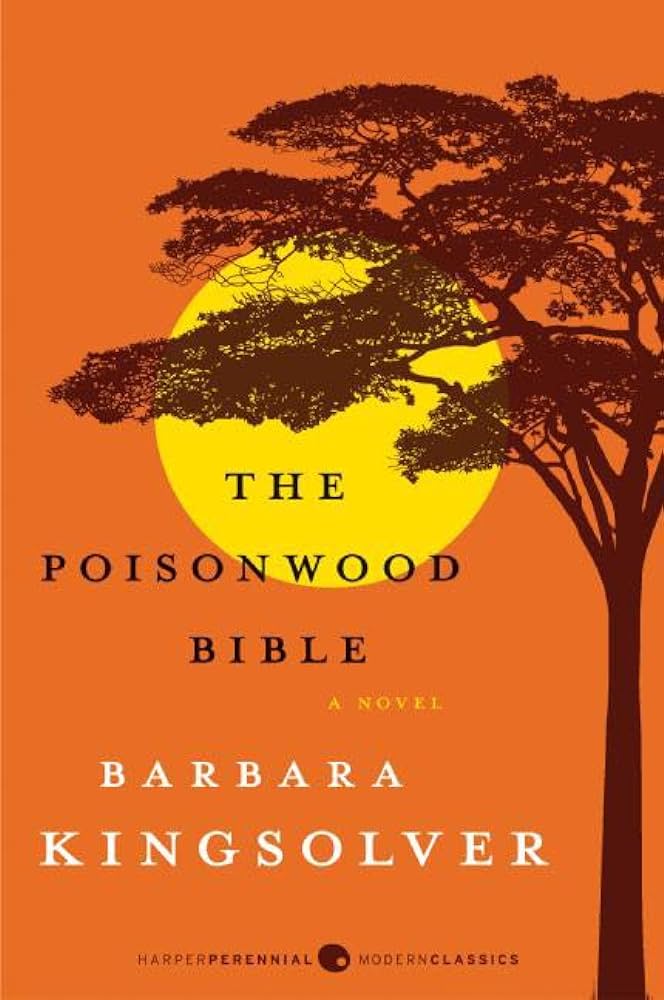
Since I started this website, many people have recommended various books that I should read. The one that got the most recommendations from those I’ve known was none other than the 1998 novel The Poisonwood Bible by Barbara Kingsolver. Now that I’ve finally read it, I can say that it’s a great book that explores five different perspectives on pivotal events in the history of the Congo.
The Poisonwood Bible is about Orleanna Price and her four daughters, who witness significant parts of Congolese history as part of a missionary trip. Orleanna’s husband Nathan Price is a fiercely devoted evangelical Baptist who takes his family to the Belgian Congo in 1959. They carry everything with them that they think they need from their home in Georgia, yet they soon find that all of it is transformed on African soil. They soon witness the most dramatic political chronicles in the 20th century: the Congo’s fight for independence, the murder of its first elected prime minister, the CIA coup to replace him, and the progress of a world economic order that robs the African nation of its independence. Against this backdrop, Orleanna recounts her husband’s actions in the Western assault on Africa. Additionally, her four daughters Rachel, Leah, Adah, and Ruth May tell their tales and how they are forever changed by the land of Ham.
The writing is top notch. I love how the book sets the stage of what’s going to occur just in the prologue with the opening line, “Imagine a ruin so strange it must have never happened.”
That’s a line I’m going to remember for a long time.
Because the book deals with religion, each section is named after a book from the Bible like how Book One is called, but what else, “Genesis.” It’s a great way to get people into the religious theme and how each character feels about Christianity and its role in colonization. The writing also allows for each of the main characters to express their thoughts while keeping the narrative going.
It’s rare for a book to have 5 narrators, and it’s even more scarce that it’s executed so well. Each person has a clear and different viewpoint that I was able to clearly identify who was talking even if I didn’t look at the chapter title. For example, the four daughters have clear definite personalities. Rachel is the vapid, self-centered, and malapropist eldest. Leah is the idealistic tomboy who idolizes her father to a point. Adah – Leah’s twin – walks crookedly due to half of her brain not being developed, but she loves wordplay, especially palindromes, and observing others. Ruth May is the courageous and youngest one. And of course, the most fascinating character is the mother Orleanna. Orleanna is the typical 1950s minister’s wife with her softness, quietness, and femininity. At the same time, she’s constantly brooding on the decisions that led her to meet Nathan, marry him, and allow him to take the family to the Belgian Congo. She eventually cracks and leaves him after something significant happens to one of the daughters.
Some of the criticism of this book is regarding the depiction of Nathan, especially how it’s anti-Western and anti-Christian. It’s true that he comes off as a stereotype of the fire and brimstone evangelical baptist. At the same time, he’s meant to represent the kind of people that came to Africa and wanted to help without understanding the culture nor the language. He also has more of a backstory than the abusive dad from The Great Alone did.
Prior to reading The Poisonwood Bible, I knew little about the colonization of the Congo and less so about its independence. For example, I didn’t know about the democratic election of Patrice Lumumba as prime minister in 1960, his murder a year later, and how the CIA replaced him with a leader who was “willing to work” with American interests. Kingsolver packs in so much about this part of history in a way that allows the story to move along. Considering that she lived in the Congo when she was a child after that country gained its independence, she’s very knowledgeable and respectful of multiple perspectives. Anatole – a teacher in the village of Kilanga where the Prices resided in and later Leah’s husband – tells Leah that many children died in the area, so why should a white child dying be any different after Ruth May passes away after a snake bite. Reading so much about the Belgian colonization of Congo and the latter’s independence makes me want to learn more, so I will have to look at King Leopold’s Ghost: A Story of Greed, Terror and Heroism in Colonial Africa by Adam Hochschild at some point.
The only aspect that I have to complain about is the ending. There’s nothing inherently wrong with it. I like how it explores what Rachel, Leah, and Adah do after their time in the Congo. Rachel becomes a hotel owner in South Africa, while Leah marries Anatole and becomes a political activist, and Adah studies medicine and biology back in the states. However, it felt tacked on. The book spends a good chunk of the time gradually unfolding how the Price women feel about their new surroundings and about the events that occur following the Congo’s independence. After they leave, it jumps decades only to tell us what each is doing. It could’ve ended after Book Five titled “Exodus.”
The Poisonwood Bible by Barbara Kingsolver is an excellent historical fiction novel about one family’s experiences with the colonization and independence of the Congo. The writing is excellent as it goes in depth about the history while exploring each of the main character’s thoughts and maintaining a steady pace throughout. Speaking of the characters, Orleanna and the daughters are so well developed that I wanted to know more about them, even the shallow Rachel. I would recommend this book to all readers, particularly to those who want to know about the history of the Congo and love stories about religion and missionary work.
In the meantime, you can listen to the latest episode of the Adapt Me Podcast. Guest and host of the Women in Session podcast Amy Thomasson and I discuss how to adapt this book into a HBO limited tv series and why we don’t know more about colonization of the Congo. Check out at this link.
Subscribe below to get notified when I post new updates. Also feel free to email me here for any review suggestions, ideas, or new titles!
 Book Reviews by a Chick Who Reads Everything